Author Archives: Daisy

Rio Grande to Porvenir (5 days)

This is the stretch we have been stressing about since long before the trip even started. It is 230km with almost no services, and a border crossing at 90km that requires us to shed *all* fresh foods and legumes. This area is notorious for the kinds of winds that usually would prompt wind warnings in the US but people here are simply accustomed to them. There were 50km of rough dirt roads, and at the very end there were brutally steep climbs around Useless Bay. That is literally the name of the body of water (Bahia Inutil). In this entry (which is long so prepare yourself) we choose a good-enough weather window and we go for it. Many adventures follow.

Rio Grande, Argentina to San Sebastián, Chile (93 km / 58 mi)
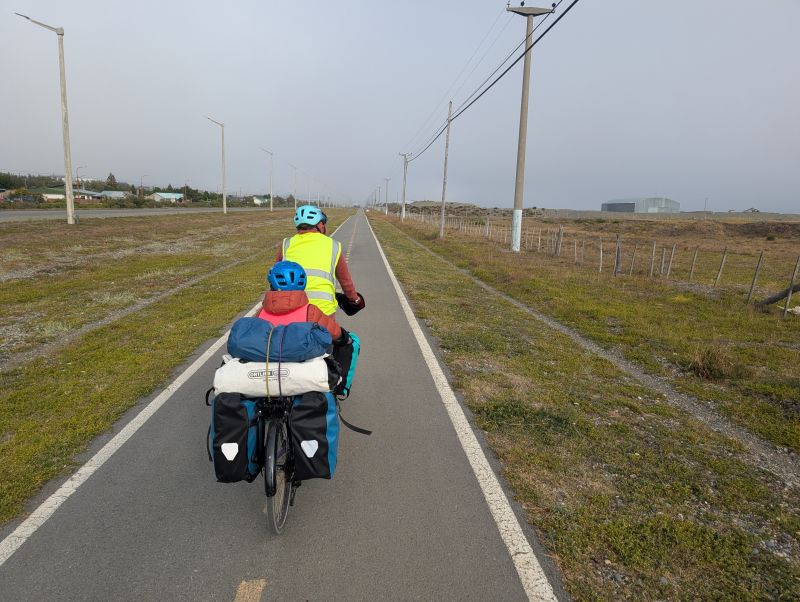
Bike path out of Rio Grande

Our longest day ever! Today was an unusual wind day in this region. It started out completely calm, so we were up and riding before 8am. There was a thick fog over Rio Grande, so we were happy to ride along the smooth bike path, separated from the main road. Once town was done… so were the things to look at. There was just flat land all around us for most of the day.

The wind stayed calm for the first 30 or so kilometers, and we didn’t stop for lunch until 50 kilometers were behind us.  By then the wind was whipping and we had to shelter behind a small hill to eat.  Even so, Jason accidentally swatted a fly straight into Henni’s mouth which was very unpleasant. A kind cyclist stopped and gave us some packs of energy goo, which were much appreciated later as we battled the wind and there were a few hills to ride over.

We fought the growing headwind up and limped our slow way forward.  The wind was manageable but unpleasant and cut our speed from 20km/hr to 10km/hr.  Despite the slow progress after lunch we reached our intended destination, a hotel on the Argentine border by 3pm.  We asked after the rates and space (the place was obviously empty) and they told us they were full and could not accommodate us.  WHAT?!  We hypothesize they didn’t like kids. After sitting down to eat a second lunch we looked at the wind, which had switched to a brisk tailwind, we decided to cross the border and ride the additional 15km to the border outpost on the Chilean side. By eat a second lunch, I mean that we attempted to eat all of our fresh fruit, veggies, cheese, and salami which wouldn’t make it through the border crossing.
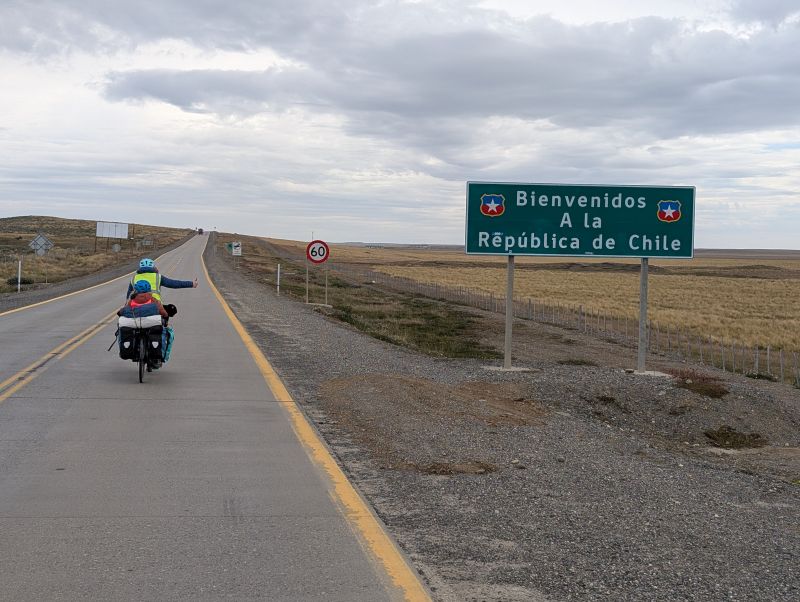
Leaving Argentina – Entering Chile!

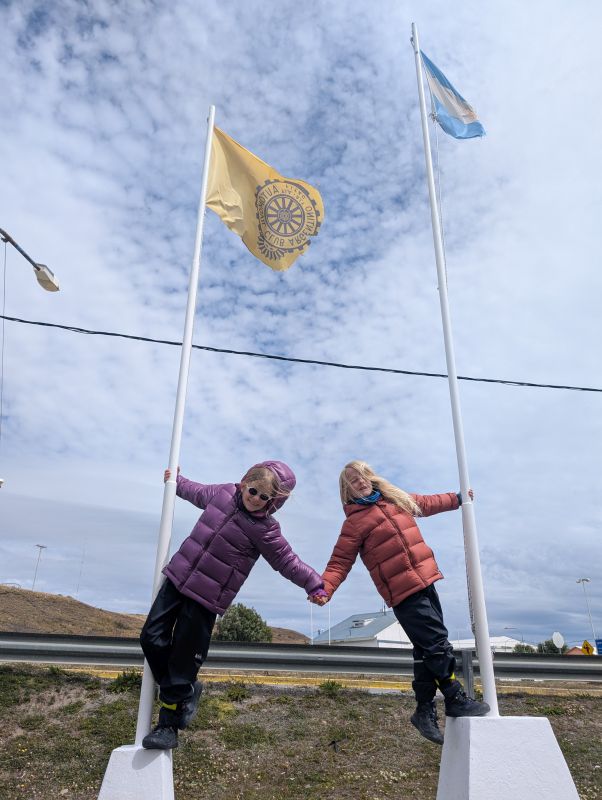
Leaving Argentina was quick. They give you an exit stamp and send you out to no man’s land. There are 15km of mostly flat land between the two border facilities. It is occupied by sheep as far as the eye can see. (Literally thousands of sheep!) The tailwind blasted us through this area and we were downright gleeful about it. All too soon we were stopping at the Chilean border complex, which required three separate stations and lots of forms. First it was passports, then it was a temporary import form for each bicycle, then finally it was agricultural inspection. Chile is notorious for not allowing anything fresh into the country.  We had already piled up the dinner we had planned for Argentina: eggs and broccoli. The border agent took those items and then trusted us when we said everything else was processed and packaged (it was). We got out of the border complex in only 30 minutes, which might be a cyclist record. Just across the street was a small border outpost made up of a hotel and a restaurant.  It was a beautiful thing: warm, clean, and barely within our budget for two simple rooms and shared bathrooms. Of course, no one else was there so we enjoyed the entire game room by ourselves.
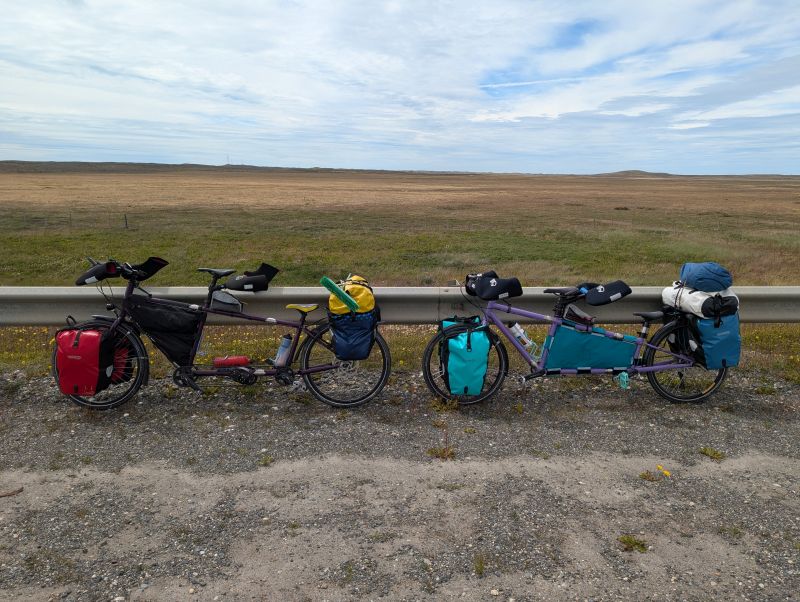
Rest day in San Sebastián
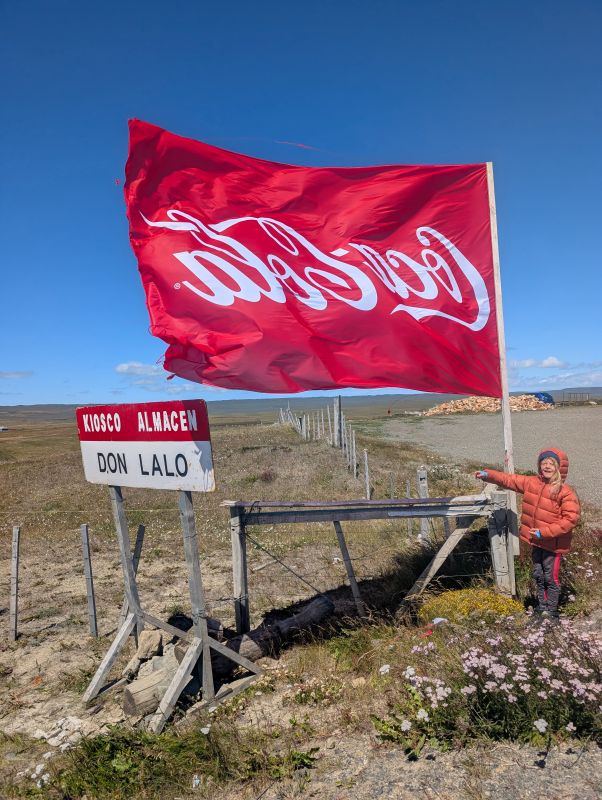
The wind was THAT strong

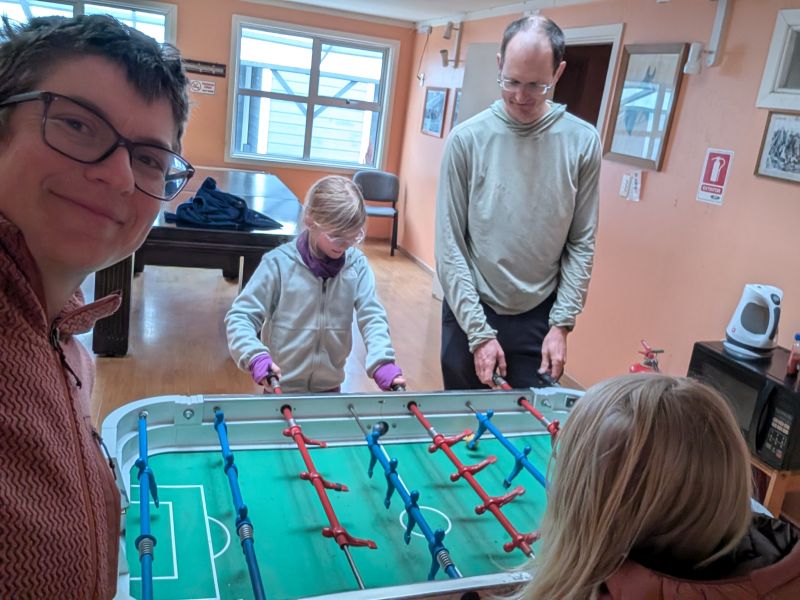
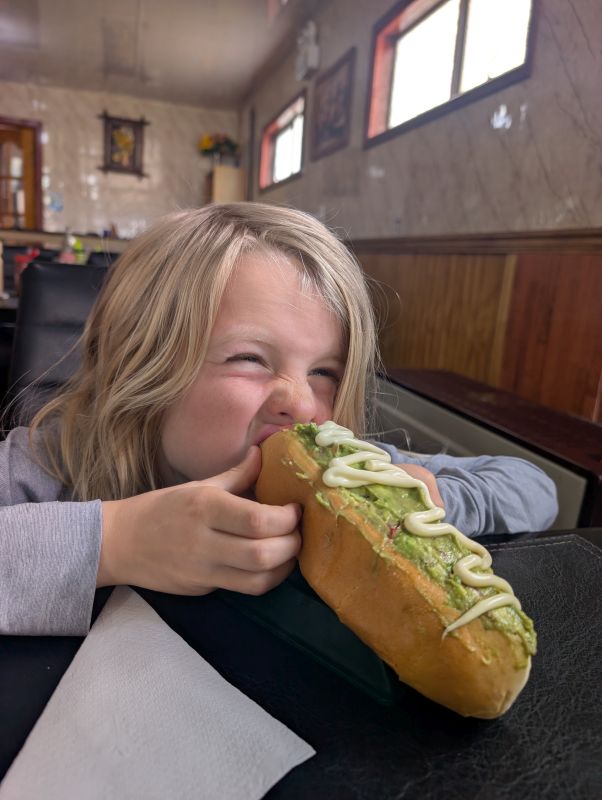
Overnight a strong storm blew through, turning the previous day’s tailwind into a raging headwind. The winds were forecast to be over 30mph sustained headwinds today, so we decided to stay in the hotel for another day. We lazed about reading, playing video games, and competing at foosball. For lunch we walked to a nearby kiosk serving giant sandwiches and hot dogs. It was only a half mile, but the strength of the wind against us was incredible. I’m so glad the girls are having this experience: you can’t replicate it by reading or watching videos. Trying to walk into a 40+ mph wind is an experience you never forget.

San Sebastián to soggy wild camp refugio on the side of the road (61 km / 38 mi)
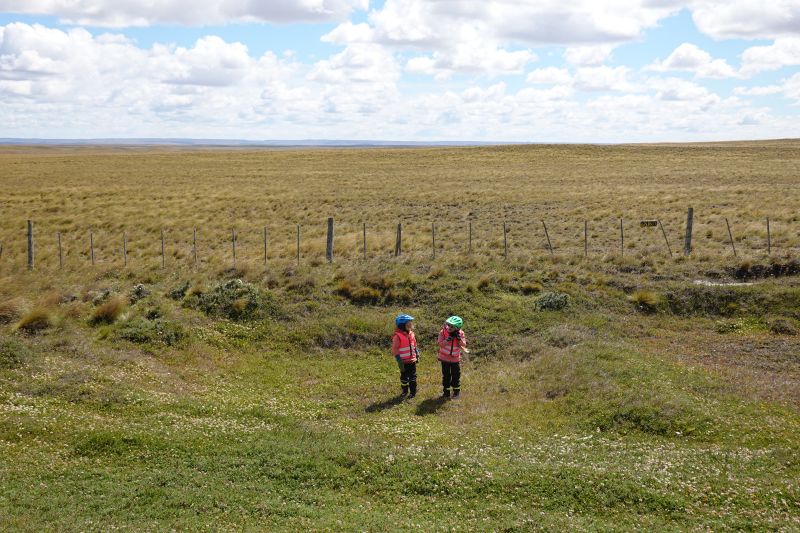
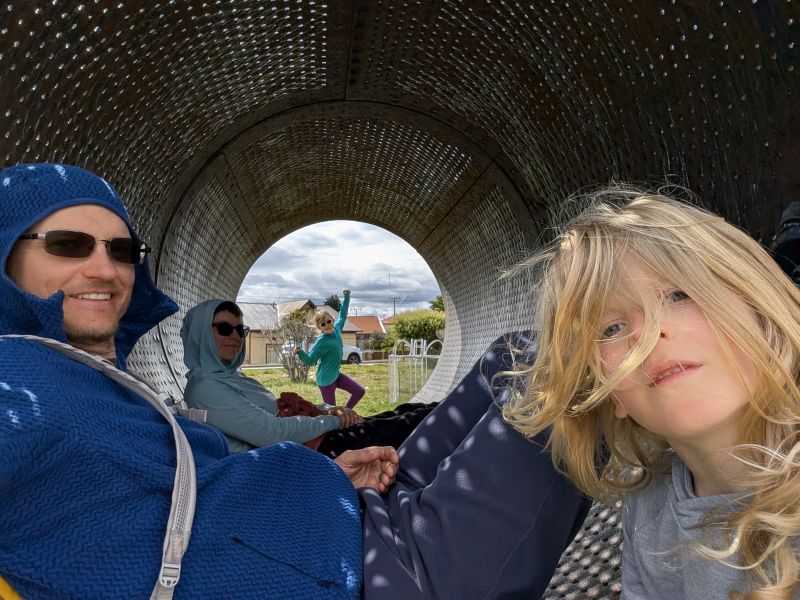
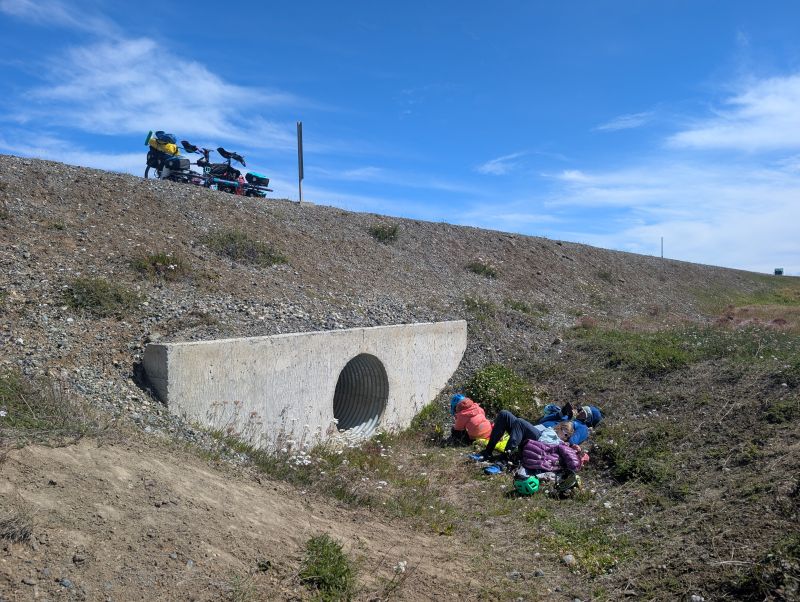
Is it windy down there? No? Well, let’s go in that hole and rest awhile.

Another storm blew through overnight and the rain was forecast to linger into the morning, so we ate a relaxed and delicious hotel breakfast while waiting for the rain to stop. As we finished eating the wind was gone and so was the rain… it was straight onto the bikes!

The riding started out gently uphill, and the calm wind didn’t last very long. Within an hour it was whipping at us, but at least the sun was shining. By the time we were pedaling hard downhill just to keep up a 5 mph pace we knew it was time for a rest. We found a protected spot out of the wind (read: a grassy hole in the ground) and lazed in the sun for 1.5 hours reading our kindles. The worst of the wind had stopped by the time we continued.

At 5pm we reached the turn-off for Porvenir. This is the last place to get water for many, many kilometers, so we got a refill across the street from the construction workers’ housing. They were very nice. We also inspected two shelters for travelers that the Chilean government built some time ago. Sadly, they have been vandalized and used as toilets by passersby. They would work in an emergency, but we chose to carry on. 
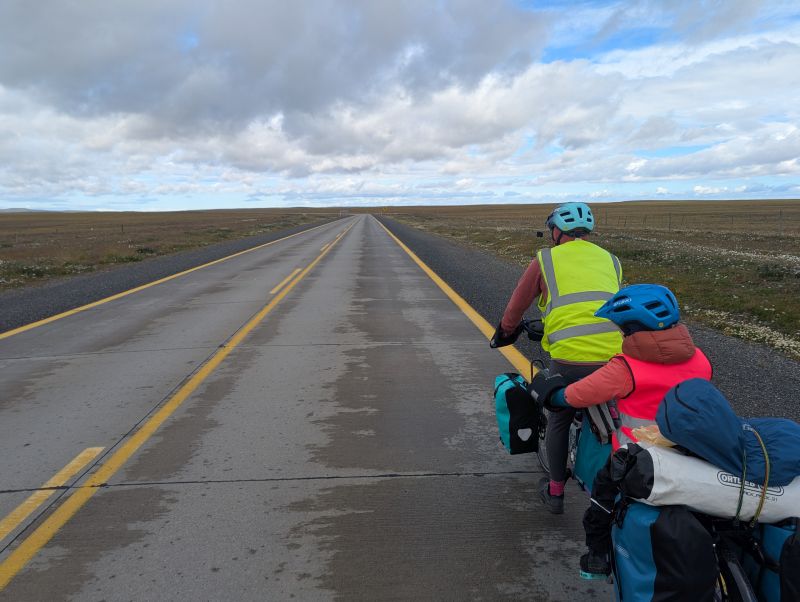
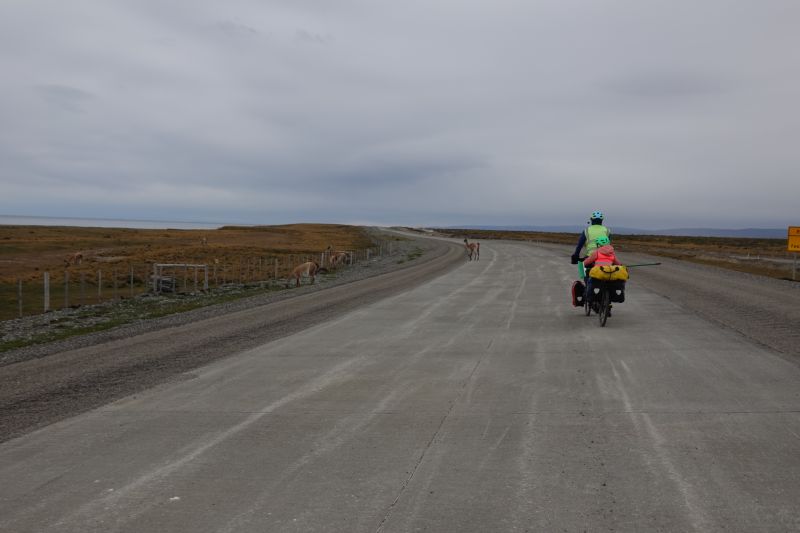
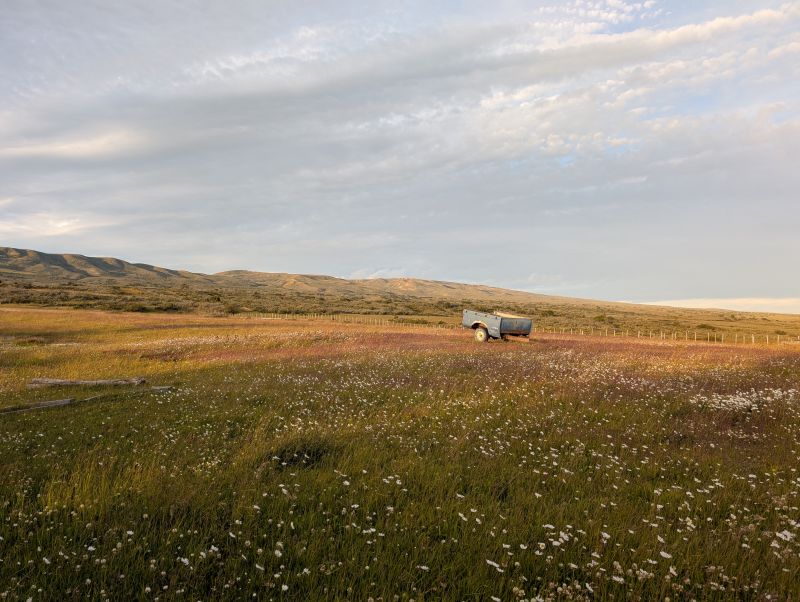
Typical scenery

Our weather apps said it would be calm and wind-free around 6pm so we set off happily for the final 18km to our planned camping location. The wind is so strong here that you can’t just camp anywhere – you need shelter or a wind-block, and those are few and far between. There was literally nothing for those 18km. There was, however, a brand-new paved road under construction.

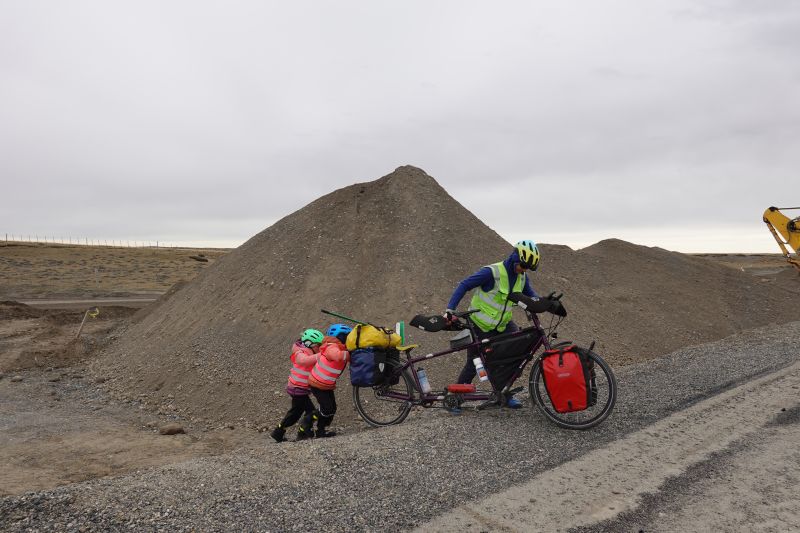
We were encouraged to ride the new pavement by construction workers and everyone we met. It was fabulous! One worker even stopped to give the girls granola bars and juice boxes. When the road was cut due to a gigantic ditch under construction, a group of workers helped us carry the bikes down and across. One laughed wildly and said “Cien dolares! Cien dolares!”, joking he would charge us $100 for the help. 
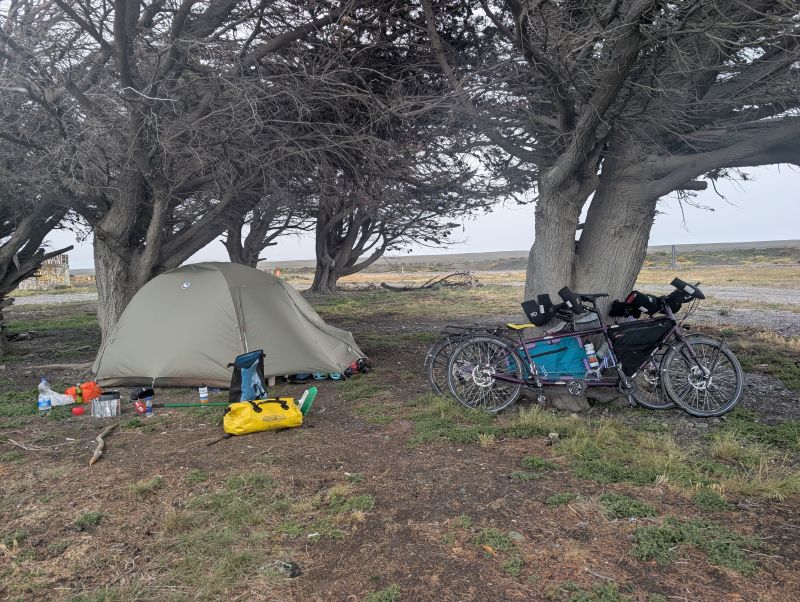
Partially wind-protected campsite

When we had about 10 km to go… the wind picked up again. Then it got worse. Then it started to rain. We were all in pretty sad spirits, but we had no choice but to carry on. It was with great relief that we reached the small stand of trees and another shelter (refugio) next to the road. Another cyclist had already set up his tent in the shelter, which was fine because it was in awful shape anyhow. Many windows were broken and one entire wall was exposed to the wind. We chose a spot next to a big tree that was well-protected when we set up the tent. It was cold and wet, but we ate a good warm dinner and snuggled into our sleeping bags to rest. It was such a relief to be done with that long, windy day. For the kids it was bliss… for the grown-ups the day was not over. Around 11pm the wind changed direction and yet another storm blew through. The tent was not protected from that side, and we watched as the tent poles bent in over us, nearly breaking. Jason and I jumped into action. (It was more like lumbering into action for the sleepy Jason.) We held up the tent with our backs as the wind raged and the girls slept. Ever optimistic, we settled in with our down jackets and kindles to read as the storm raged. Within an hour the gusts stopped and we went back to sleep. What a night!
Soggy Refugio to Estancia Draga sheep farm (40 km / 25 mi)
There was walking

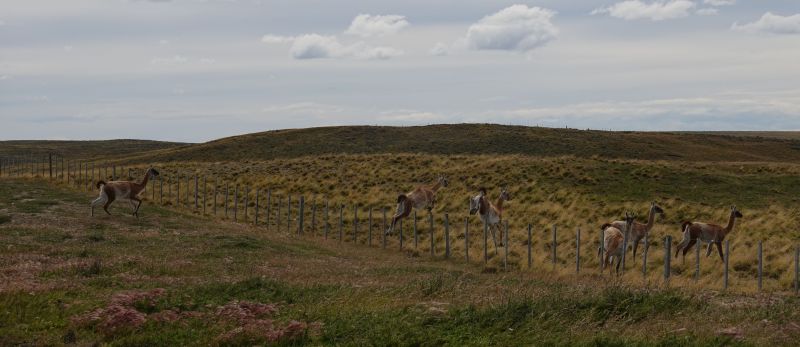
I woke up to a calm, overcast morning. It was surreal watching guanacos wander through the nearby construction site in the quiet light. Of course, by the time the girls woke up it was raining. It was a cold rain. We decided to wait a bit for it to stop, eating breakfast and playing cards in the tent.

As soon as the rain stopped, we noted a tailwind and jumped into action. We packed and scrambled and hopped on the bikes to take advantage of any help we could get. The tailwind lasted about as long as the new pavement did. Then we were spit unceremoniously onto a rough gravel road and the side wind kicked up in strength. 

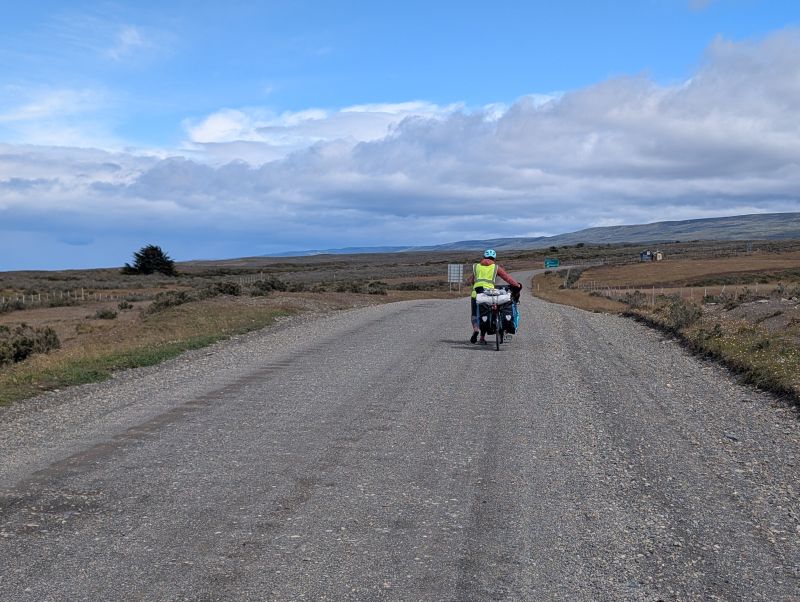
We stopped in a sheltered spot for a snack, and when we got back on the bikes the wind was so strong from the side that we couldn’t safely ride the bikes. We had to walk the kilometer or so to the next turn in the road, where we found another sad and vandalized refugio. Again, this used to be such a treasure for cyclists seeking refuge from the wind and rain, but now the windows are broken and the place has a bad smell. It would be suitable for emergencies, but we still had a lot of daylight so we continued on. 
Entrance to Estancia Draga

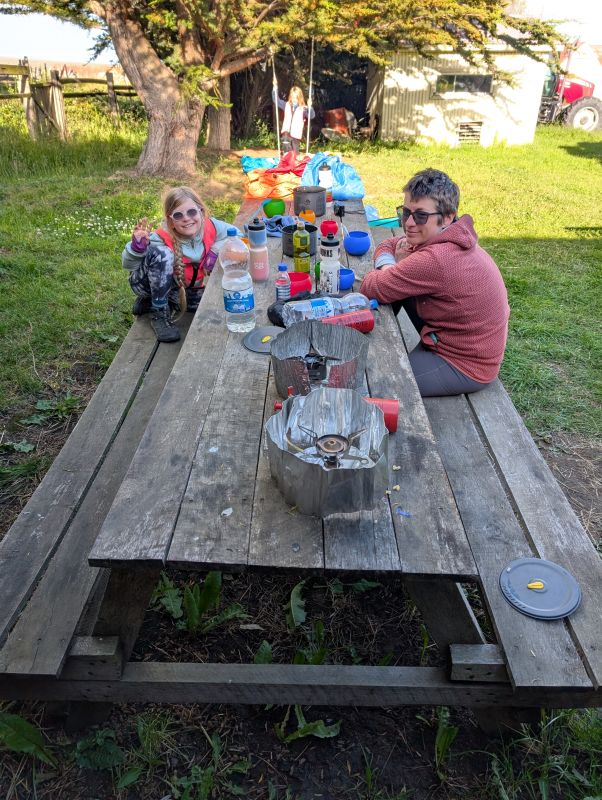
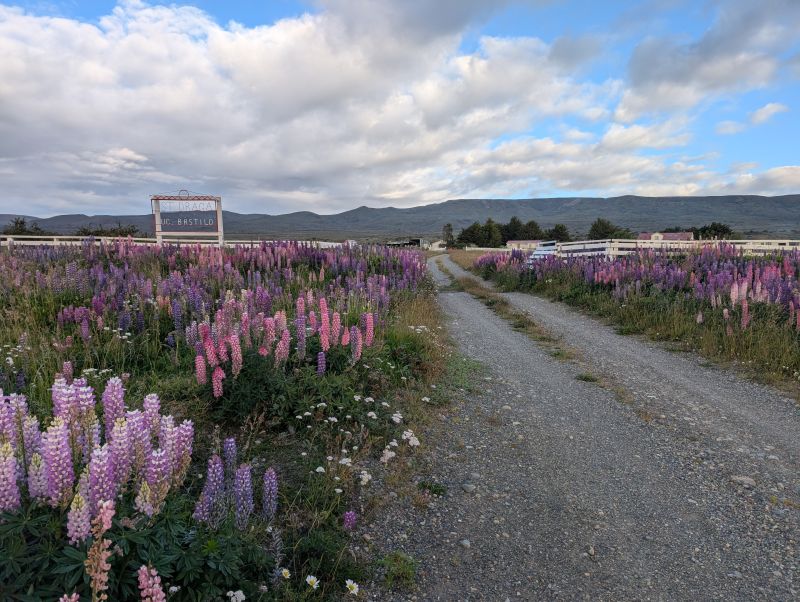
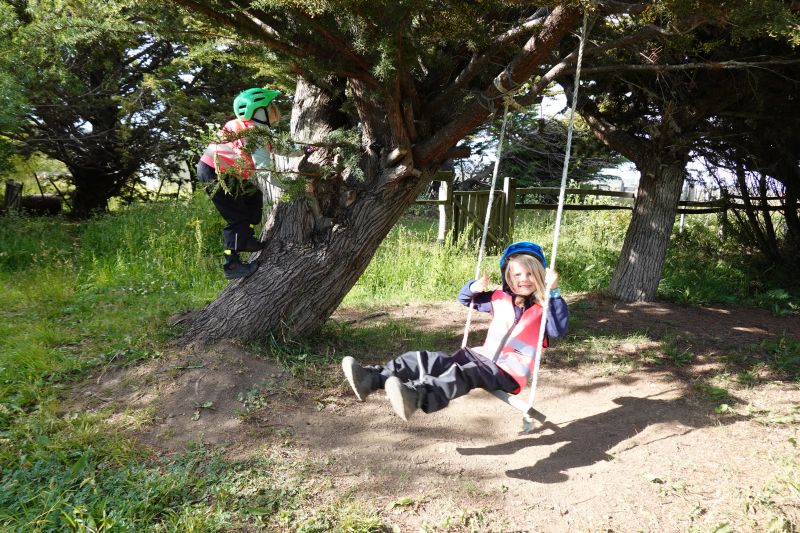
The wind was unrelenting all afternoon.  Sometimes as a headwind and sometimes as a side wind. I remember pedaling uphill, in a raging headwind, on a rough dirt road at 5km an hour (that’s 3 mph) and thinking…  this is better than walking at least. By 5pm we were exhausted and still 5km from the next sheltered place marked on our map.  We were very slowly making progress up a big hill, and at the turn there was a sheep ranch. We decided to send Jason and H up to the gates to ask about water and a sheltered camping spot. Luckily, we were welcomed with open arms. They showed us a very lovely, sheltered spot to camp with a little outdoor kitchen and a picnic table. (Actually, it was one of the largest picnic tables we’ve ever seen!) The family had a young child too, so there was a swing the kids enjoyed. We made a big dinner of pasta and refried beans before heading to bed. It felt so good to be in a safe, wind sheltered place!
Estancia Draga to Porvenir (41 km / 25 mi)
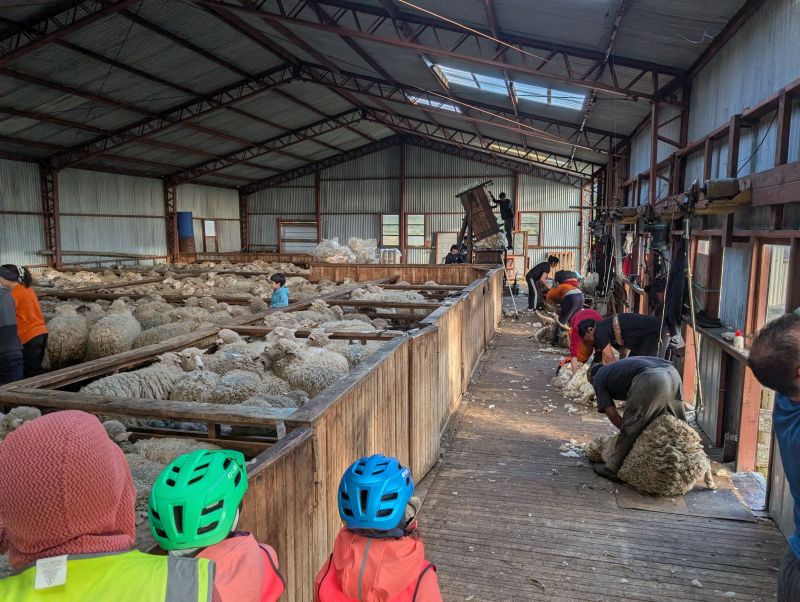
Sheep shearing is a production!

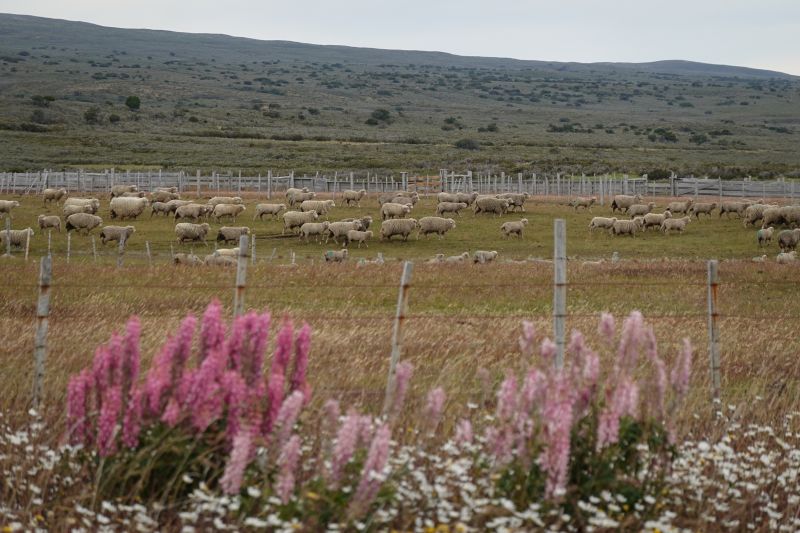
The barking sheep dogs woke us up early, around 6:20 AM, and it was a good thing too. We needed every bit of early morning riding time before the wind started up. We ate a cold breakfast of cookies (yum!) and were just heading out when a woman came by our camp to let us know they were already shearing the sheep! There are 900 sheep on this ranch and apparently a whole crew was there to shear them during a two-day period.

In the shearing barn we were able to watch the process. The sheep were crammed into pens, and four men were lined up with electric shears along one wall. They would reach into the pens and grab a sheep, then hold them upside down and cut off the wool in one huge mat. A woman was constantly sweeping up any escaped bits. The big piece of matted wool, once freed, was shaken then crammed into a huge wooden box and stomped down by another person standing on top. It was a sight to see! What an amazing gift to be there.

The rest of the day was not so glamorous. We crawled along the dirt road for the next 28 km into another strong wind, but this time the ups and downs were so steep we had to walk over several ‘hills.’ It was pretty brutal, but we knew that at the end of the day we’d have a bed and a bathroom so we carried on. When the pavement was in sight we stopped for lunch in the shelter of a fisherman’s shack, right on the ocean water of the Strait of Magellan. 
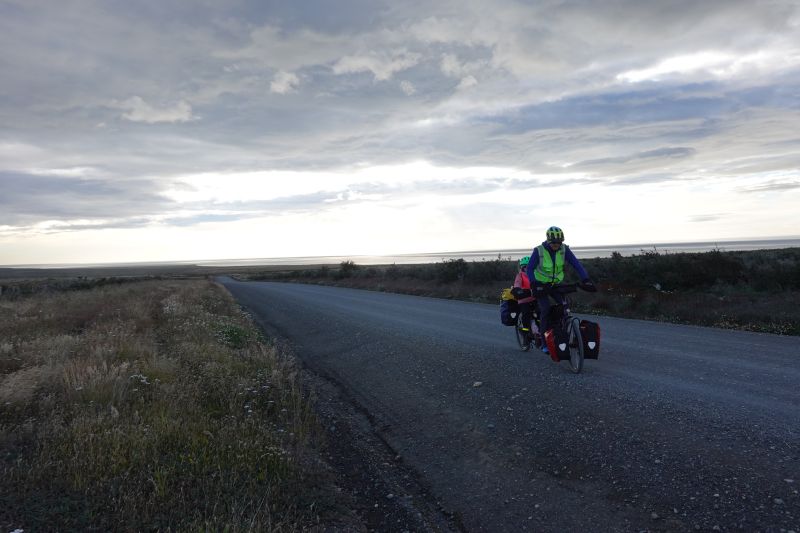
Grinding on

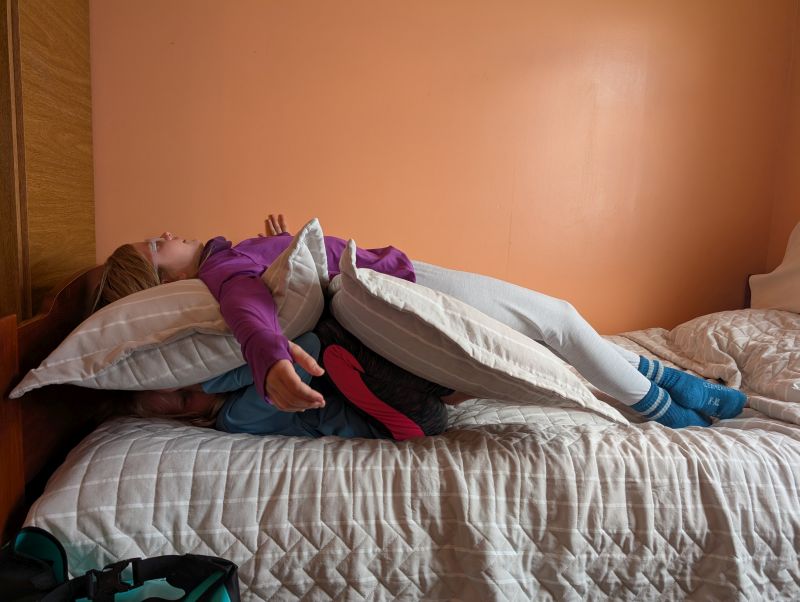
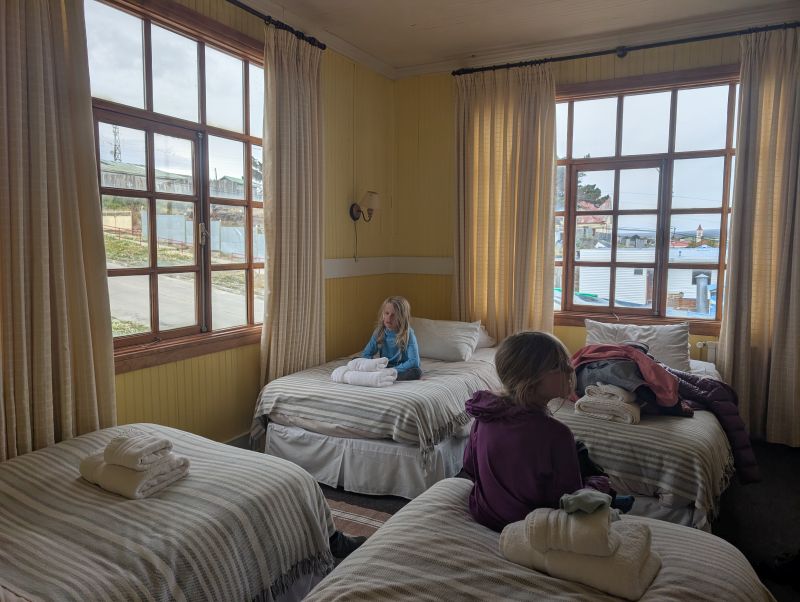
The fun wasn’t done even after hitting pavement – we had one more big hill to climb into the headwind. At one point I thought we were cresting the final peak before town… Then over the top I just saw another whole series of hills. A very rude word escaped my lips before I could stop it! We persevered and eventually, with great relief, cruised downhill into town. The town of Porvenir has a real ‘end of the world’ feel, even more than Ushuaia. It only has about 5,000 inhabitants. There are little minimarkets, small family-run hotels and hostels, and a single bank. The buildings are brightly colored but weathered. We went straight to the tourism office to get some help finding a place to stay. We had hoped to find a cabin with a kitchen, but as the rain started to come down we took the first hotel that had a room for four people. Hotels here aren’t like those in the US – there are a variety of bedding set-ups available and none of them are ‘two queens.’ You pay per person and kids count. We are in a lovely, bright room with four twin beds and a bathroom. Now we will rest for several days before taking a ferry to the mainland and the ‘big city’ of Punta Arenas.
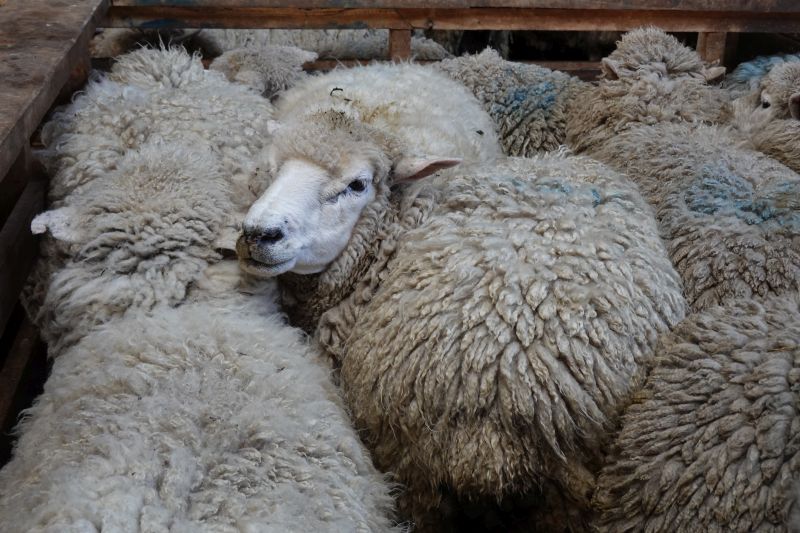
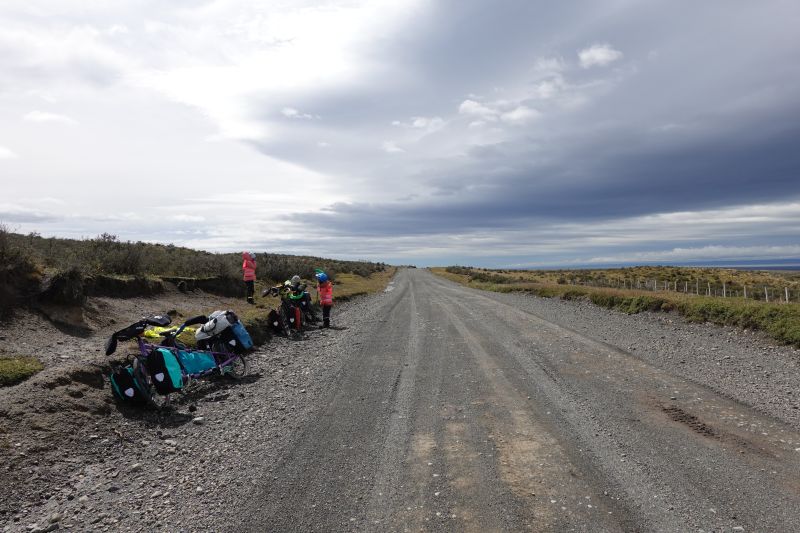
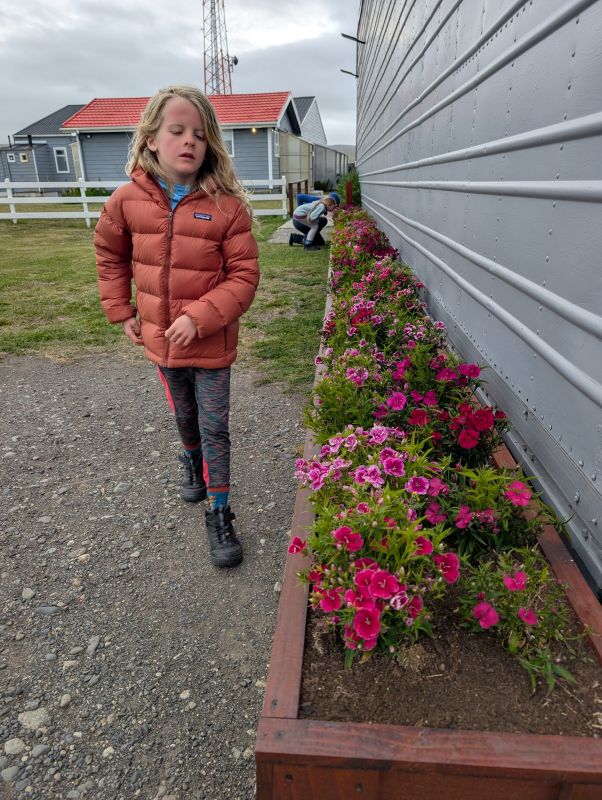
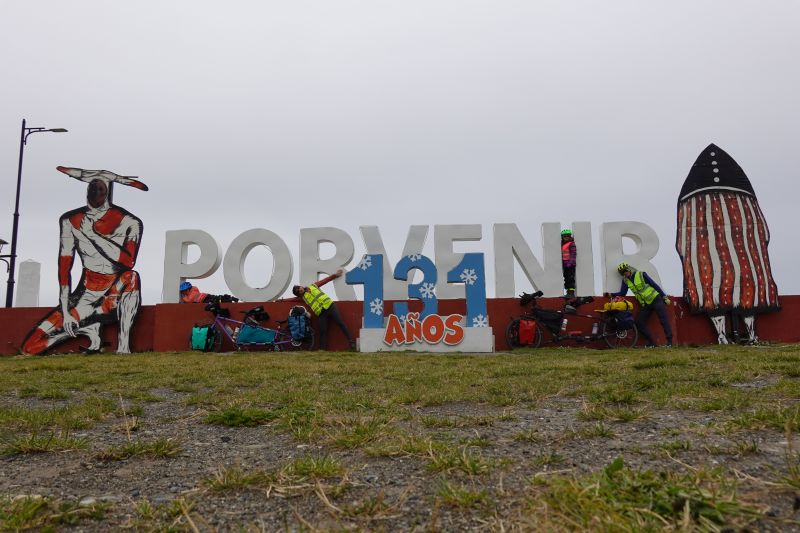
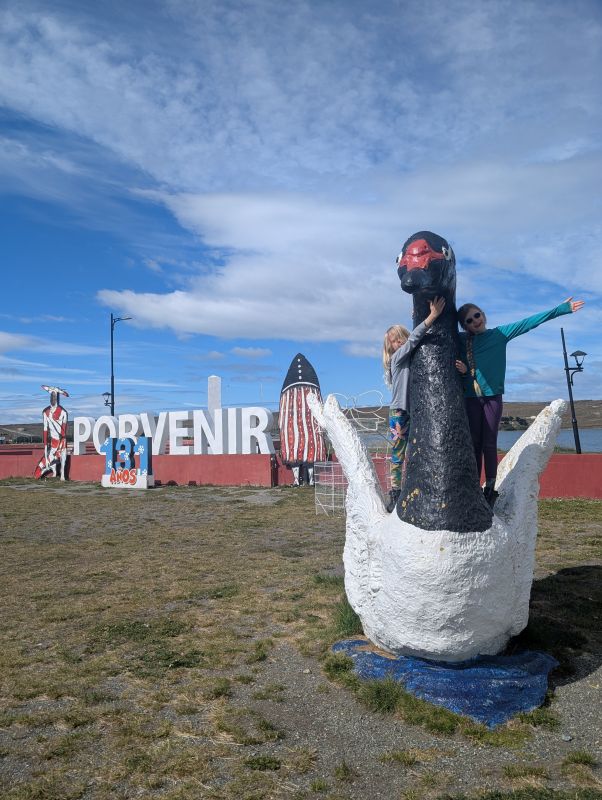
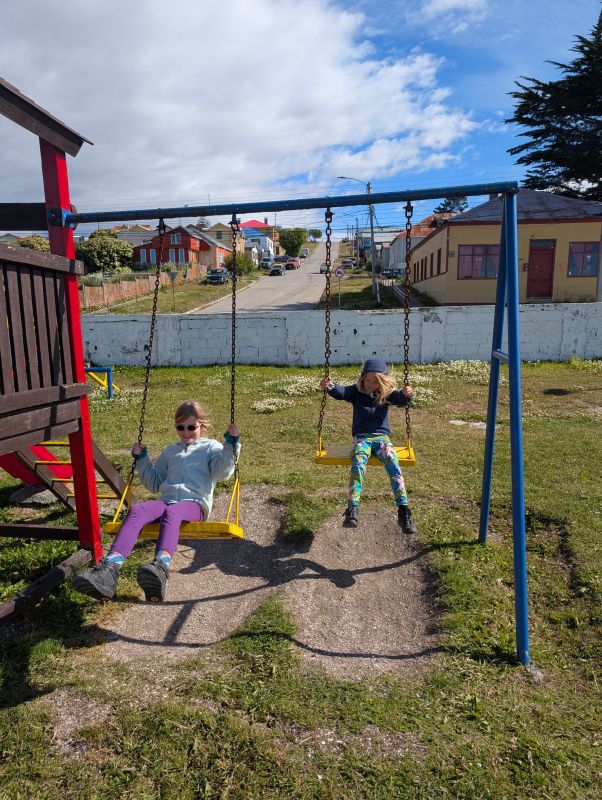
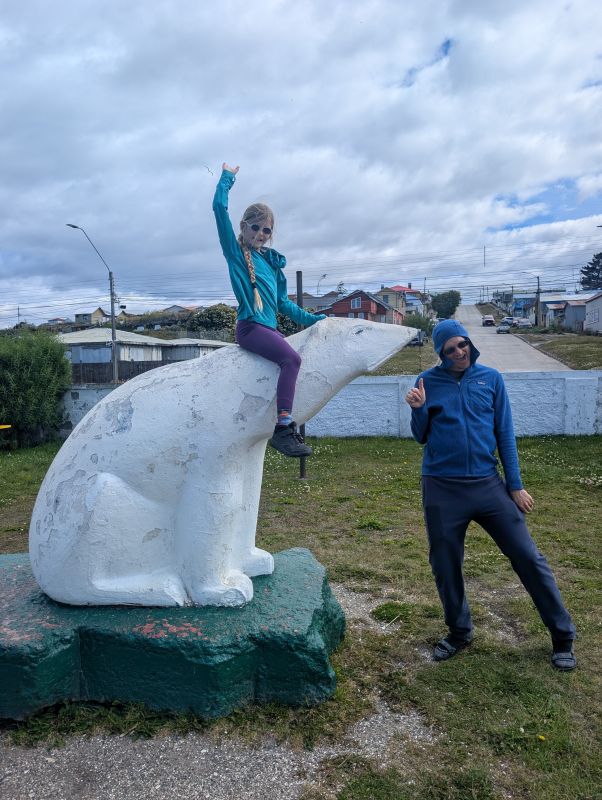
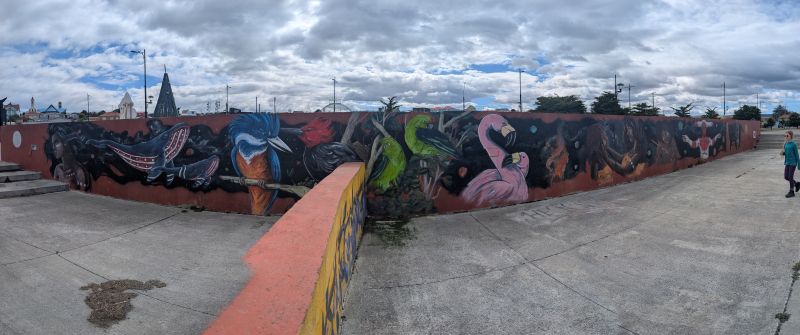
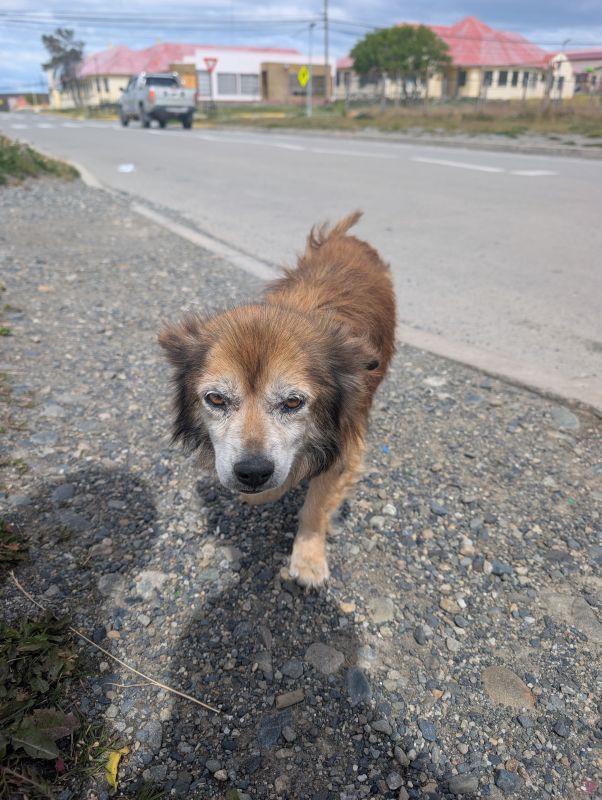
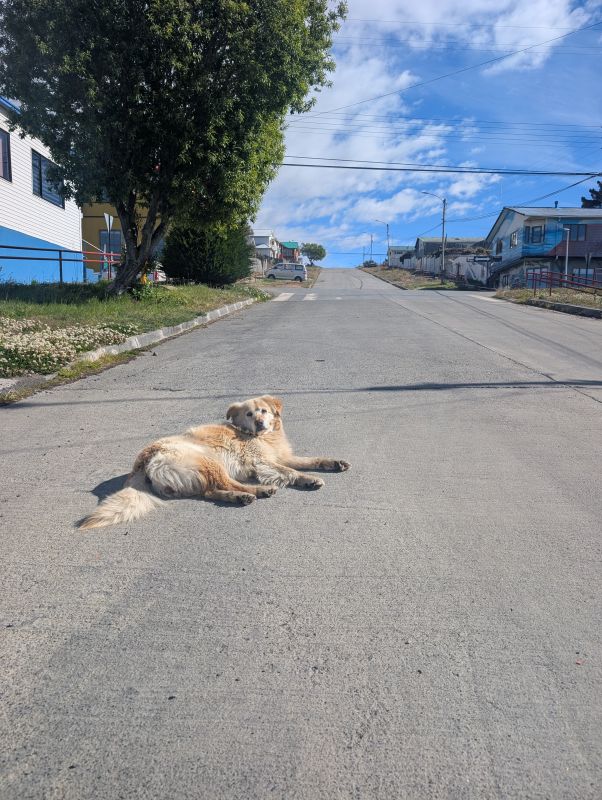
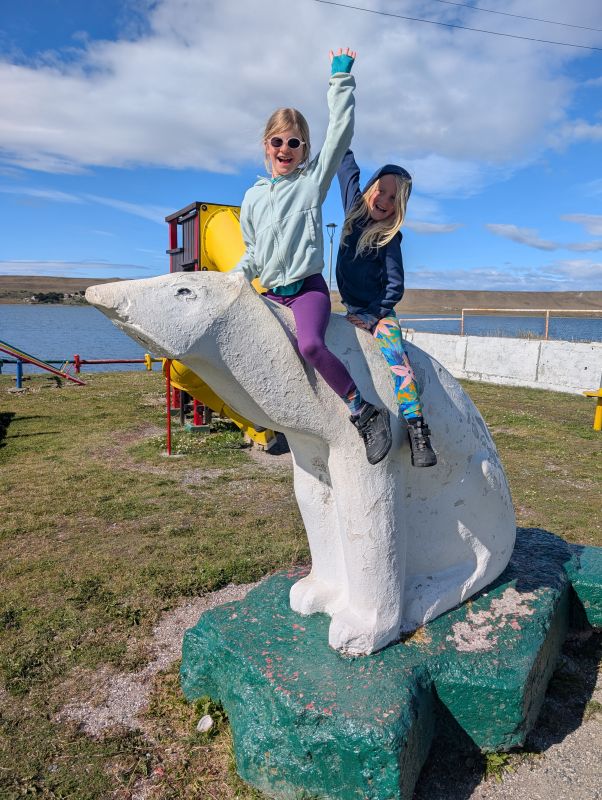
Here are some pictures of our fun first day in Porvenir. We are enjoying this town!
Entrepeñas to Laza – the climbing begins

In this entry we truly enter the mountains of northwest Spain. We ride two of our planned three big passes and enjoy the quieter mountain towns. We have to skip a rest day to account for the extra climbing, but wow are these mountains beautiful and the people who live here friendly.

Day 17: Entrepeñas to Puebla de Sanabria (16km). It was a special thing to spend a night in such a tiny, quiet town. When we woke up we walked to the small little children’s park at the bottom of the town, where we saw a snake eating a lizard and the girls enjoyed some silly fun. Opportunities like these are what makes cycletouring so incredible – we’d never have ended up in such a place on a more typical tourist trip.

A small playground in a tiny village

Because of all the extra riding we did the previous day we had very few kilometers to cover this day. Good thing too – we were feeling tired and also a big rainstorm rolled in! As we were casually pedaling between towns we saw a huge cloud move across the sky. Then we heard some thunder and started pedaling faster. Then we saw lightning and we sprinted towards town! Just as the deluge began we ducked into the stairwell of a closed antiques shop – safe.

Storm is coming!
Happy and dry, four cyclists wait for the storm to pass.

We stayed under cover until the storm passed. The store next to use appeared to be a cheese distributor doing a brisk business. People were constantly coming and going from the shop despite the storm. We tried to get some coffee to wait out the end of the storm, but one cafe/bar was too warm (like actually roasting inside) and the other one smelled like paint thinner so we got back on the bikes and carried on.

Entering town the girls stopped for this pilgrim’s bench. The yellow arrows guide us on the path.

By 1pm we were in our destination town. Our room/apartment (splurge!) wasn’t ready yet, so we dropped off our stuff and went into town. Old town was a ten-minute walk from our place… a walk across a river and up 231 steps to a hillside castle! We had a lovely picnic with a view all up and down the river valley.

Looking towards old town
Climbing up up up to old town and the castle
Perfect spot for a picnic
Notice the different building type from previous cities down in the plains.

After walking just about all of old town our apartment was ready and we took the rest of the day lazing about. We had originally planned to take a rest day here, but when we looked at the elevation profile for the final 100km to Santiago we realized we needed an extra riding day. A very lazy short day would have to be enough rest.

Day 18: Puebla de Sanabria to Lubián (30km) Our first real pass! We weren’t sure how this day was going to play out so we planned for it to be very short, and we stopped in the one town between two passes. As it turned out, we were really good at riding uphill and we reached our destination by 1pm.

Riding up the pass

Leaving Puebla was a breeze, and we were quickly riding up a gentle river valley. The road turned steep and we got in our low gears and kept pedaling. Jason taught H about prime numbers and we spent at least an hour determining primes under 100. We stopped for a breather and a drink every kilometer. It was a 1500′ climb (yes I know I’m mixing units – but doing vertical distance in feet still makes more sense to me!). It took us about 1.5 hours.

When Jason and I were riding the Americas 11 years ago we always calculated how long a climb would take by how many vertical feet needed to be gained. We estimated about an hour per 1000′ feet. What this means is that we haven’t lost all our fitness and climbing skills in the last 11 years! We still got it!

We unfortunately didn’t get a summit sign, but we still zipped down the other side on bumpy pavement until we reached Lubián, a mountainside town that was clearly a major stopping point until the big highway opened up across the valley. It was very quiet when we got there, except for the random people arguing in the bars.

On the other side of the pass, looking down towards a town

It was delightful to find the one grocery store in town that opens for exactly one hour in the evening – from 6 to 7. The whole family went down to gather supplies for dinner and the next day. Town was very quiet, but lovely with stone buildings and little creeks/fountains all over.

Our room (two floors) above the bar. The woman who ran both was enchanted by the girls
Lovely flowers on a quiet street
A beautiful public fountain in town

After weeks of riding through the drier parts of Spain it is so interesting to see water start to be abundant. We have really noticed how the buildings look differently in each region – from the white houses in the Extremadura to the warm tan sandstone near Salamanca, and now big grey stones here as we approach Galicia.

Day 19: Lubián to Laza (70km)

This day was TOO LONG, but we made it. There was SO MUCH CLIMBING. We left Lubián and immediately started pass number two. It was actually lovely, and we celebrated the summit sign at the top. I was happy the girls got the experience of moving through different ecosystems, then over a ridge and back down through them again. That sounds pretty minor – but I find it to be my favorite part of mountain riding. It’s just incredible to slowly move past the plants, up and above a treeline, then to the top.

Taking in the green and the rushing water

We descended into the rolling Galician countryside. At lunchtime we stopped in the town of Gudiña, which honestly looked pretty grim with its grey houses in the overcast weather. Of course on a Sunday it was nearly impossible to find food, but we happened upon the owner of a small convenience store who opened it up just for us to buy supplies.

A summit sign at the top of the pass!
A bonus summit sign at the top of a smallish hill on the way to Gudiña
First lunch stop in Gudiña

The most incredible riding was waiting for us as we left Gudiña. We climbed up to the top of a ridge… and stayed there for miles and miles. On both sides we could see the deep valleys and rolling hills. To the north there were mountains. To the south the views went on and on. We marveled at the fact that the tiny road we were riding was even paved.

Leaving Gudiña it was up and up and up again. We were led by these markers showing us the way along the route.
Views for miles along this ridge line
Alice and Jason ride along a ridge and look down on a reservoir far below
H was very nervous on the exposed ridgeline road. Beautiful, but also a little scary!

We stopped for another lunch at a little restaurant in some tiny town. We needed a long rest so took a seat by another pilgrim and ordered ‘hamburgers’ off the menu. Hilariously the burgers arrived as just a patty with a pile of french fries. We laughed at ourselves and our imaginings of actual burgers, but ate up the food and got back on the road.

Are we there yet?!? The last couple little climbs were too steep for our tired legs.

I’m not sure how, but we made it up and over more ridgelines for a long, long descent into the village of Laza. We all agreed that a rest day in Laza was obligatory, especially when we saw where we were staying. Our room had a gorgeous view over the countryside, the hotel had a small pool, and we were a short walk away from a fairy-tale perfect river. The host was just delighted to meet the girls and welcome us for a rest day.

This entire place we landed in was fabulous – kind host, comfy beds, pool, and this incredible view.

Salamanca to Entrepeñas

In this entry we depart the big city of Salamanca and ride across the plains for 2.5 days until reaching more mountainous terrain. We delight in the city of Zamora, endure a heat wave, bail on another hostel and generally hit our stride.

Heading out of Salamanca on a bike path

Day 14: Salamanca to Zamora (70km)

If you had told me at the beginning of this trip that we would be logging 70km days somewhat regularly, I would not have believed you. Yet here we are!

Predictably, we got a little lost and the route got messy departing from Salamanca. We were all smiles once we saw the car dealerships though. It seems that in every country, the car dealerships mark the end of town. We waved goodbye to the Toyotas and cycled on our way.

These flowers smelled great!

The route was flat and fast. Honestly, it was a bit of a blur we were going so fast! We stopped to smell these fragrant yellow flowers that lined the road, and we stopped to devour a bunch of cookies, and before we knew it we had entered the city of Zamora.

Making good use of a bike rack

There are few places that I mark down as ‘need to be revisited’, but wow Zamora was one of them. To begin with we had rented a beautiful apartment on a little plaza that was absolutely delightful. Then we wandered the old town which was gorgeous, AND got to explore a castle. The city was packed with little museums (that we didn’t have time to visit) and was super walkable. It also wasn’t swarming with tour groups like Salamanca was.

View of Zamora’s cathedral from the castle walls
What a street!

Day 15: Zamora to Tabara (48km)

Morning walk up a street in Zamora

Today we left our beloved N-630 highway that we have followed more or less since Sevilla, and started heading northwest instead of North. N-630 ends in Gijon and we are heading to Santiago de Compostela. Now we are on the Camino Sanabres, one of the many pilgrimage routes to Santiago.

Goodbye N-630 (we met you back near km 900)

We chose to take a bit of a shortcut compared to what our guide book recommended, and it had pros and cons. It was shorter by about 12km, but it also had more traffic and little shoulder. It was in no way unsafe, and the drivers were all extraordinarily careful of us, but it wasn’t the carefree riding we had gotten used to.

A section of dirt, which we abandoned for pavement

We arrived early to our destination in Tabara – around 1pm! Jason went to get us a room, and when he came out to tell us the specifics he left the key to the garage (for the bikes) on a little shelf. Then he couldn’t find it. We suffered several long moments of panic over where is the key?!! The lady gave us a spare and by the time we returned from storing our bikes and stuff the key had ‘appeared’. We suspect an employee had grabbed it while Jason was outside and put it away.

Ready for the menu!

We had a delicous ‘menu del dia’ at the hotel restuarant. The menu offers a choice of first plate, second plate, dessert, and drink. Cheap places offer it for 12 euros, but fancy places ask around 18. Ha – we only go for the cheap ones.

Day 16: Tabara to Entrepeñas (70km)

Now, this day was as much an adventure as the previous day was an uneventful and shorter ride.

We decided to follow the book’s advice this time and take the longer route off the main road. This involved some extra climbs, some small towns, some bike-pushing, and of course beautiful scenery.

The typical Spanish breakfast consists of cafe (coffee) and tostada (toast), and you can get a little butter and jam on your toast. Jason was dragging in the morning, but once we got him some extra calories (a few spoonfuls of peanut butter) all was set right. We went off road onto the same gravel path that the walking Camino took over the hill. It got quite steep!

A hill on the Camino

It was getting very hot again, and we knew we had a ways to go, so we were very excited to see sprinklers watering a section of grass in a small town’s park. A and H especially had a blast running through the water. I’m not sure what the locals thought about that episode.

Done with their shower for the day

One of the next towns we came to was only a strip of buildings along the road. However, there was a great panaderia and a grocery store where we got some good eats.

Panaderias sometimes have all sorts of good stuff, not just bread

We traveled on to Rionegro where we wet our shirts again, downed a coca-cola, and had a quick chat with some New Zealanders. Finally we made it to our destination of Mombuey. We set our bikes in the Albergue and got a menu. In our chat with one of the other peregrinos, we were warned that there may be an unsavory character at the Albergue this night and decided to get back on the bikes. (After wetting our shirts yet again!) Daisy found a nice place in Entrepeñas and voila, our long day had finally come to an end.

Entrepeñas is a tiny village with absolutely no businesses. The owner of the house where we stayed was kind enough to bring us some eggs and milk so we could put together a good dinner and breakfast. It was actually very charming to wander this small little village.

Zip-lining before leaving Mombuey
Dinner time in Entrepeñas

Baños to Salamanca

In this entry we continue to enjoy the mountains before descending into the plains around Salamanca for a rest day. We do some lovely off-road riding along a Roman road, stay in a giant hostel with communal meals, and have a misadventure finding lodging in Salamanca.

Day 11: Baños de Montemayor to Fuenterobles (35km)

Leaving Baños involved a well-graded climb up and over the mountain pass and into the next drainage. We could see snow-covered mountains and for many miles afterwards we enjoyed looking back and watching the mountains slowly recede. After finishing the climb we chose to join the walkers on a dirt track that went steeply down into a valley.

Riding up and over the pass from Baños. Sadly, no summit sign.

For lunch we stopped at a small bar, where the owner was so charmed by our girls that he flagged down a friend riding by on a horse. They offered to let the girls take a short little pony ride around the square, joking that maybe they’d trade the bicycles for horses. H said she’d make the trade, and A said no way.

Horses Thor and Califa

We continued on a dirt track through farmland and open fields. Along the track were Roman mile markers. The girls were inspired to learn about Roman numerals, and that night ended up doing Roman numeral math problems!

Roman mile markers along the path

We rolled into the tiny town of Fuenterobles prepared to share a bunkroom with a bunch of hikers in a pilgrim’s hostel that is famous for offering hospitality to travelers. We were delighted to find that they had a four-bed room we could have for just our family. Hilariously it was called the American Room in honor of pilgrims from the US. I guess it was meant to be.

Our four-bed-room

At 8:30 there was a communal pilgrim’s dinner and we ate with about 20 other people walking on this route. Everyone was friendly and they seemed delighted to have kids around. The host gave them extra olive oil on their fish. The girls were overwhelmed with all the attention, but when dinner was finaly done well after 9pm they were quickly asleep.

A bonus picture of this cool cat kid

Day 12: Fuenterobles to Salamanca (51km)

We were the last of the pilgrims to leave the hostel, since no one in our bunk room was interested in waking up early! Back on the dirt track we took a turn to get back to the road sooner. It went through several cow pastures requiring opening and closing gates. At each one we held our breath, praying it wouldn’t be locked… and none were! We made it to the next town of Frades de la Sierra without incident.

As we rolled into a town a man called out to welcome us to his grain mill museum. Mind you, this was a random, tiny town in the middle of nowhere. We said yes. He welcomed us into the grain mill owned by his family for three generations. He showed us pictures of his parents and grandparents, explained how they got the machinery, and also how it worked. They used a steam engine to power it! All the farmers from the surrounding areas would bring their wheat to be ground. Jason would like to add that the mill shook the building so hard that the roof was reinforced with extra wood beams and suspension heists.

The grinding part of the mill
The mill owner who told us all about his family’s mill

The ride into Salamanca was uneventful. Usually entering a big city is stressful with traffic, but we got on a separated bike path that delivered us right downtown without incident. Once there the historical area was packed. We walked to the hostel where we had reserved rooms, but found that it was in fact impossible to get the bicycles into the bicycle storage area. Actually, the storage area was a small corner in a stairwell that was already full.

Nice bike path!

We quickly scrambled to find new lodging and leave the old one. For only about $15 more than the crowded hostel we rented a two-bedroom apartment just on the outside of the historical area. It turned out to be a great decision.

I promise we had permission to bring the bikes inside!

Day 13: Rest in Salamanca (0km)

We were all happy to have another true zero day. We slept in, ate Argentine Empanadas, and did a small amount of traditional tourism. If I’m being honest though, we mainly sat around and ate. Jason and I took a walk to a big grocery store and ended up with a LOT of food.

Salamanca has a huge historical area full of intricate churches and pedestrian strees.
The view from up high
My favorite picture from the day