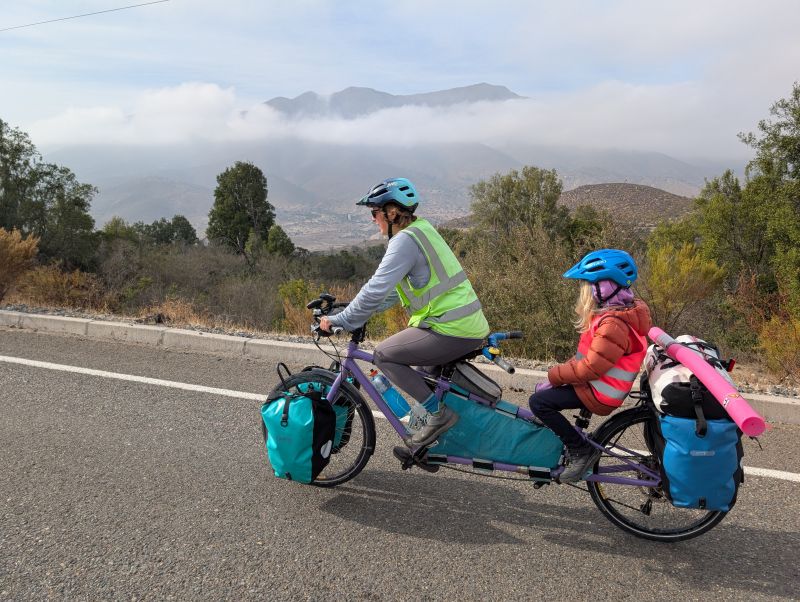
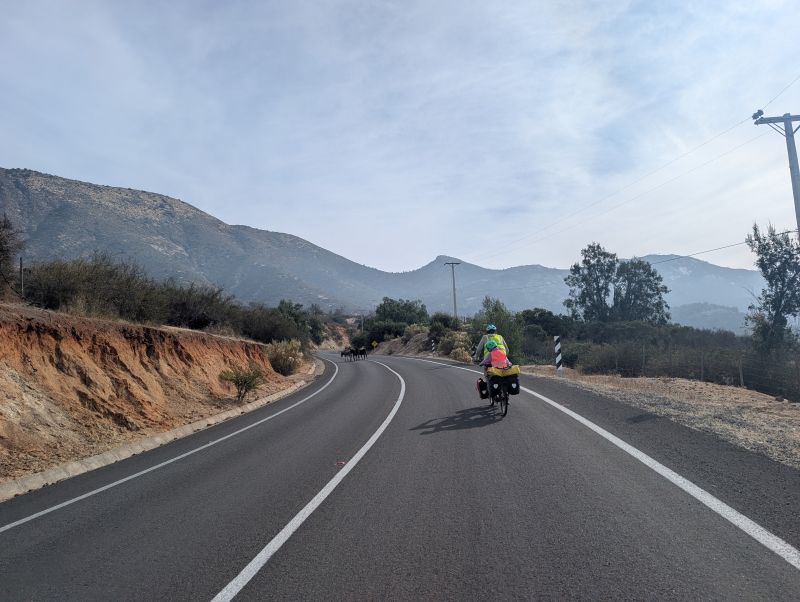
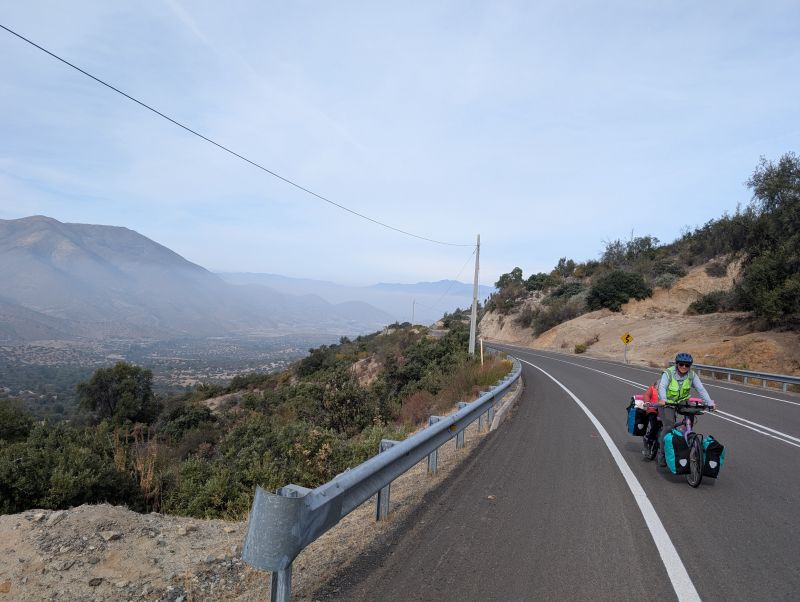
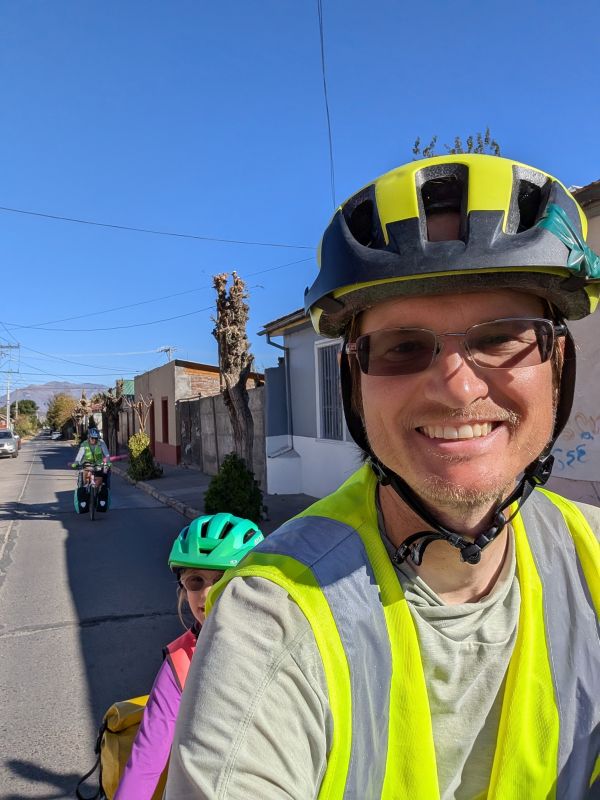
Riding Chile’s tunnel route: Cabildo to Illapel

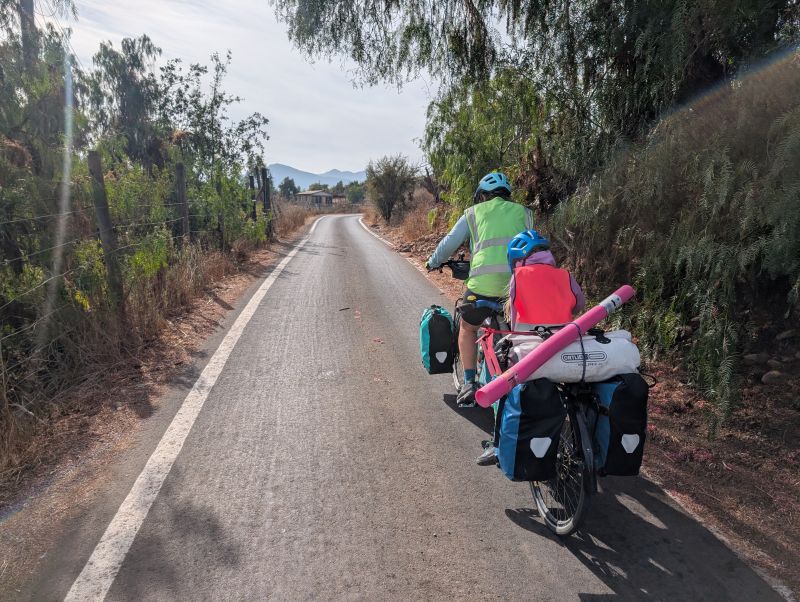
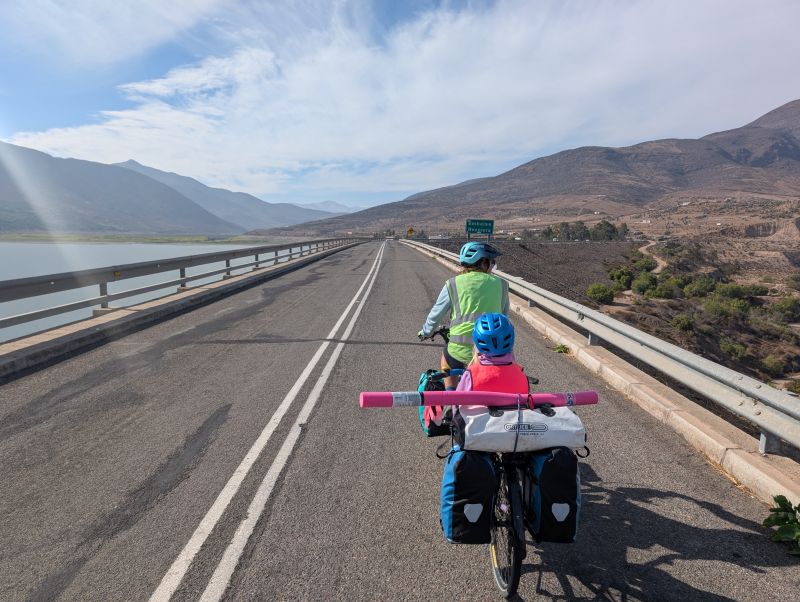
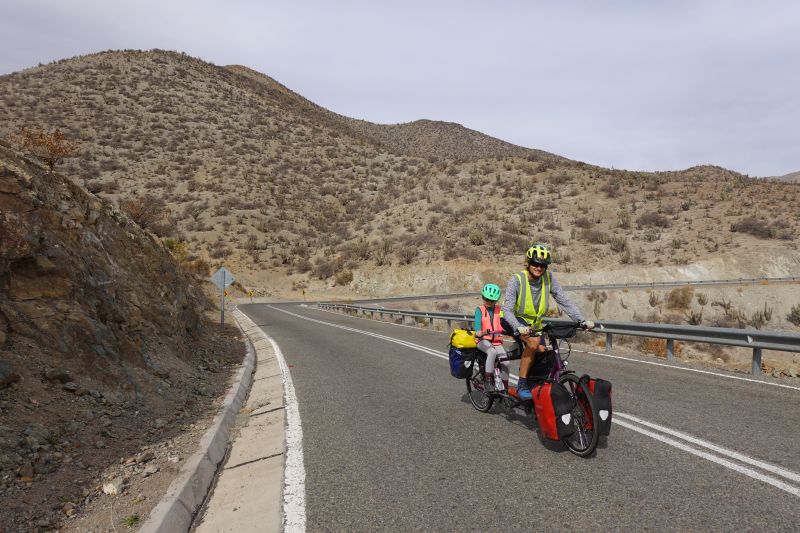
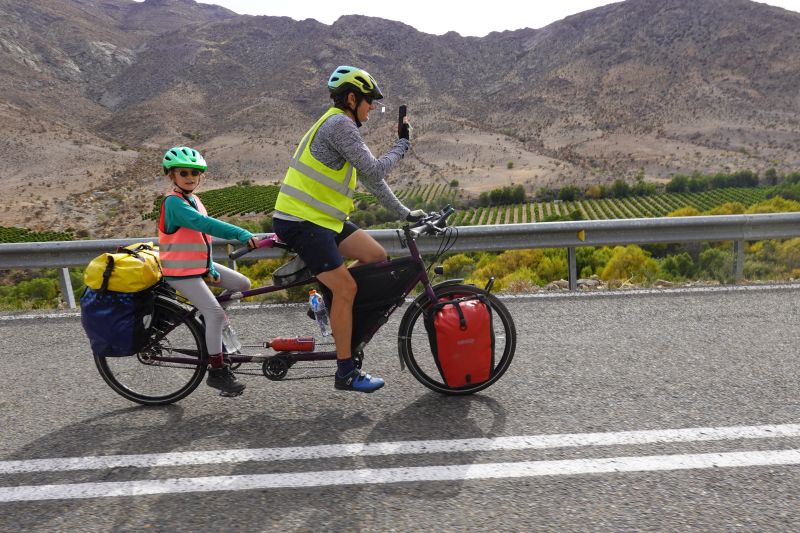
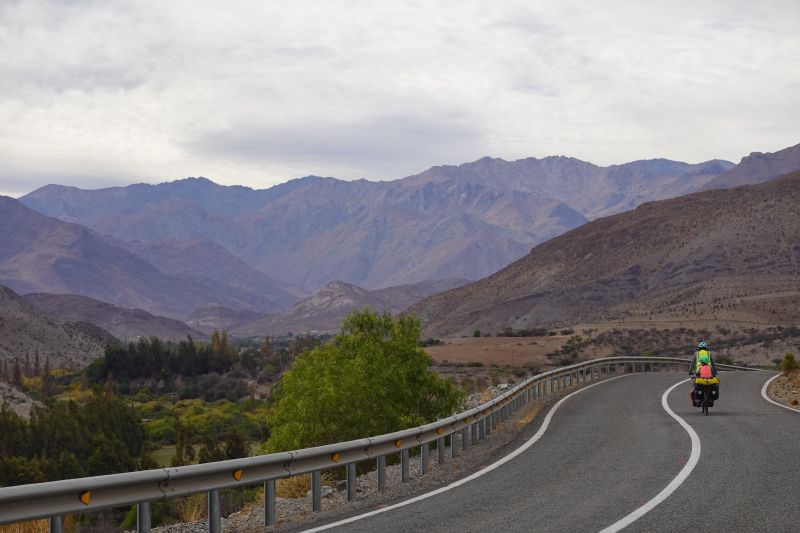
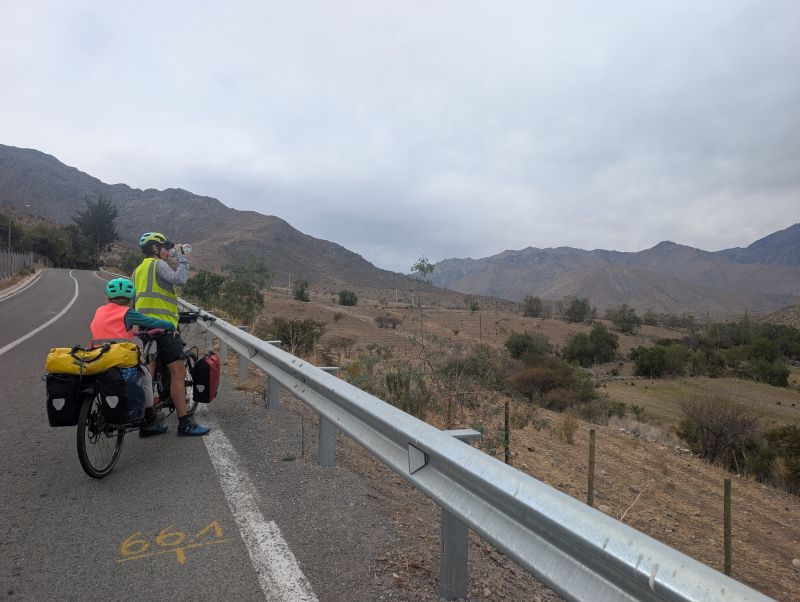
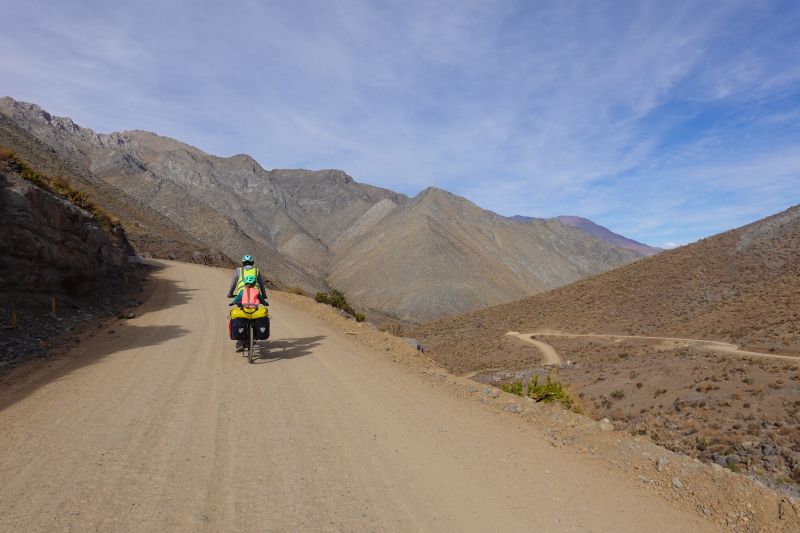
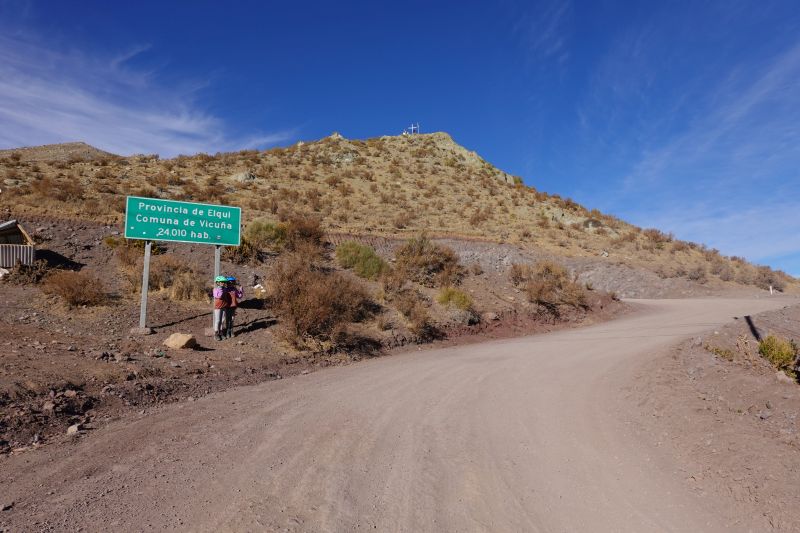
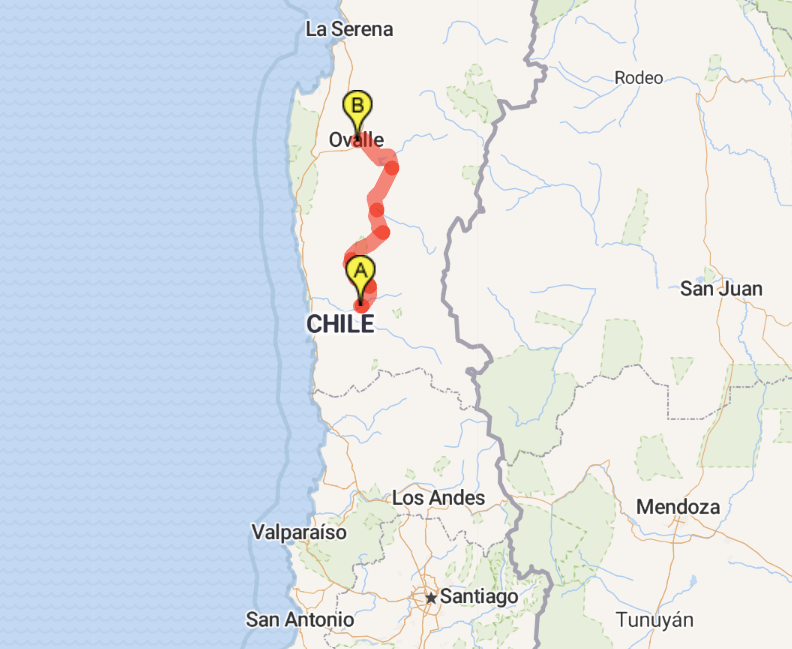
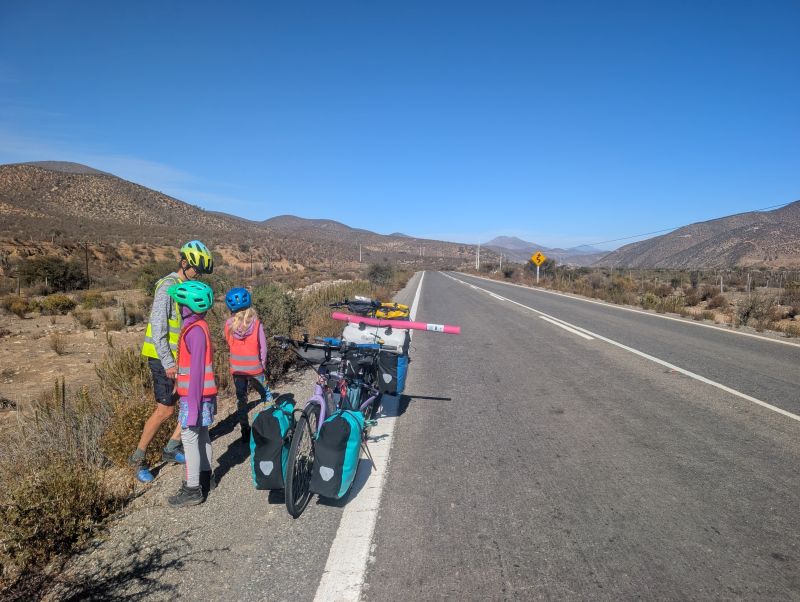
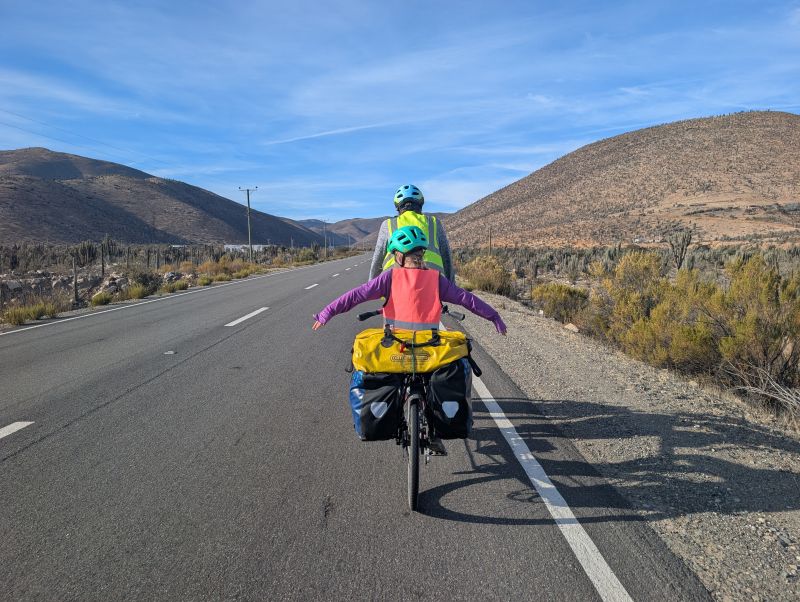
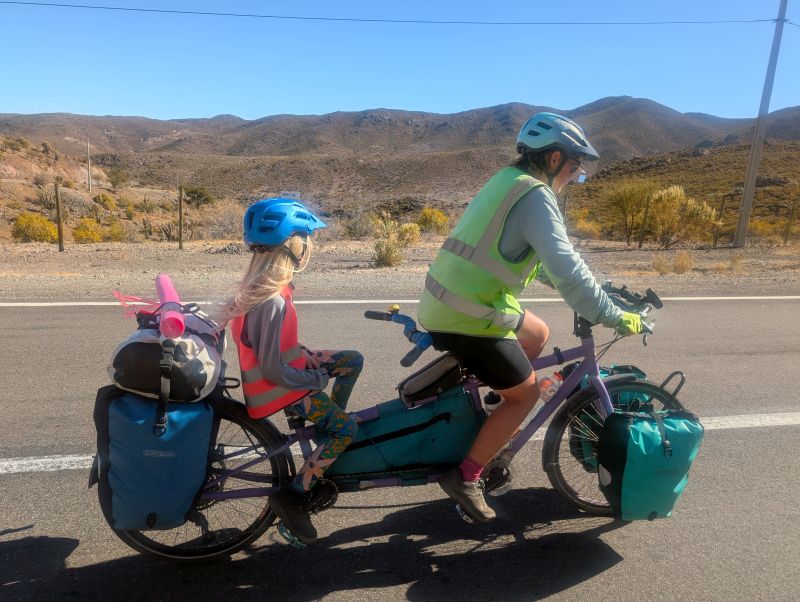
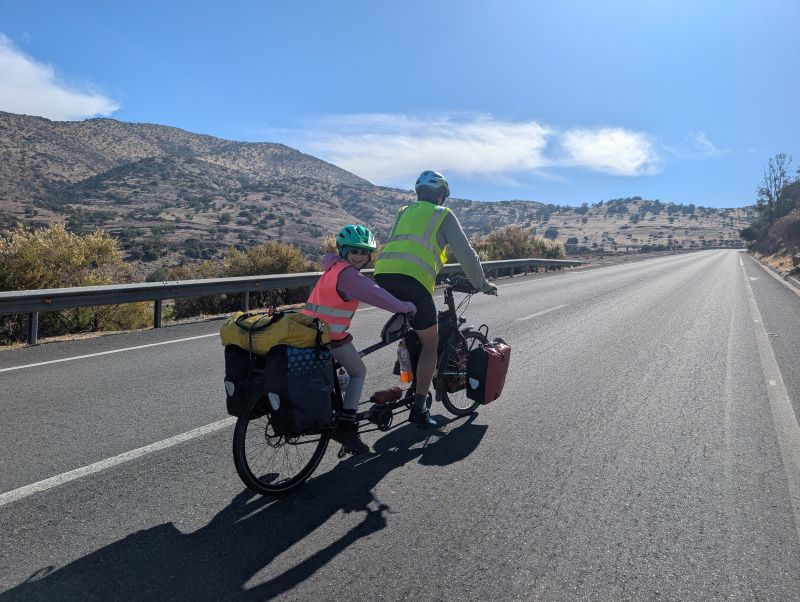
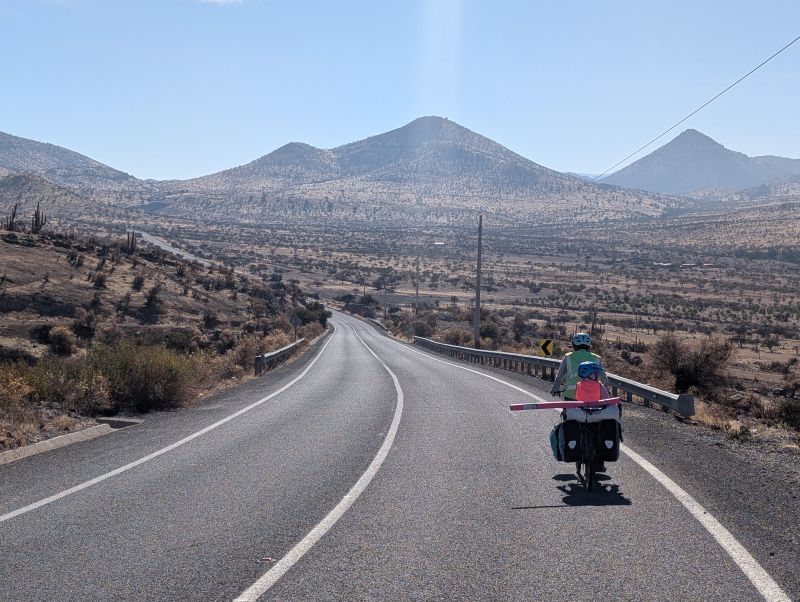
In this entry we spend four days riding the interior of Chile through incredible mountain ranges and along a historic rail route. We pass through tunnels carved through the mountains in the early 1900’s and still in use today. The four days felt much much longer, since each day involved a lot of climbing and most days we started out without knowing our destination. Without kids, it is absolutely typical to not know where our destination is. With kids… we try to know where we will end up most nights. They like knowing ‘how many kilometers more?’ and we like knowing there is food and water awaiting us at a set location! But in any case, we had a spectacular time. Here is the day by day.

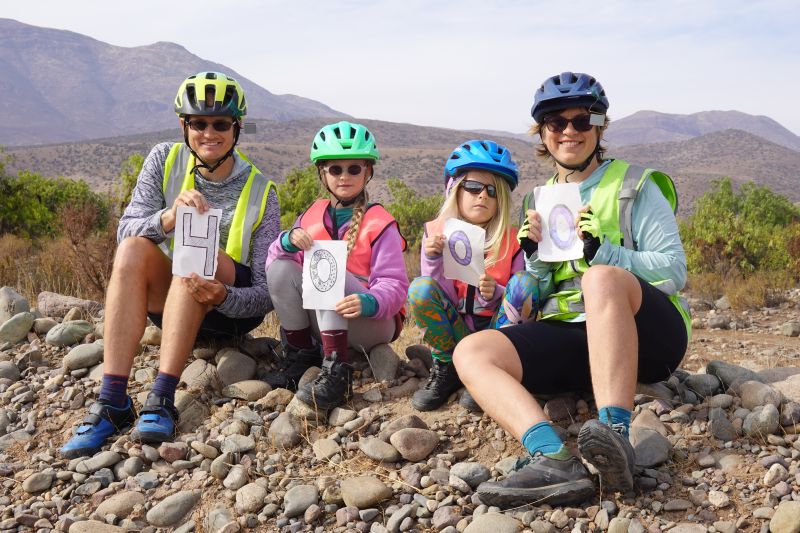
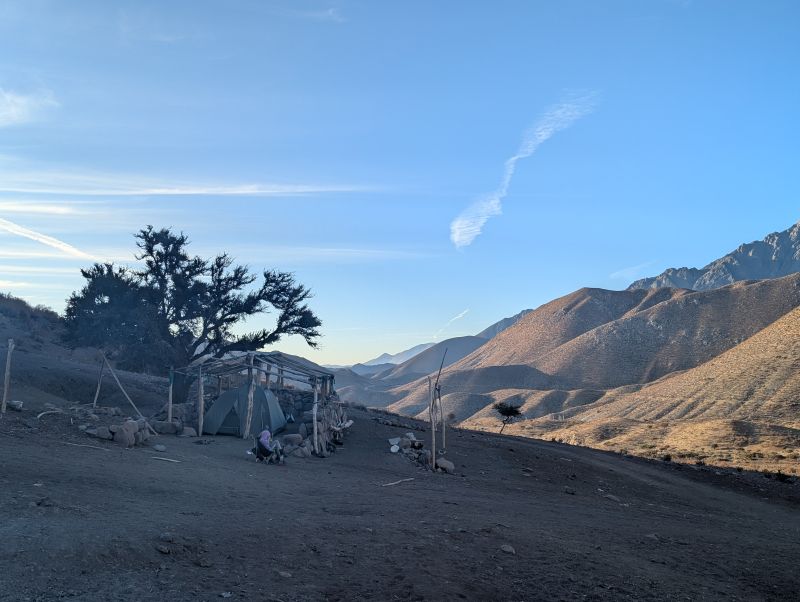
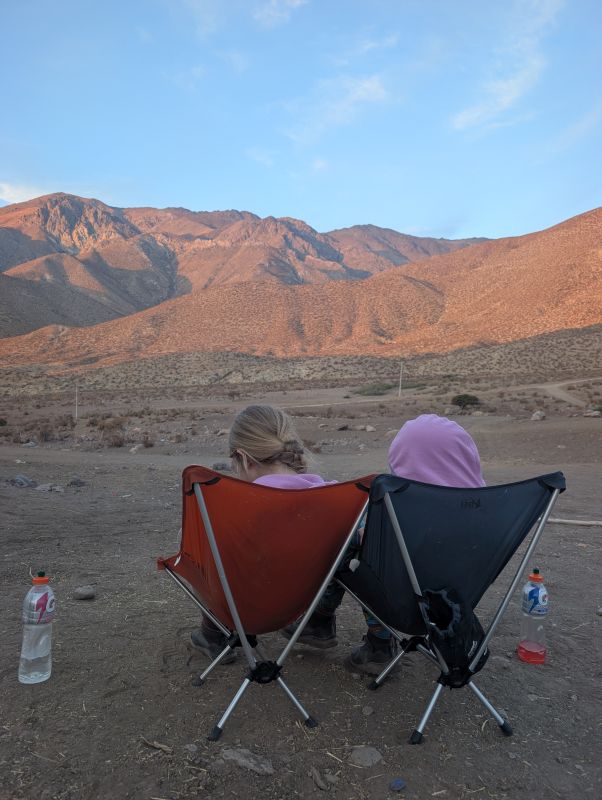
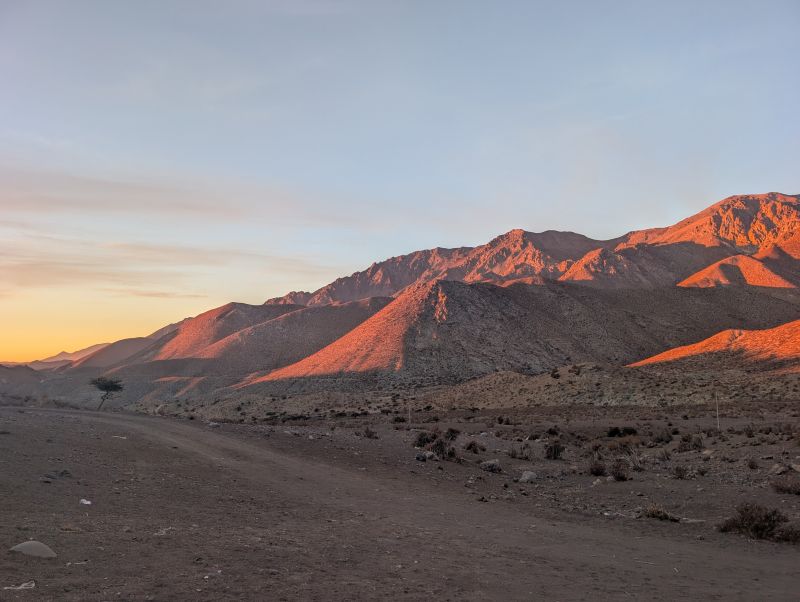
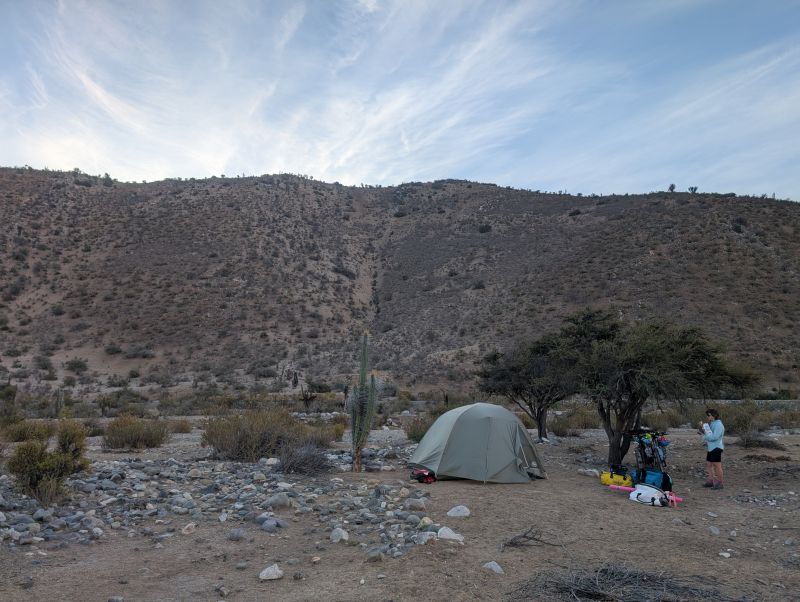
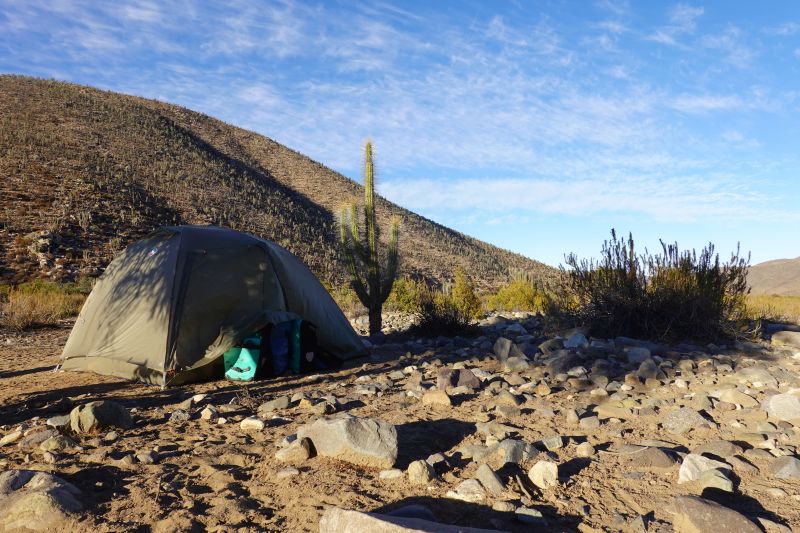
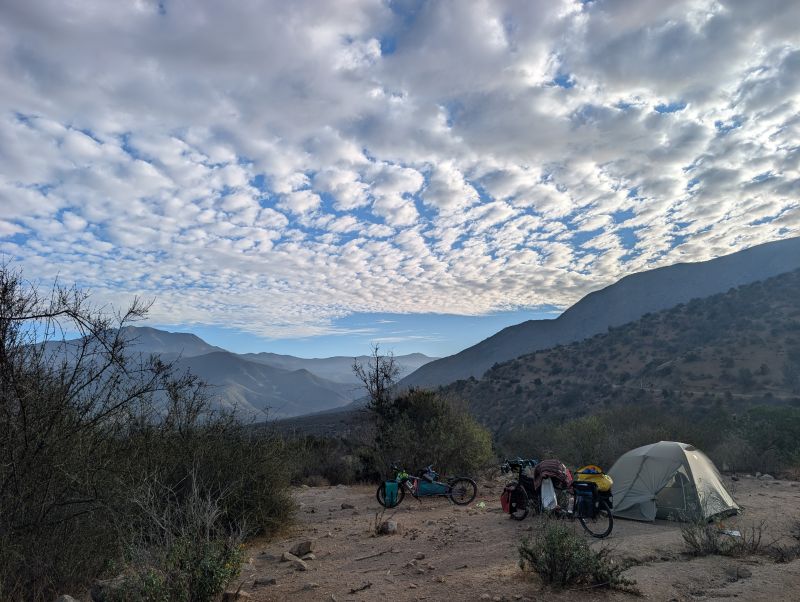
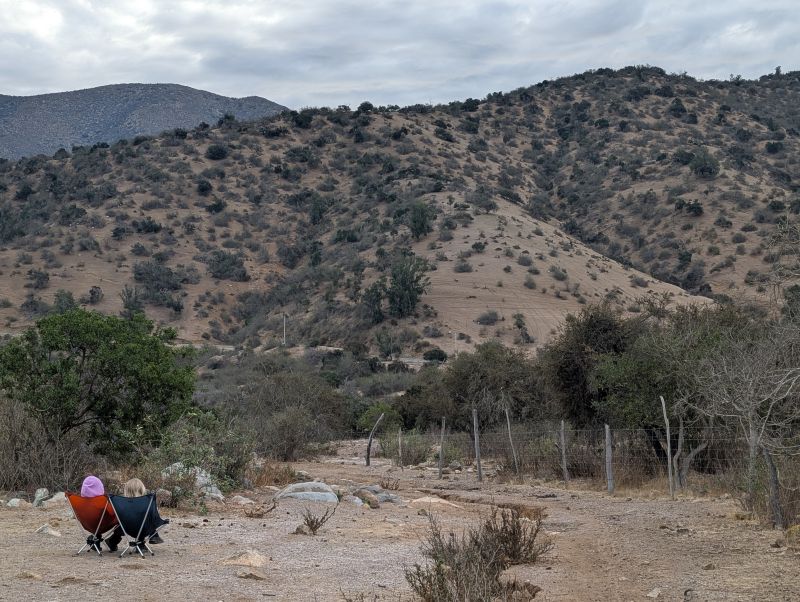
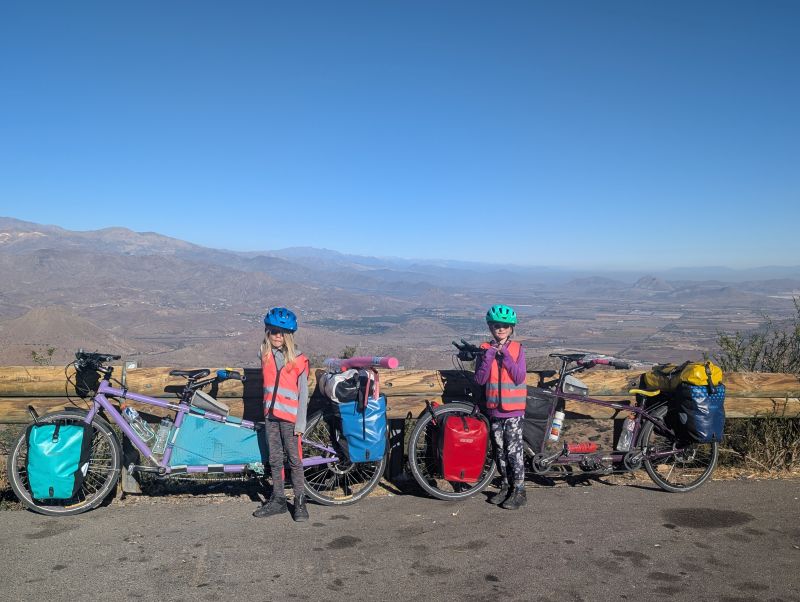
One of our wonderful wild campsites

Day 140: Cabildo to Palquico (31 km / 19 mi)

We chose to make this a rather short and easy day for us, since the lodging and even the campgrounds further along the route were full. The route is also very… slanted… so finding a flat campsite on our own would be a challenge. Jason worked some real magic texting various places along the route. If one place was full he would ask if they knew anyone with an available spot. Eventually someone gave him the number of the owner of a small minimarket that also had a small camping/party area nearby!

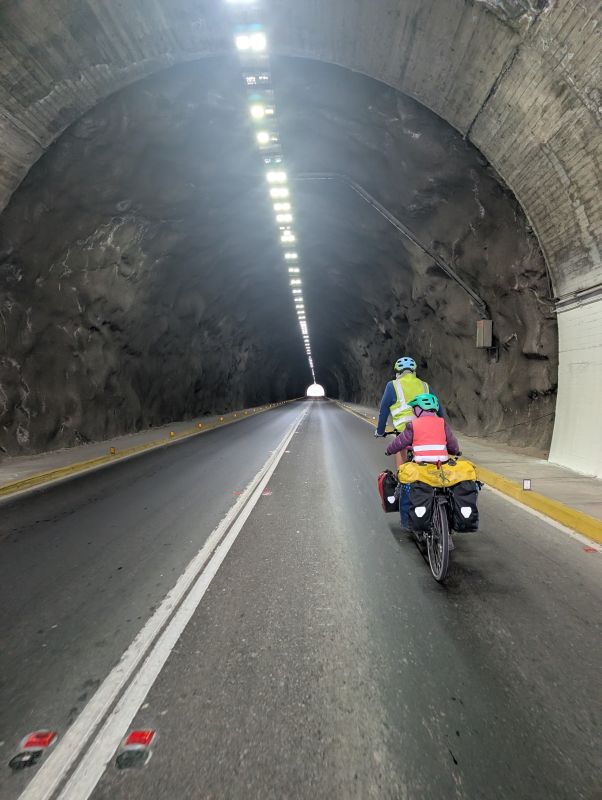
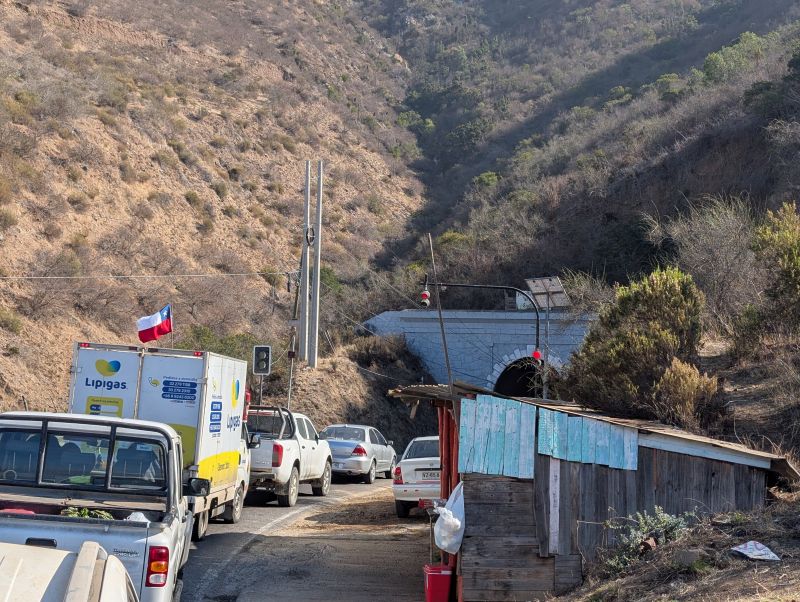
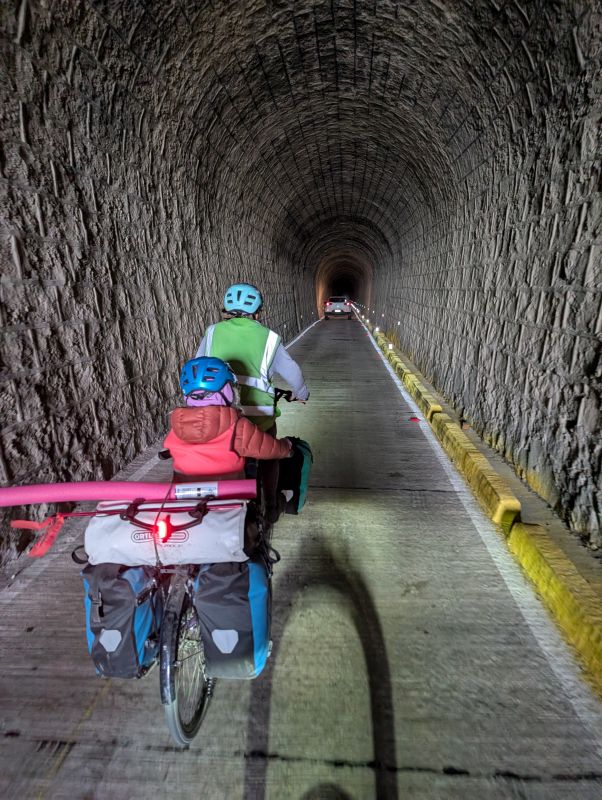
Anyways, back to the day. We dragged ourselves out of Cabildo and right away started climbing up to our first tunnel. The opposing traffic came through in bunches, which makes sense because the first tunnel was just above us. It’s a one-lane tunnel so a traffic light controls which cars go through. It wasn’t long before we were waiting at the traffic light too. We waited out a cycle to make sure we had cars ahead and behind us who were on board to make sure we didn’t get run over, then when the light turned green we entered the dark tunnel.

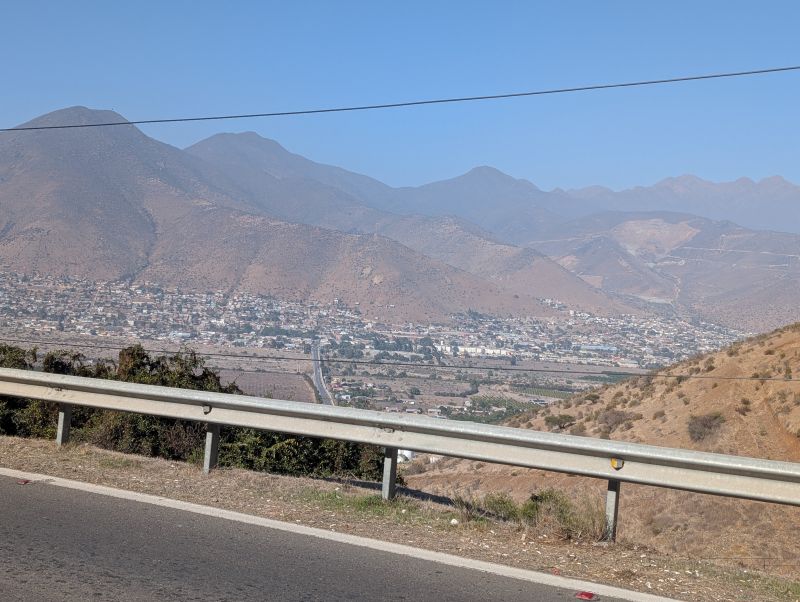
Looking back down to Cabildo before entering the tunnel. It was much larger than we initially expected
Tunnel entrance

It was really dark! It was really long! We were racing through as fast as we could to make it in the designated amount of time. At first it was slightly uphill, so it felt impossible, but somewhere in the middle it changed to downhill, so by the end we were flying through the tunnel. On the other side we were delighted to see that the opposing traffic still (just barely) had a red light!

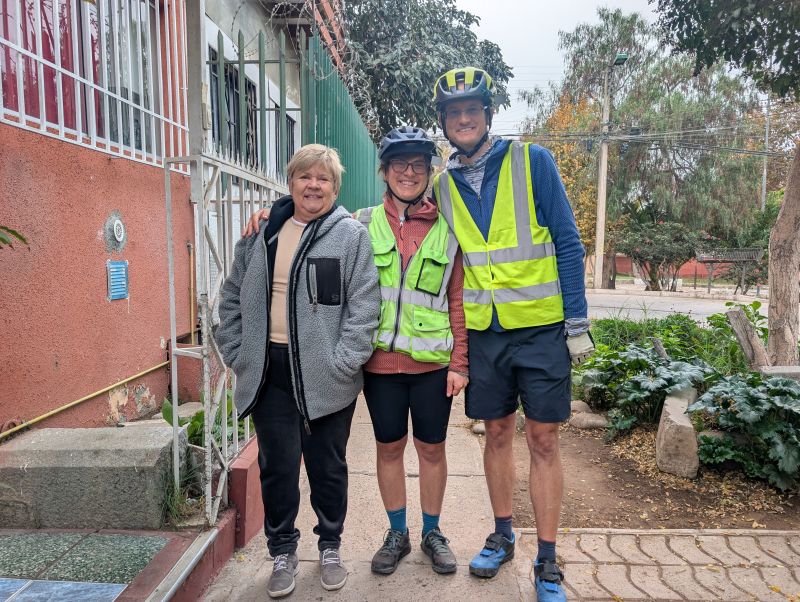
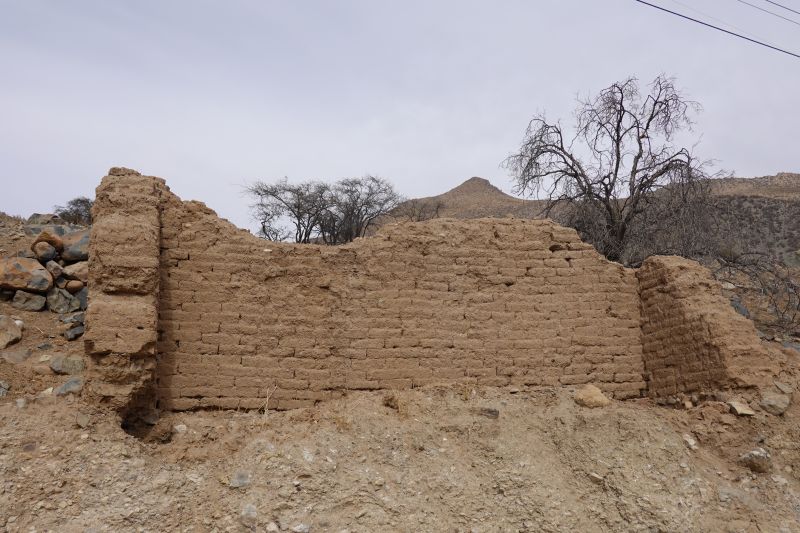
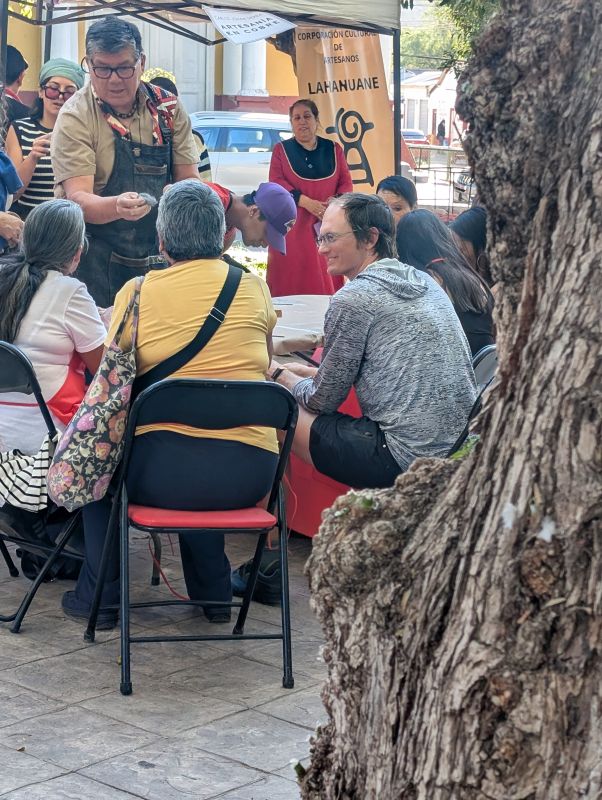
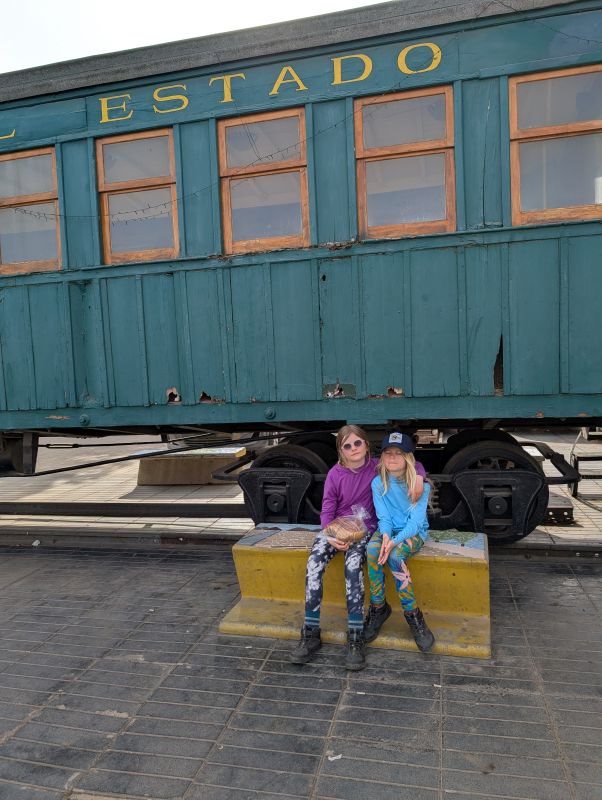
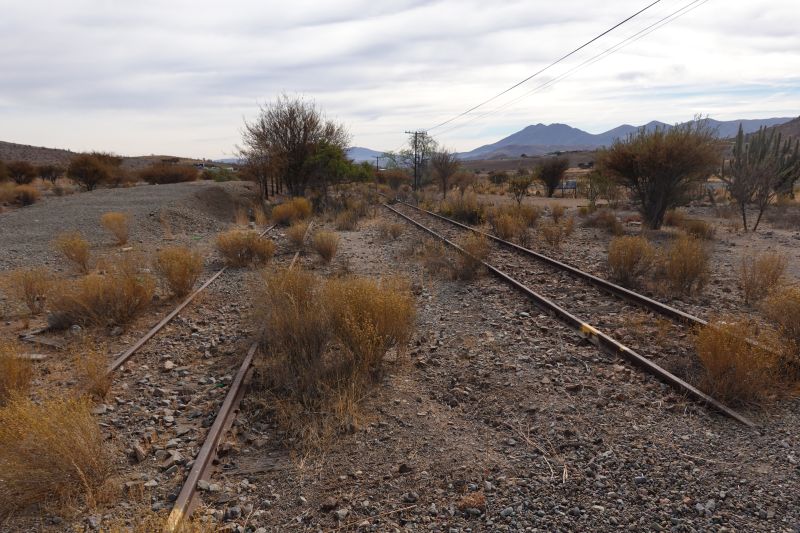
From there we descended quickly into the next town, then we cruised along a lovely valley with a tailwind. We stopped in a small town for sandwich supplies, since the restaurants weren’t open yet. A nice man came by to chat with us in the plaza as we ate. He told us all about the mining in the area (lots!) and the fruit (lots!) and the water (not much anymore). The rail lines came through in the early 1900’s and left behind station buildings and tunnels. Now the entire region is tourism and mineral extraction.

A conversation while waiting for lunch sandwiches

After lunch we pedaled away and up the next valley. It was easy, lovely riding on a quiet road. In the ‘town’ Palquico, which was more like an intersection, we found the minimarket (actually a small shack with just a few goods) that also would let us stay in their nearby camping/party space.

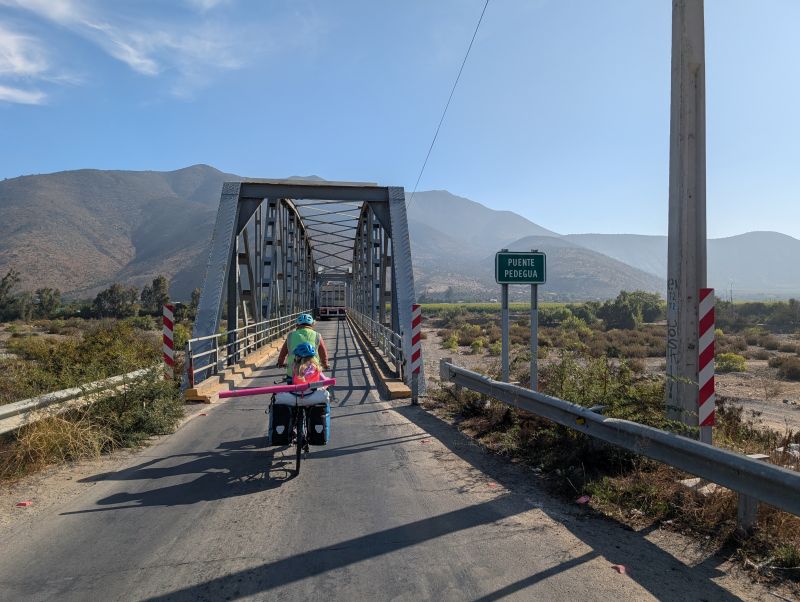
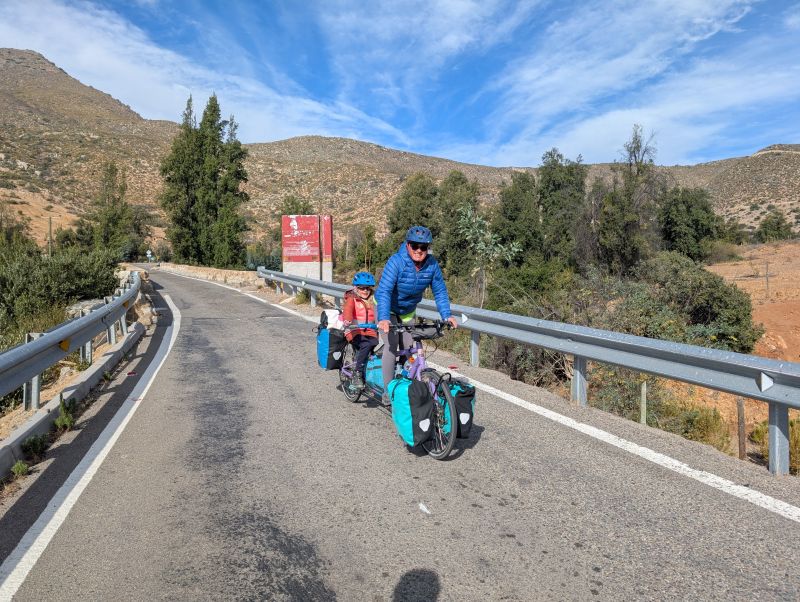
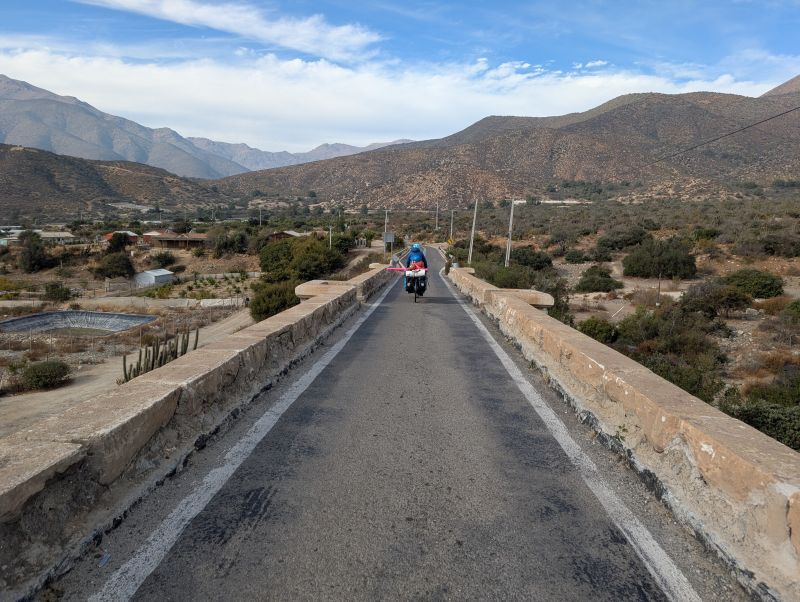
Some of the bridges are one-lane in this region
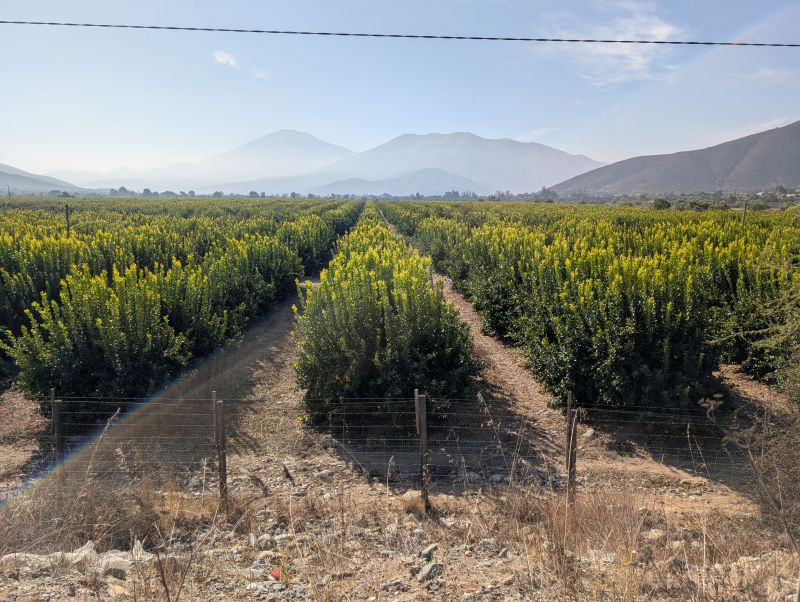
Lemon tree farm
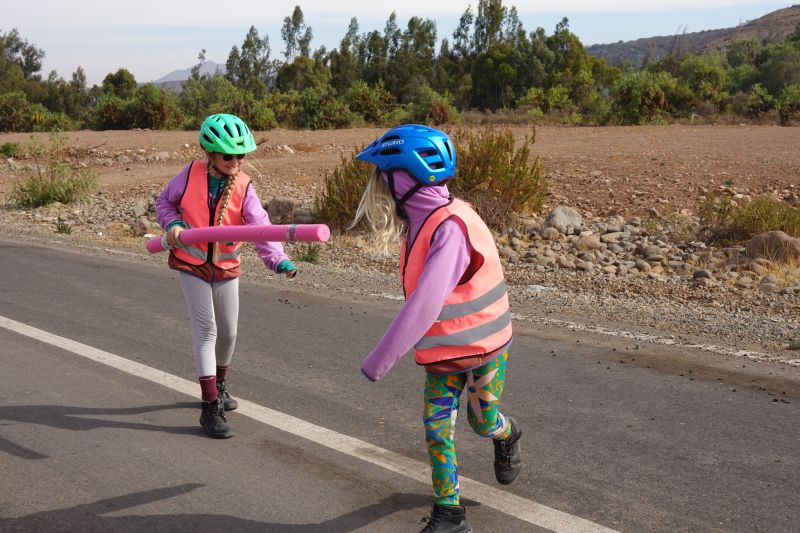
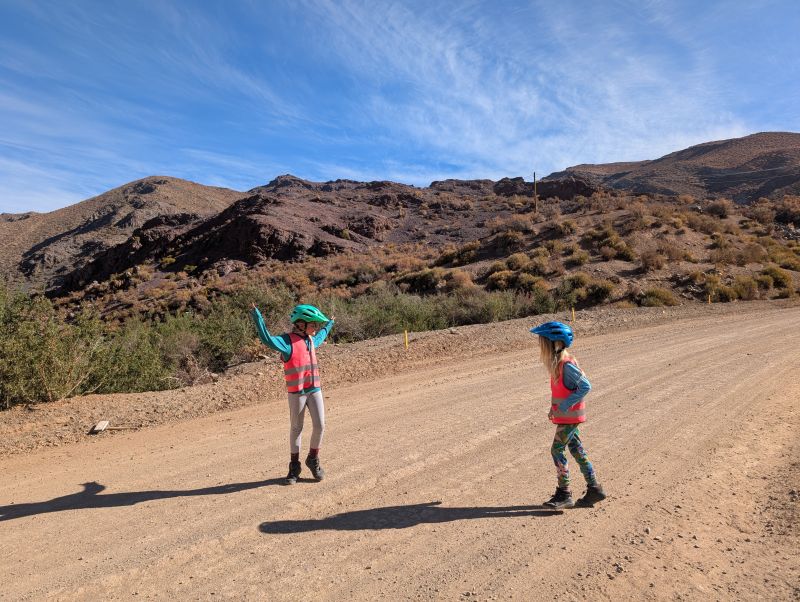
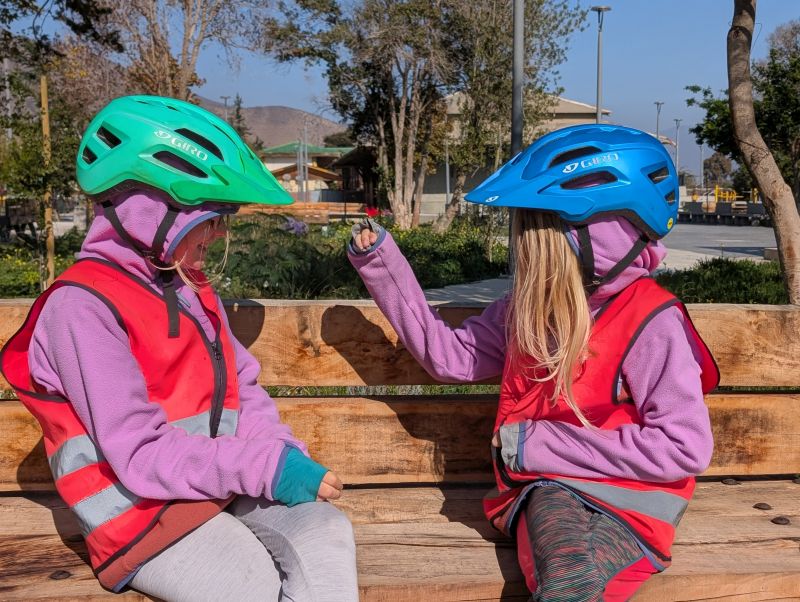
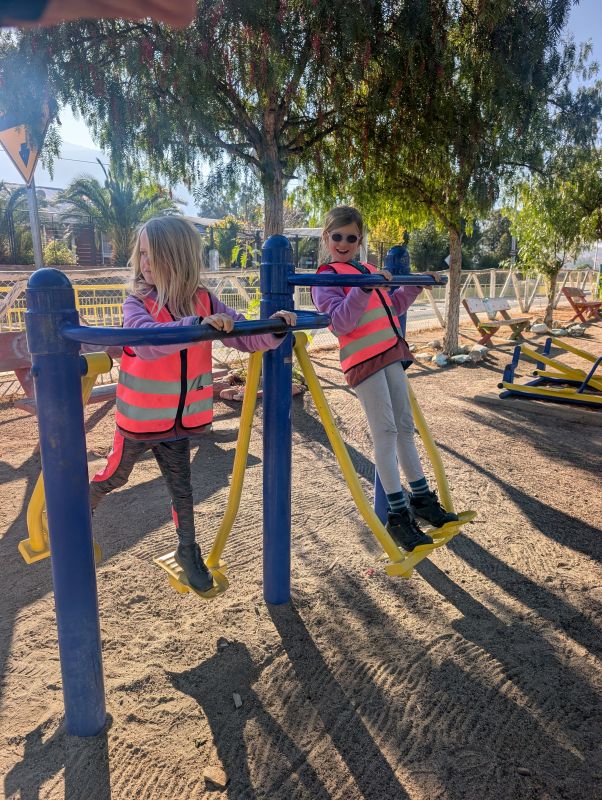
Arrived at our destination of Palquico, and of course the kids still have energy!

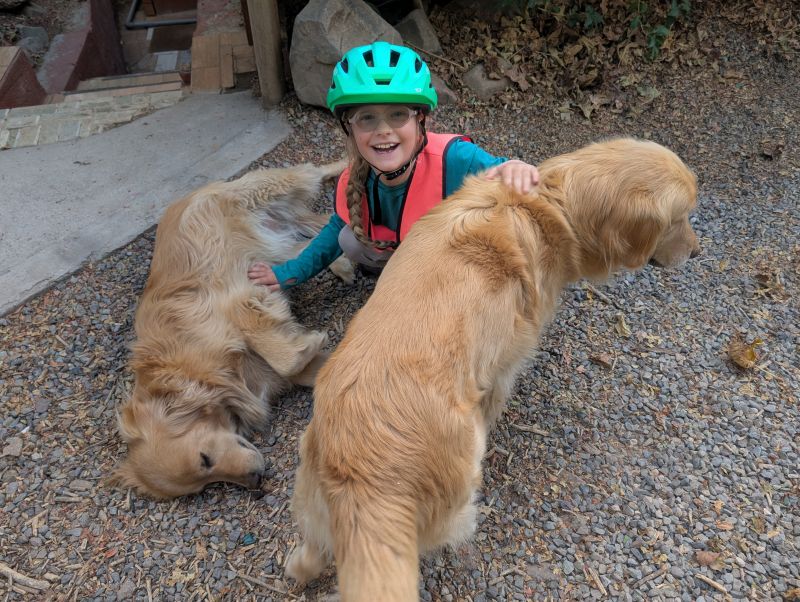
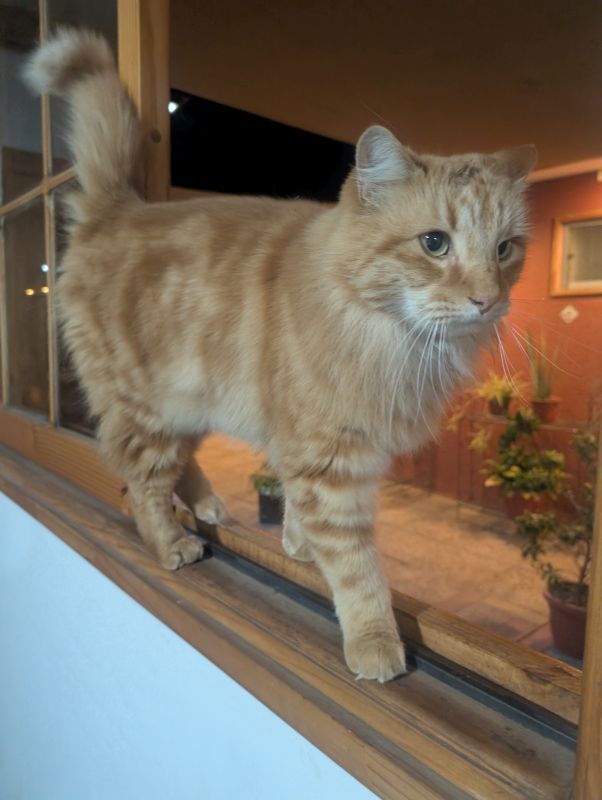
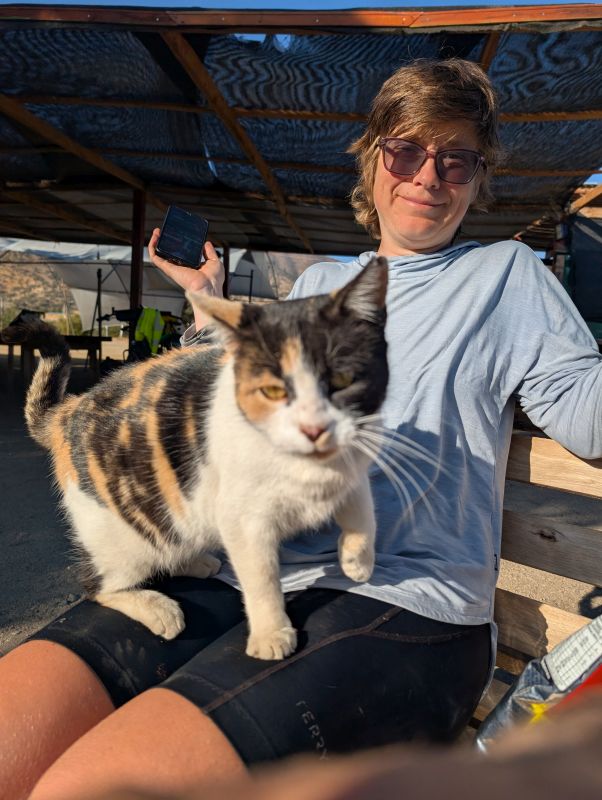
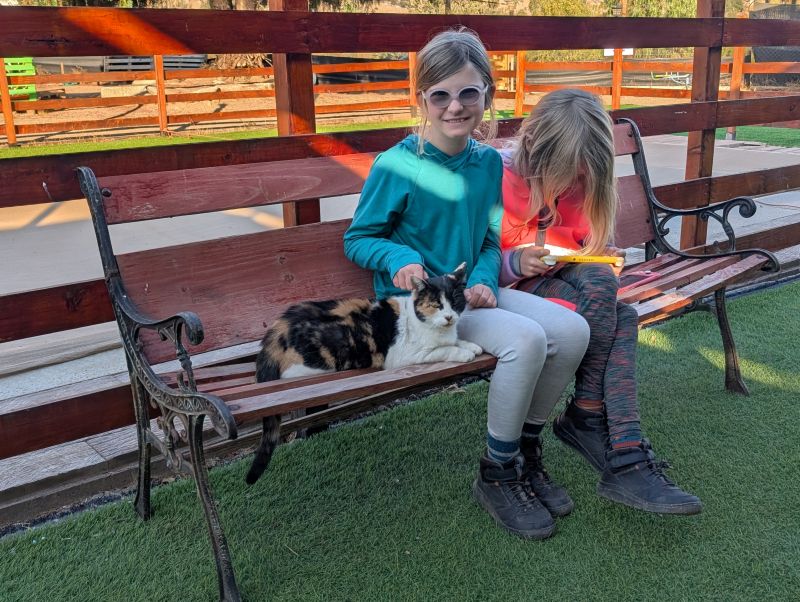
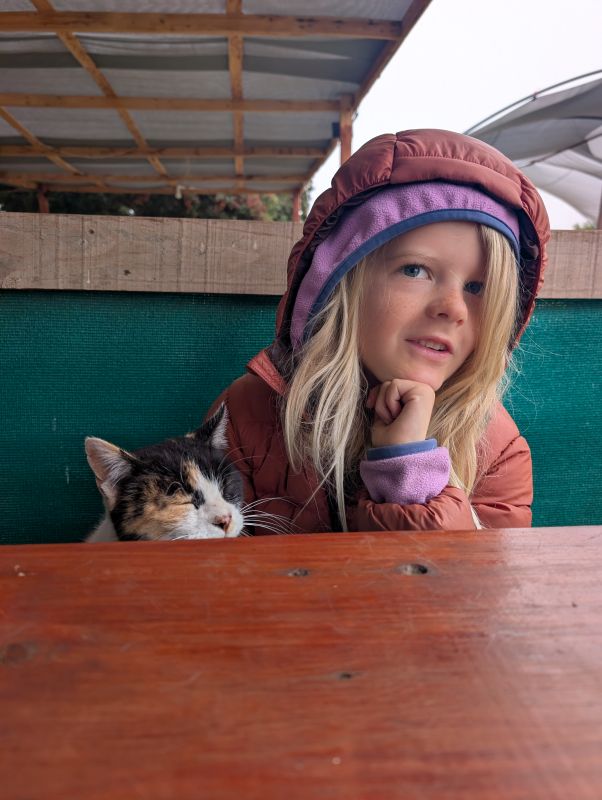
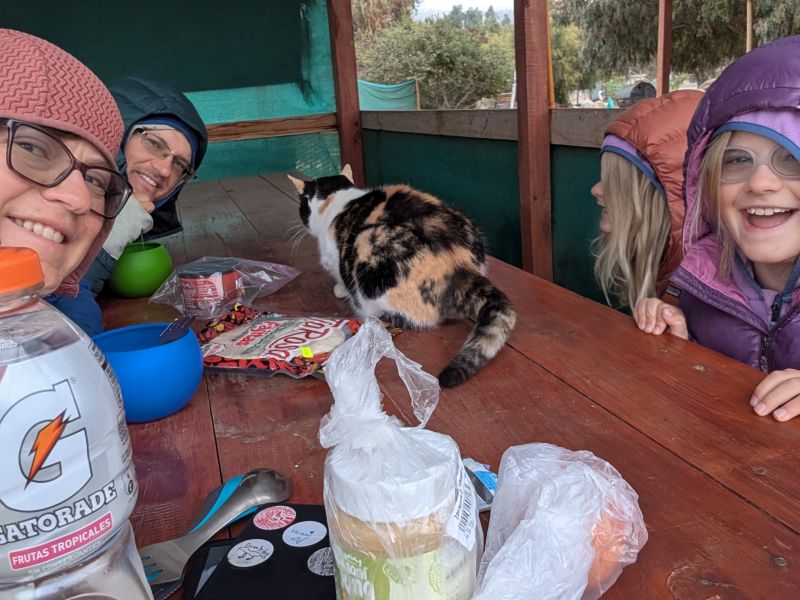
It was actually a delight! There was a large covered area with tables, an outdoor kitchen with lights and power outlets, and a bathroom with running water! We were in such good spirits as we set up camp. We ate instant noodles from the minimarket, munched on chocolate, and peeked at the goats and dogs next door. The dogs barked and barked. Three very friendly cats begged us for scraps, sometimes hopping into our laps to get close to the food. One of them peed on the tent (rude!). There were over a dozen barking dogs as we laid down, but somehow we still slept soundly all night long.

What is up with this cat!?
Yes, it is very friendly
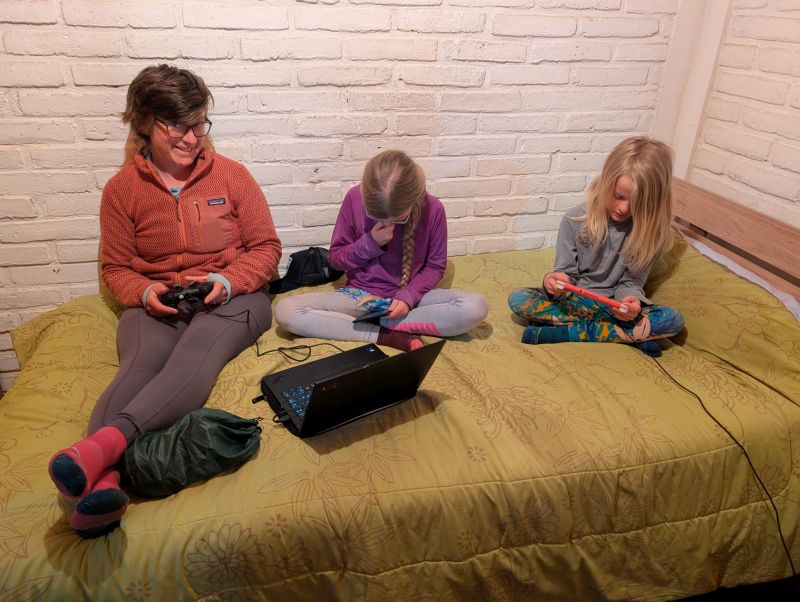
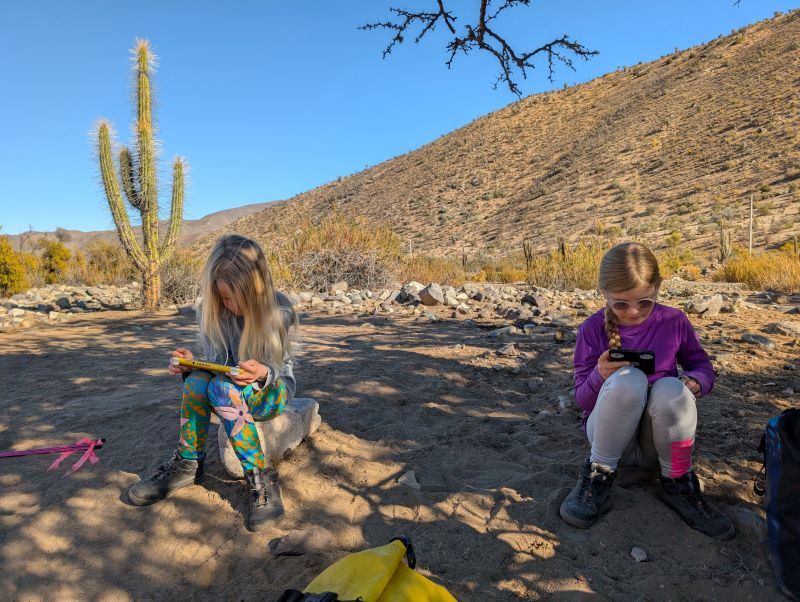
Game time in the tent

Day 141: Palquico to Tilama (25 km / 16 mi)

When we awoke the whole valley was covered with thick, low clouds. We couldn’t see the road above us or the mountains next to us and it felt cold. The only logical thing to do was wait. We ate a slow breakfast and packed up the tent. The clouds retreated just a bit, then a bit more. Eventually they were far enough away that we could confidently ride.

The cat is back in the morning
OK, cat, now that is just ridiculous!
Getting started while the clouds/fog is still low

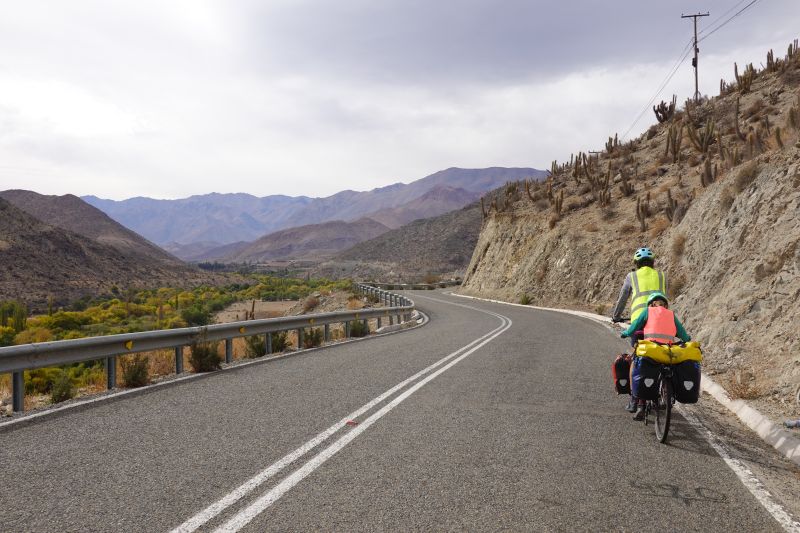
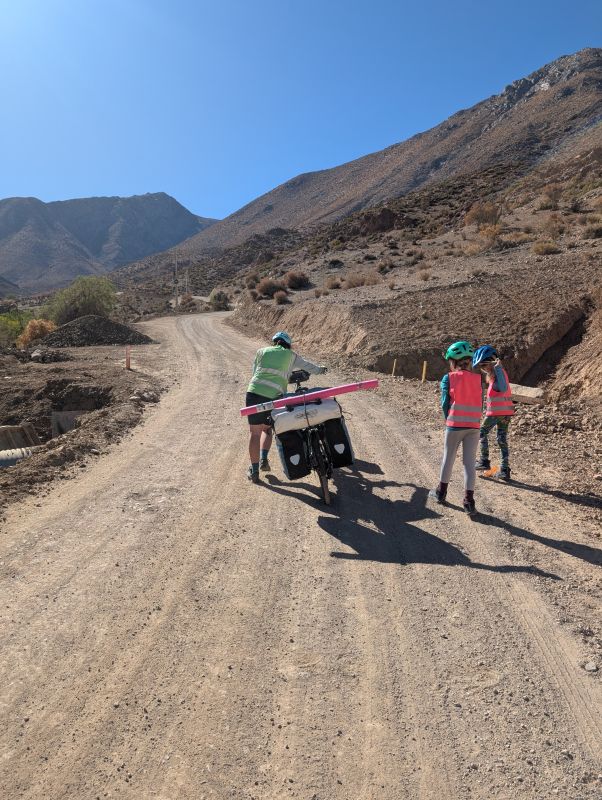
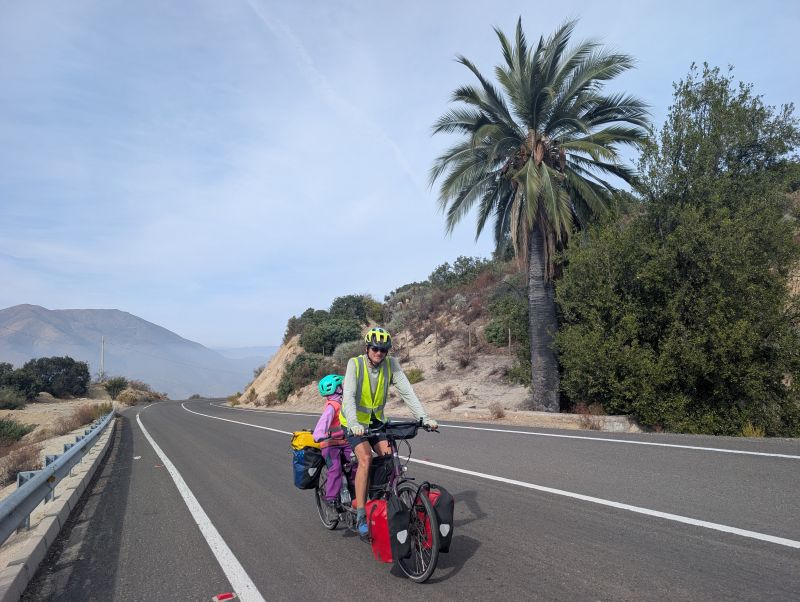
All morning we climbed. Slowly, for the most part, but the grade was gradual enough that we didn’t have to push. As we climbed we noticed more and more plant life. By the time we were nearing the high point of the road there were trees and bushes all around us. There were many Chilean Palm trees in the valley, which was a delight. These trees have teeny, tiny coconuts as fruit!

Going up from Palquico
Climbing
Jason, A, and a Chilean Palm tree

At the top of our climb was another tunnel, this one over a kilometer long and controlled by a shorter stoplight. We flagged down a passing truck and asked the driver if they would go ahead of us at the next light, then stop on the other side and make sure no one else entered until we had exited. The driver was happy to help! With this extra reassurance we really enjoyed the long tunnel this time. It was dark and full of echoes, and at the end there was a bit of a waterfall from the side of the tunnel!

Another tunnel

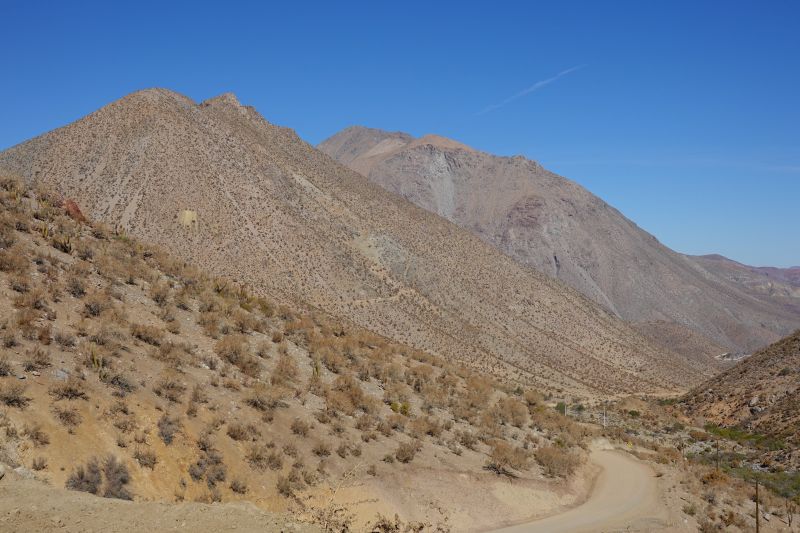
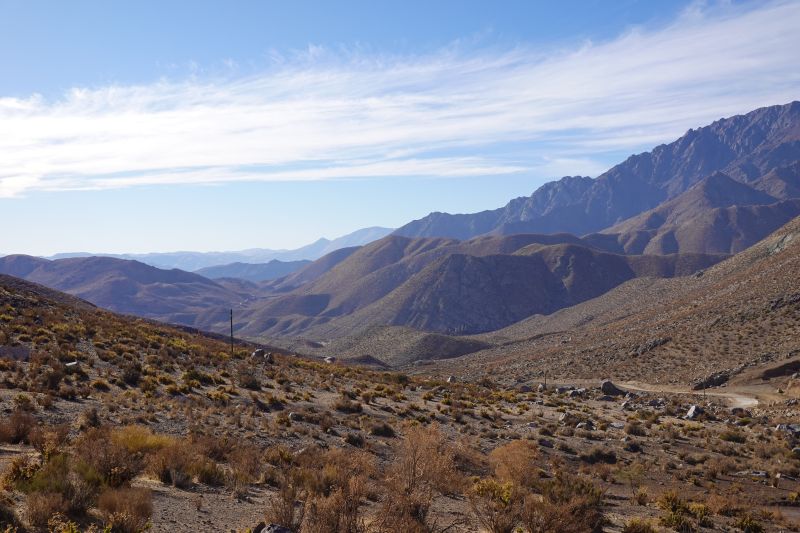
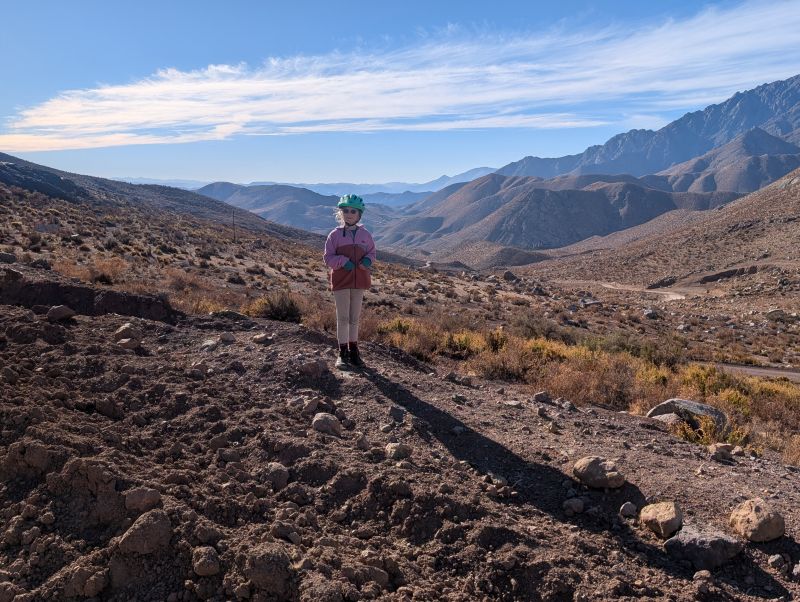
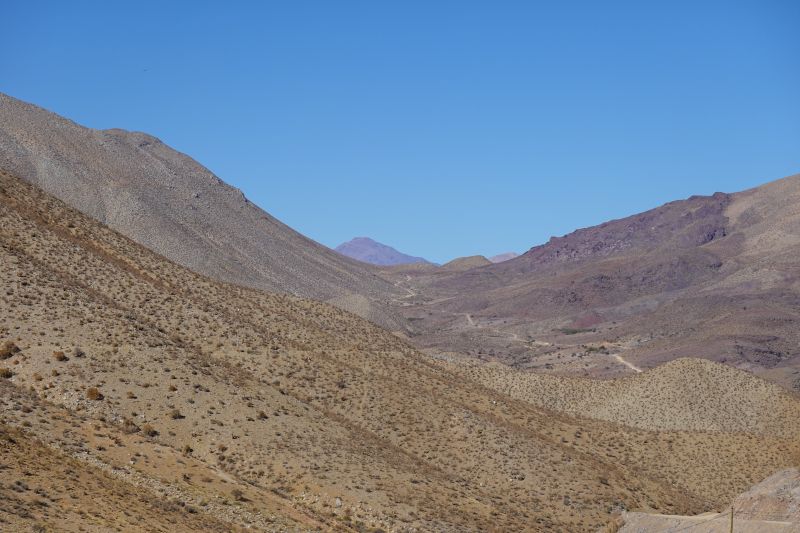
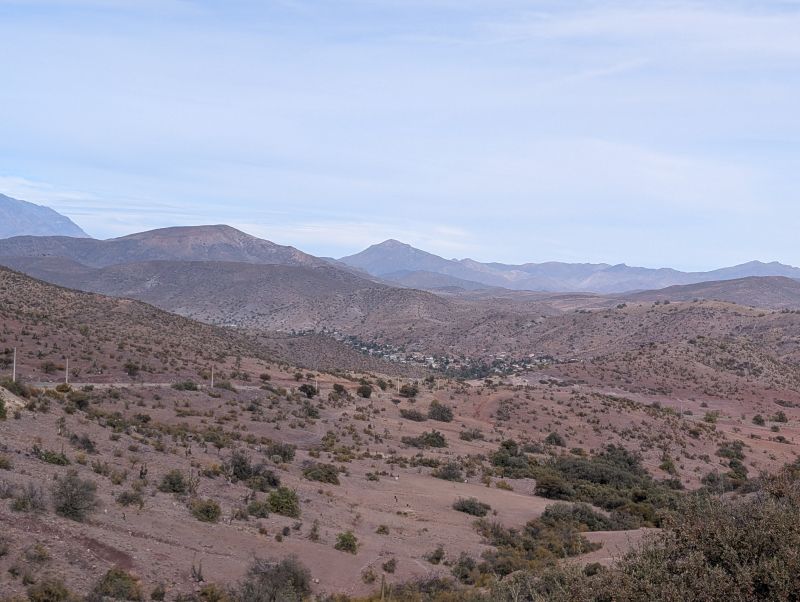
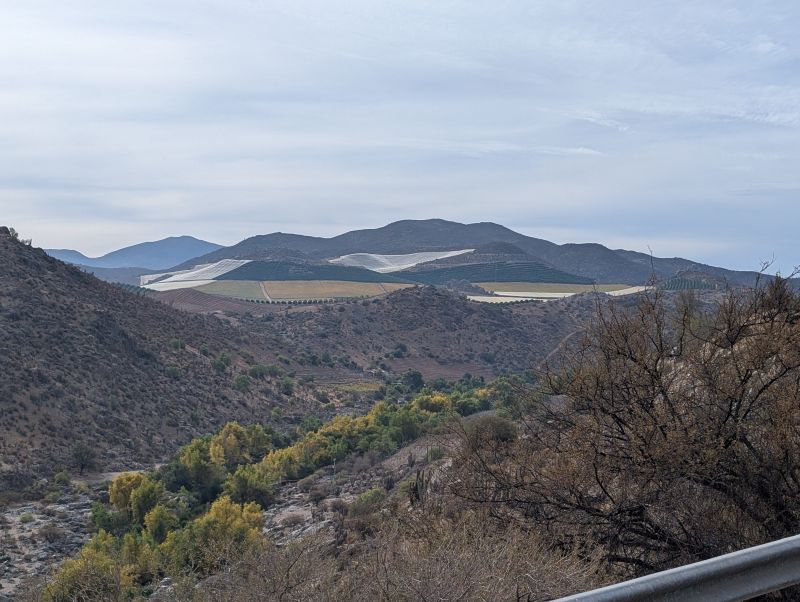
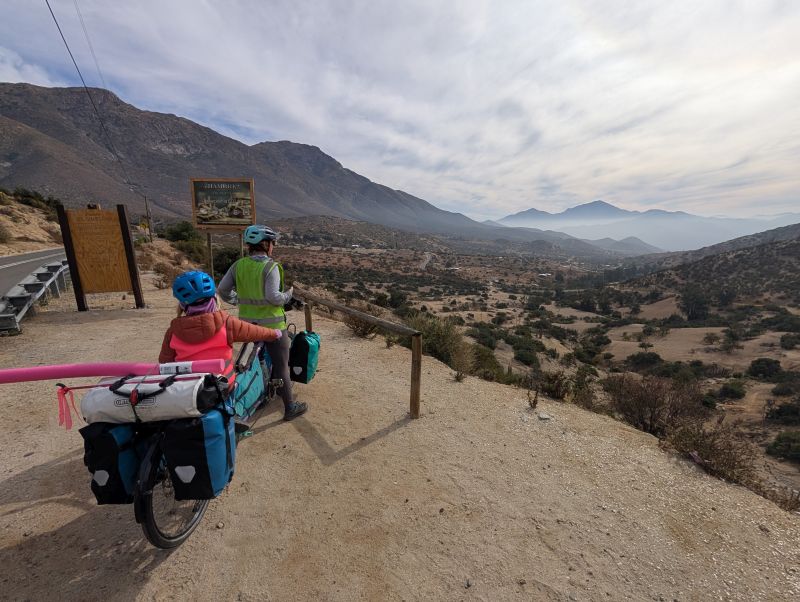
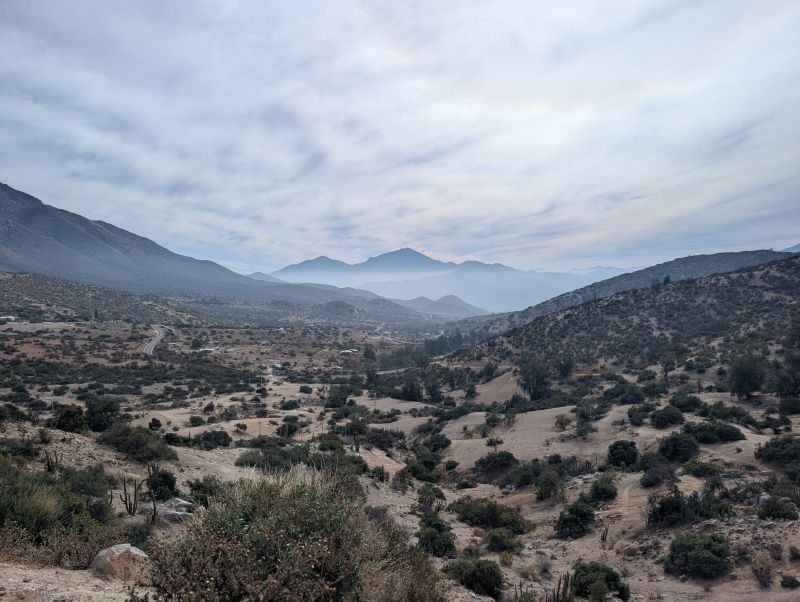
We emerged into a bright day, a new valley, and a spectacular view. Each time we climb from one valley to the next we are greeted by mountains that are just a teeny bit drier. This time the view was truly spectacular.

Looking into the new, slightly drier valley

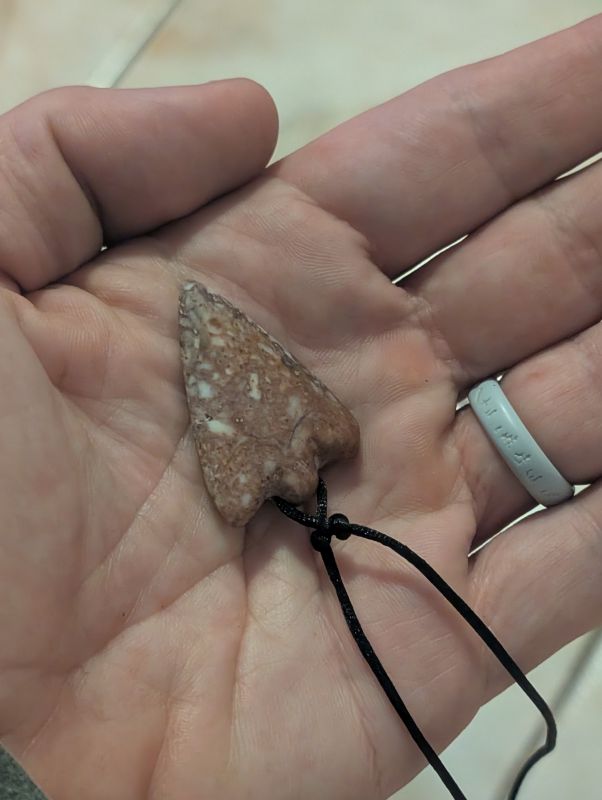
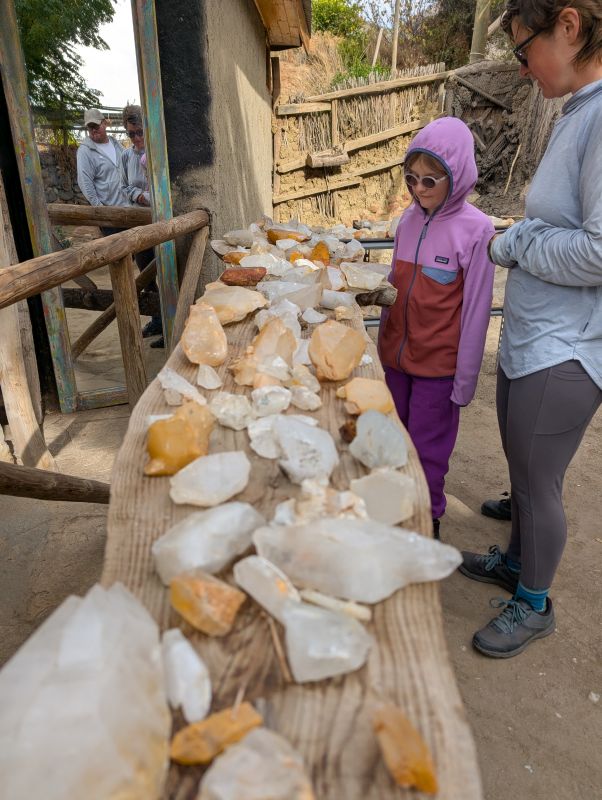
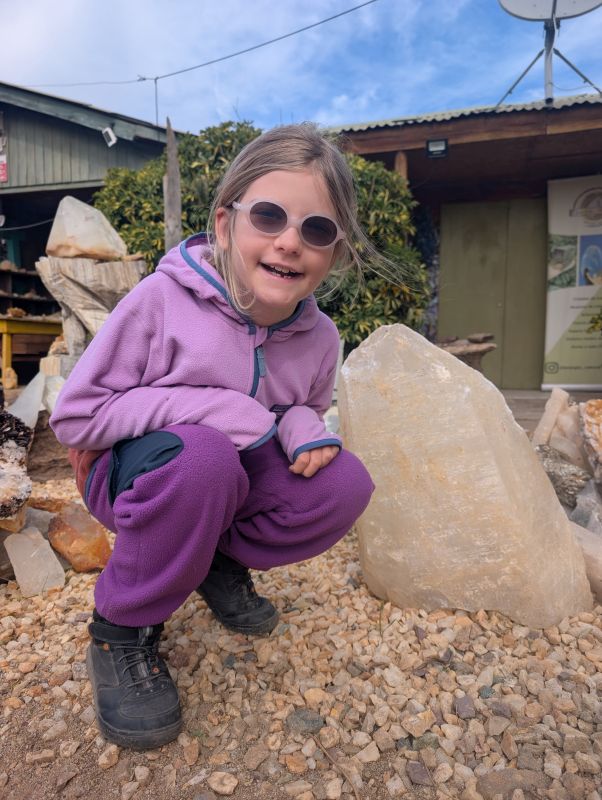
The road descended just a bit to a little shop selling sandwiches and quartz crystals. We were cold and hungry, and the owners there were so kind to us. We ordered drinks and sandwiches, and when the noticed how starving the kids were they brought us slices of apple cake. They also gifted the girls some quartz crystals, which is so sweet and kind but also now we carry rocks I guess.

Checking out the quartz rocks
I think A might want to take this one…

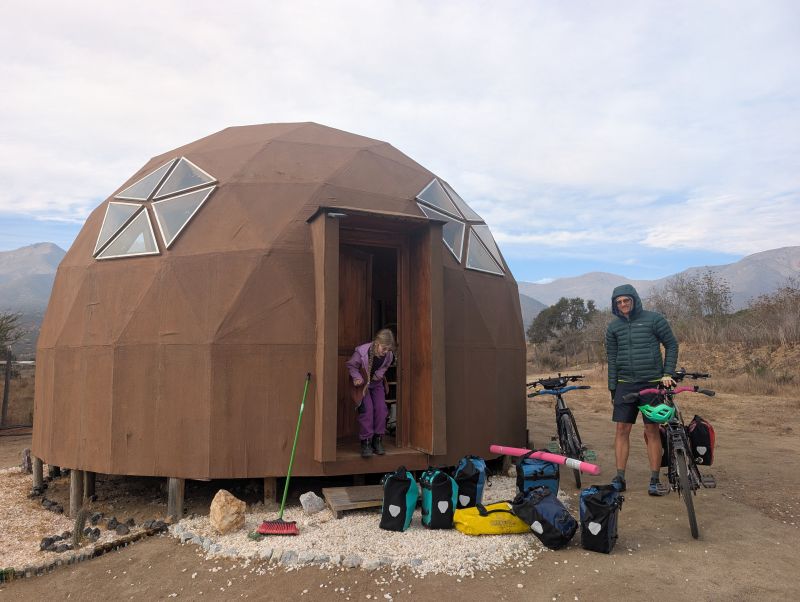
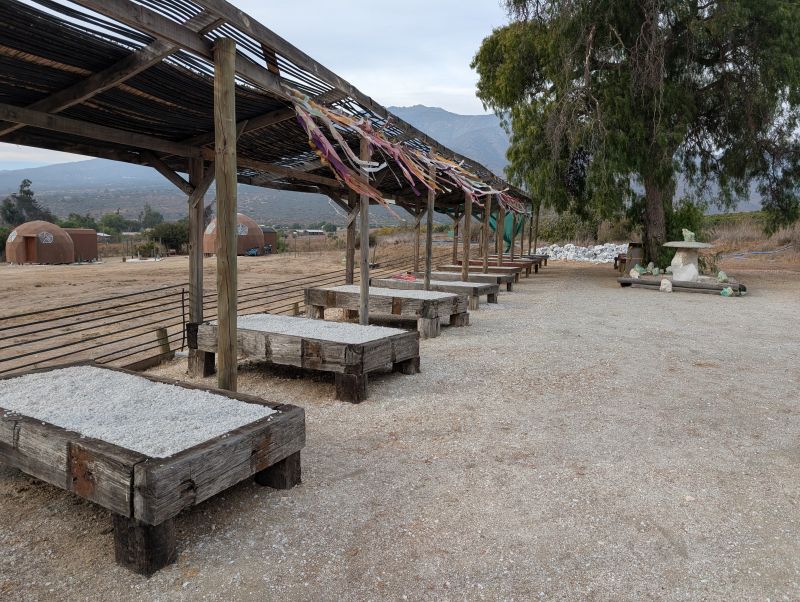
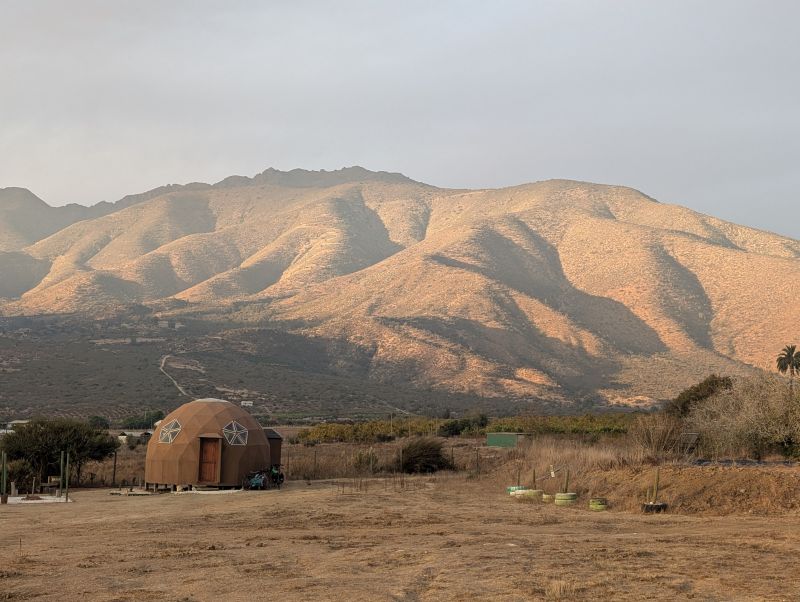
We zipped down the mountain, which was truly magnificent. There were big vistas and little one-lane bridges over a dry creekbed. In the ‘town’ we saw a small sign for a campground, which also offered geodesic camping domes. We followed a dirt track to a big field with quartz beds, a restaurant full of Chilean tourists, and two domes. We were absolutely delighted when we were allowed to rent the big dome for the night.

Coming down the mountain. In down jackets
Another one-lane bridge, presumably created for the railroad 100 years ago
Our dome, with two beds
This is what quartz beds look like. We were told that they have good energy

While the girls rested, Jason and I went in search of food. This town is so small that there is only one place to buy food. When we rang the bell an older gentleman came out and told us the owner was at mass and that we’d have to come back in a couple hours. Then he proceeded to ramble on about all kinds of interesting topics, including his aunt that moved to DC to work at the Chilean embassy there. He mused that we should go find her and tell her about him so he could inherit her money, since she never married nor had children. Odd conversation with that one.
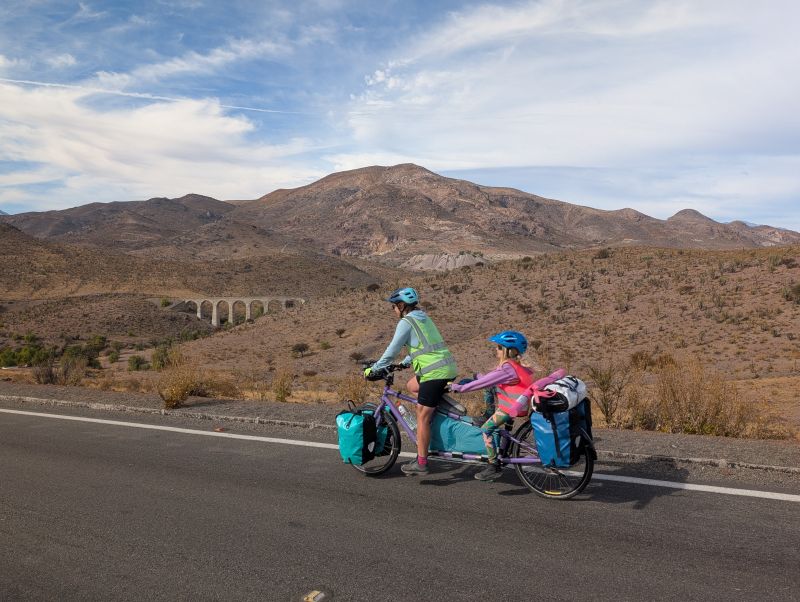
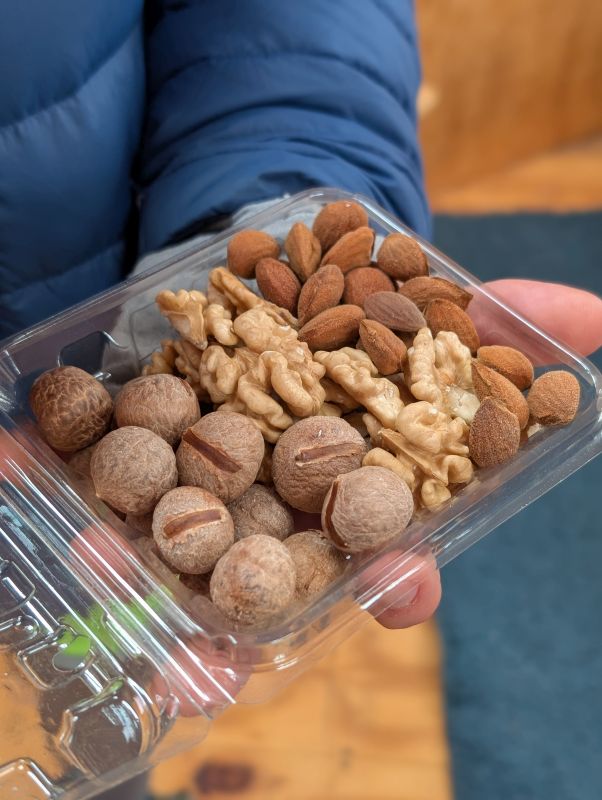
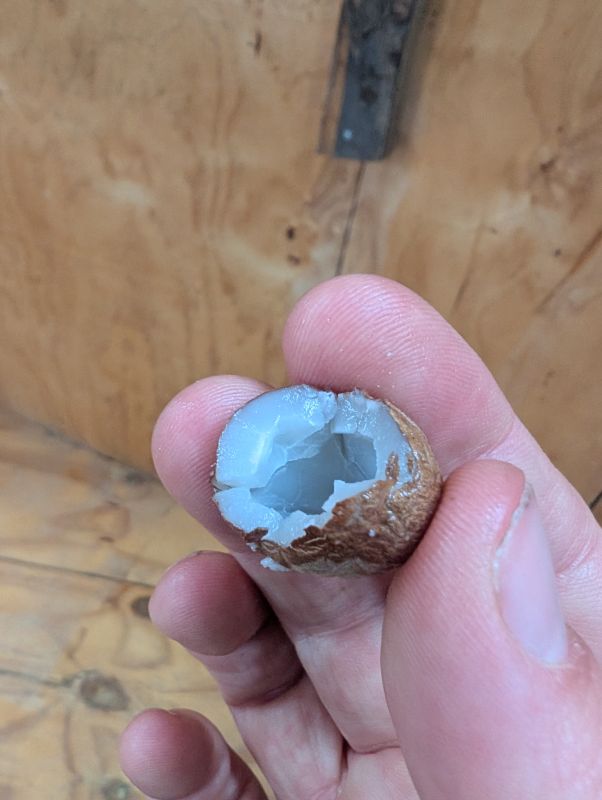
We decided to take a little stroll up the street and back. By luck we found a very nice woman selling random things from her car. We bought avocados, strawberries, and a container with shelled Chilean coconuts!

Nut selection: Chilean palm coconut, walnuts, and almonds
It really does look just like a teeny, tiny coconut
Ah, there’s some monster in the background

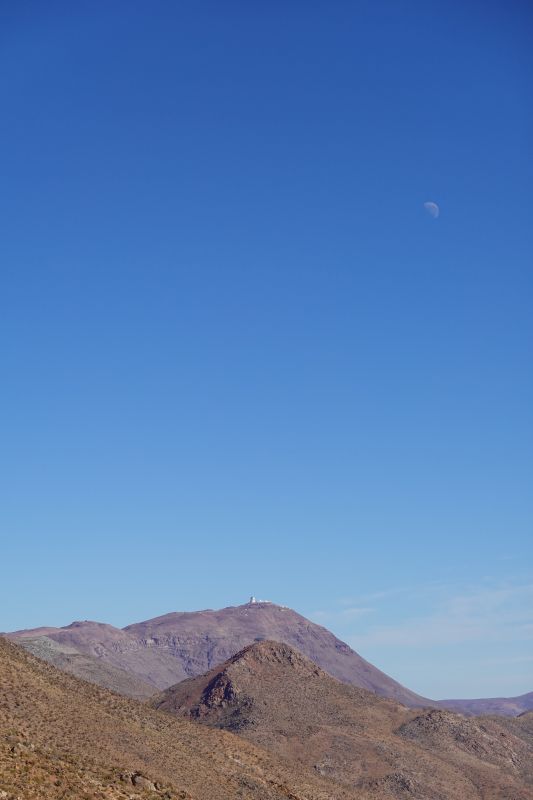
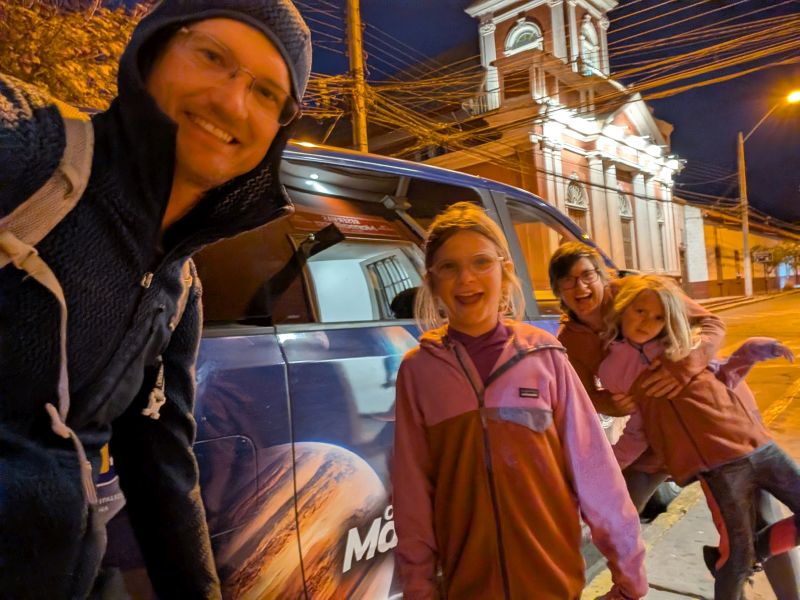
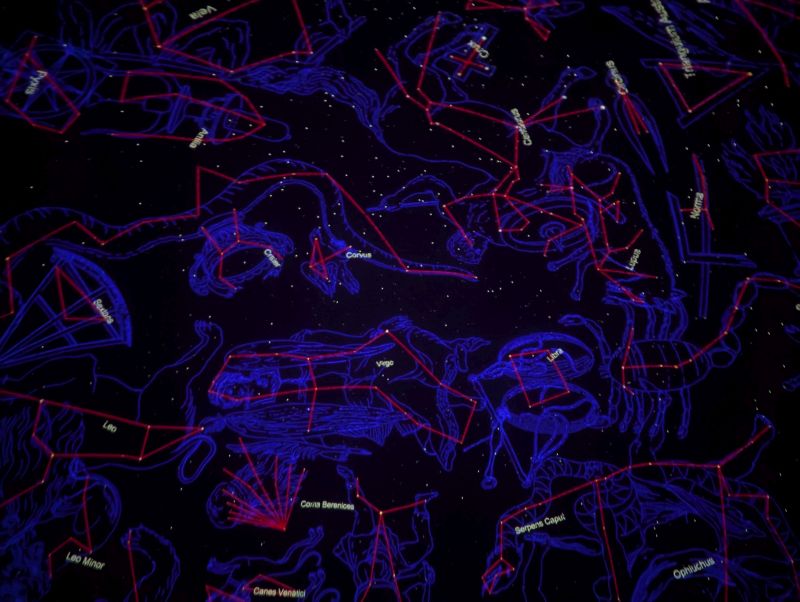
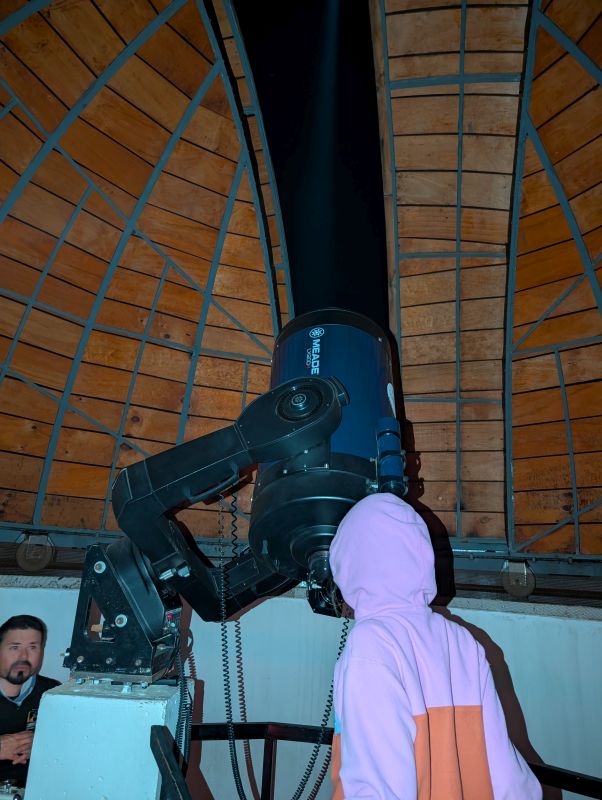
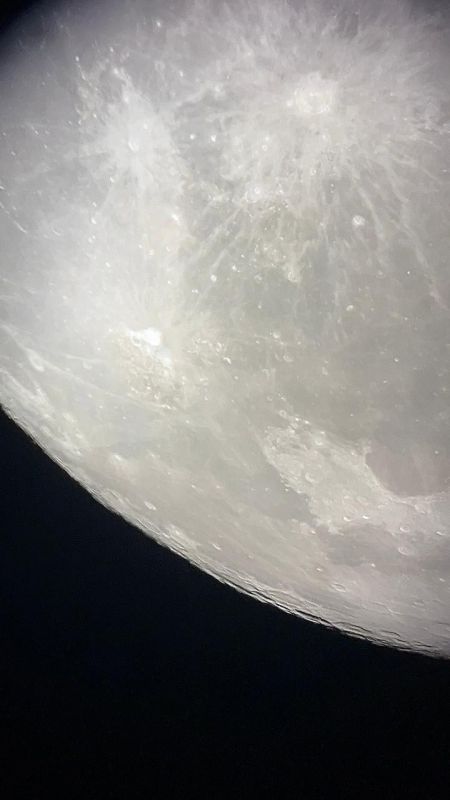
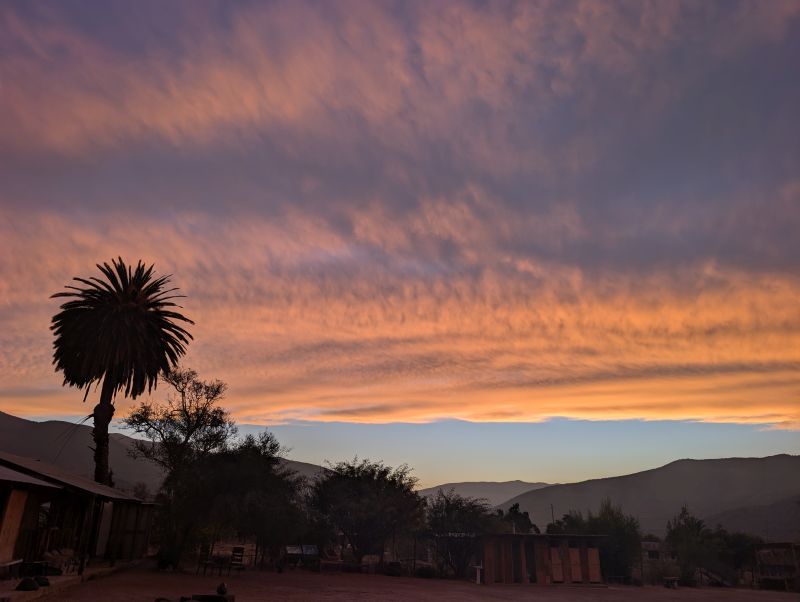
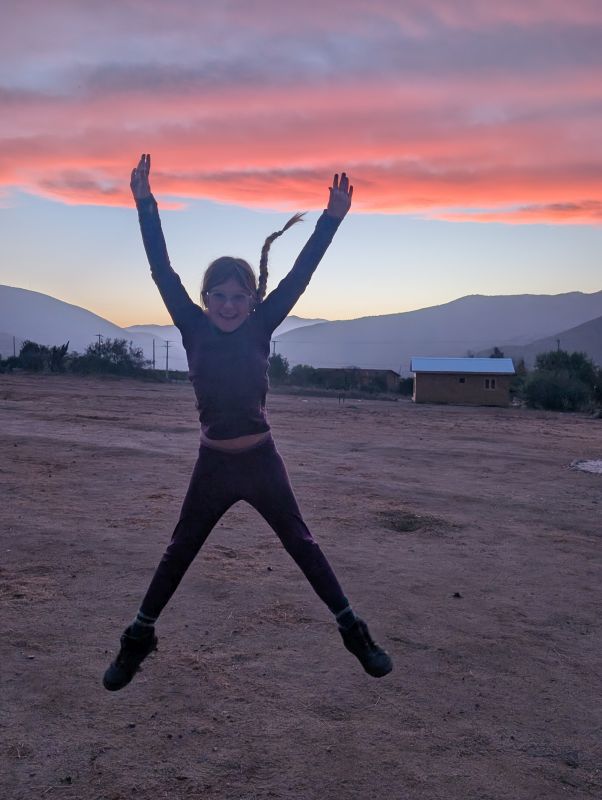
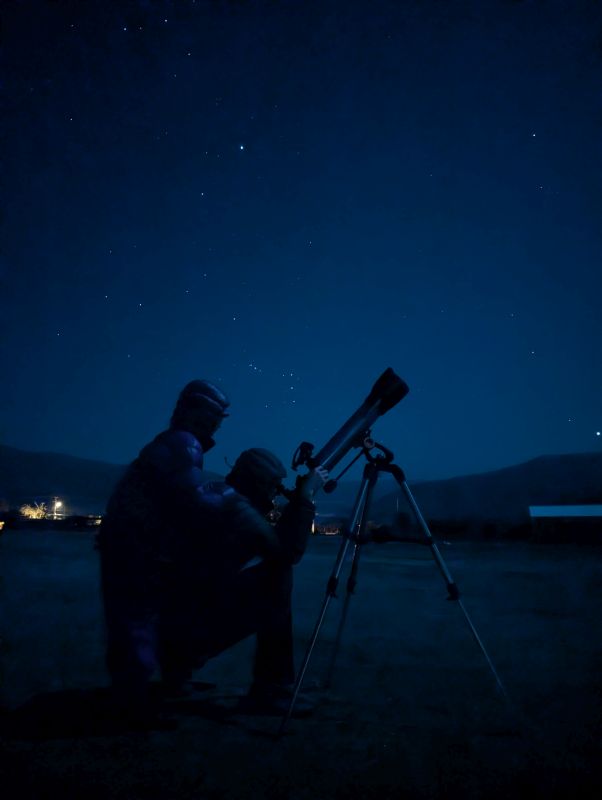
We were treated to a fantastic sunset. In the evening we took the small telescope out of the dome. We looked at a few stars, the moon, and a distant street light.

Sunset is starting in Tilama
Yeah, A!
Telescope time

Day 142: Tilama to wild camp north of Caimanes (26 km / 16 mi)

It was a cold night in the dome, so we weren’t moving quickly to get out of town. It was cloudy, with a heavy dew on our bikes, but no fog at least. When we finally got moving it was straight back up into another climb. This one was only half the vertical gain as yesterday, so it was over quickly. There were no Chilean palm trees or hidden lush ecosystems either. I suppose the high valley from Day 141 was truly special.
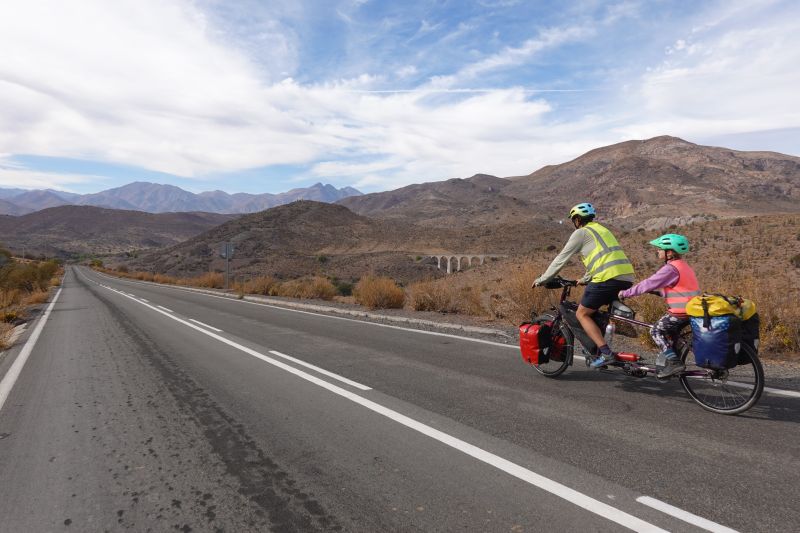
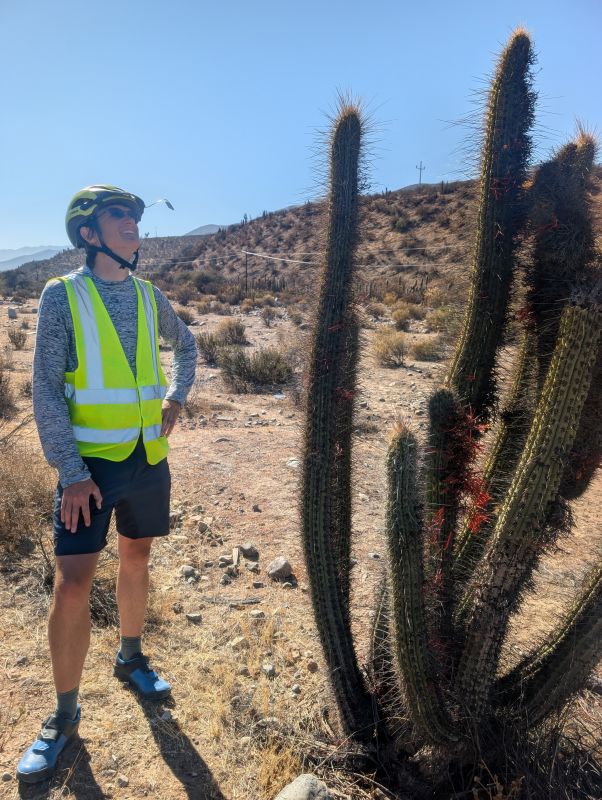
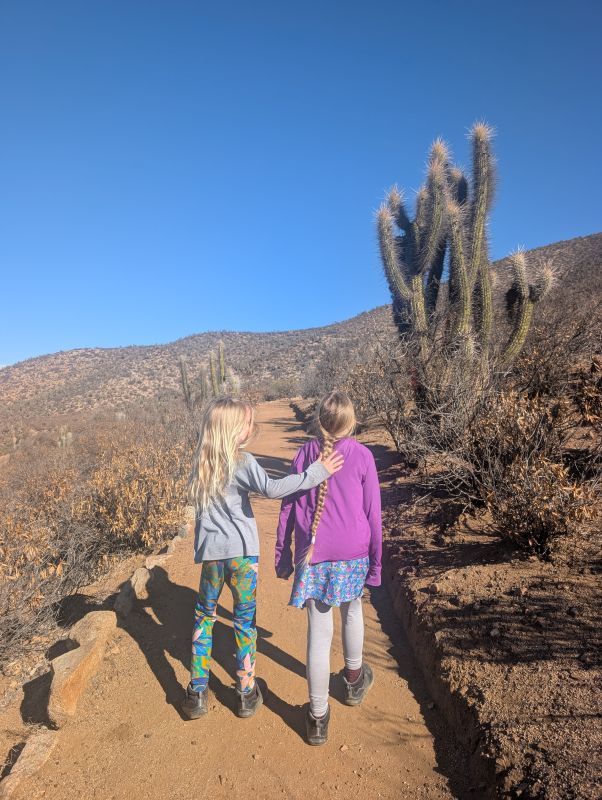
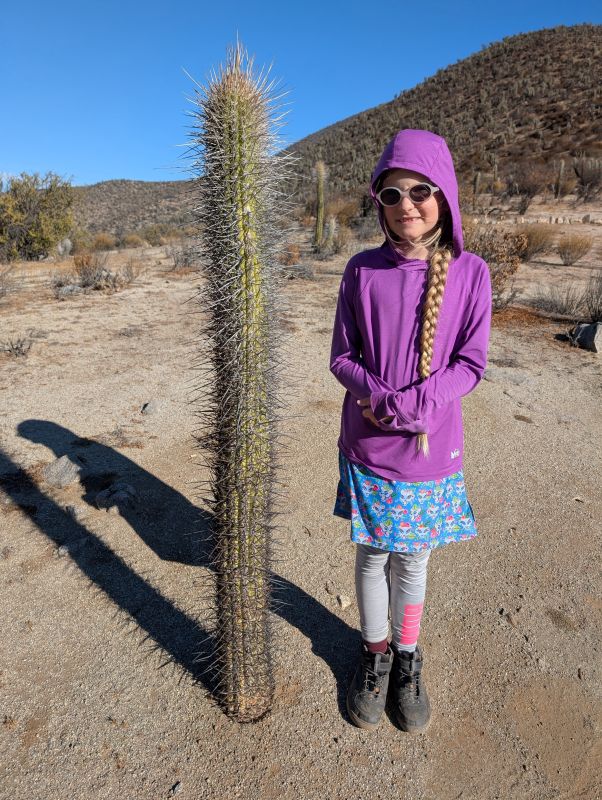
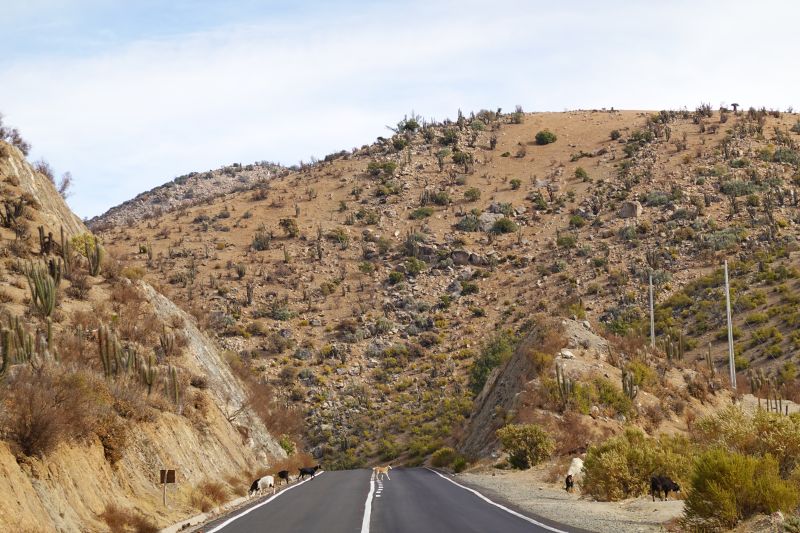
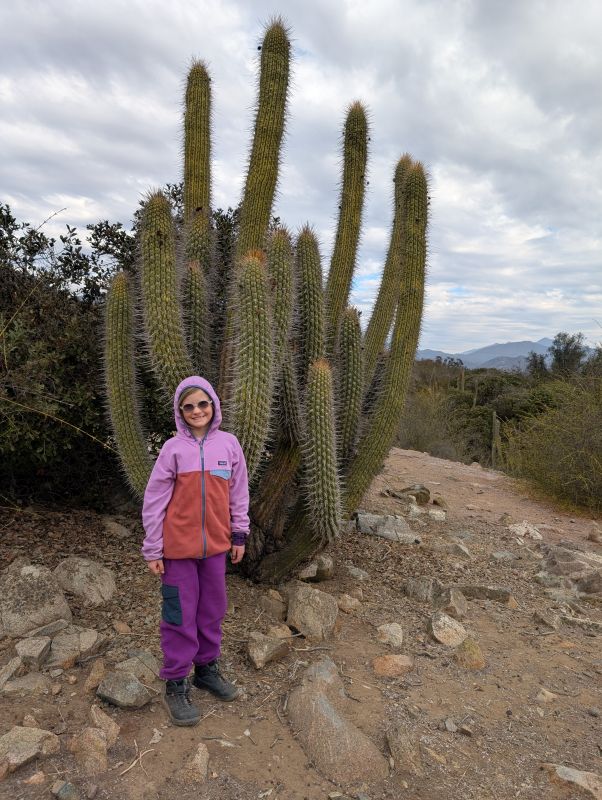
A wants to show you how big some of the cactus are
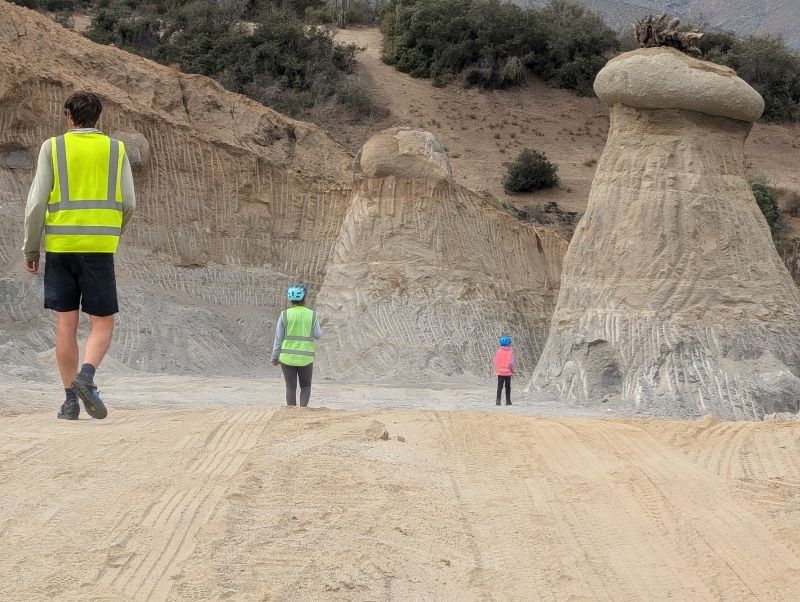
We were enthralled by these rocks in this quarry
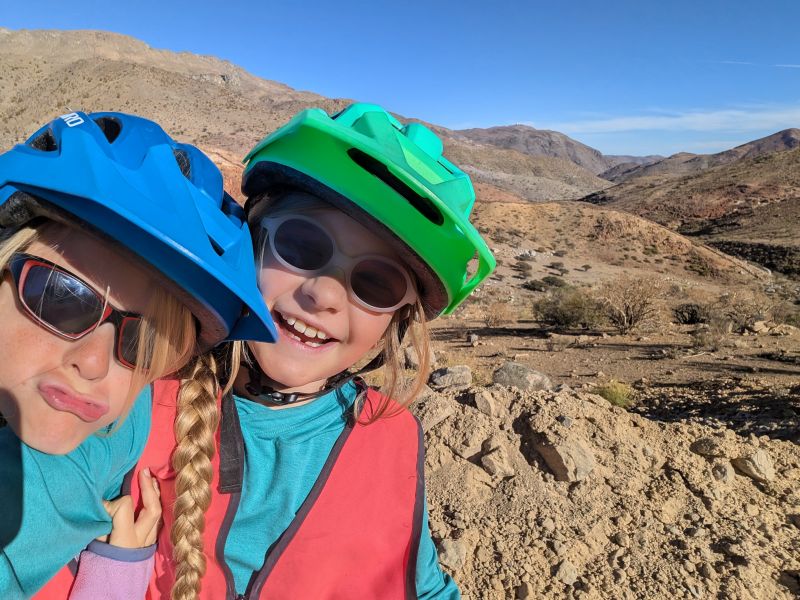
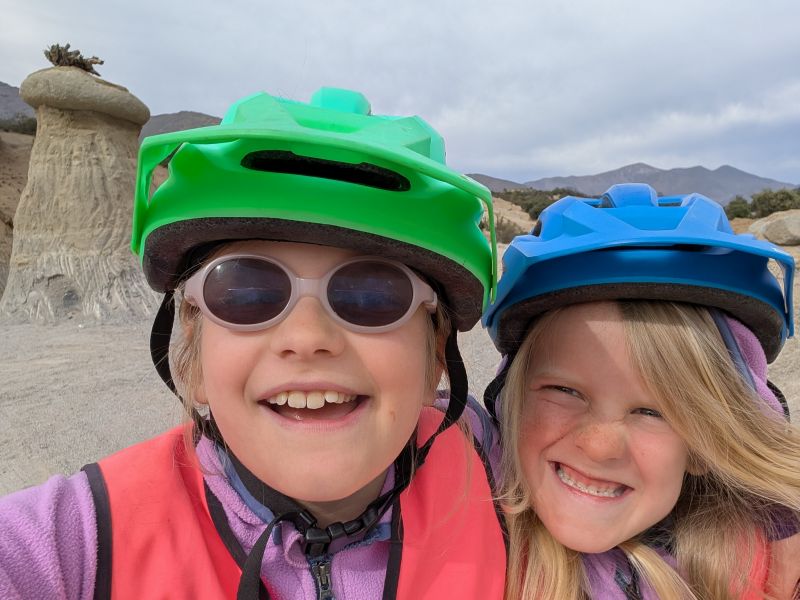
Two happy sisters

The next valley over was, as expected, just a wee bit drier. It was also a lot less lovely. The region is overtaken with waster processing from an immense copper mine in the Andes. We arrived in the main town, Caimanes, before lunch. The main road was under construction and the streets were teeming with workers from the mining companies.

We had already messaged about a dozen hostels asking if they had space, and not a single one had said yes. There was optimism that we’d find a place to stay once we were actually in town, so we started asking around. We asked at the minimarket, who sent us to a sprawling complex of accomodations. They didn’t have any space either, but sent us to another hostel that ‘might’ have space. Nope. We popped in at every place with a ‘lodging’ sign out front. Nothing. Every lodging was only for ‘la empresa’ (the company). We asked at the fire station if they had a place we could camp, and their only solution was a nearby parking lot. No thank you!

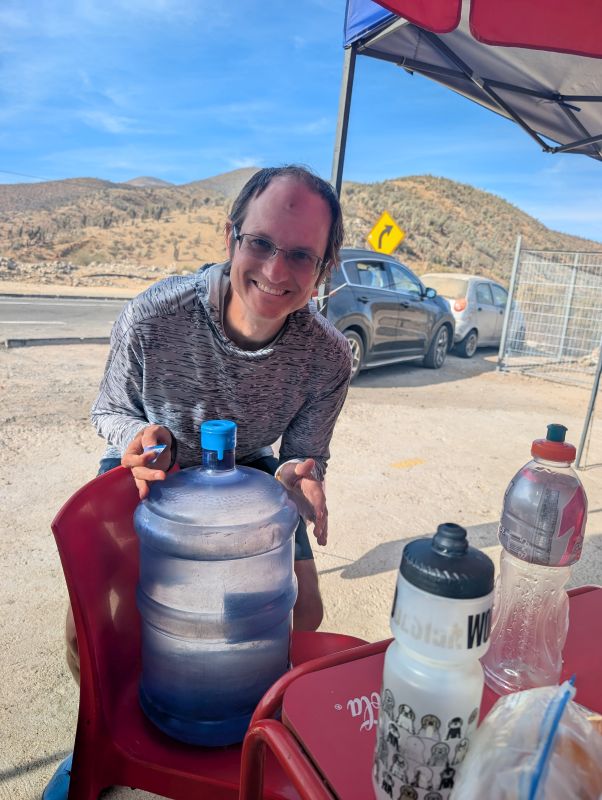
Finally around 3pm we gave up. We loaded up on water at a mini market near the edge of town (the owner was very curious about our trip but had no ideas about where we could stay in town). Then we rode out, looking for a safe place to camp on the next climb.

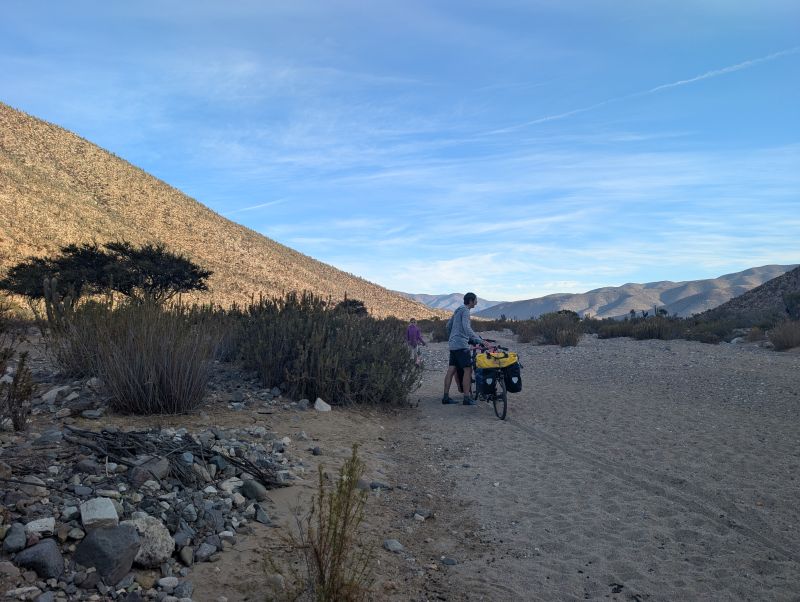
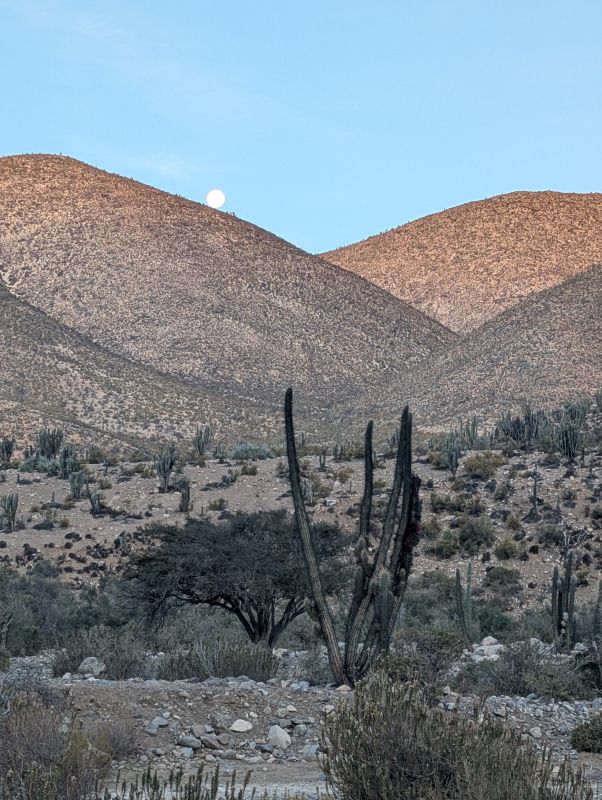
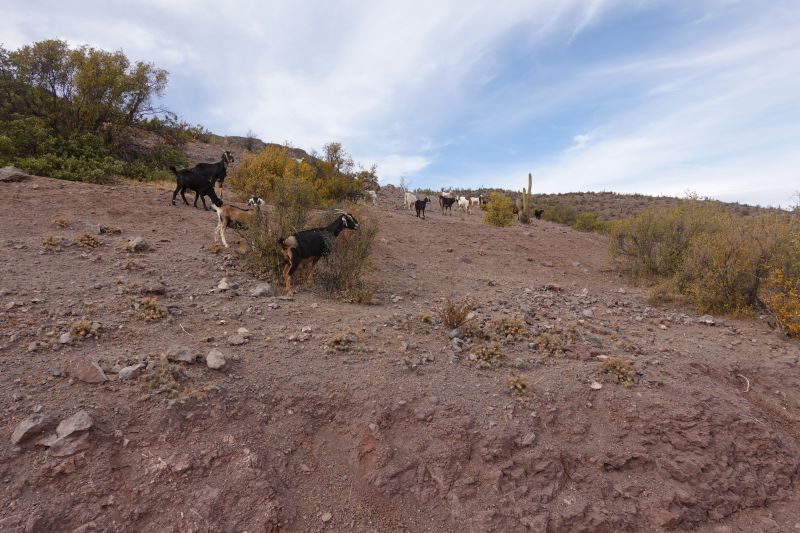
It didn’t take long before an opportunity presented itself. We found a sheltered spot between two roads (visible to neither) that goat herders clearly used to transit their livestock between locations. Lots of goat poop, cacti, bushes, rocks… and a nice sheltered flat spot for the tent. We dragged the bikes and gear up the path and set up camp. It was a peaceful, scenic night after all that.

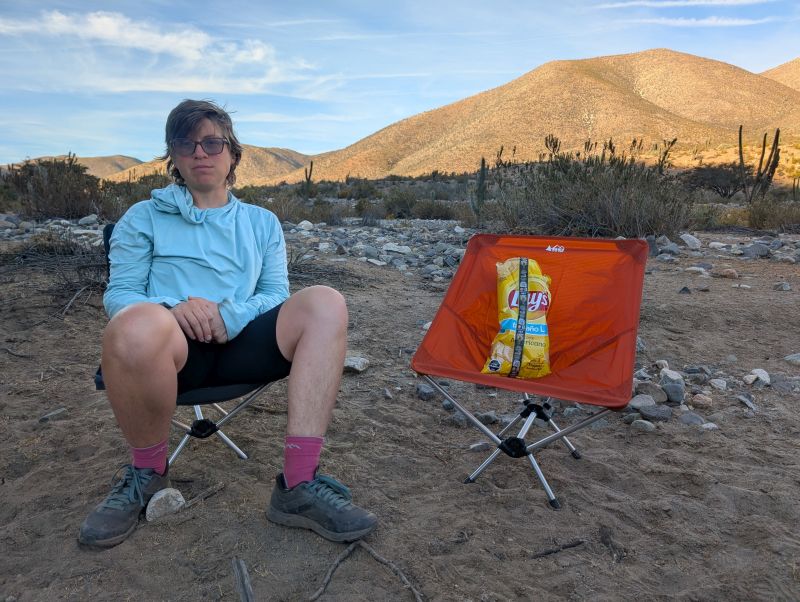
Relaxing at our wild camp
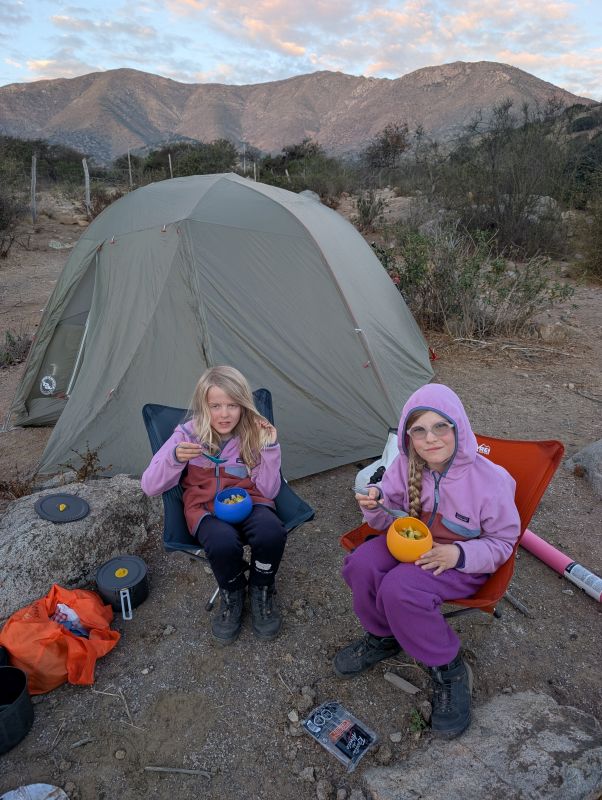
Dinner time in camp

Day 143: Wild camp north of Caimanes to Illapel (52 km / 32 mi)

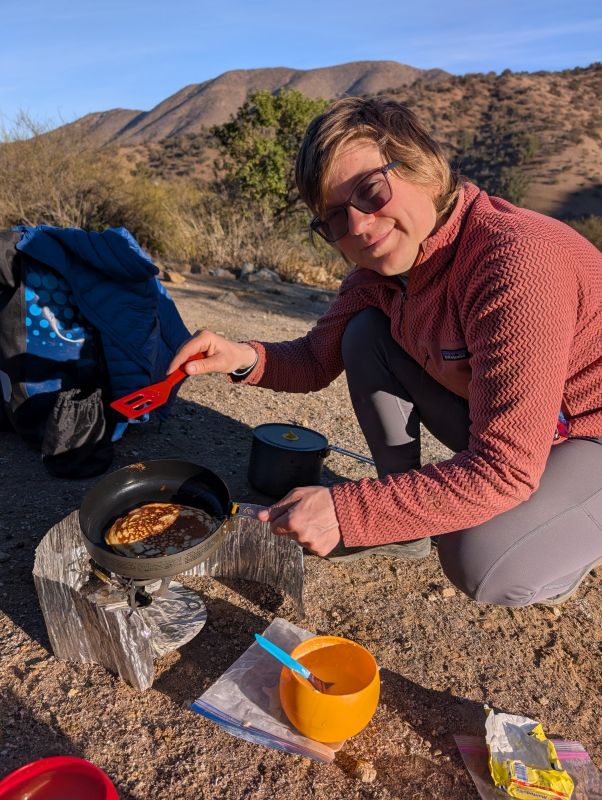
We woke up to a sunny, warm day. We were running a bit low on food supplies, since it had been many days since we passed a proper super market. Remarkably, I had the supplies for pancakes still, so in our goat-poop wild camp we chowed down on fresh pancakes and coffee.

The chef cooks pancakes in the middle of nowhere
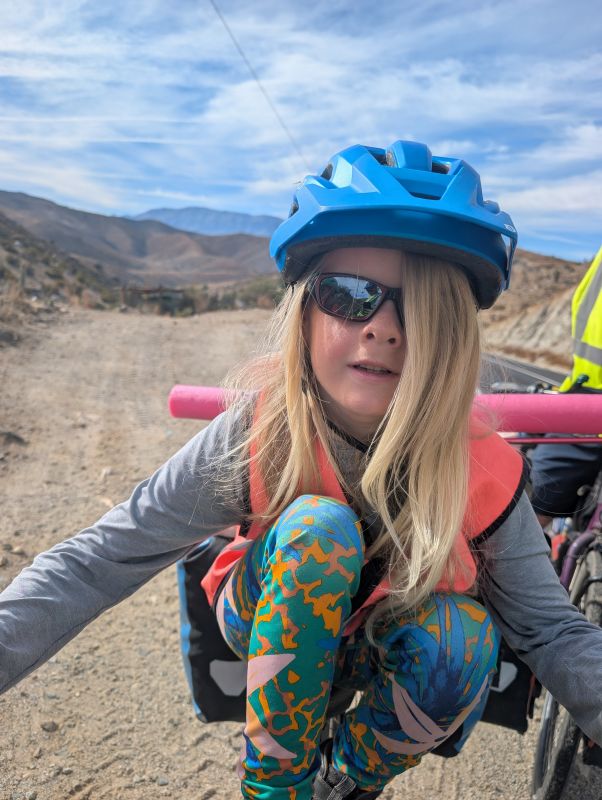
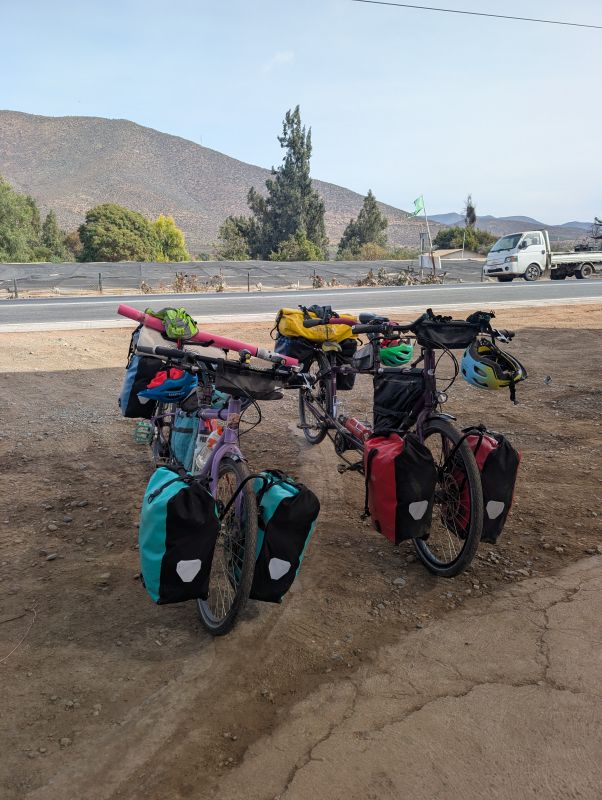
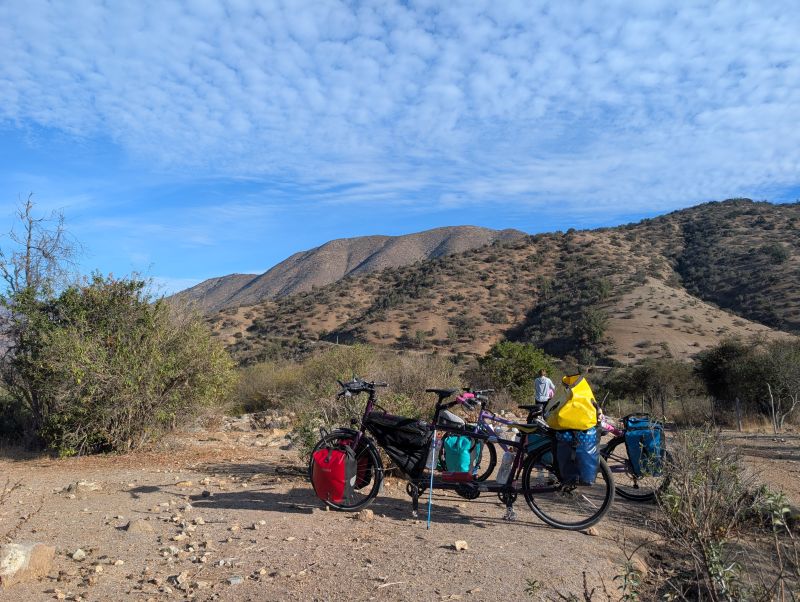
Our bikes – just about ready to go!

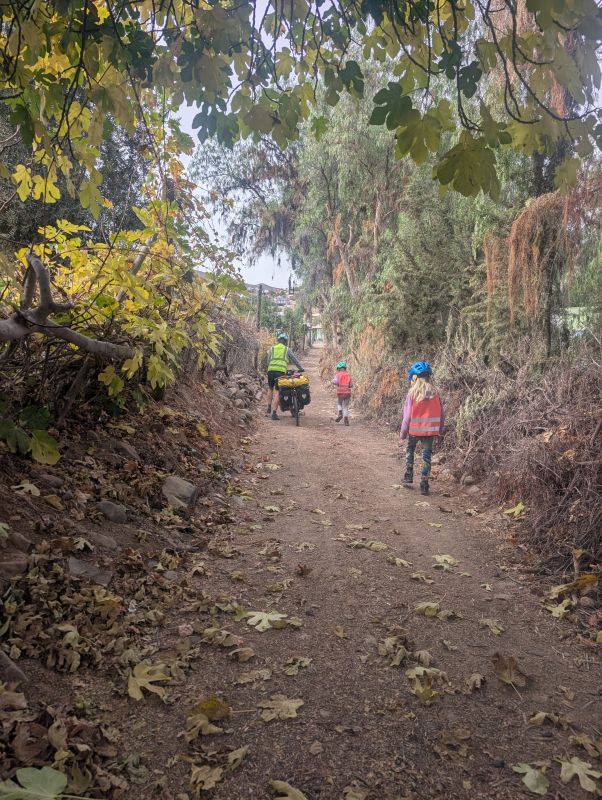
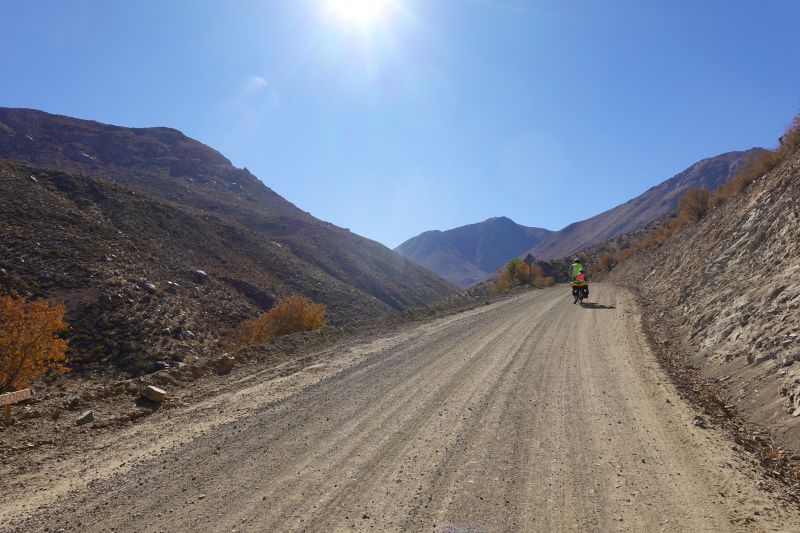
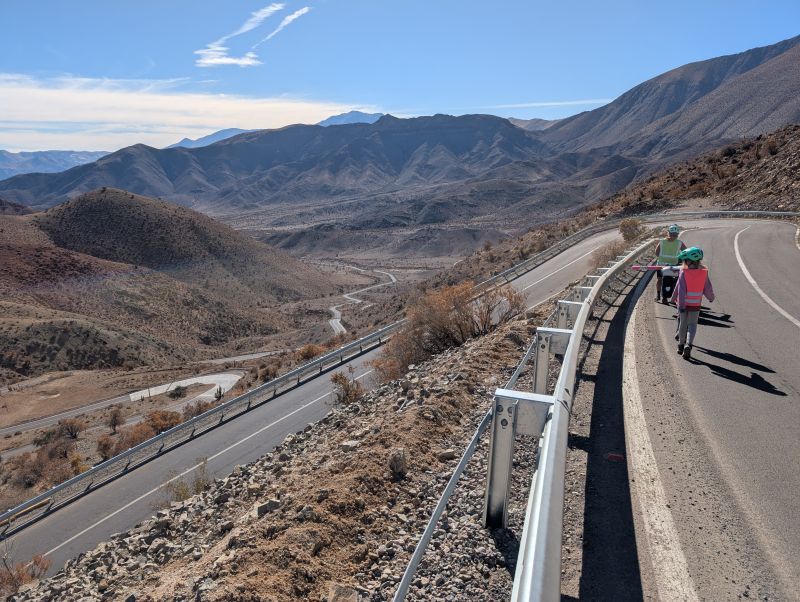
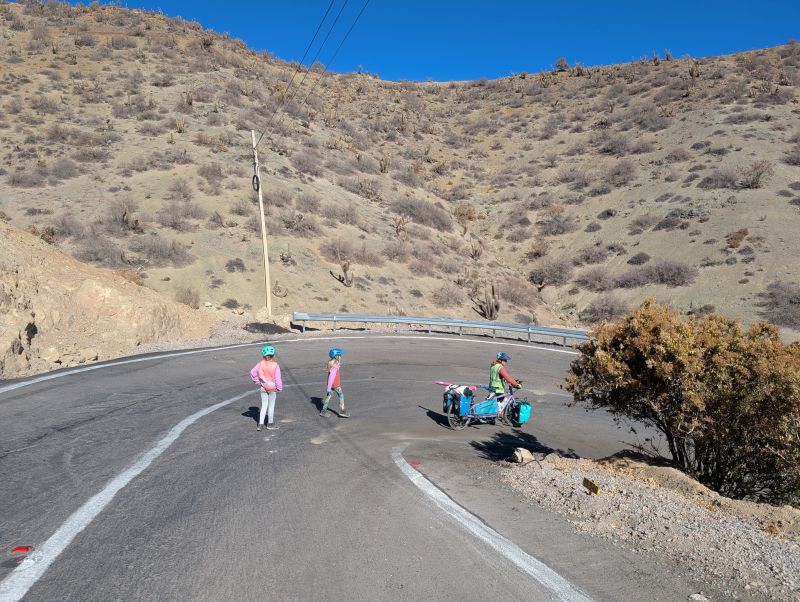
As is normal on this route, we started the day climbing. This time we criss-crossed the same mountainside overlooking Caimanes. When the road got steep and my legs got tired I would rant a bit about the town overtaken with mining.

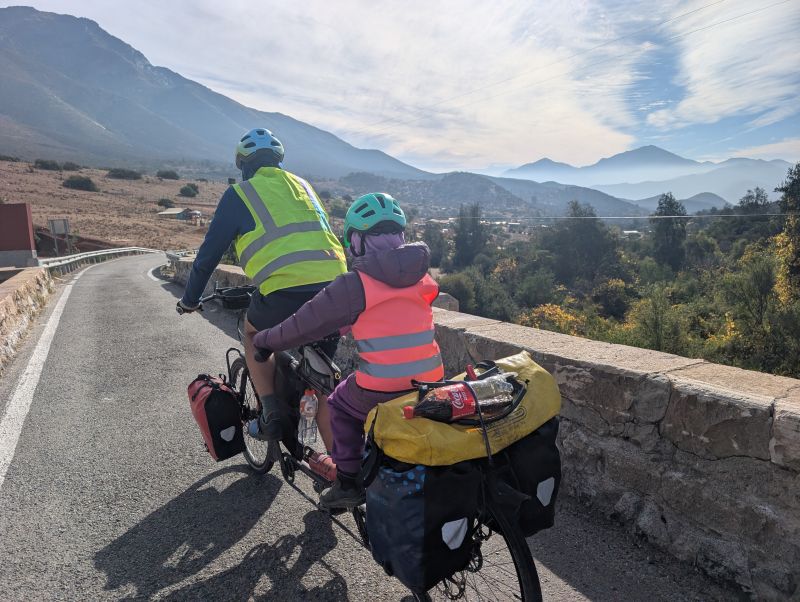
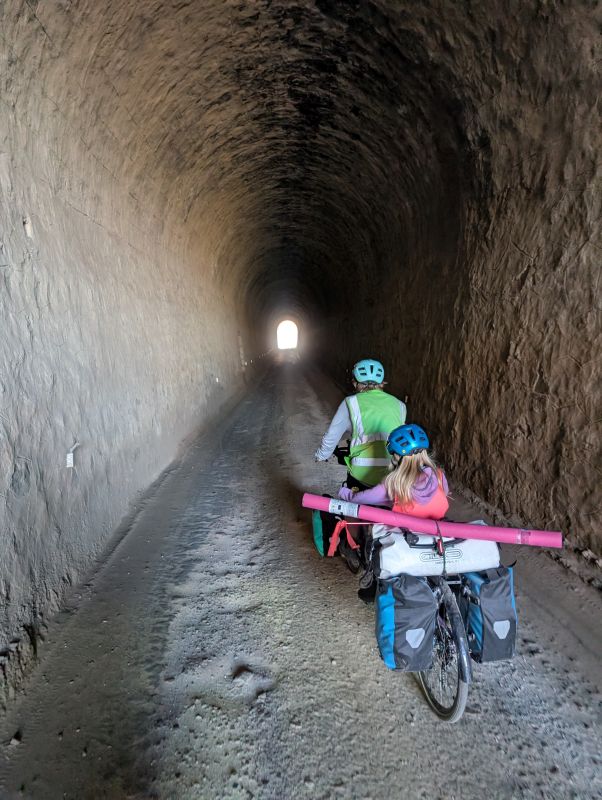
We had three tunnels today, all with dirt road surfaces, all one-lane and built between 1910 and 1912. The first tunnel was short and straight. The second tunnel was a bit longer and also curved. That one was a bit spooky since there was a stretch in the middle when we could see neither the entrance nor the exit. Finally the last tunnel was very long, with a very rough surface. By the end of it the surface was actually cobblestones!

Another tunnel

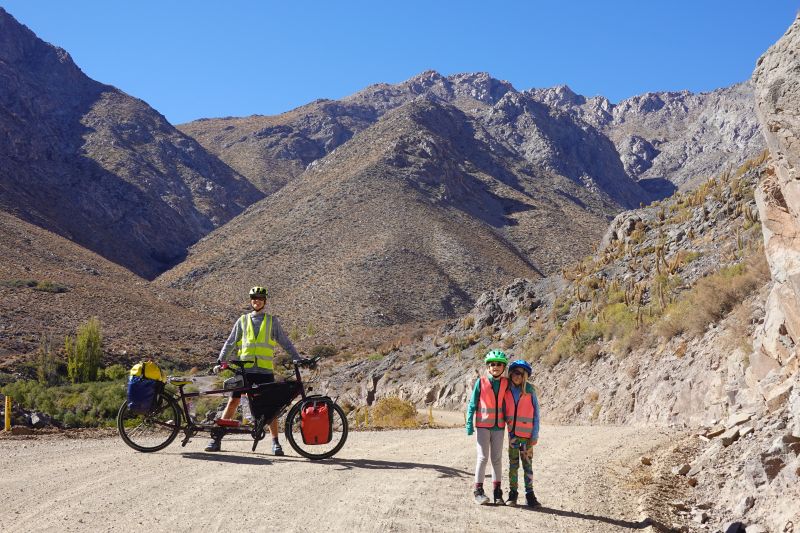
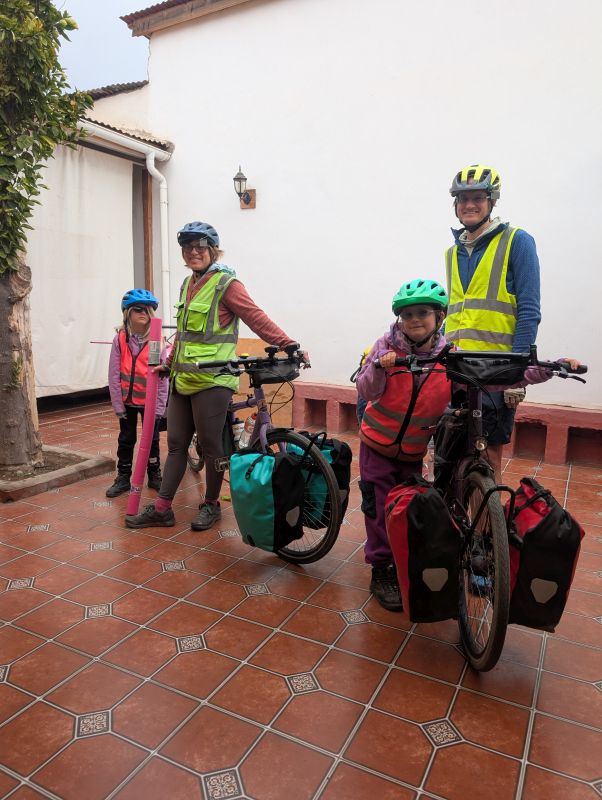
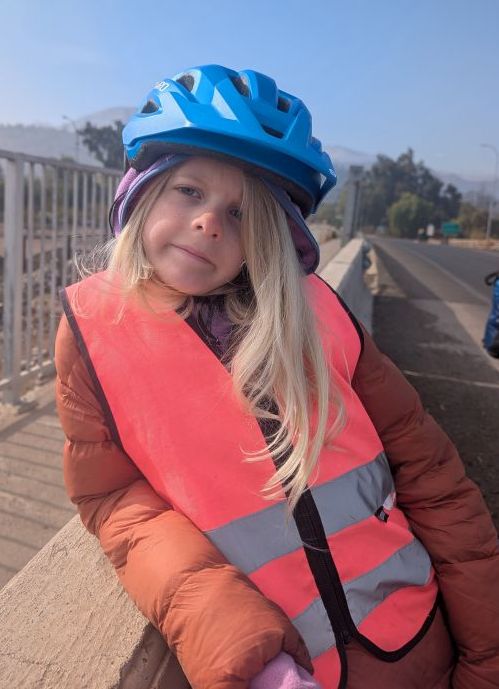
For all the tunnels we flagged down a passing vehicle to be our safety escort, and of course we had our reflective vests on and all our bicycle lights on bright. We felt very safe, so we could enjoy the unique experience of being inside these century-old tunnels.

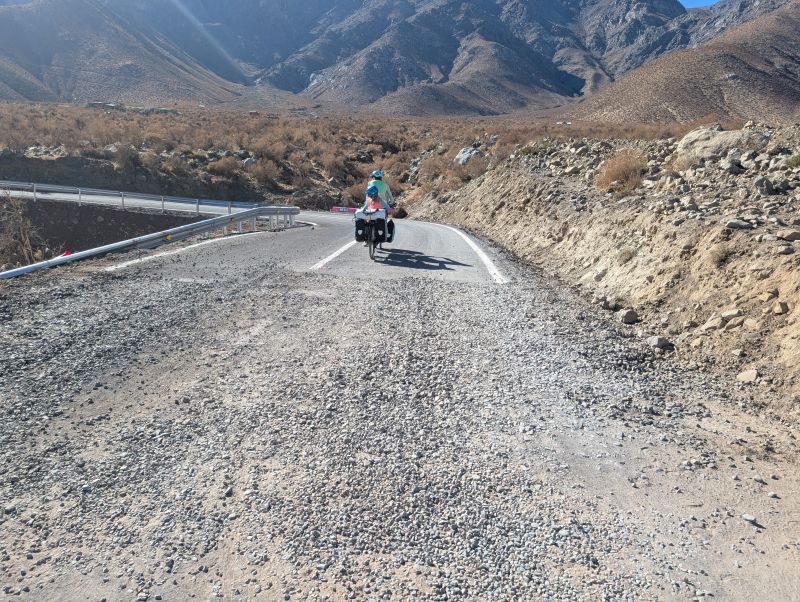
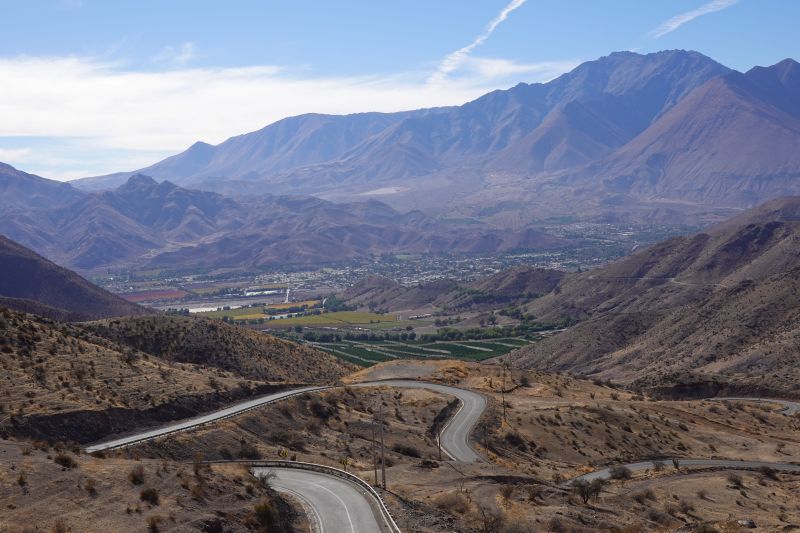
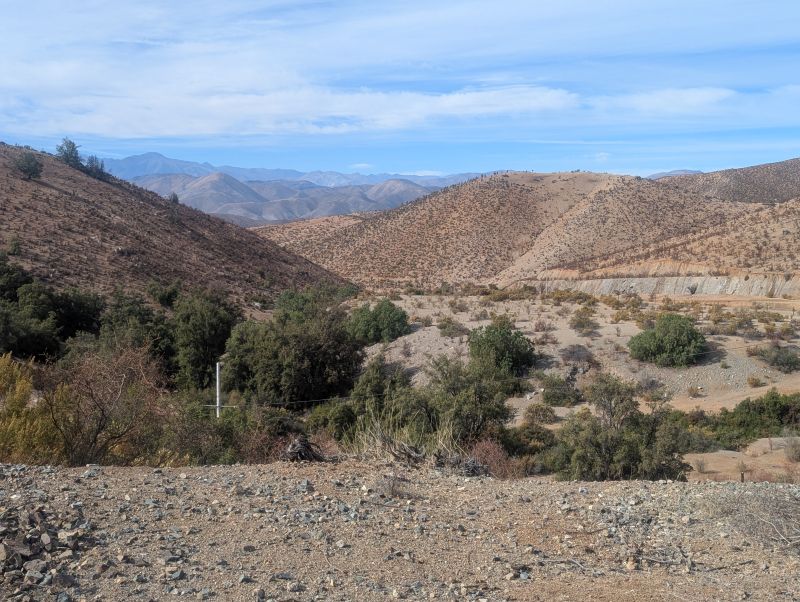
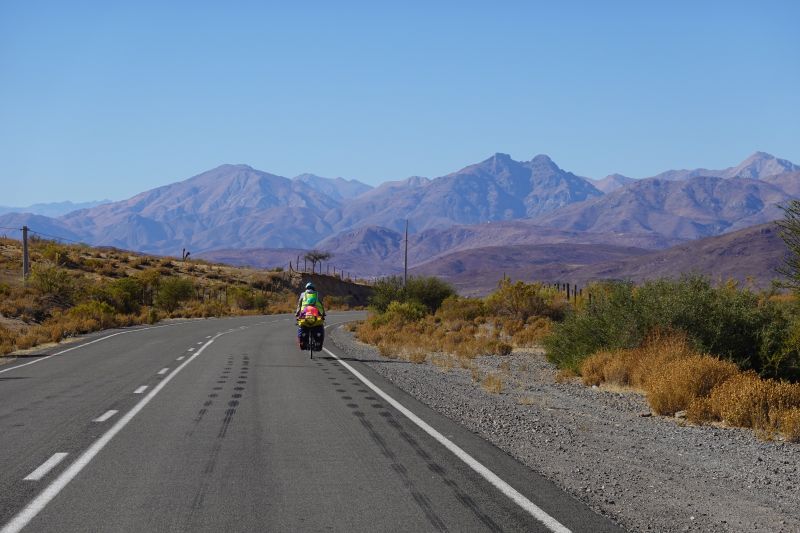
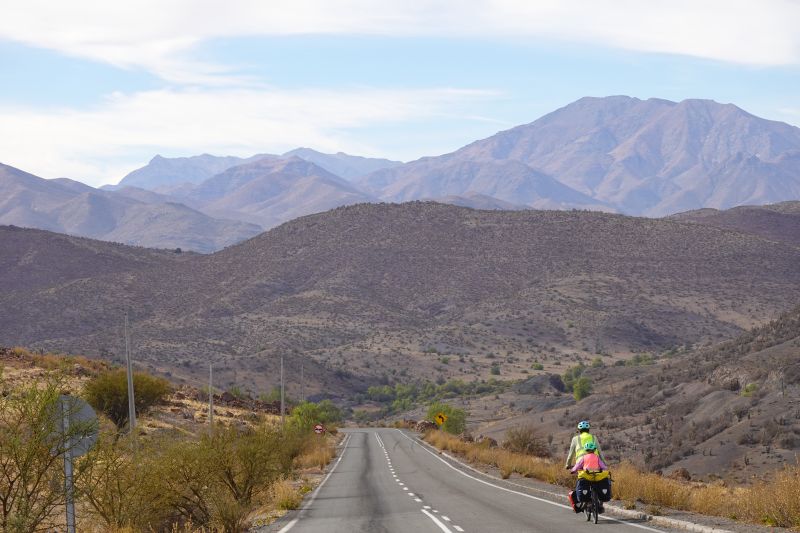
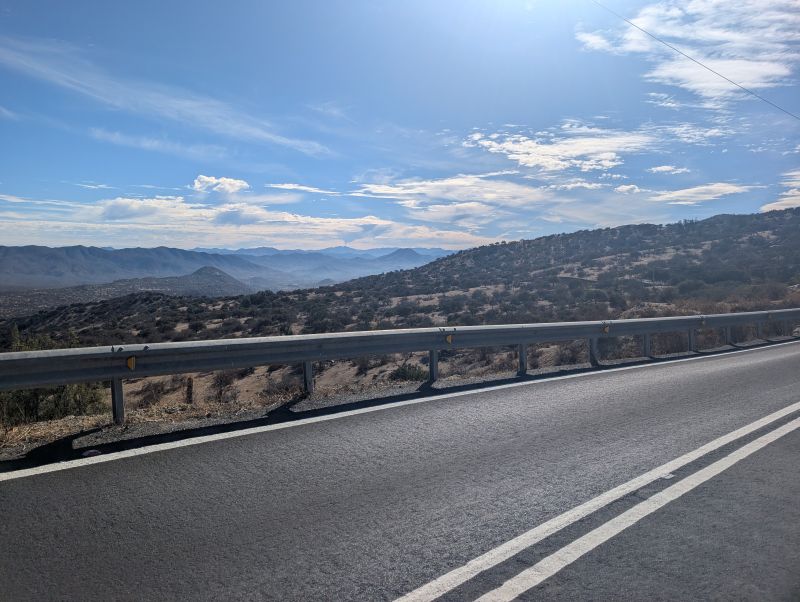
Outside the last of the three tunnels we emerged into… yet another slightly drier valley. The descent was magnificent. It was a perfect grade on a smooth road with layers on layers of mountains stretching out to the north. We loved it.

Nearly endless mountains
Heading downhill

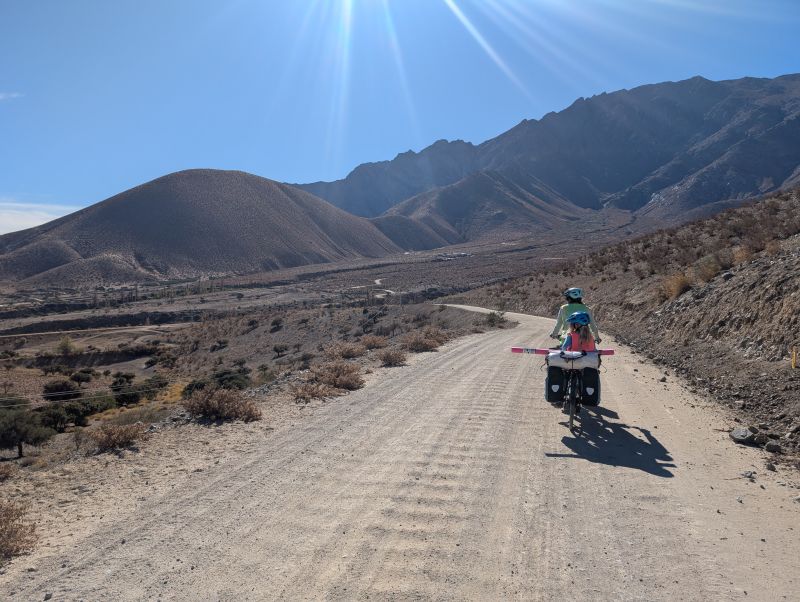
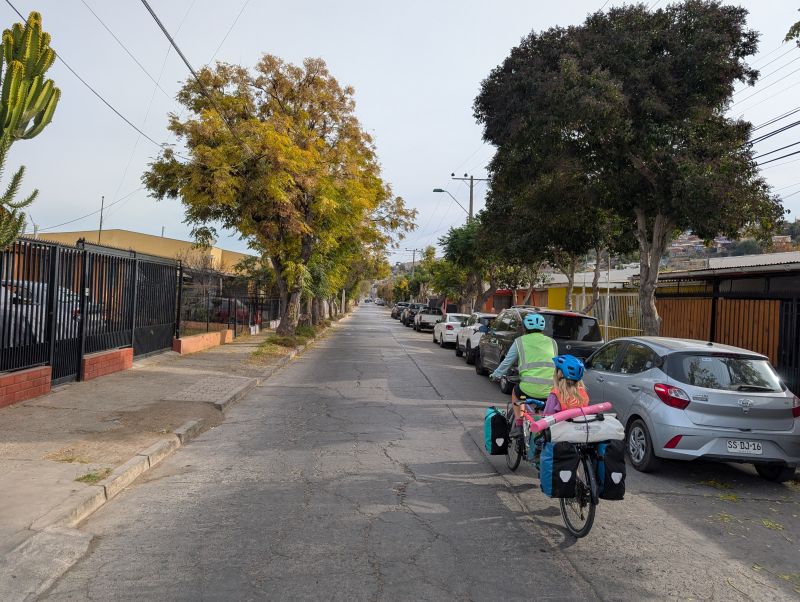
We grabbed some lunch supplies at a minimarket then got on a very quiet side road for our approach into the city of Illapel. This side road was what we call ‘peak cycletouring’. It was narrow, with almost no traffic, with good views down the valley and farms around us. We eventually entered large groves of citrus trees before reaching the final approach to Illapel.

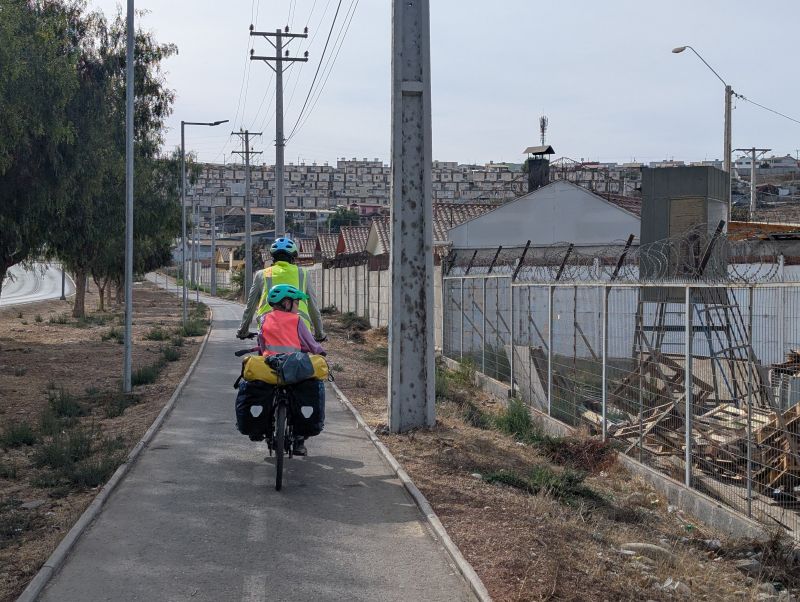
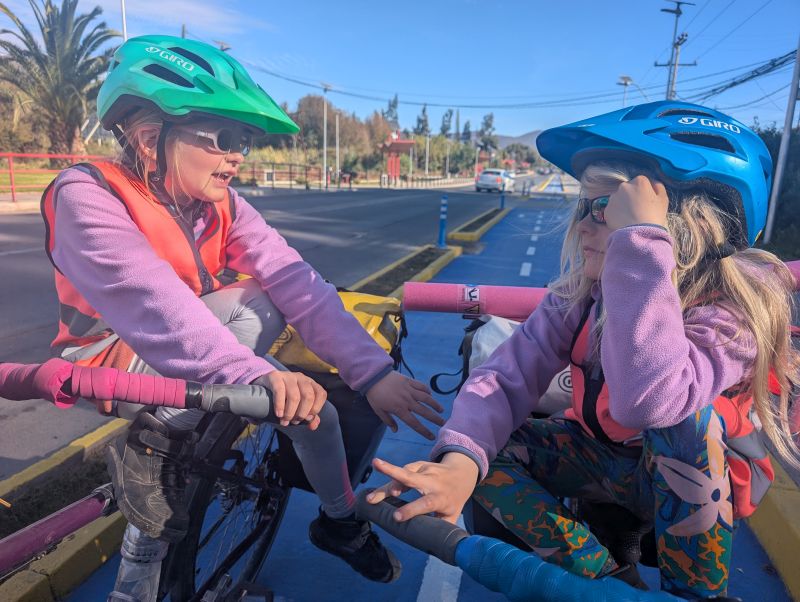
Bike path discussion in Illapel

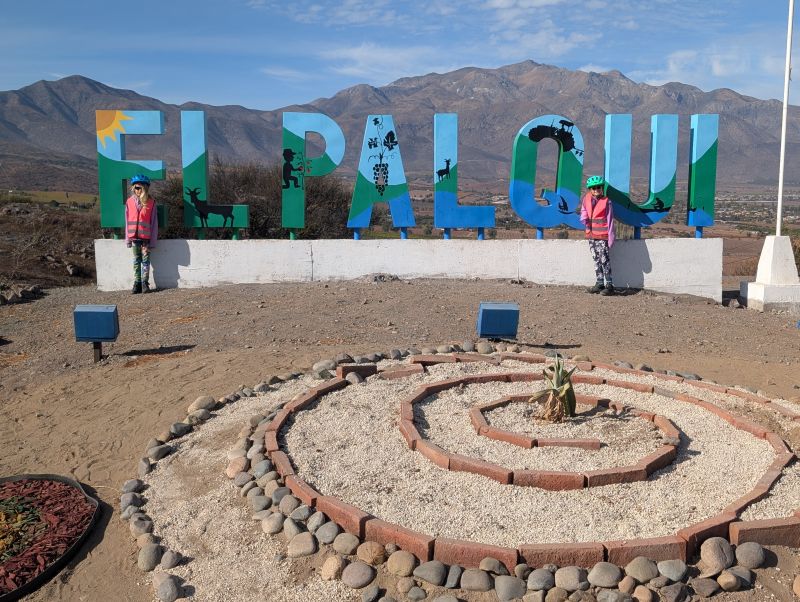
Illapel is the largest town in the region. We made our way to a hostel where we were welcomed with open arms. It was one of those places that cycletourists frequent and write their names on a wall. Flags from different countries hung in the courtyard. We decided to rest for three nights and two days here. After our long stretch of desert it felt like an oasis.
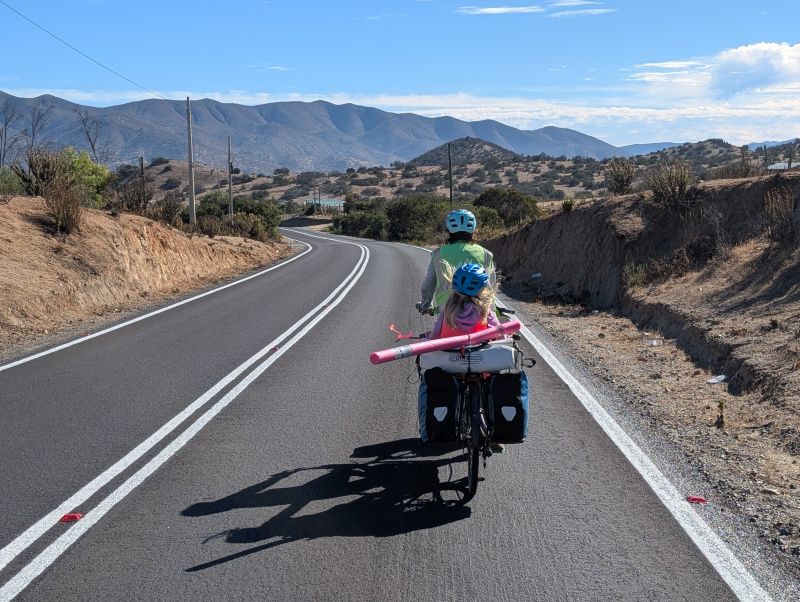
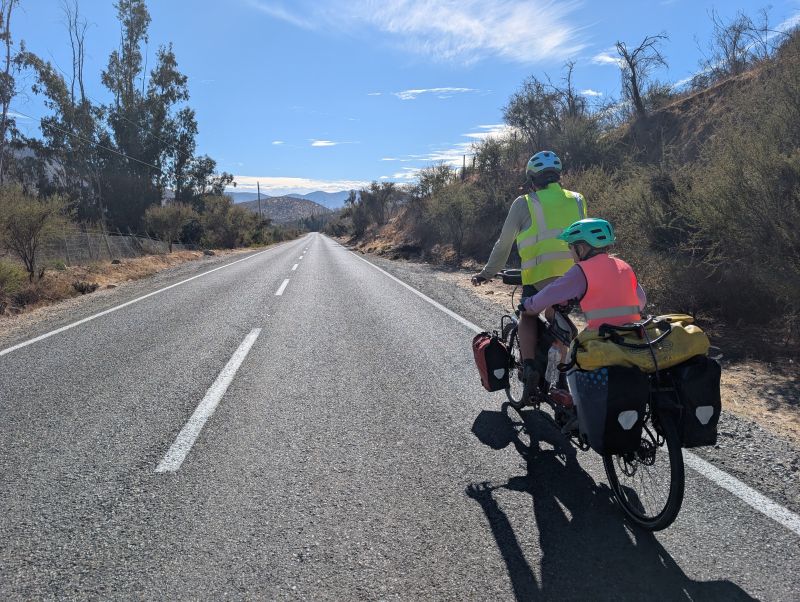
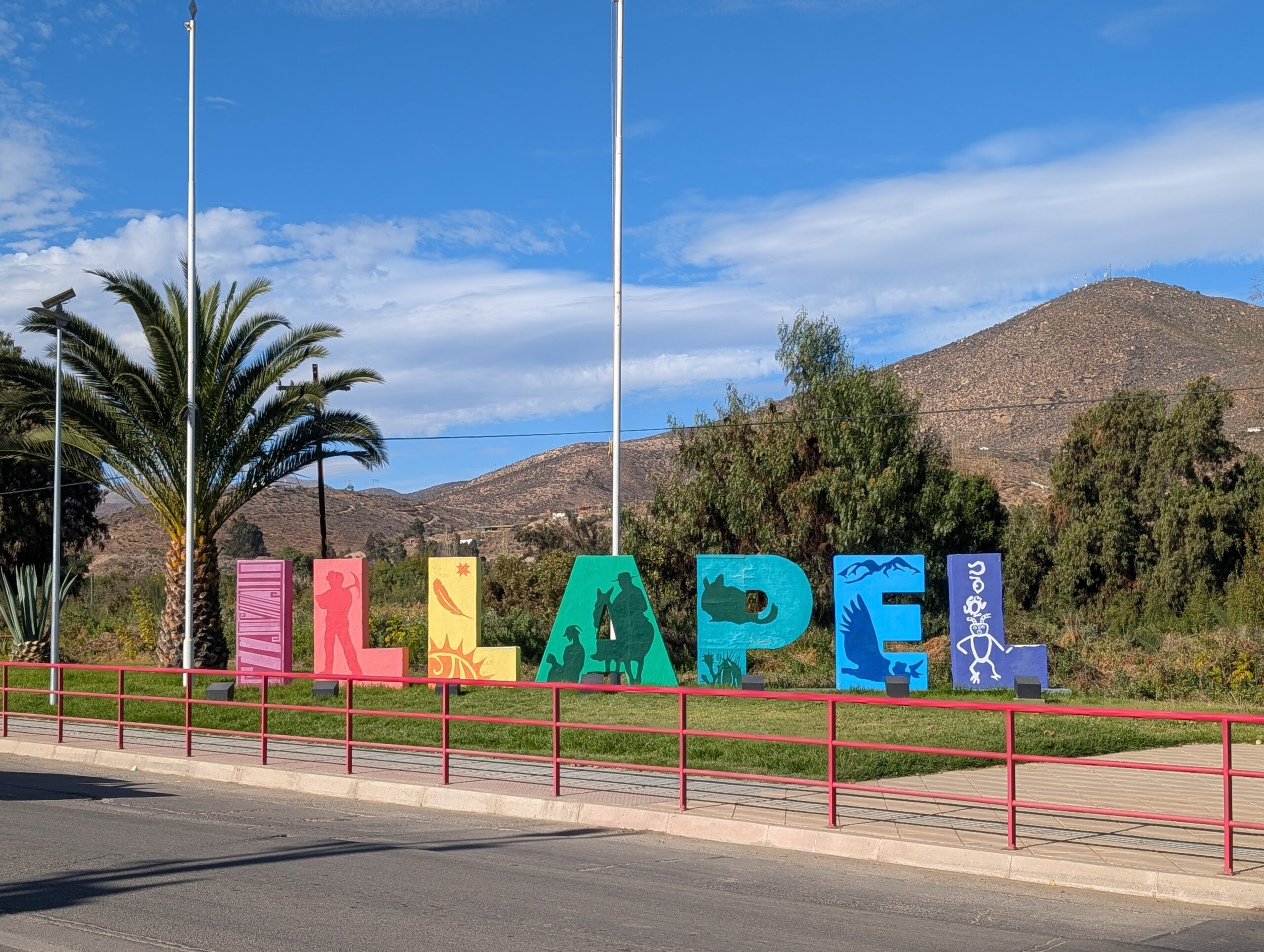
Welcome to Illapel

Santiago to Cabildo: into the north

In this entry we leave the metropolis of Santiago behind us to venture into the mountainous interior of northern Chile. This is the beginning of what we are calling our ‘victory lap,’ that is, the bonus miles we get to ride past our original goal of Santiago. So far, the north of Chile has been absolutely incredible. It’s dry, mountainous, full of miners and people growing oranges, persimmons, walnuts, figs, avocados, and lemons. We have been climbing up and over impressive mountains passes most days.

Up at the top!

Day 135: Santiago to Colina (41 km 25 mi)

We were all a bit nervous to leave the giant city, and it didn’t exactly help when we awoke to a flat tire on my bicycle. It appeared to be a slow leak, so instead of patching it in Santiago we just pumped it up and headed out. This might seem like an odd choice, but that wheel is actually particularly hard to manage for my bike. When we had the couplers installed several years ago we also got it repainted the lovely lilac color it is now. The paint went on a little thick around the rear fork, so it takes serious muscle to move the wheel in and out. We avoid it whenever we can.

Once the tire was inflated we rolled the bikes into the street… and immediately Jason’s front brake started making a horrible metal on metal noise. It didn’t take long to discover that the front brake pad was getting low and a little piece of metal was sticking out where it should not be. We took care of that and rolled towards the river that bisects Santiago.

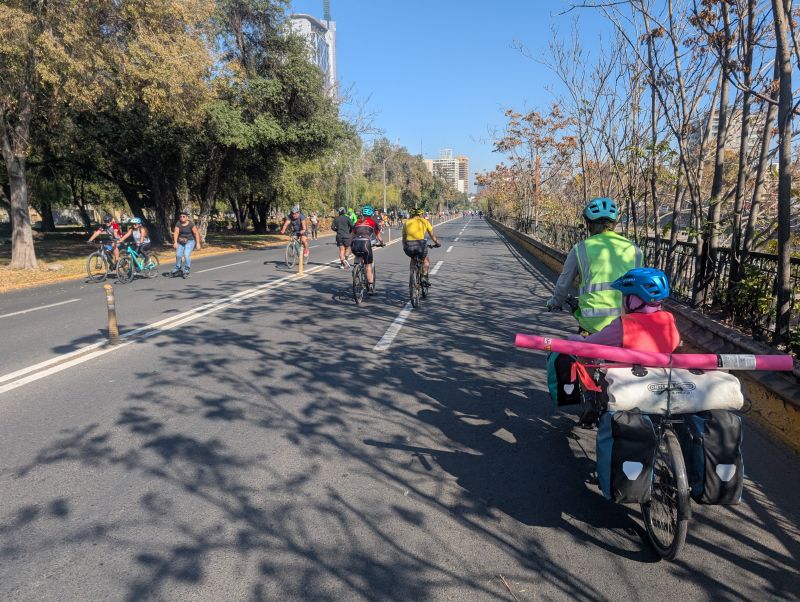
CicloRecreoVia day in Santiago, with blocked off streets from car traffic

To our utter delight one of the huge boulevards along the river was completely closed to traffic. Thousands of cyclists were enjoying a summer ride, car and worry free. Comically, we had another mechanical issue almost right away. Jason had made some adjustments to his rear wheel and the whole thing was crooked and making a horrible noise… back to the side of the road and after flipping his bike upside down, we fixed it.

Third time is the charm, right? Today it certainly was! We finished the length of the car-free boulevard and turned north to cross the river. We were feeling a bit melancholy about leaving the city (gosh those bagel sandwiches were incredible), but as we crossed the river we spotted a giant protest and what appeared to be a dark cloud of smoke from something burning. The melancholy left us and we pedaled away fast!

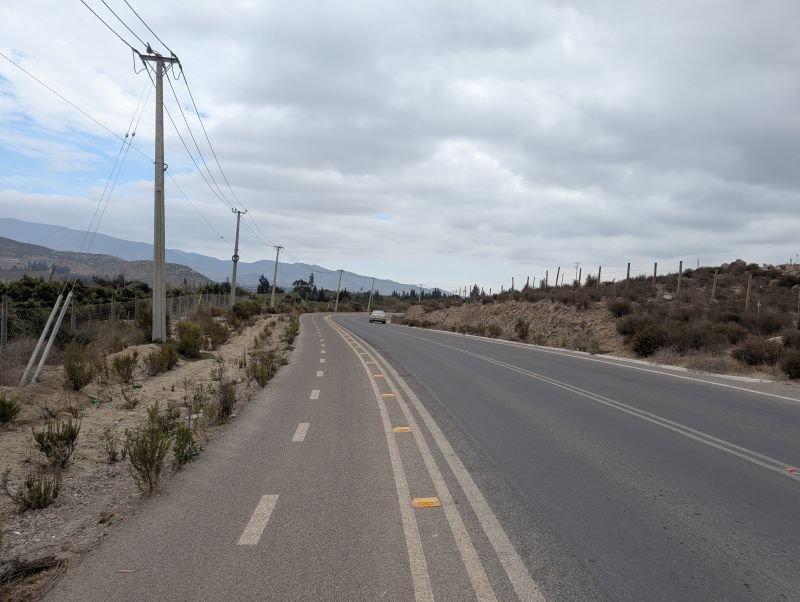
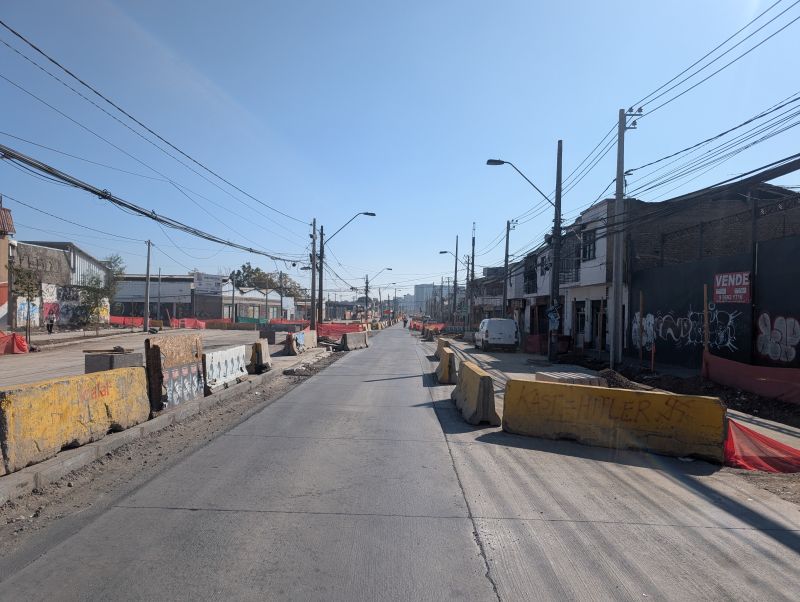
We stuck to a main street with a wide cycle lane for the next bit, until the cycle path disappeared and then the road did too! The last ten kilometers or so were under construction, and based on what we saw in Google StreetView, they had been under construction for well over a year. The neighborhood looked pretty rough, so we got on the mostly-dirt track and carried on as quickly as we could. Before long we were crossing under the perimeter highway and officially out of Santiago!

Road construction did mean less traffic
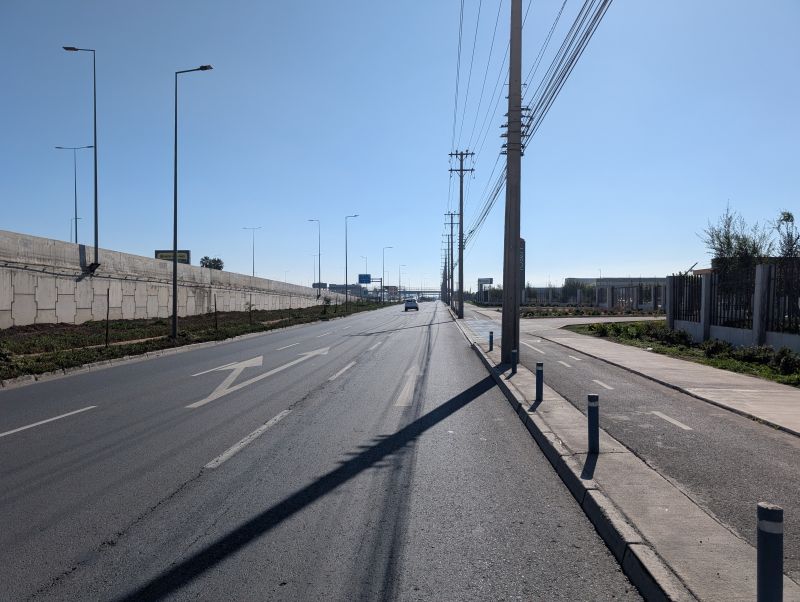
A multi-lane service road almost all to ourselves

A nice cycle path appeared next to the main highway leading north, but even better was the multi-lane service road right next to us. There was almost no traffic (yay for leaving on a Sunday) and we cruised away from the city. Right when we started to get hungry we saw… a McDonalds. This has never happened before, but we all started dreaming of soft serve ice cream and french fries. H begged for a cheeseburger. Obviously we couldn’t say no, and it ended up being such a celebratory stop.

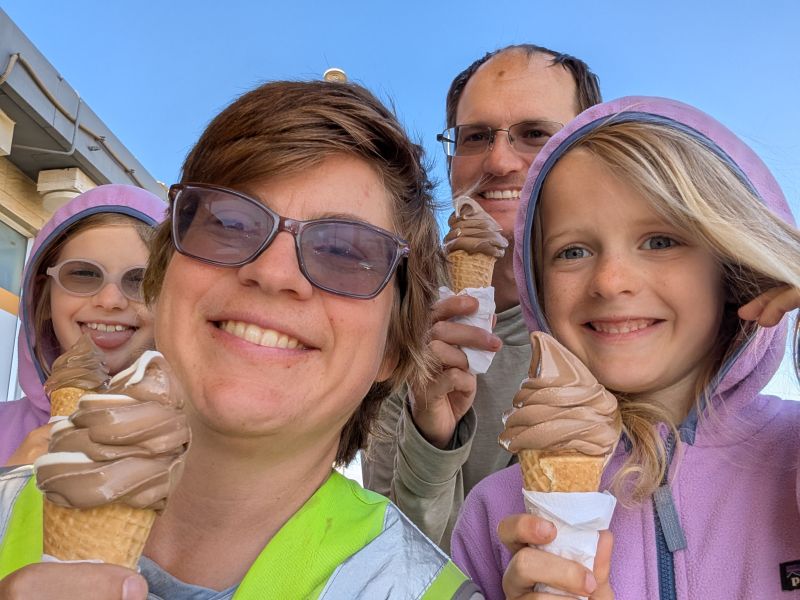
What a family photo, eh?

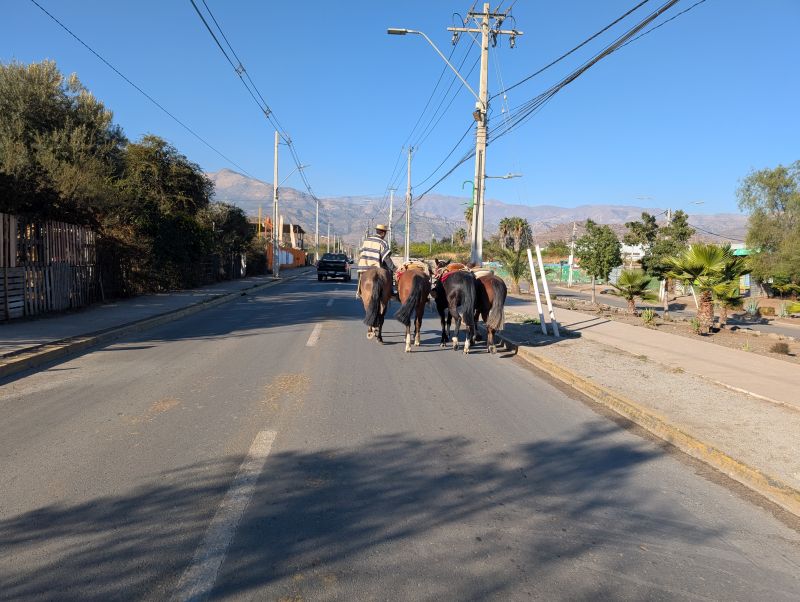
I was shocked at how quickly we went from mega-metropolis to industrial outskirts to small town feeling. As we reached the edge of the town of Colina we began seeing an unusual amount of people on horseback. Actually, by the time we finished our day we saw easily more than a hundred horses. At one point, the horses were trotting along both sides of the road and we were pedaling through the middle. Apparently it was the town’s festival to ask a saint for rain.

Just a few of the horses

We settled into our room on a hill overlooking the city with a view back towards Santiago. We were tired from the day’s ride but deeply relieved to have escaped the city successfully.

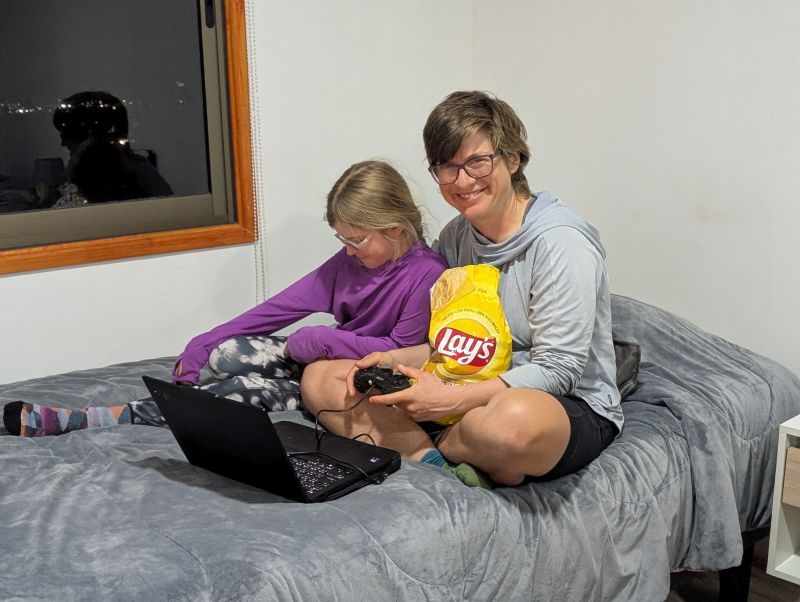
Reward for a day well done: chips and games

Day 136: Colina to Los Andes (54 km / 31 mi)

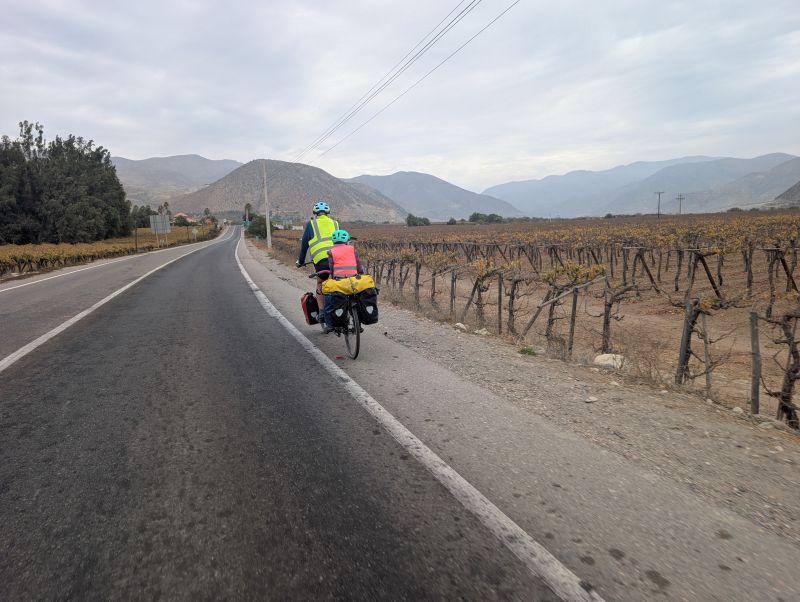
Today was the first of many incredible mountain passes. We climbed about 900 m total (3,000′). The climbing began right as we were leaving Colina on a quiet side road. We joined a larger highway as we reached the top of that climb and then we flew downhill in a wide shoulder. Sure, bicycles were technically not allowed on that road, but there was no alternative! It was fine.

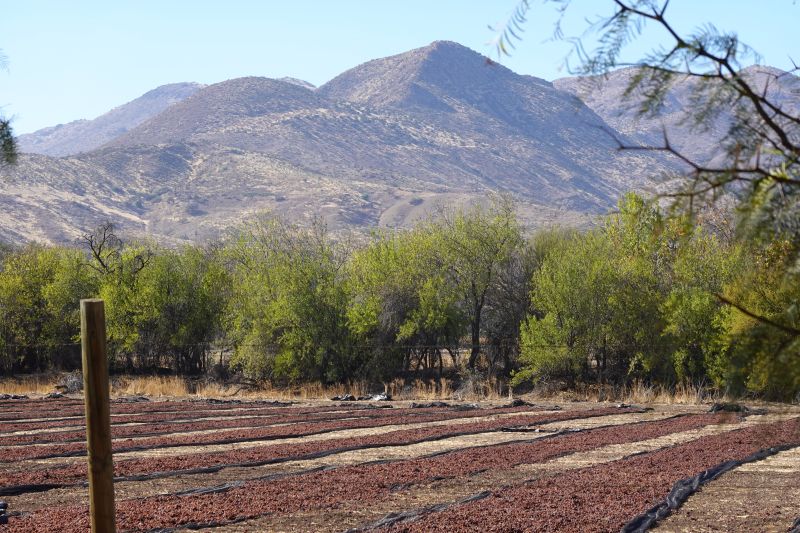
We’ve seen many vineyards, and here they were drying grapes into raisins in large quantities
The highway, and the mountain we climbed over this afternoon

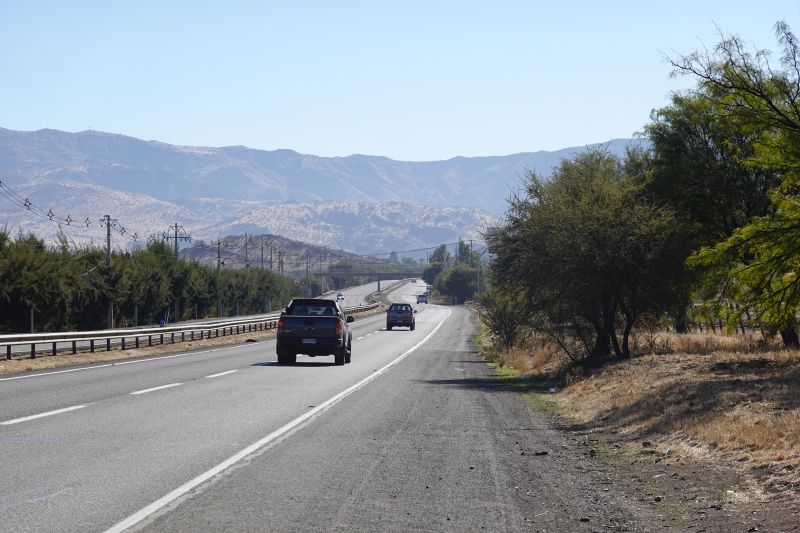
The highway goes through a giant tunnel to reach the next valley over, and there was no way we could ride that section. Instead we were able to pedal the old road up and over the ridge with almost no traffic. After a huge and delicious lunch at a roadside restaurant we turned off the highway and started climbing. It was hot. The vegetation was sparse. We switchbacked up the same hillside all afternoon at 5 km/hr but we made it!

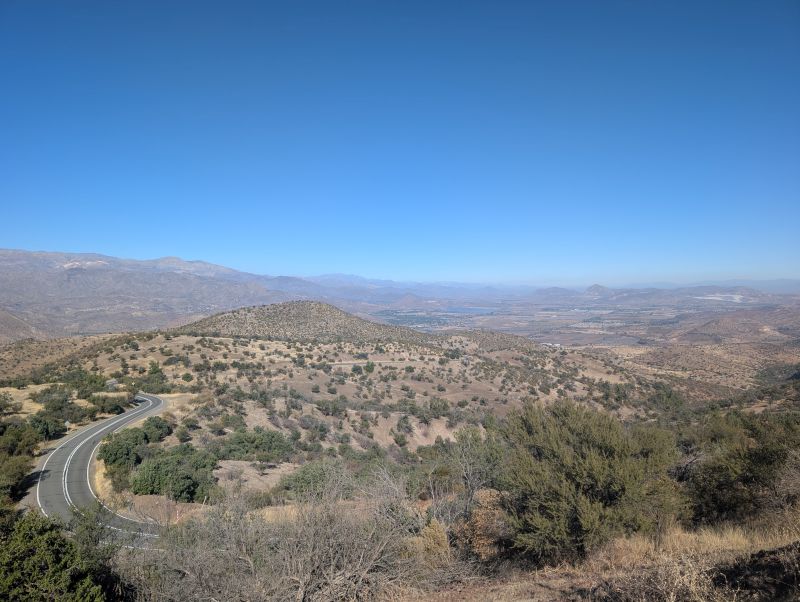
Looking back down on the serpentine road

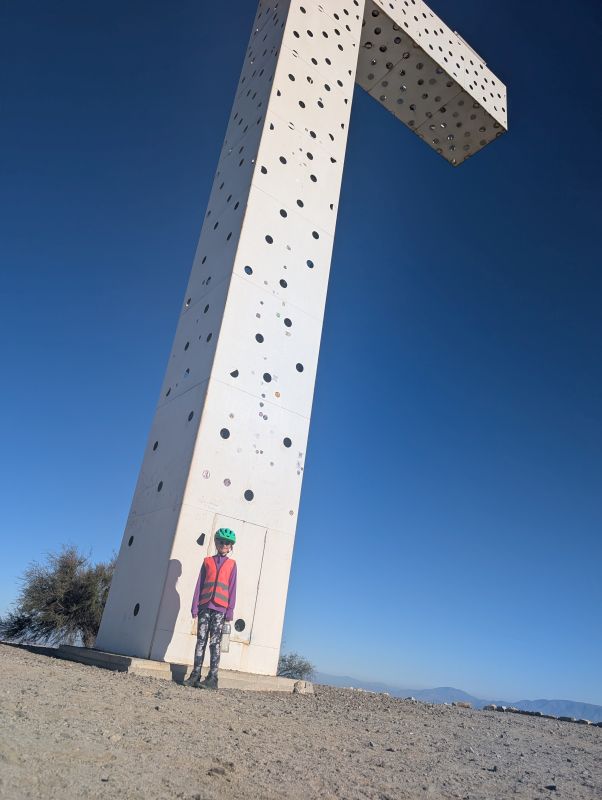
At the top we had views in all directions. A and I even hiked up to the (massive) cross located at the summit. Then we bundled up and headed down. At first the descent was steep with wild curves and switchbacks, then we met up with main highway again. The ramp to the overpass was just about the steepest thing we climbed all day – it was so steep the car behind us stalled out and couldn’t get going again! We kept pedaling though.

Yes, a very, very big cross
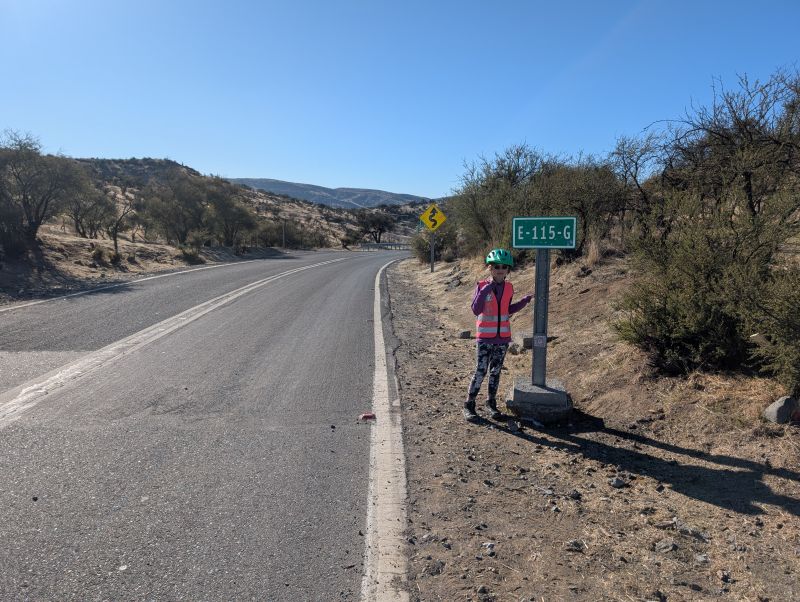
Jason thought we deserved a pass sign, but all we got was this road name sign

When we rejoined the road we were dismayed to see that the wide shoulder we had ridden in the morning was gone. We had no choice but to take the slow lane and start the descent. In the end traffic was both very light and exceedingly polite. It helped that we flew down the road at 50 km/hr! By the time we turned off, at the first opportunity, we were all ready to be off the main road.

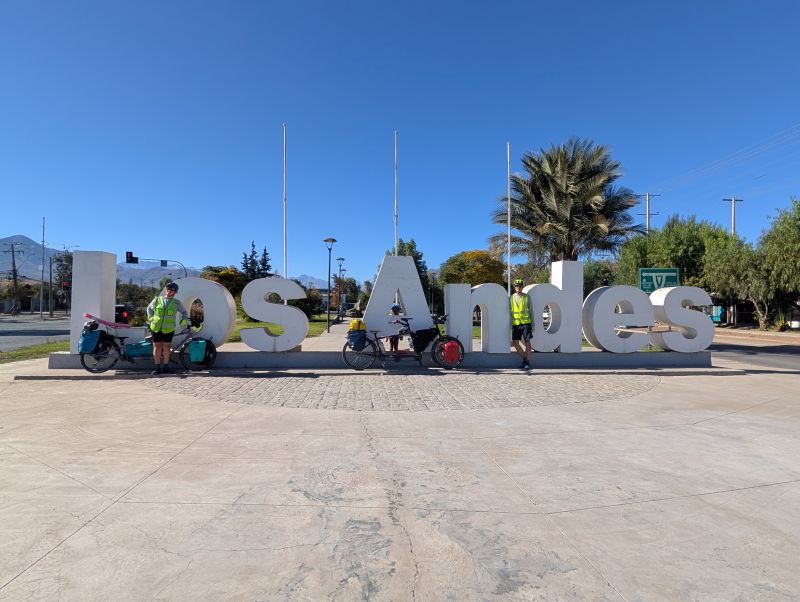
We rolled into the city of Los Andes a little dazed from the big day. A nice guy stopped his car and welcomed us to the city, telling us that the community of cyclists there was small but always willing to help. He gave us some recommendations before we rode off to find our hostel.

This is totally normal, we promise

Day 137: Los Andes to Putaendo (34 km / 21 mi)

We didn’t know this when we arrived, but Los Andes is the last big town before the famous high pass between Chile and Argentina: Christ the Redeemer of the Andes. This pass sits at 12,572′ and although I personally would be delighted to ride it… we don’t think the kids would be thrilled with the effort. Reluctantly we pointed the bikes downhill and rode away.

It was a fast morning into the gritty town of San Felipe, where we tried and failed several times to find an open restaurant with decent visibility for the bikes. Eventually we gave up and headed out of town. We stopped at the edge to buy sandwich supplies and eat a picnic.

The afternoon’s ride looked easy on paper: a gentle uphill into the countryside. However the road was narrower and busier than we expected, so the traffic was heavy and stressful. Even when we were far enough away that the number of cars went down, it was still uphill and HOT. We were baking in the sun! This was pretty new for us, after so many weeks and months of clouds, rain and chilly weather conditions.

This town, Curimon, wins the prize for ‘coolest sign that is hardest to read/see’

We were tired and a bit cranky when we rolled into Putaendo, not expecting much. We were very pleasantly surprised when we reached our cabin near the edge of town: it was practically a tropical paradise! The owner had built this area to be a place for parties and tourism, with old arcade games, picnic areas, bright beautiful plants, and even a pool. We were delighted to arrive and occupy a little one-room cabin.

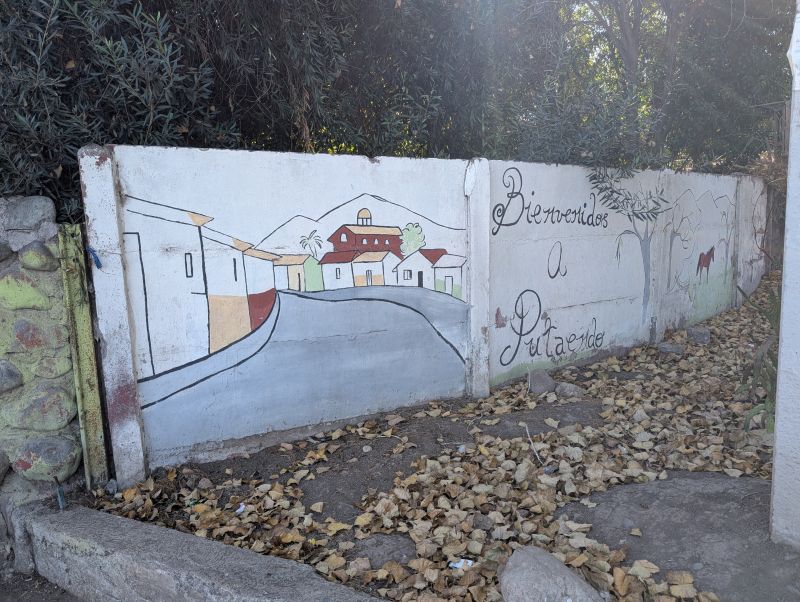
What a cute mural
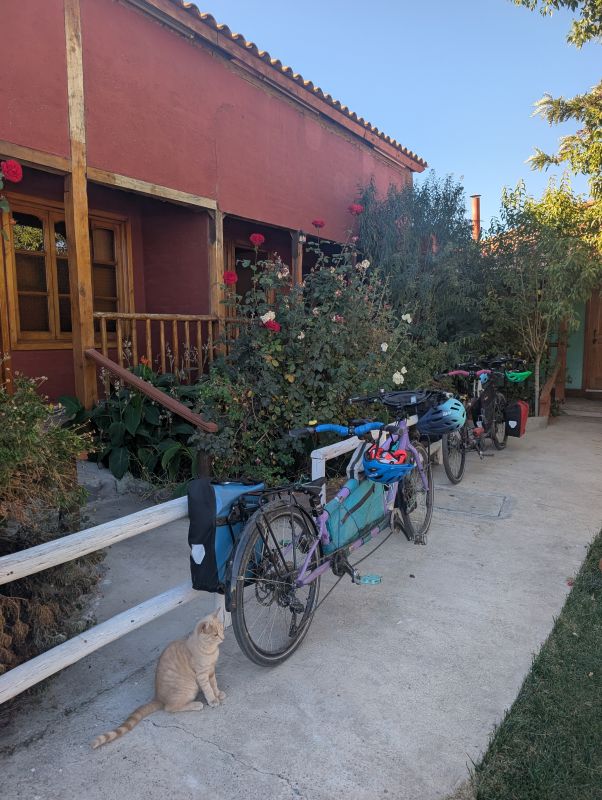
Our bikes get much deserved rest next to the cabin, and with a cat as their protector

Rest day in Putaendo

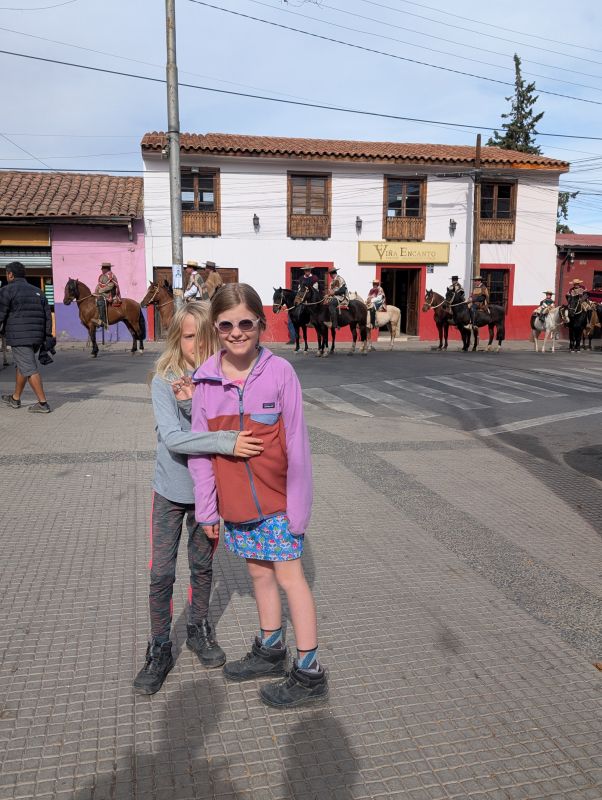
I don’t know how we do it, but it seems like we choose the perfect rest day by chance more often that not. We rested in Putaendo on the same day that the town was having a festival. The historical center is full of colorful mud-brick buildings and a leafy plaza. When we took a walk to check it out we found the place packed with a marching band, a farmer’s market, a big group of people on horseback, and local school kids lining up for a parade.

A + H with juts a few of the paraders in the background

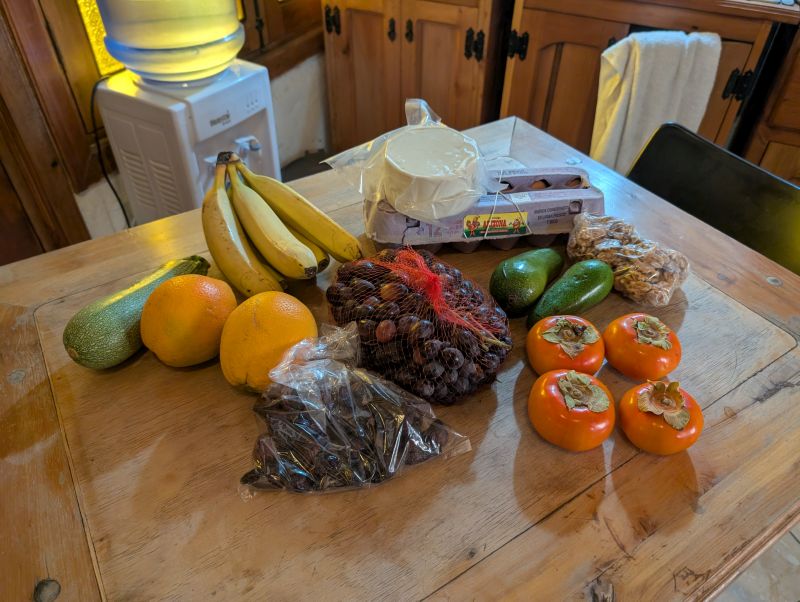
We joined the fun for a bit, buying popcorn and local produce. We even got a pound of fresh goat cheese.

After that it was time to finally fix that flat tire from Santiago (yes, we’d been pumping it up every morning for three days). Jason and I both changed our front brake pads and adjusted our brakes as well. In general, I dislike bicycle maintenance, but on tour it is unavoidable.

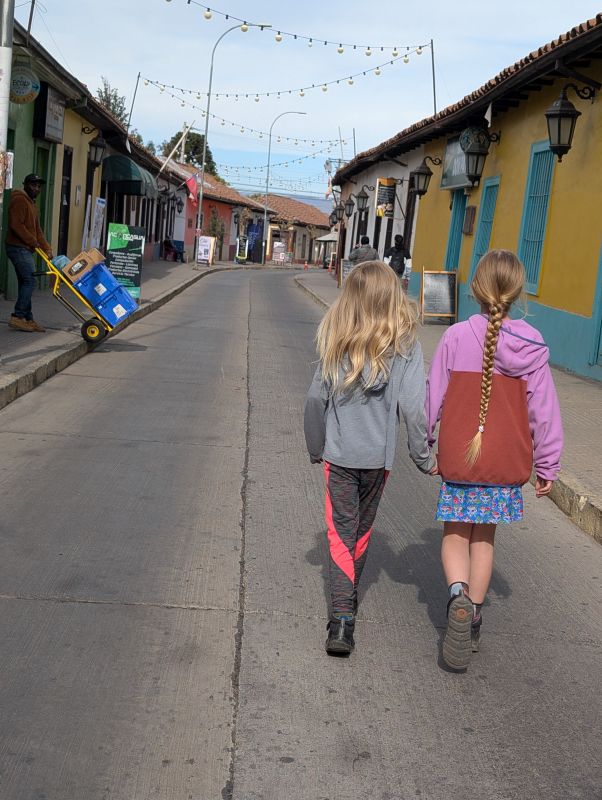
The streets reminded us of a town in Spain, with long blocks of glued-together one-story houses and shops
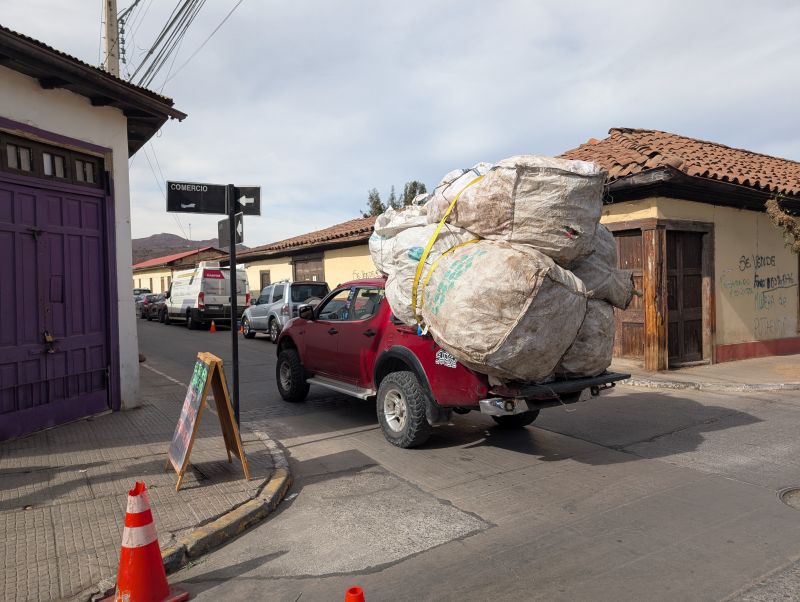
You never know when you might see a loaded pick-up truck
Our haul from the farmer’s market. Yum, yum, yum

Day 139: Putaendo to Cabildo (72 km / 45 mi)

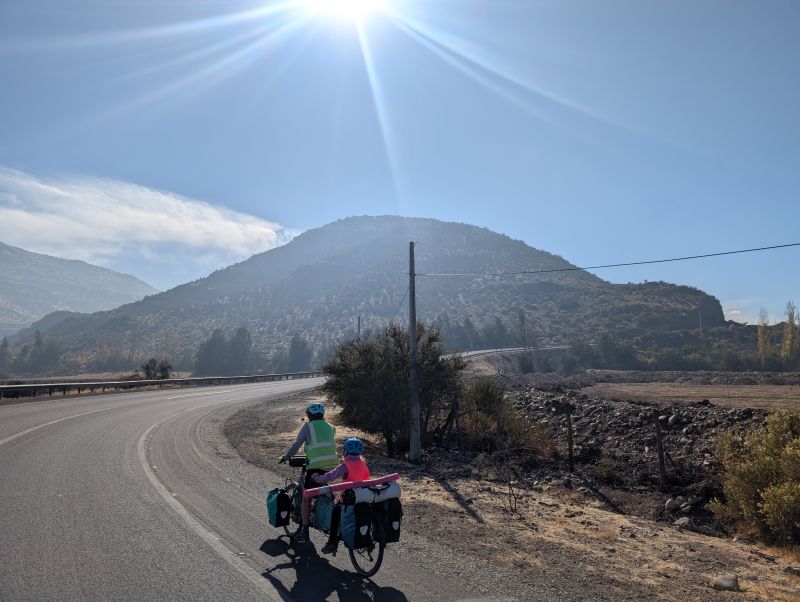
Today was a very long day for us. The morning was a long (but beautiful) climb in the bright sun. Over the top we had lunch enjoying the incredible mountain scenery. This scenery isn’t something we have found in the US – it just feels like these mountains go on forever. They are higher than the Rockies or the Cascades and stretch all the way north to Peru, then Ecuador, then Colombia. It is so incredible to be among these mountains again.

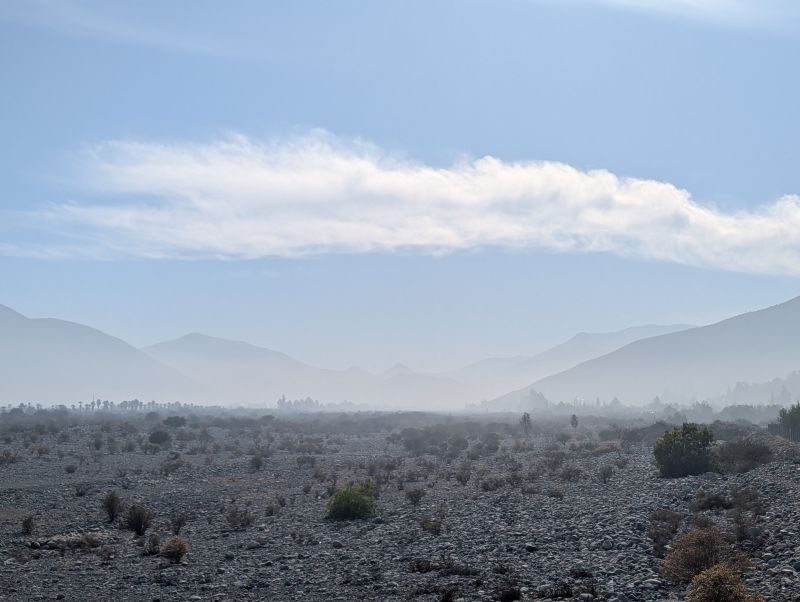
The morning fog was unexpected and quite heavy
Having fun
Nearing the top… the road heads through the pass on the left

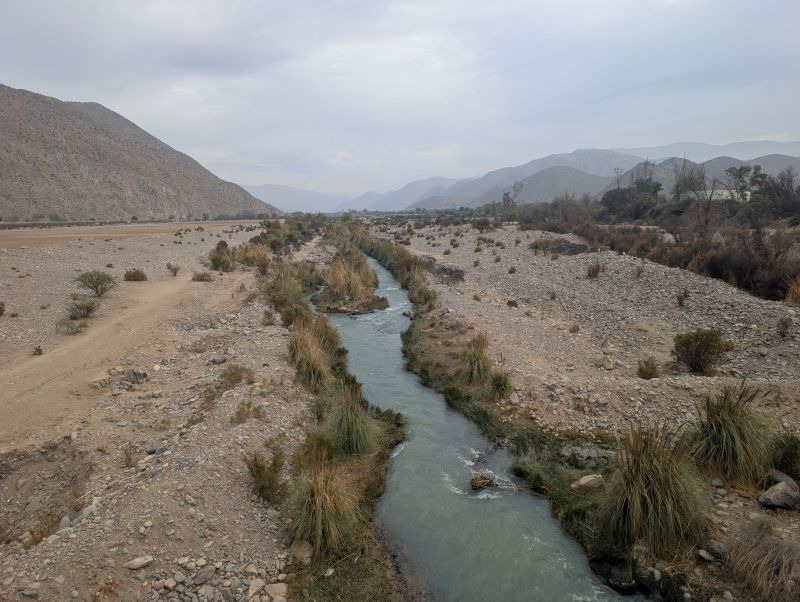
We had planned a long day because of the long descent towards the town of Cabildo. We plunged down along a river as the mountains around us got higher and higher above. What we didn’t account for was the headwind. It was actually very strong and slowed our progress substantially.

The river runs dry due to the orchards

When we finally limped into the town of Cabildo we were tired and night wasn’t far away. We were staying in a hostel near the far edge of town, which didn’t help our morale. Luckily it proved to be a lovely house with a third story ‘lookout’ room on top! We got a couple of huge pizzas from a nearby restaurant and were ready for sleep. The next day we would be starting the ‘ruta de los tuneles,’ the tunnel route.

Hiiiiiiii

Santiago as “typical” tourists

This post is a short update that only covers our 4 days in Santiago, and a few details on our route in and out of this big city. (Cyclists: at the end of this post are maps of our route, which followed cycle paths nearly the entire way.) Santiago is home to about 8 million people, and we really felt its size. Luckily, Daisy rented an apartment in the Triana neighborhood of Providencia, which felt small, quiet, and safely tucked away from the hustle and bustle of the city. Our spot was still just a block from the Mapocho River park and major cycle paths.

View from up on Cerro San Cristobal

We spent our time in Santiago visiting tourist sights, eating delicious food, completing some bicycle maintenance, and, of course, relaxing. A true highlight was watching our last guide dog pup (Mookie) graduate from GDB live. He is officially a working guide dog!

Live Guide Dogs for the Blind graduation ceremony. Mookie and his partner are a great team! Mookie’s co-raisers were able to attend in person (they are awesome).

In the municipal park, we enjoyed riding the funicular up to Cerro San Cristobal and the teleferico back down. We also got an excellent view of the city (and the smog) from Sky Costanera, the tallest building in Santiago, at 300 m (1000 ft) up. We learned more about Chile’s history from the Carabineros Museum, the National History Museum, and Pablo Neruda’s house La Chascona.

Riding the funicular up the mountain
View from Cerro San Cristobal
Santiago sign!
In the teleferico (basically an enclosed ski lift)
View of the Sky Costanera building. The tallest building in South America.
We were above the smog
Chile!
An old map of Santiago in the police (Carabineros) museum
Outside of the museum there were several vehicles, including this armored tank/car that we all got in together.
We must be waiting for something!
Santiago sign in the Plaza de Armas
A unique sculpture inside the National History Museum
Walking a street in Bellavista. The house with the mural is for sale.
At La Chascona, Pablo Neruda’s house

Within just a couple blocks of our apartment there were a ton of restaurants. We especially enjoyed the pizza place just down the street, and our bagel cravings were fulfilled by a cafe around the corner! On the way into Santiago we ran over a ton of glass and other trash on the side of the street and in the cycle paths. From this, Daisy got our first flat tire of the trip. I’ve also had warped disc brake rotors for awhile, that won’t seem to stay straightened. I went on a search to find new ones.

I imagine Daisy feels this. The sign says: A little coffee because hitting people in the face isn’t acceptable.
One of the many delicious pizzas we ate from Pizzeria da Bruno
Bagel sandwiches from Oly’s Bagels
Tasting a “mote con huesillo,” which is a traditional Chilean drink. It is a sweet drink that contains a rehydrated dried peach (huesillo) and cooked husked wheat berries (mote).
The Mapocho river, which is contained in cement
Bicycle maintenance

All in all, we had a fantastic time in Santiago and it was a pleasure to spend several days as “typical” tourists. When we pass back by Santiago on our flights home to the US we won’t have any time to visit the city, so we were glad to experience it now.

For cyclists: Initially, we were quite daunted by the task of choosing a route into and out of a city with 8 million people. Luckily, Santiago has a bunch of cycle paths. A quick web search will help you find several different maps of the known “ciclovias.” In some cases, there are additional cycle paths that extend before/after the ones on those maps. We found the cycle paths safe and generally easy to ride on within the city.

Our route entering Santiago from the south. The terrain is nearly flat. We crossed the “ring road” on Camino a Melipilla and followed the bike path along Av. Pedro Aguirre Cerda towards downtown.
Zoom in of our Santiago entrance route. We headed north on Exposition, east along Av. Almeda Liberator Bernardo O’Higgins, north on Teatinos at Plaza de la Ciudadania, east on Santo Domingo, and on Diag. Cervantes over to the park along the Mapocho River.
Our route exiting Santiago to the north. Ultimately we rode along a service road parallel to route 5 when outside the ring road.
Zoom in of our Santiago exit route. This path was much easier than our entrance – less turns! We followed along the Mapocho River until taking Av. Independencia north. Note that on Sundays some roads are closed to vehicle traffic for “CicloRecreoVia,” including portions along the Mapocho River.

Entering the giant city of Santiago

When we started this cycling trip, our main hope was to make it to the central heart of Chile: Santiago.  This massive city is home to 40% of the country’s population, or 8 million people.  It felt like a bit of a victory just to navigate safe entry into the sprawling metropolis!  We had expected the approach from Santiago to be a bit boring at best, but it turned out to be varied and lovely, with the exception of the chaotic final approach.  In this entry we will cover the days from Pichilemu to the heart of Santiago.

Like everything and everyone else in Chile, we have now passed through Santiago!

Day 125: Pichilemu to Litueche (62 km / 39 mi)

Between Pichilemu and Santiago lays the coastal mountain range, and today we got to climb up and over.  The main event was a 2,000’ (650m) climb that wound through tree farms and past fields, with good views back down towards the coast.  We were dreading the climb a bit, but in the end it was fun!  The grade was gentle and at the top was a pizza restaurant where of course we stopped to eat lunch.

Climbing, with a branch as a pass-safely barrier
Our delicious pizzas at “Pizzalemu”
The restaurant had a view of the Andes, on the other side of the country

We flew back down the other side with Andes in the far distance.  The scenery immediately changed from vast tree farms to big open ranges with dry scrub brush.  We passed many little settlements and sheep farms.  We even randomly saw an emu in a field! 

It was difficult to find a hostal to stay in the town of Litueche.  Apparently the nearby highway is undergoing an expansion, so most of the hostels are full with workers.  We ended up in a place that was safe and friendly, but noisy.  Our rooms were above the kitchen of the bar next door, so the music and the smell of fried food wafted over us during the night.  It ended up being definitely in our bottom 3 hostal experiences.

This grocery store is STOCKED

Day 126: Litueche to Lingo Lingo (45 km / 28 mi)

Despite being tired from lack of rest the night before, this was a good day.  At the top of our morning climb we saw a small parking lot and stopped for a quick rest. Jason made a joke about the empty picture frames being some kind of modern art exhibit. Then I confirmed his suspicions by explaining that yes, it was! You stand in the middle and different wind turbines are viewed through their frames.

Exploring the “art exhibit”

After that, we descended down to the famous Rapel hydro-electric dam.  As we flew down the road we saw a group of two dozen day riders on an organized trip riding up, complete with support vehicle. 

The Rapel dam has an installed hydroelectric capacity of 377 MW and a 249 ft head. It’s pretty big.
Looking downstream

We rode across the massive dam looking down at the drop-off on one side and the reservoir on the other.  Jason had a good time explaining power generation to the girls. 

Crossing the dam

On the other side we wove through huge expanses of avocado and lemon trees.  We stopped at a small minimarket for ice cream, soda, and avocados from the area.  It was exactly what we needed before the last push to our hostal in a very small rural town.

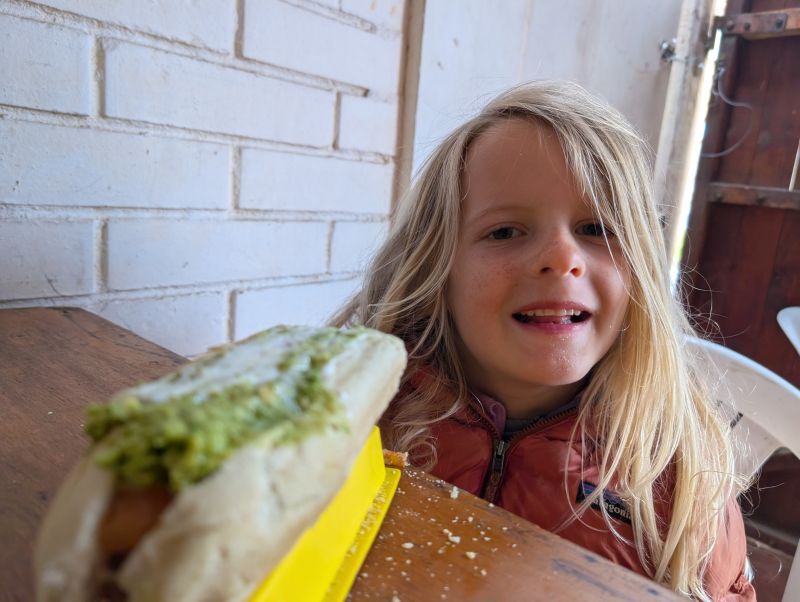
This is the clearest image of the iconic Chilean completo we’ve seen: bun, hot dog, diced tomato, and mashed avocado, with mayo on top

The final roads were small and beautiful, winding along through small farms and homesteads.  Our destination in the tiny settlement of Lingo Lingo was a family-run hospedaje and greenhouse.  We were welcomed with fresh juices made of raspberry and strawberry, and we met a whole pack of the family’s dogs (from naughty puppies to senior collies) and cats (at least 3 or 4 kittens)!  With the headlines about hantavirus in South America the owners wanted more cats to keep their home free of rodents. It was a very lovely opportunity to chat with the owners about life in small-town Chile.

A rare moment of calm when Yappy wasn’t jumping on us

Day 127: Lingo Lingo to Melipilla (51 km / 32 mi)

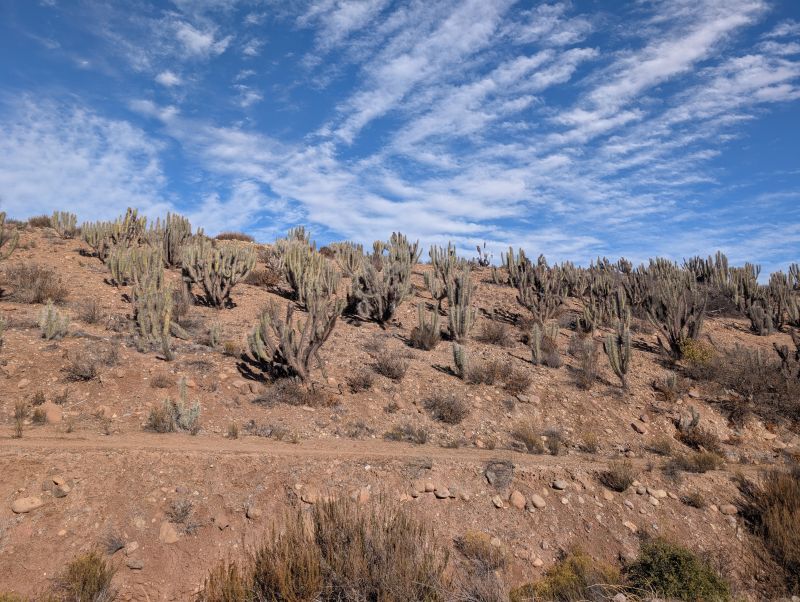
We chose a longer route on a side road for this approach to the city of Melipilla, and it really paid off.  We spent a delightful morning riding alongside the river Maipo and passing hillsides full of huge cacti.  It was almost surreal to be there riding past the cacti when we had started so far south in Tierra del Fuego.  We really felt that huge distance as we passed the desert flora. 

The land is definitely drier around here
We were surprised by a heavy fog this morning
There were very large cacti around every turn
Cacti and bushes dotted the hillsides

It was a Saturday, so we expected to find lunch spots along our route, which went through many small towns.  There were certainly parties happening, and soccer games being played, but no open restaurants!  In the end, starving and hot, we grabbed sandwich supplies from a minimarket and turned down a long driveway to have a little picnic.  A geriatric and friendly German shepherd watched us hungrily until we finished.  Then we gave her a stack of cheese leftovers as a reward for her patience.

We’re enjoying the ride!
A typical pet food store. We have seen these across Chile!

One big hill remained between us and Melipilla and the road was busy with no shoulder.  We managed to find an alternate road with a wide bicycle lane that took us right to the top before rejoining the main highway.  Once we were flying down the descent we had no choice but to take the lane and slow down traffic.  In the US, this would mean angry drivers. Somehow though, no one honked in anger and when we eventually found a place to pull of and let traffic pass everyone smiled and waved at us as they drove by.  What a difference!

The city of Melipilla is only an hour’s drive from the huge city of Santiago.  About 60% of the residents commute to Santiago for work.  Jason managed to track down a house to rent for a couple nights in one of the fancier suburbs.  The owner met us at the house and invited us to eat lunch with his family the next day.  Of course we said yes!

Our final entrance to Melipilla pushed us on an unofficial bike path

Day 128: Rest day in Melipilla

Our typical rest day is to do whatever chores or tourism in the morning, then relax all afternoon.  We had to flip the routine for this day though, since we had the invite for Mother’s day lunch. 

It was an absolute treat to be welcomed into a Chilean family home.  We met the three kids (ages 6, 8 and 18), talked about the schools in Chile, and about the ‘hustle’ of Chileans to figure out ways to make money.  They made ‘Pastel de Choclo’ which translates as ‘Corn Cake’ but is actually akin to Shepherd’s pie with polenta in place of mashed potatoes. (And it is delicious!) By the time we headed home the girls had ridden scooters around their cul-de-sac and we were all tired.

Pastel de choclo, a traditional Chilean food
Scootering down the block with a new friend

Day 129: Melipilla to Lonquén (41 km / 25 mi)

We had very carefully planned today to stay on separated cycle paths for nearly the entirety of the ride.  It was flat and boring, for the most part, but it was very safe.  There was a lot of traffic, and the cycle path fluctuated in quality, but it brought us through increasingly busy towns in the periphery of Santiago. 

Our lunch spot in the Unimarc parking lot

We stayed the night in a countryside AirBnB that was behind not one but TWO gates, neither of which we could open on our own.  People around this area are very concerned about the crime in Santiago, so security is a top priority.  We felt a little bit like hostages, but safe and comfortable hostages at least! 

Our canine welcoming committee

Day 130: Lonquén to Santiago (44 km / 27 mi)

This was the big day!  We had again planned a route of separated cycle-paths for all but a few kilometers. 

The morning dawned…  foggy. It wasn’t ideal, but it wasn’t bad enough to stop us either.  We rolled through the last of the countryside on a separated bike path.  At one point we saw a truck take a turn too fast, and because it was piled high with wood pallets they spilled out into the road.  At another point a truck carrying fruit blocked the cycle path completely, and the owners kindly offered us a handful of grapes for each girl. 

One incarnation of a bike path, of many for the day
Some absolutely delicious grapes

Soon the countryside feel evaporated entirely and we were in the industrial outskirts of Santiago.  The cyclepath continued, but factories lined the road on both sides.  We stopped for a quick lunch at a busy empanada stand.  One of our tricks in choosing where to eat is to go where the local workers are.  It hasn’t failed us yet.

Lunch stop
There was a lot of traffic
First (but not last) time we saw a fire hydrant in the bike path!

The true ‘city’ started when we crossed the perimeter highway on a pedestrian overpass and dropped down the other side.  Remarkably it was a 3-revolution spiral bicycle path that led us into the city.  We started to cycle past more and more apartment buildings, and then eventually we were in truly chaotic and hectic commercial areas.  At one point a street market took over the cycle path and the street nearby was filled with cars parading by (honking) as part of a funeral procession.  We turned around and skedaddled.

A nice straight section of bike path
The point when you realize it is time to turn around

Finally we entered the true center, complete with busy bus stops and cobblestones.  It was with great relief that we finally turned down the street where we were staying.  By good luck and persistence on AirBnB we had rented an apartment in a small historical building on a quiet sidestreet in the area of Providencia.  It was close to many of the city’s hospitals and thus had so many options for food.  There was also a secure parking area for our bicycles!  The girls quickly collapsed on the couch to play Zelda while Jason and I went downstairs for cookies and a latte.  We made it! 

By the Plaza de Armas in Santiago
A great section of bike path
Jason demonstrates that the bike path comes complete with foot rests at road crossings