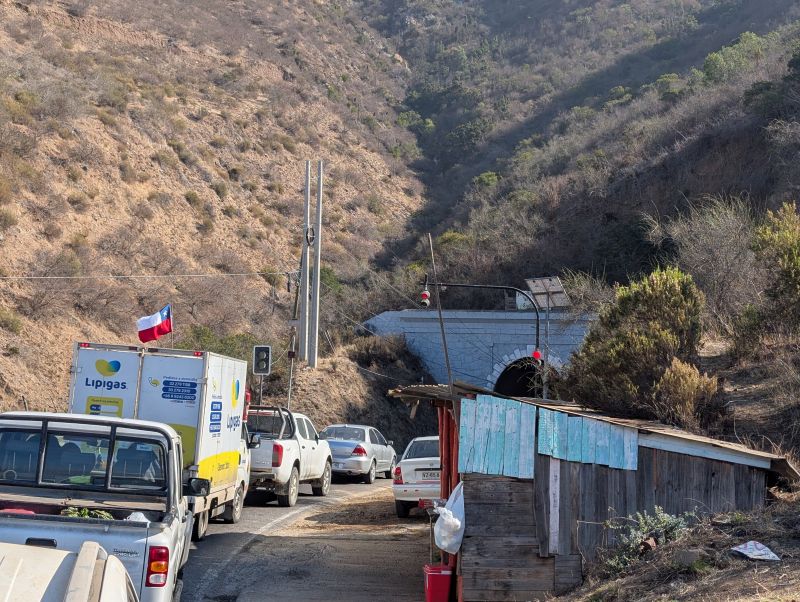
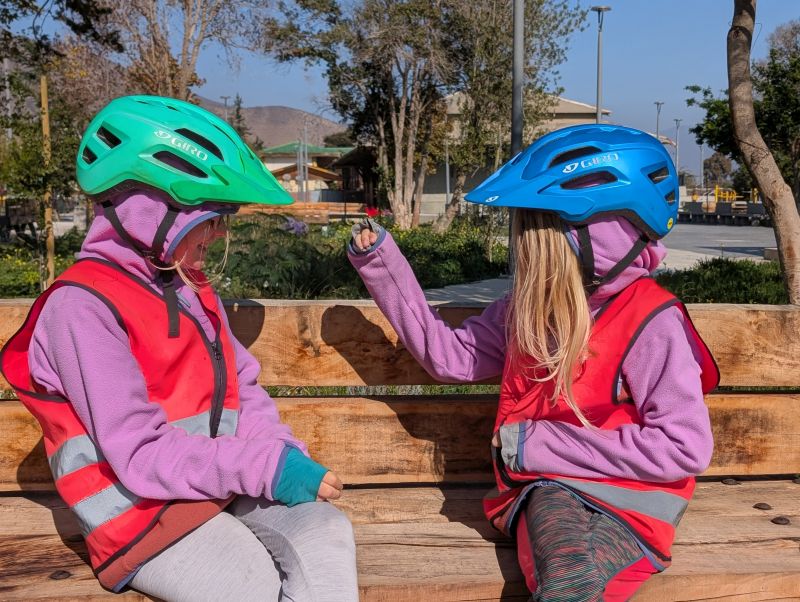
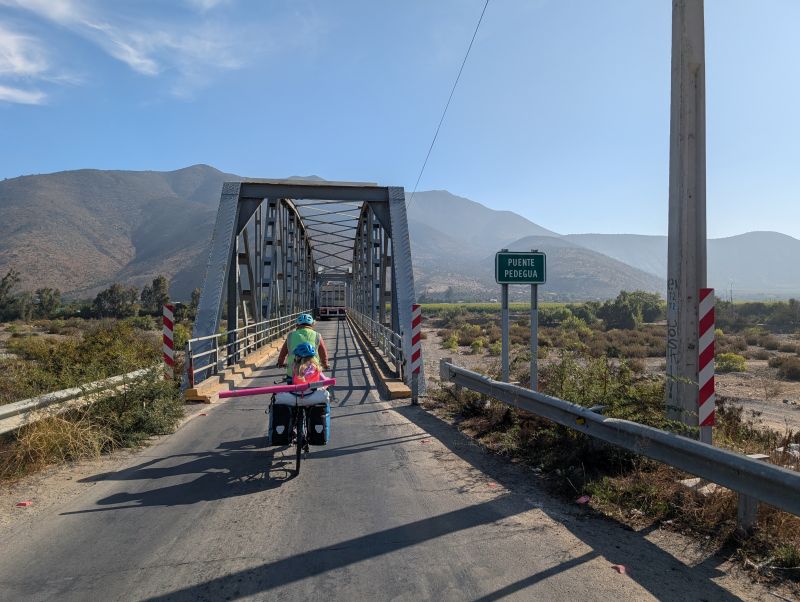
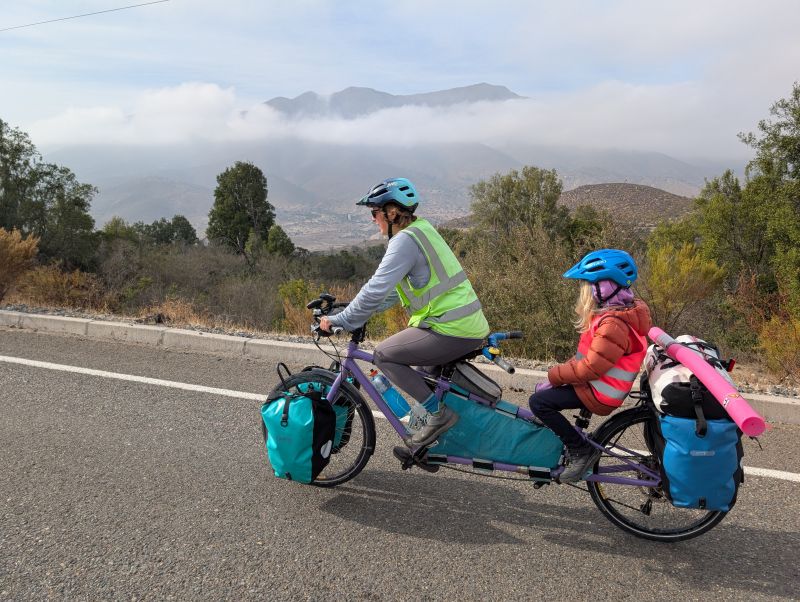
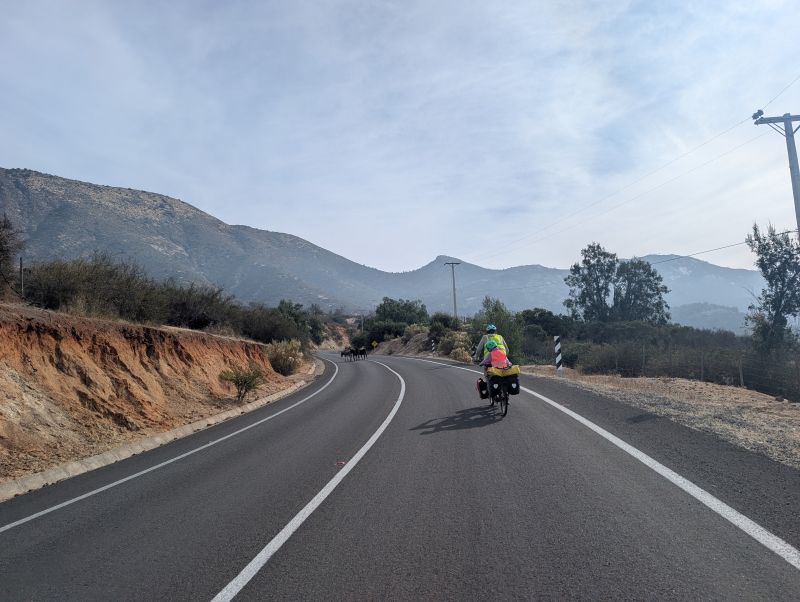
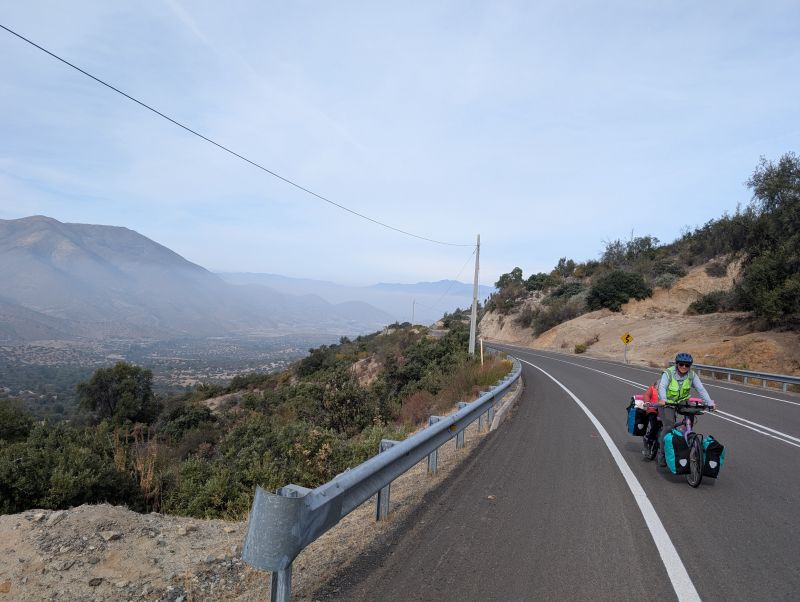
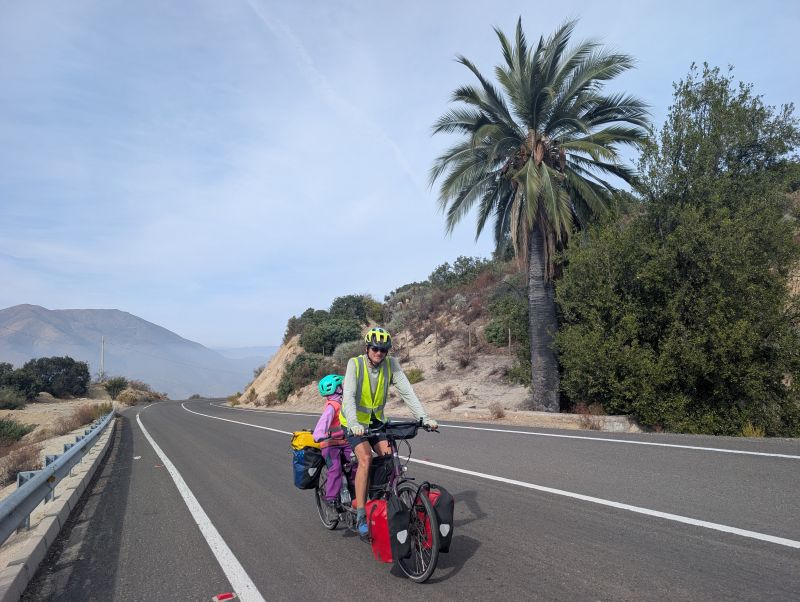
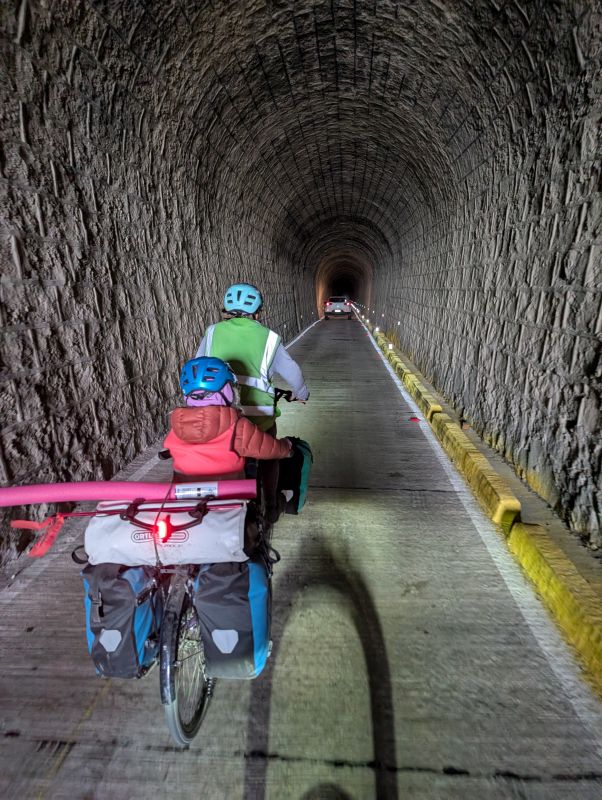
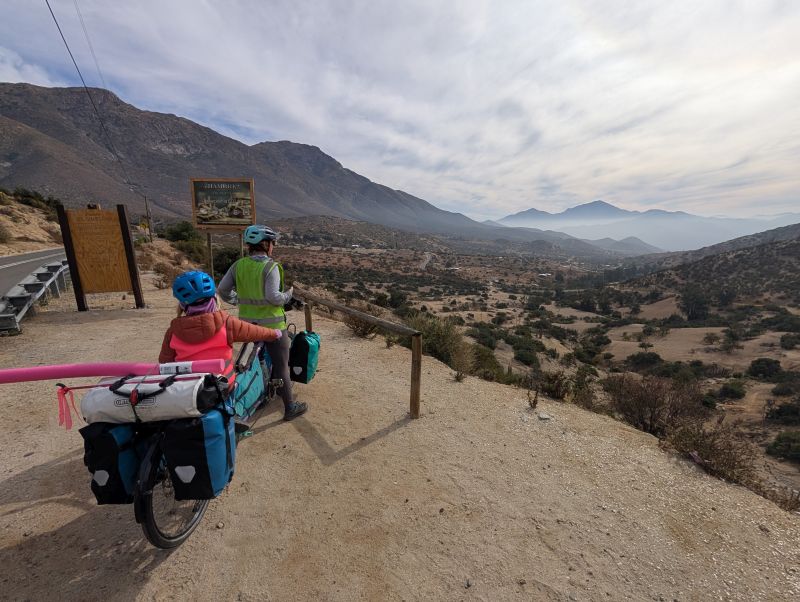
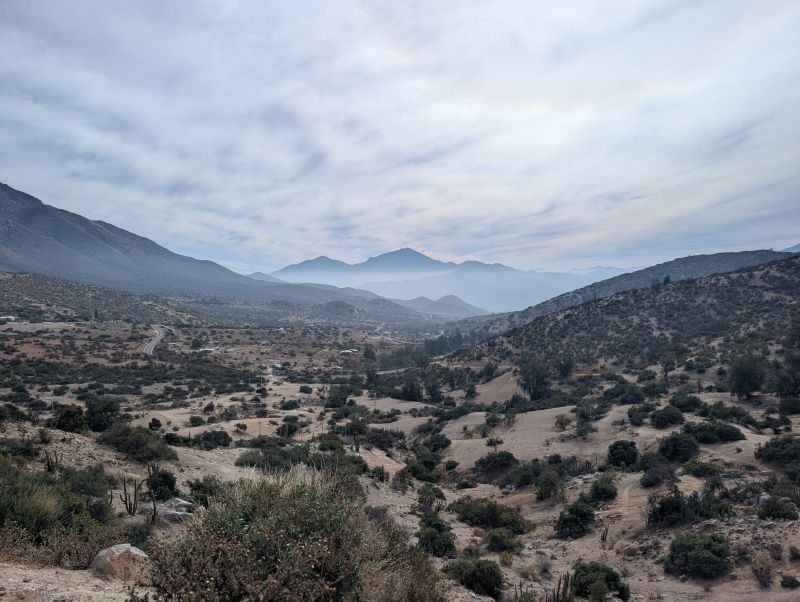
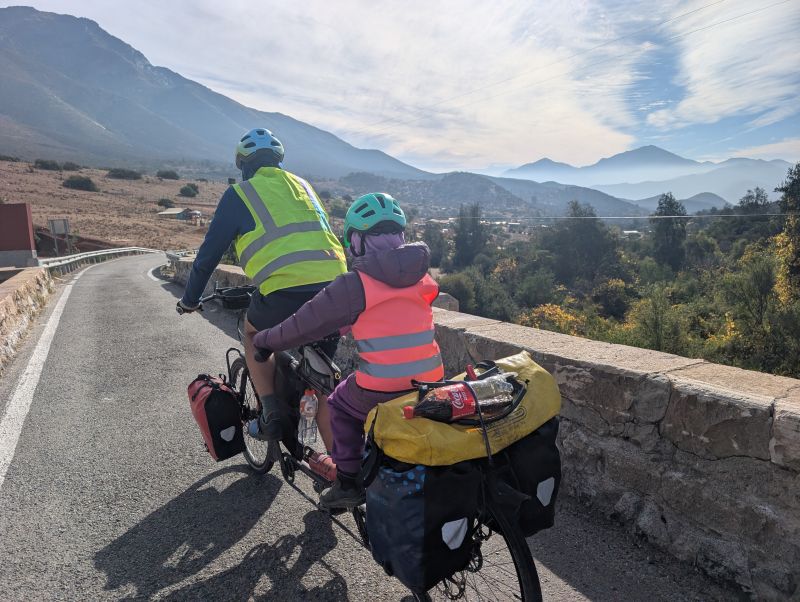
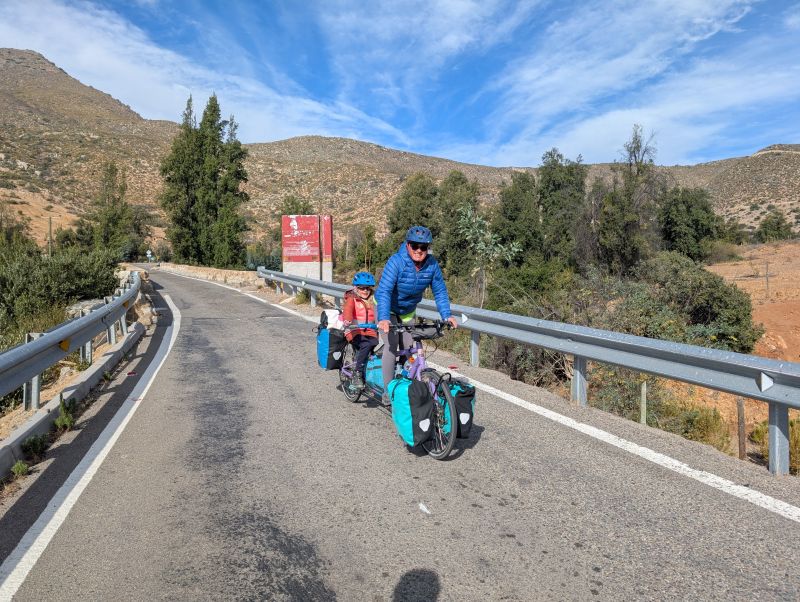
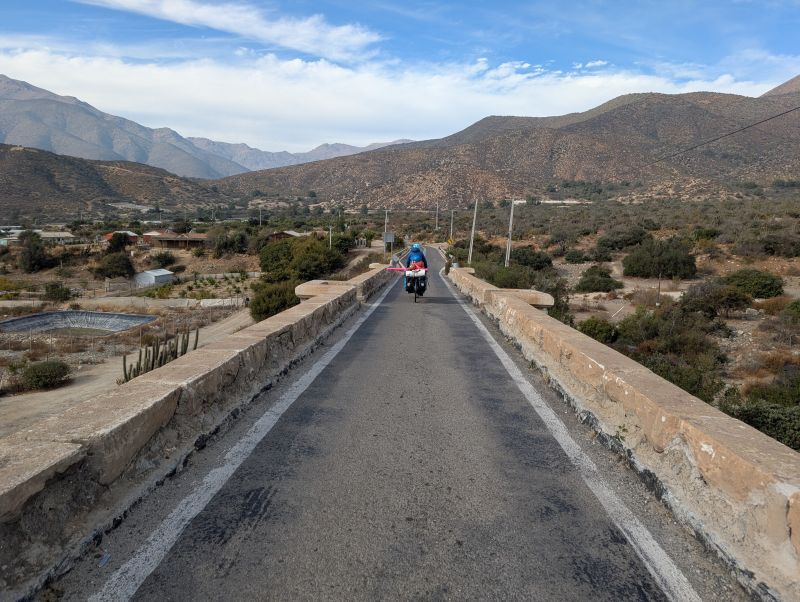
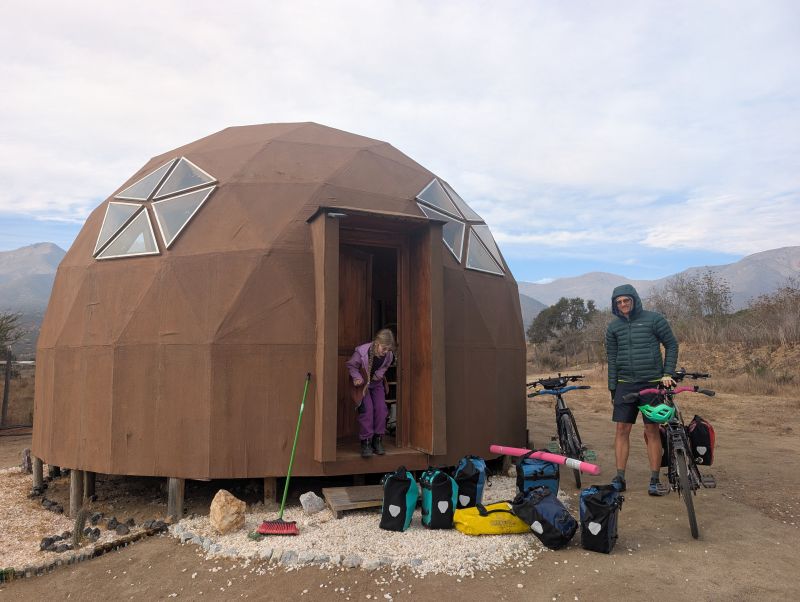
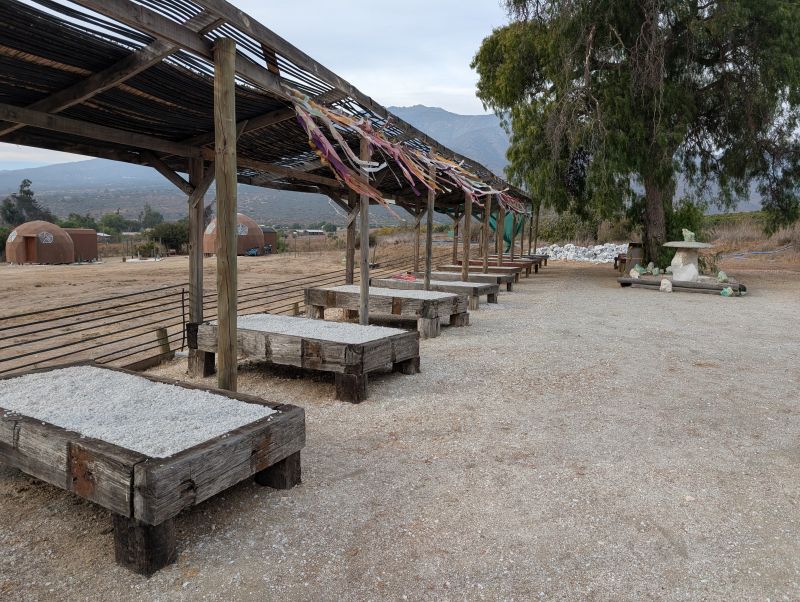
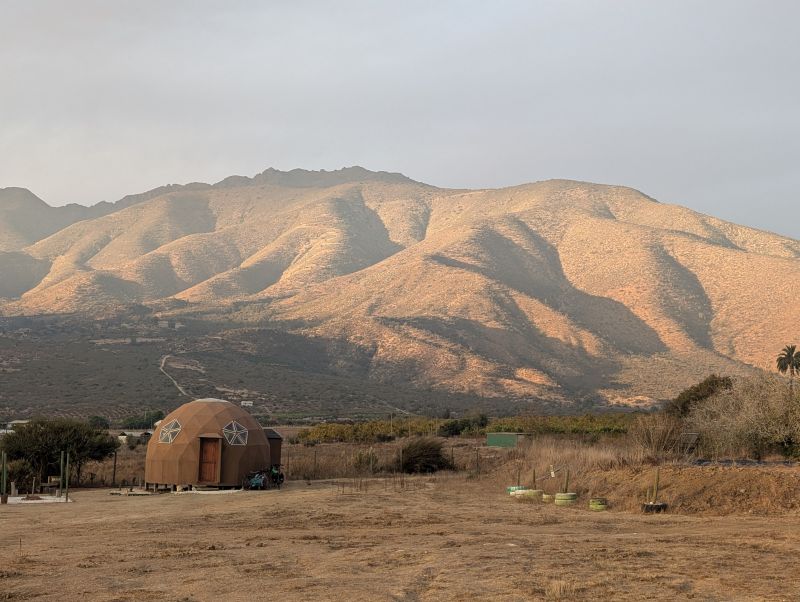
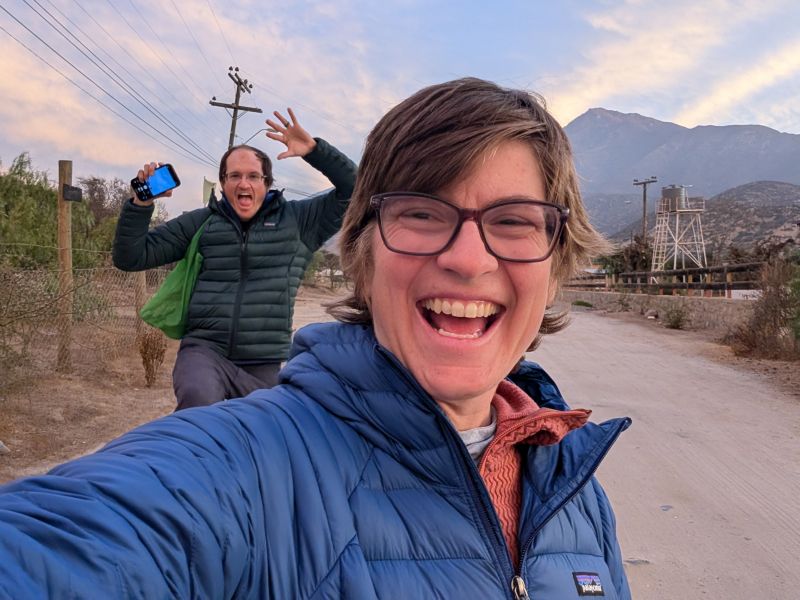
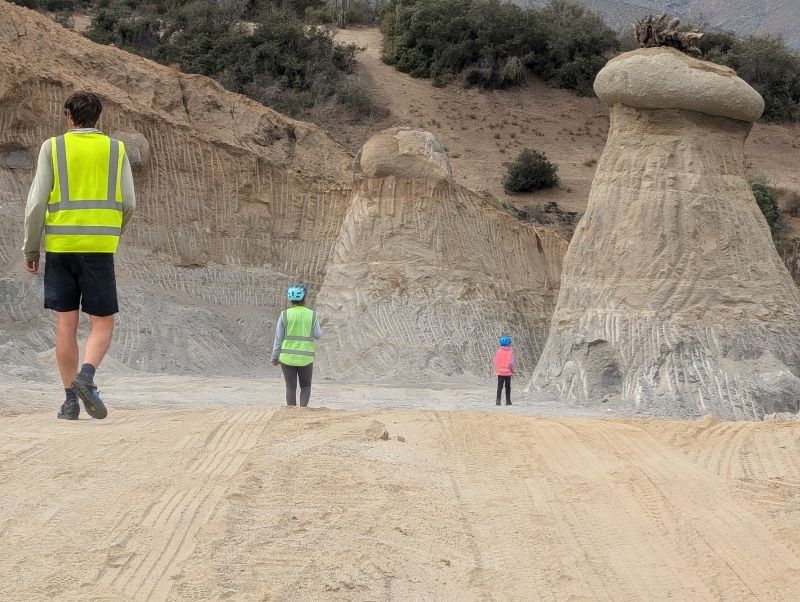
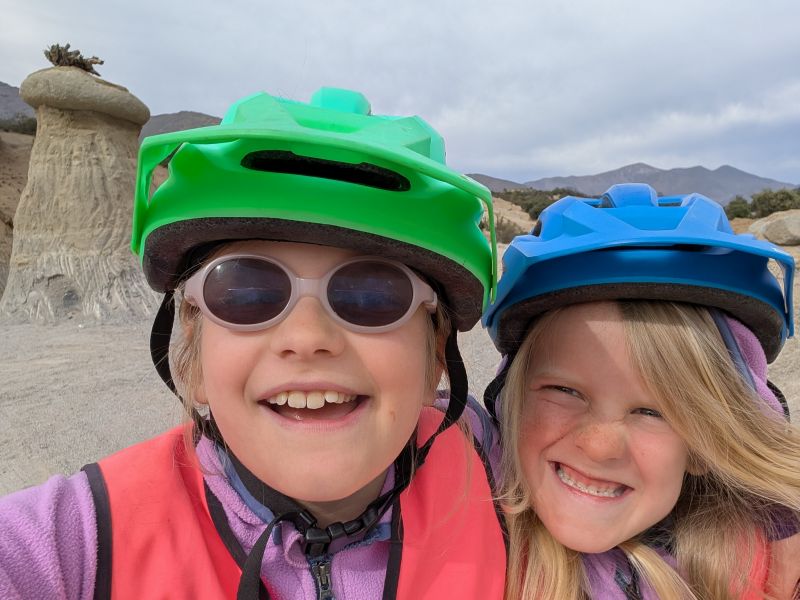
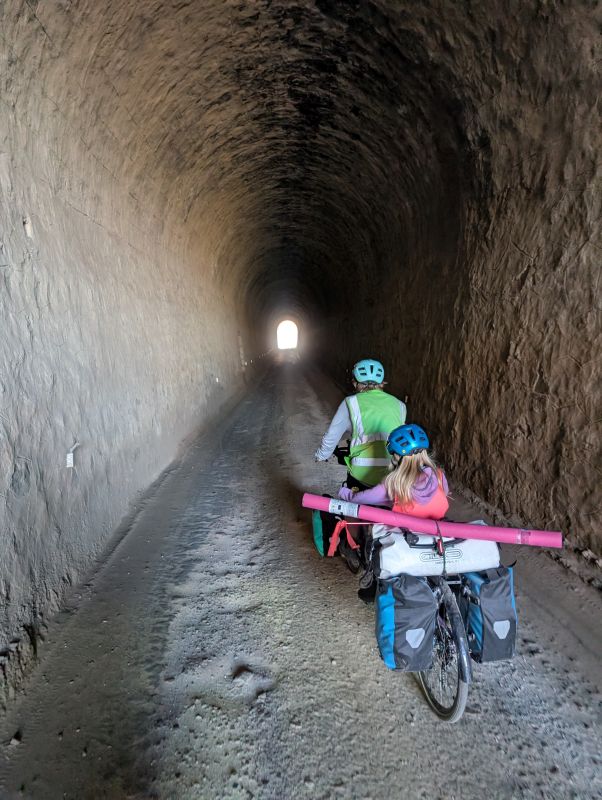
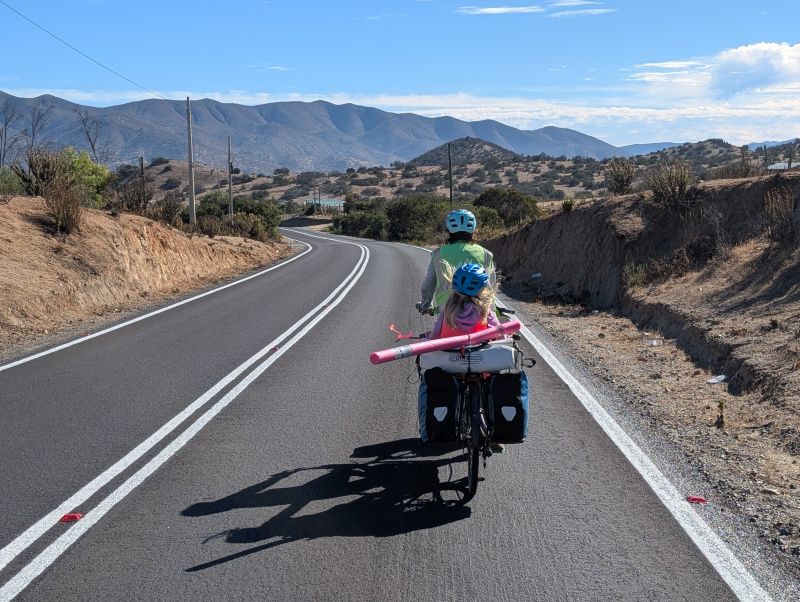
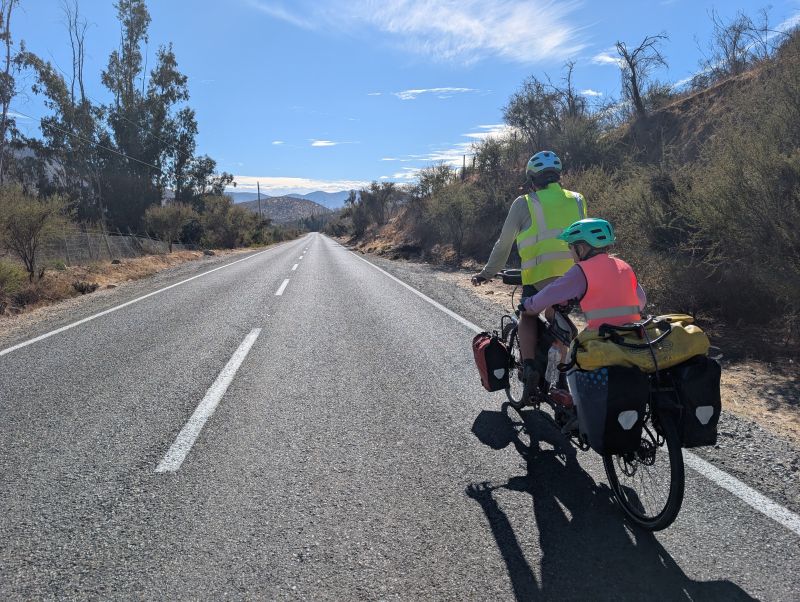
After finishing the route of the tunnels we continued on interior roads, heading north as always. We really enjoyed this section. There was a lot of climbing, a lot of cacti, and beautiful places to stay.
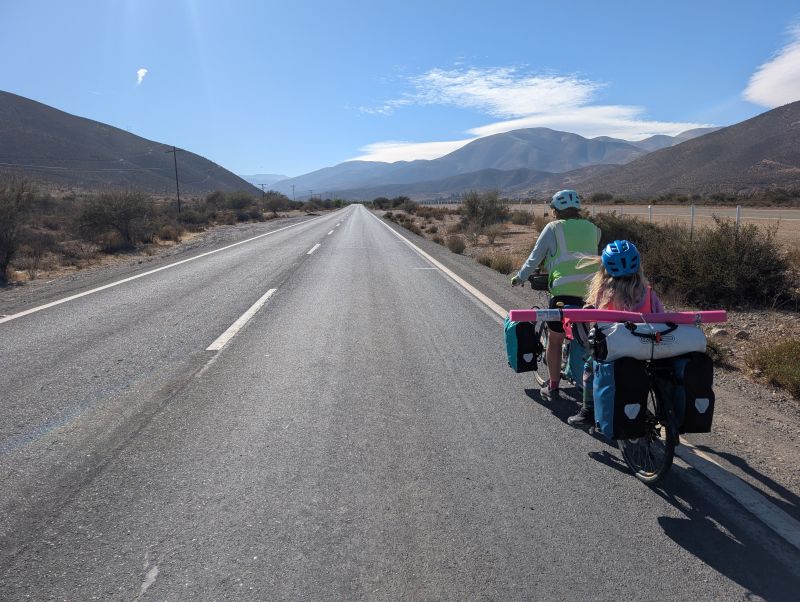
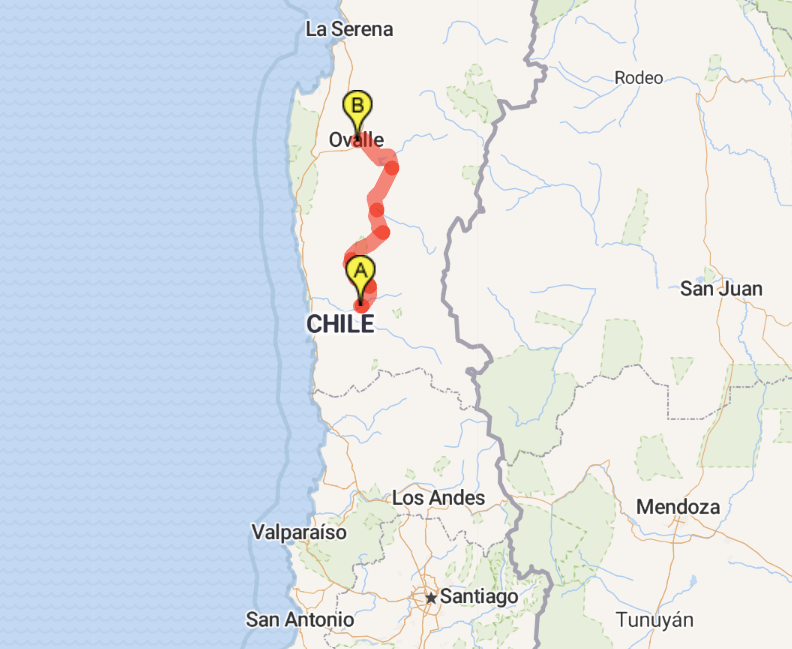
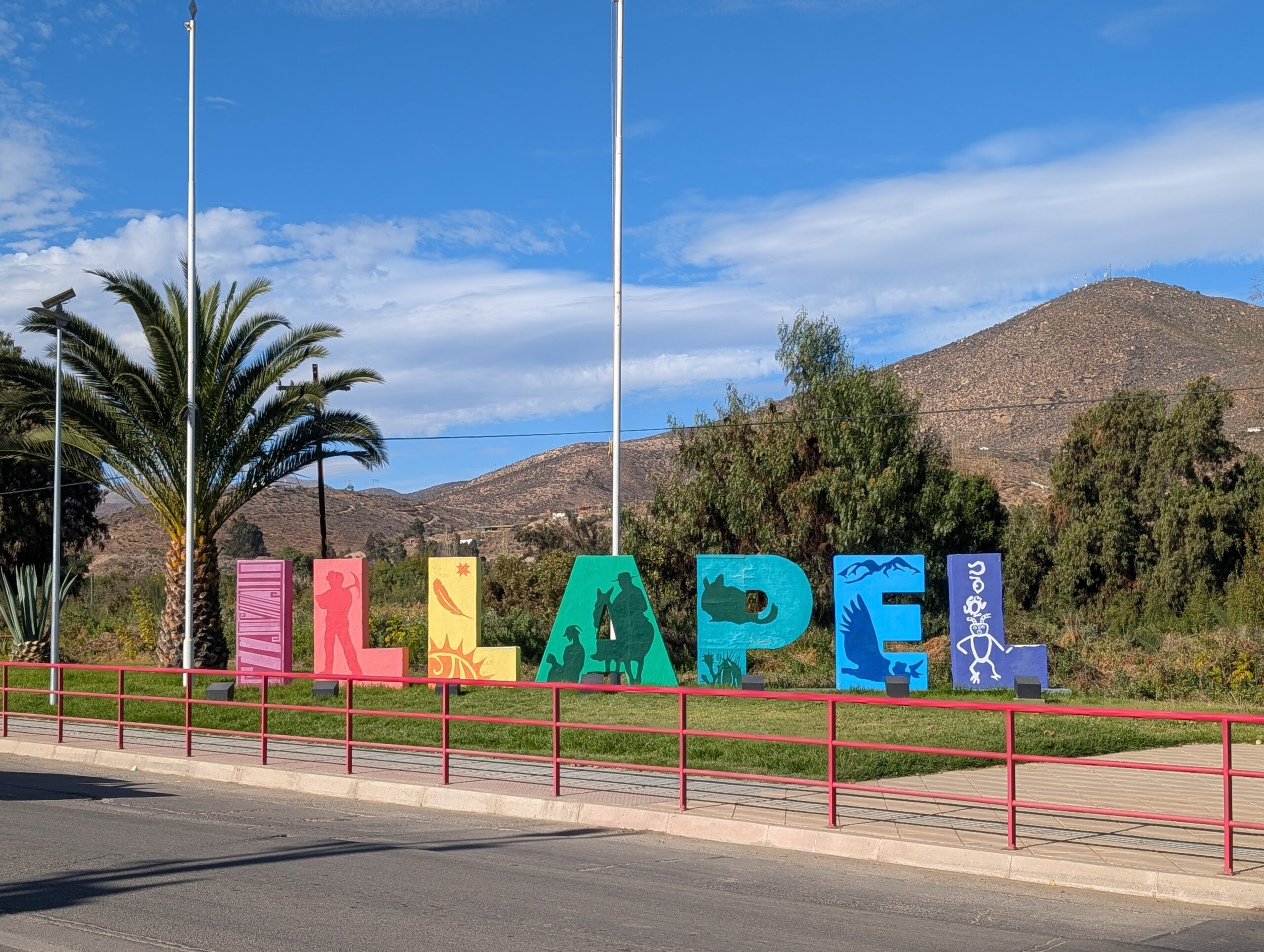
Day 146: Illapel to Reserva Nacional Las Chinchillas (18 km / 11 mi)
This was a short day, since we planned to stay inside the National Chinchilla Reserve. We lazed our way through the morning at the friendly Sherpa Hostel, then easily got out of town. The road wound through several small settlements along the hillside. Just when we were finally seeing the last of the settlements we realized that we had forgotten to refill our cooking fuel!
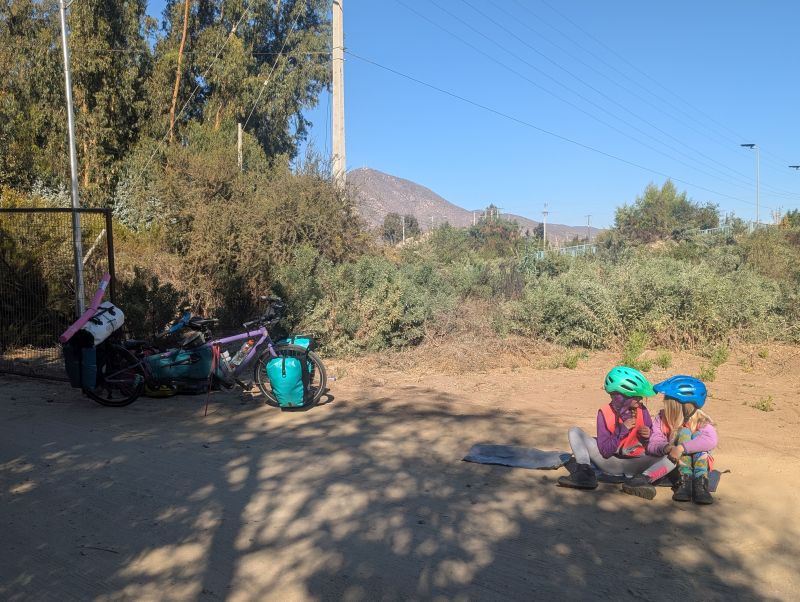
We use gasoline for our stove, and we expected to need it for the next couple nights. After a quick check of the maps we decided to send Jason back 4 km each way to the gas station while the girls and I sat in the shade and waited. It worked out! Apparently Jason had a much more adventurous half hour than we did. He got yelled at by some drunk guys, had a good chat with the guy working at the gas station about his sister who lives in Miami, and then got invited to get coffee by a passing cyclist! He had to turn down the invite though, since we were waiting. We passed the time drawing pictures in the dirt with a stick.
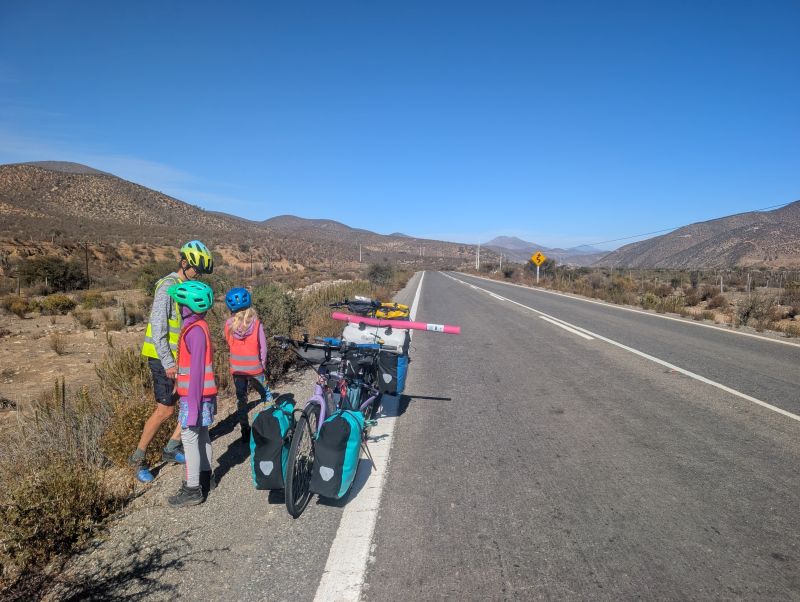
Back on the road we spent the rest of the day climbing gently up an increasingly dry valley. Jason and I remembered the valley from eleven years ago. Back then we took a slightly different route, skipped the Chinchilla reserve and tackling a long, challenging dirt climb. Today we kept left at the fork to stay on pavement!
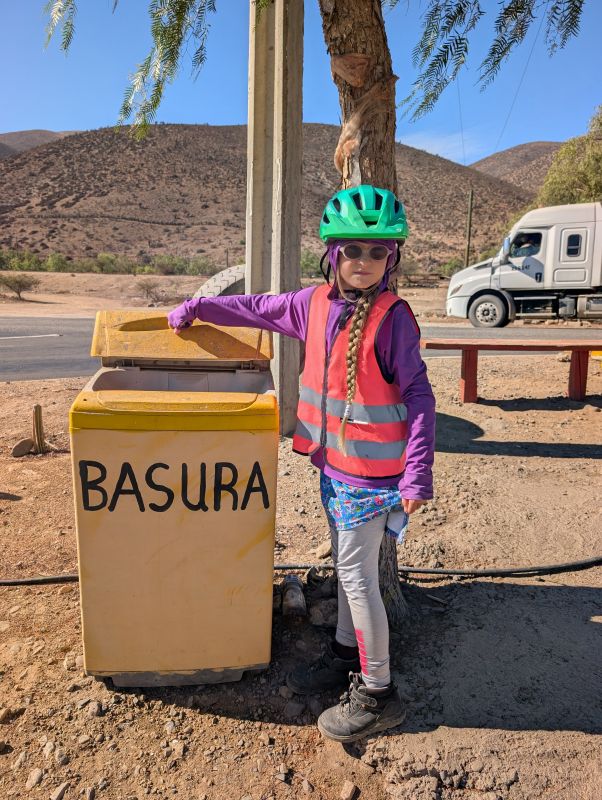
We stopped at a little convenience store to buy some avocadoes and were very amused to find several garbage cans fashioned out of old wash machines.
Just up the road we reached the Reserve. As we turned in, the park ranger came down to greet us. He was so friendly! We had called and emailed ahead of time to ask for space in the ‘cabin’ that we had read might be available. We had no idea what to expect. It turns out it was a lovely two-room cabin with a full kitchen, bathroom, and dining area. It was lovely, and right next to the visitor center. After we dropped off our gear we were given a tour where we learned about chinchillas and the reserve.
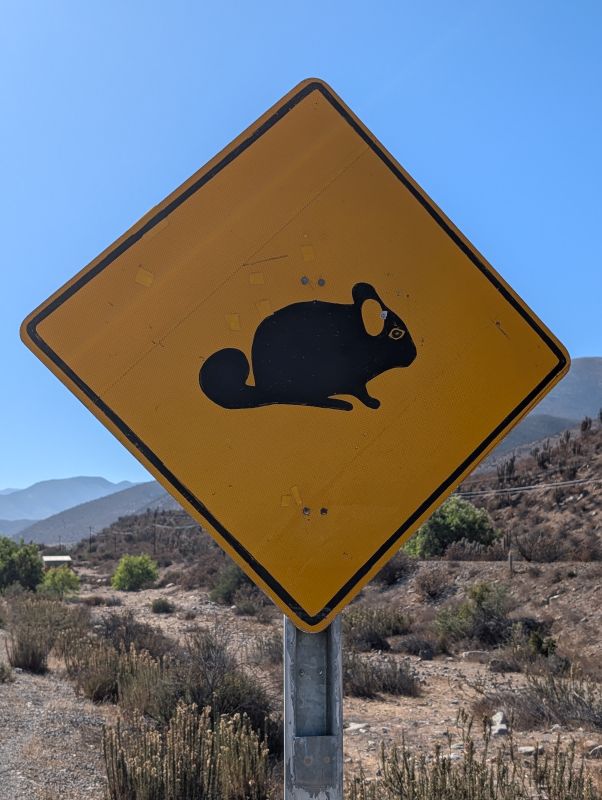
Chinchillas are extremely adorable desert rodents that were once highly prized for their extremely soft fur. They were hunted nearly to extinction in the 1910’s, when over 20 million were killed and turned into jackets and comforters. Today they live in a much smaller area than they used to and in dramatically smaller numbers. About 14,000 live in the reserve. 6 (that wouldn’t survive in the wild for some reason or other) live in the reserve’s ‘nocturama’, dark display area, and we were able to see them. We spent the afternoon taking a little hike to learn about the desert plants and then relaxing in the cabin.
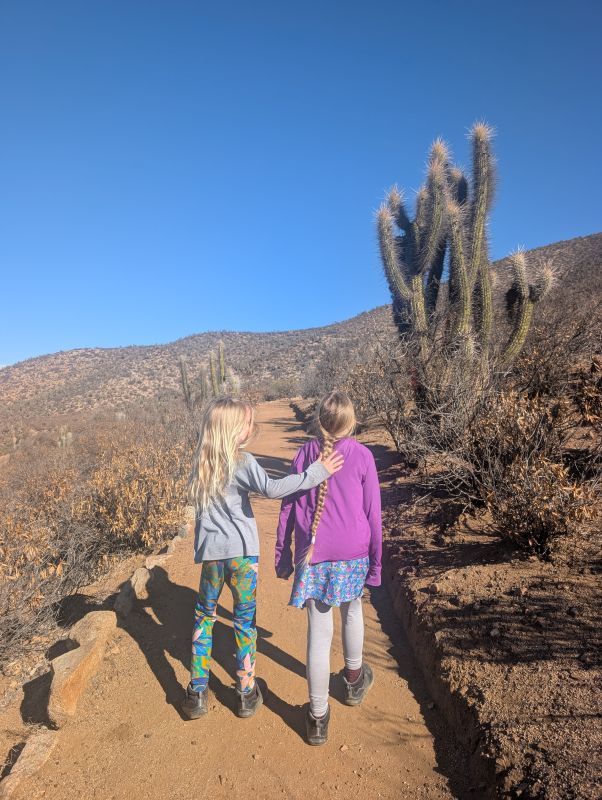
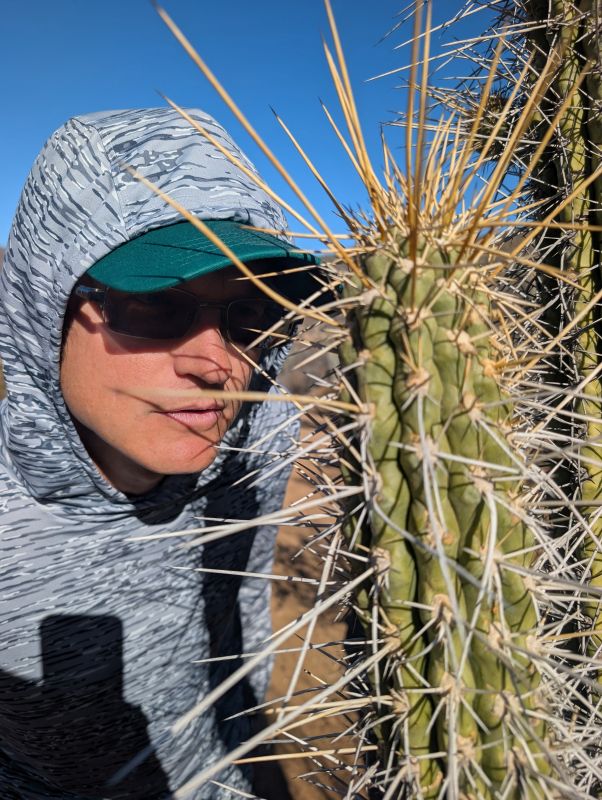
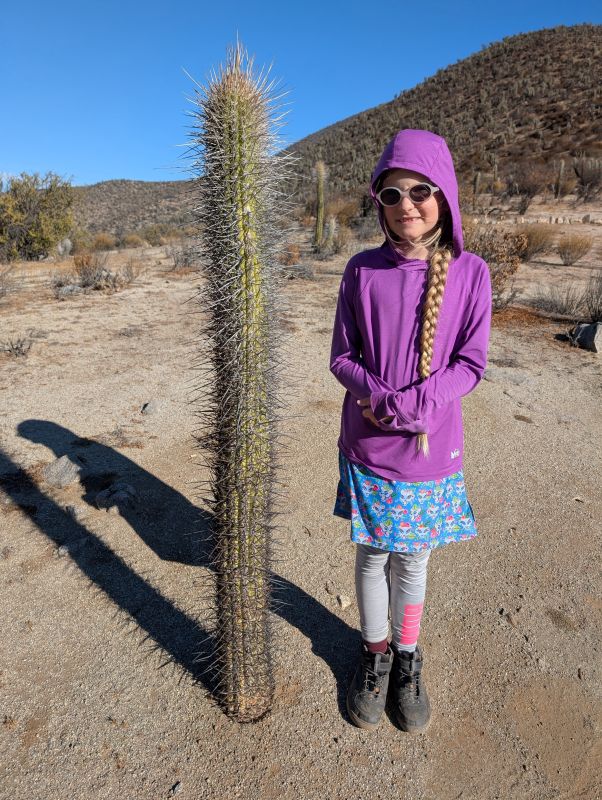
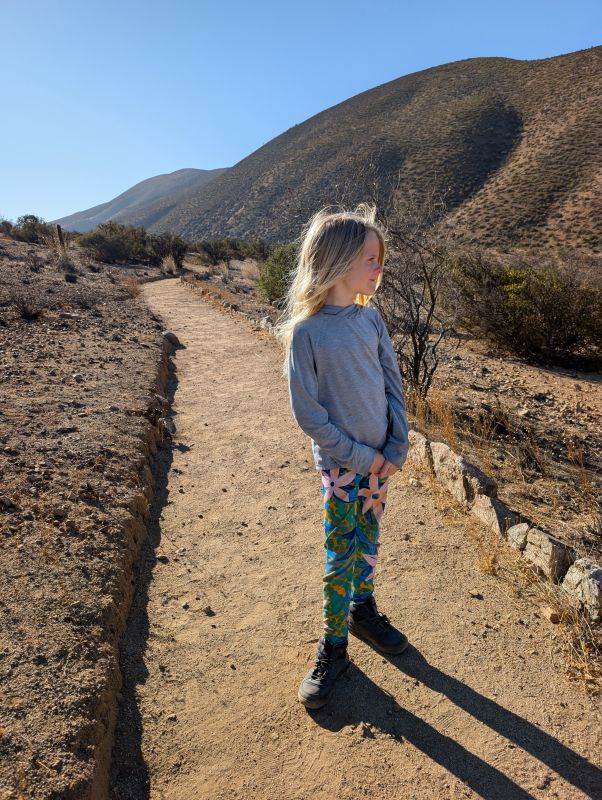
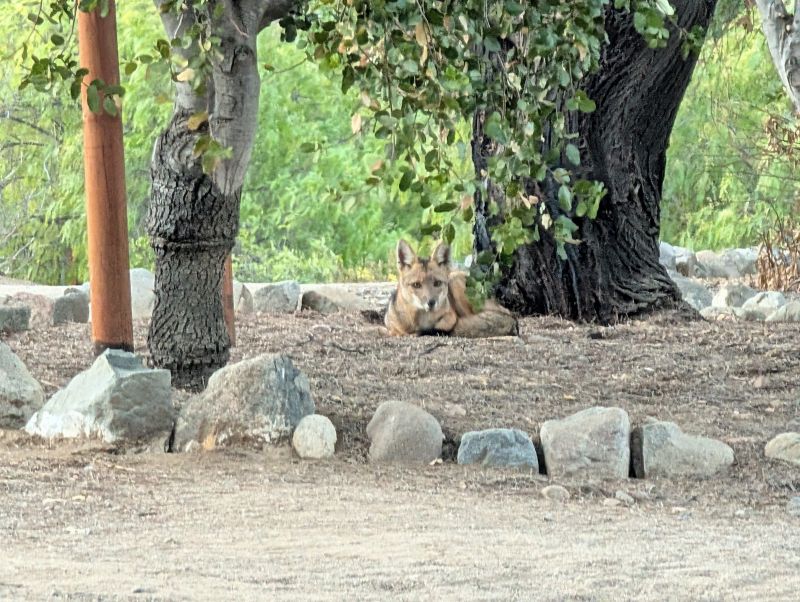
When 5pm rolled around so did the resident foxes. We watched them jump and play, then laze about as sunset neared. The rangers left to go home. It was just us all night in the Chincilla Reserve! What a special experience.
Day 147: Chinchilla Reserve to Wild Camp near Los Pozos (36 km / 22 mi)
I swore I heard music in the night at the Chinchilla reserve, even though that was impossible. Maybe it was a ghost? In any case, the day dawned warm and sunny. The rangers were happy to see us, and chatted more as we got ready for the day. I got the feeling they don’t get many visitors, so they were thrilled when we showed up excited to learn about everything. Here are a few things we learned about:
- The native people in the area never developed metalwork, likely because of some slow-growing trees with extremely strong wood.
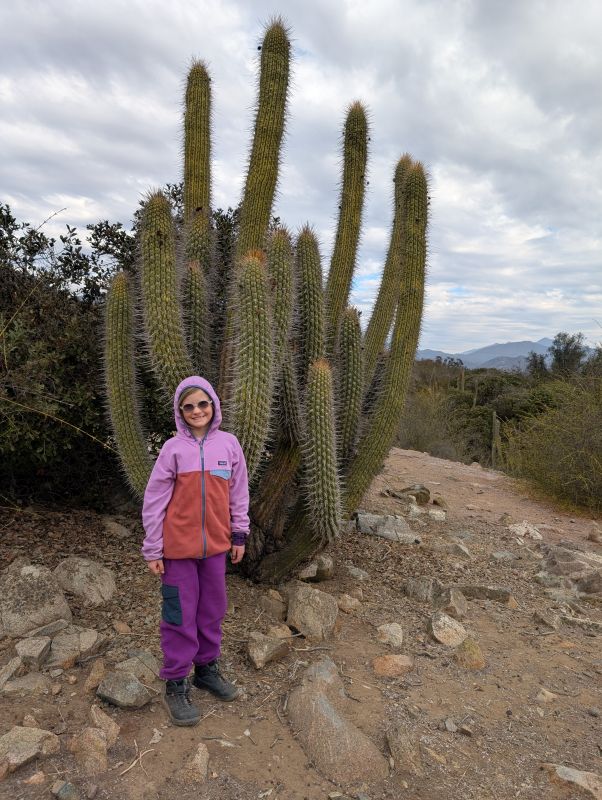
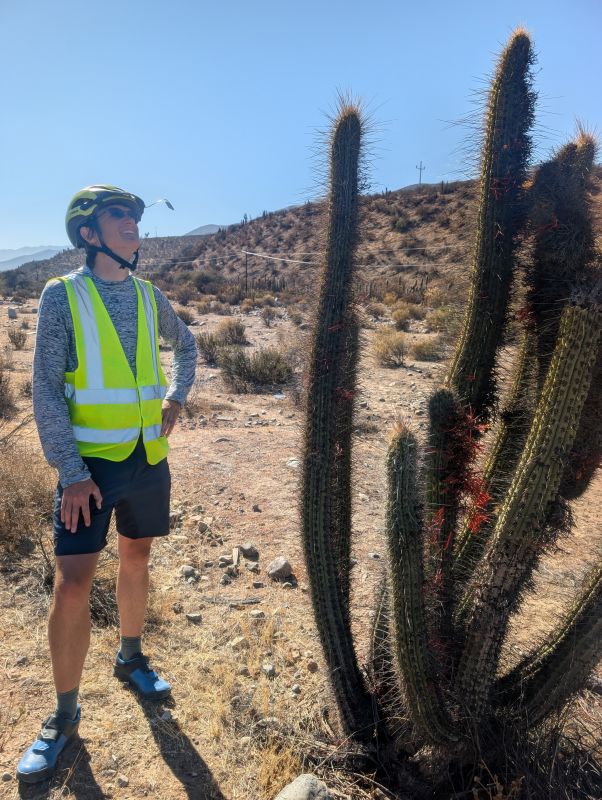
- A cactus that is Jason’s height here is about 80-90 years old
- The prickly pear cacti we saw the day before were planted by a US traveler named Emmy that stayed at the Chinchilla reserve for a month and hitch-hiked back and forth to town.
- The red flowers we see on cacti are in fact a parasitic plant. They use the cacti for supplies and birds as a means to spread.
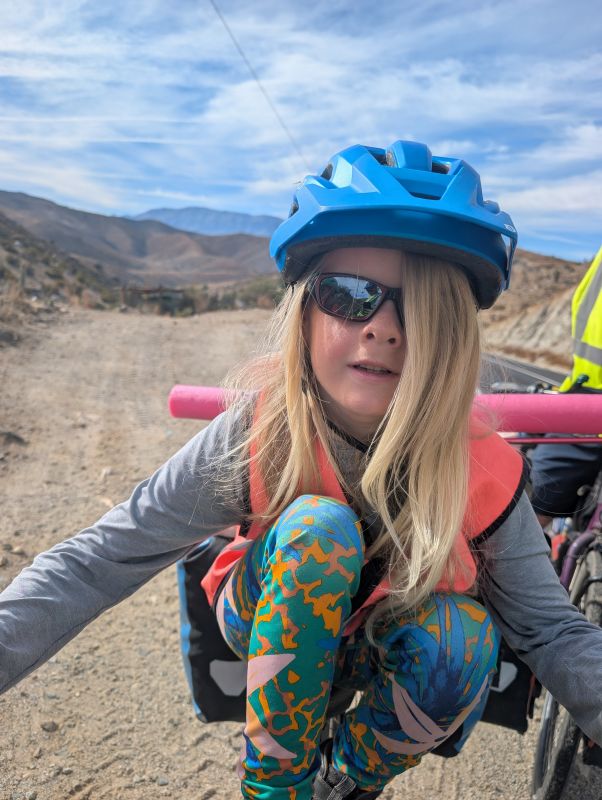
The climb started immediately as we left the chinchilla reserve. It was a sneaky climb – it started off gradual and lovely and slowly got steeper and steeper until the very top. I didn’t eat properly and ‘bonked’ near the top. Quite simply, I just ran out of energy. We sat on the side of the road and ate protein bars and drank water.
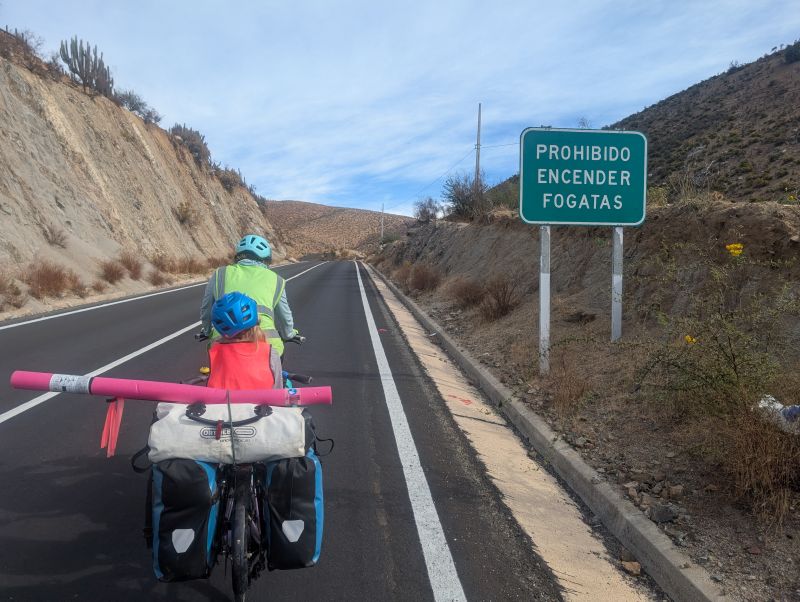
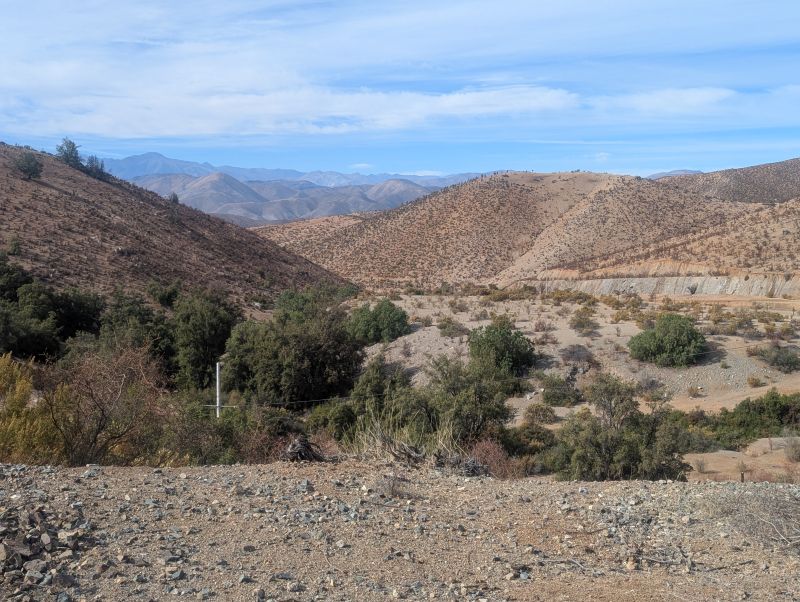
Finally the climb ended. It went straight from ‘steep and brutal uphill’ to ‘steep and brutal downhill’. At the very top a transport truck had broken down. We were amused that even diesel engines struggled on the climb. His buddy, in another transport truck, had just arrived to help. He waved us past as if we were at the finish line of a NASCAR race. We laughed and zoomed down the hill.
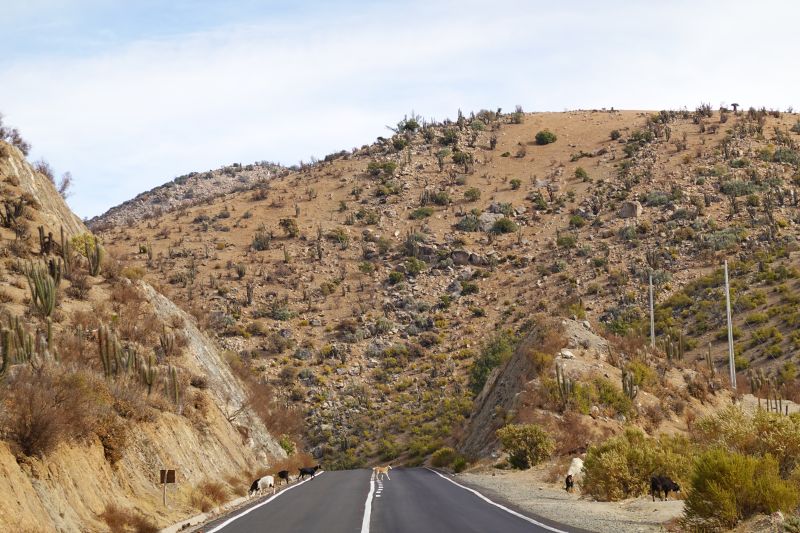
As we descended we noticed houses scattered along much of the valley. The land did not seem hospitable, yet there they were finding a way. We passed a minimarket about halfway down, but were going too fast to try and stop. At the bottom we found another, that was also serving completos. That was our stop!
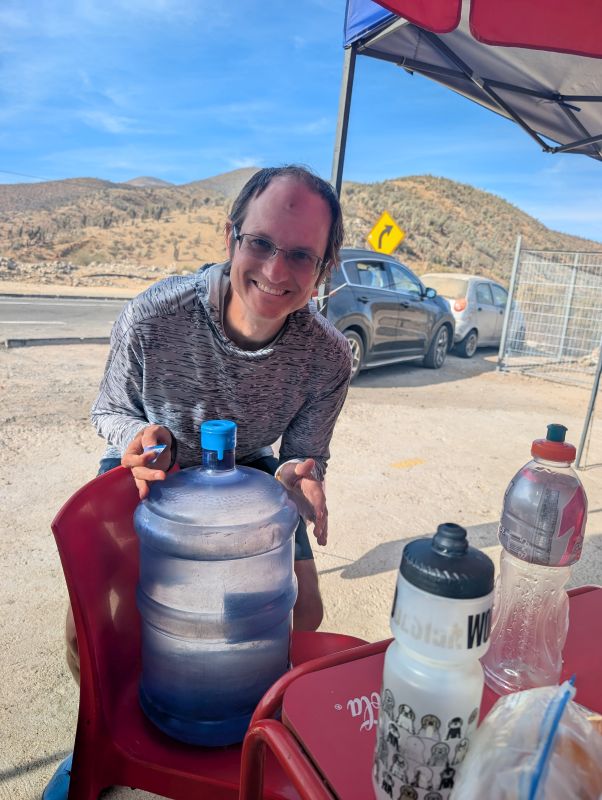
We were starving and ordered a completo each. A couple of kids were hanging out in front of the market, playing wildly in a small push car. After we ate we asked after accommodation nearby and the grown-ups in charge said we should just go to the next town, since the next pass was ‘gentle’. Yeah right! They meant well, but we were in no shape to do another pass. Instead we bought dinner supplies and a giant jug of water, refilled our various water containers, then headed out to find a camp in the desert.
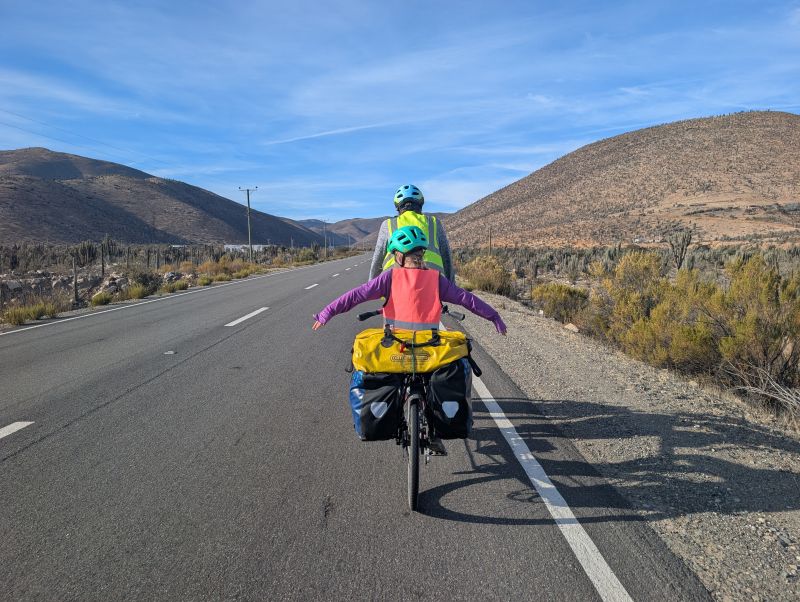
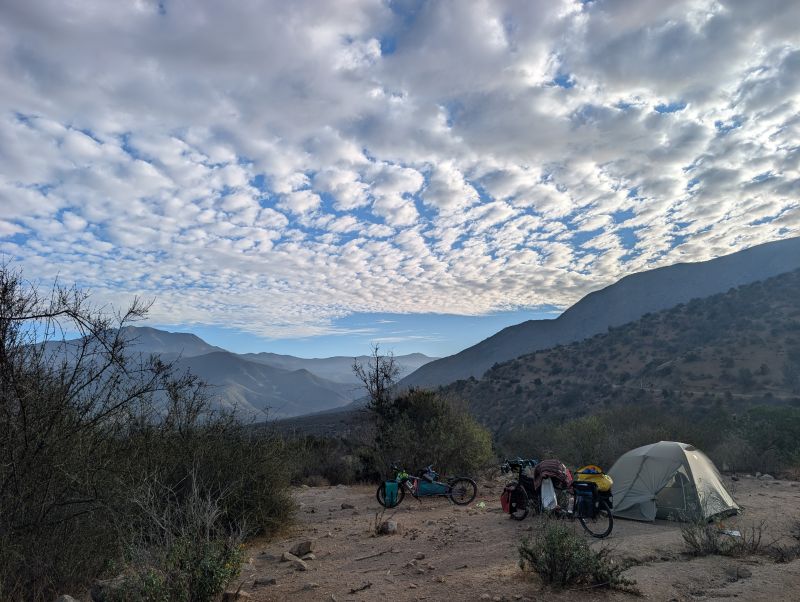
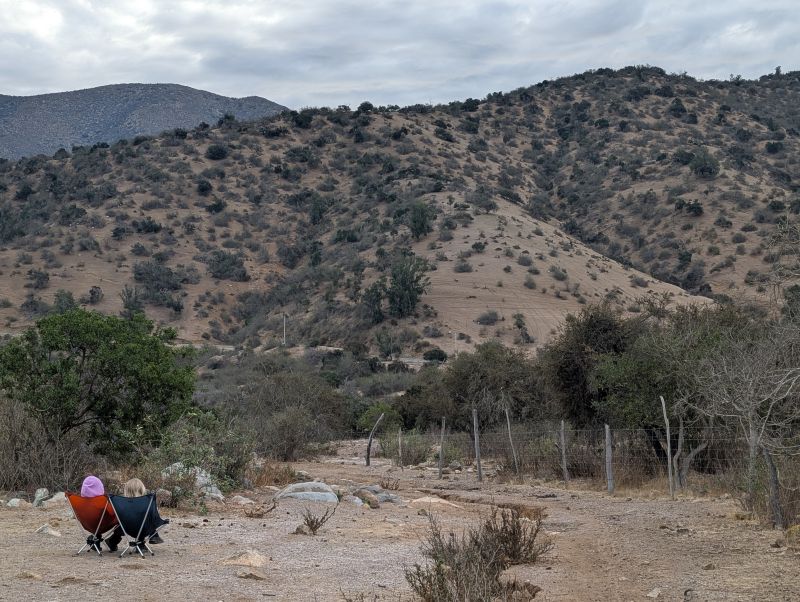
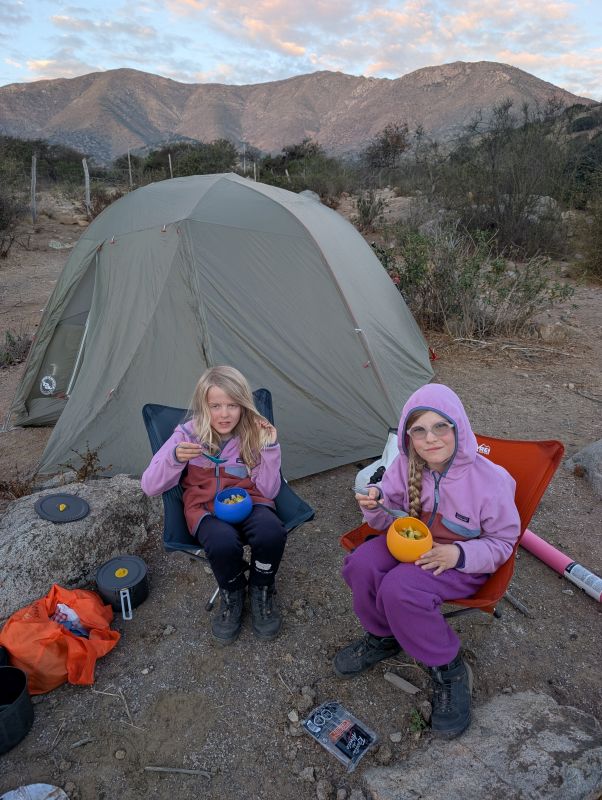
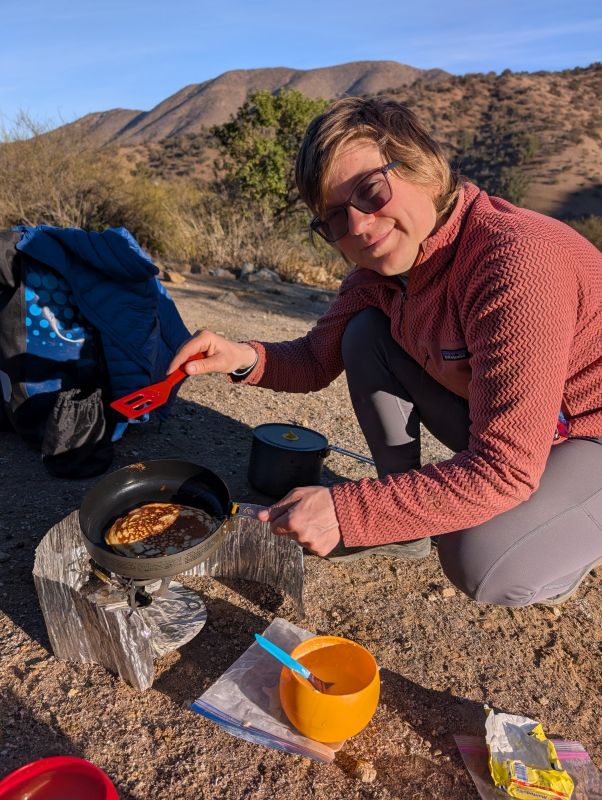
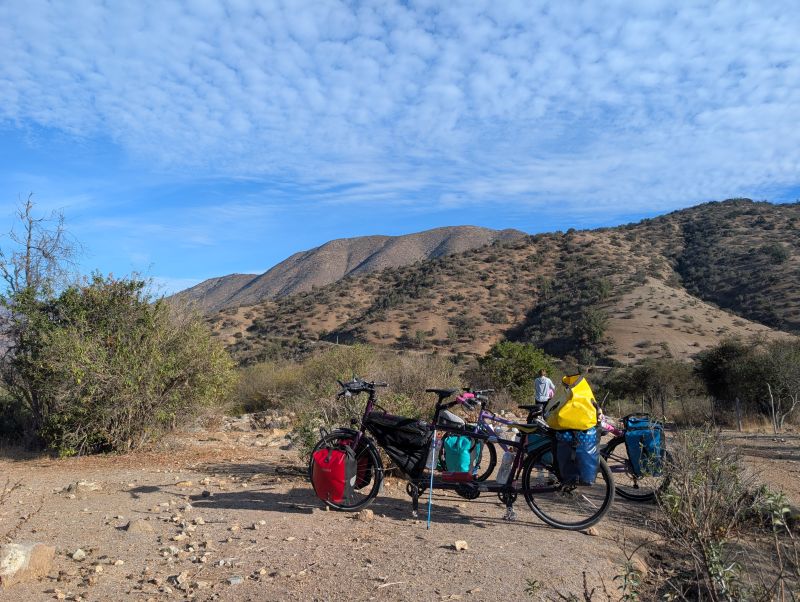
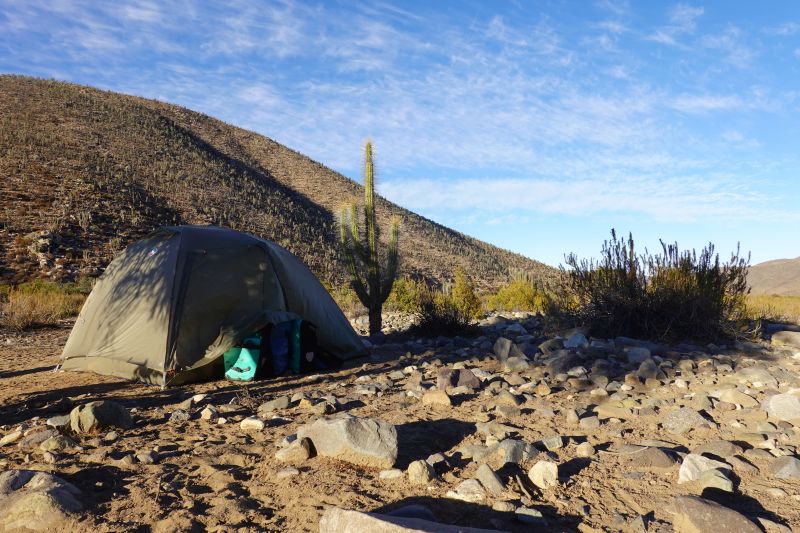
The road up the next valley was lovely and mostly flat (at first). It passed some few houses then we were alone in the desert next to a dry wash. We waited until there was no more fence next to the road then we walked out to find a spot for our tent. Jason and the girls found us a lovely flat spot next to a cactus and by two trees. We set up camp and deeply enjoyed the desert calm.
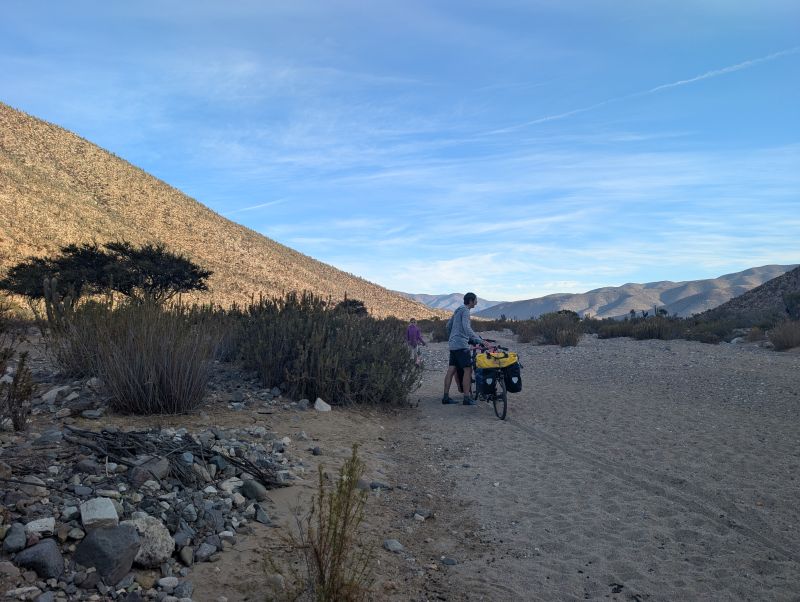
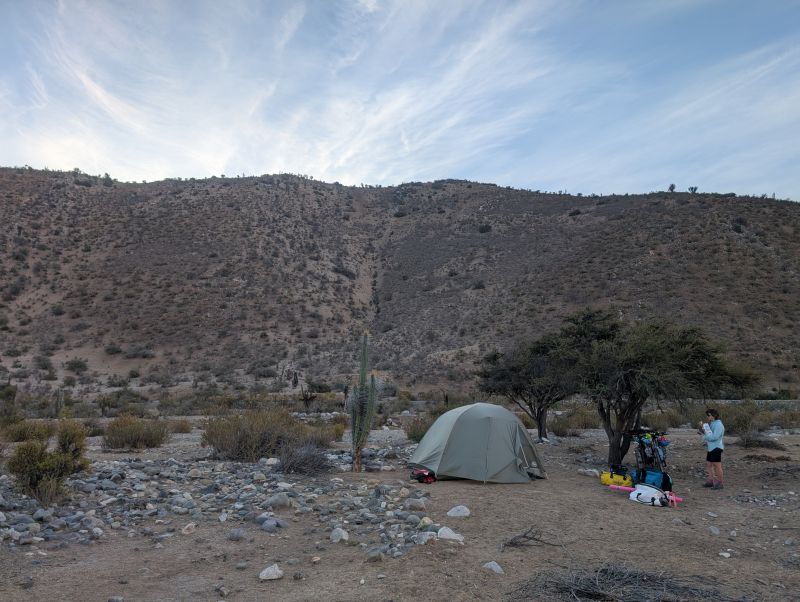
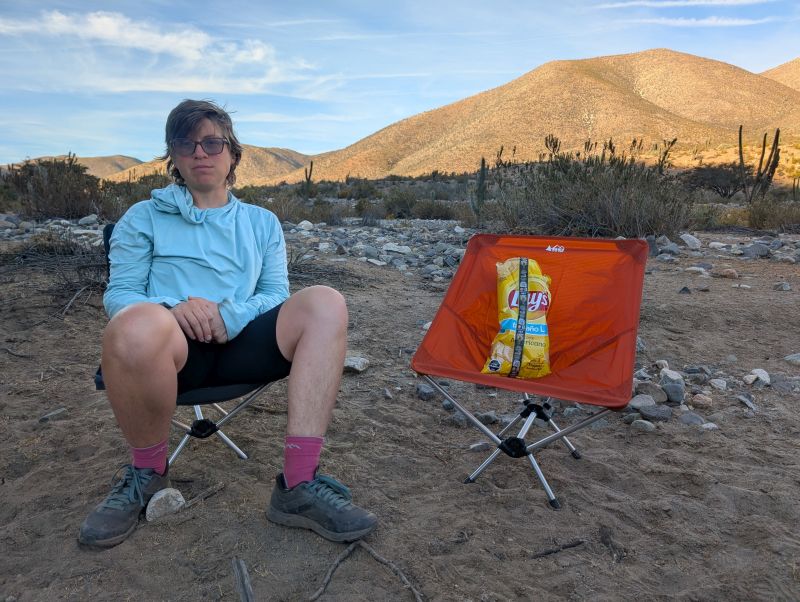
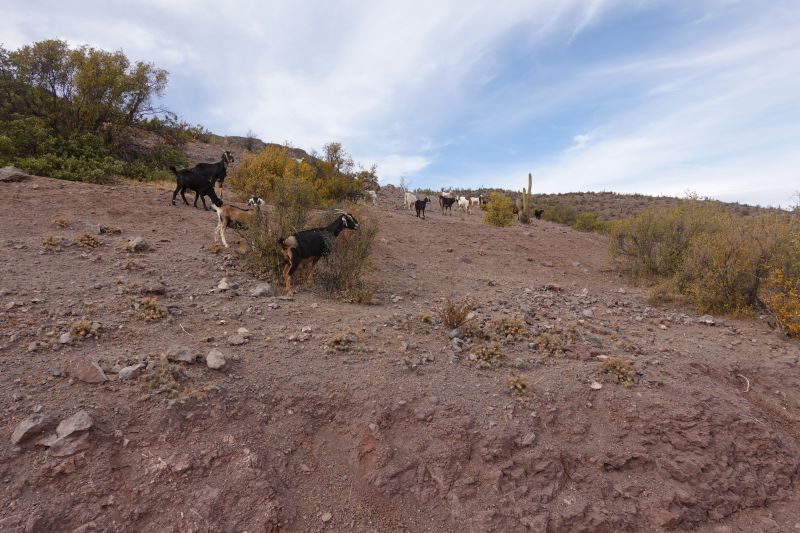
A big herd of goats wandered by and we ate a filling dinner of hot dogs and pasta. It was quiet and peaceful. We were happy to be camping again after the months of hotels and hostels in central Chile.
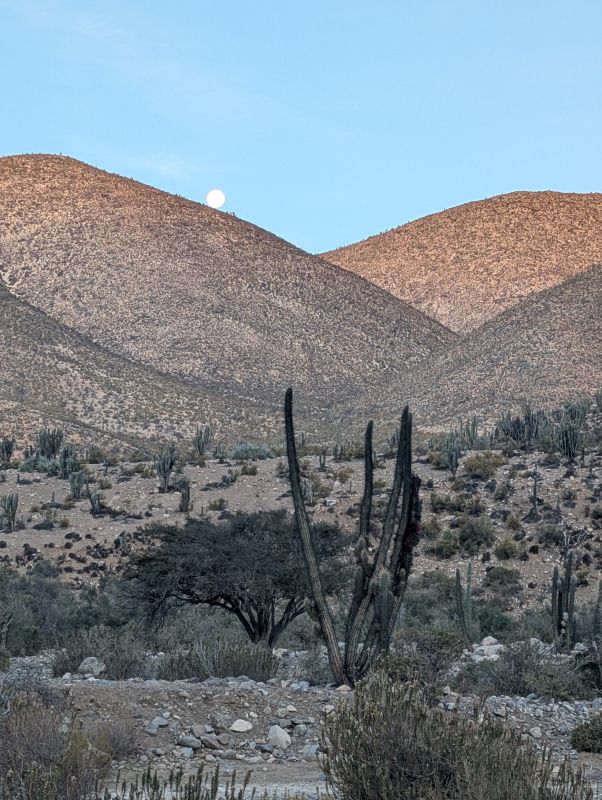
Day 148: Wild Camp to Combarbalá (30 km / 19 mi)
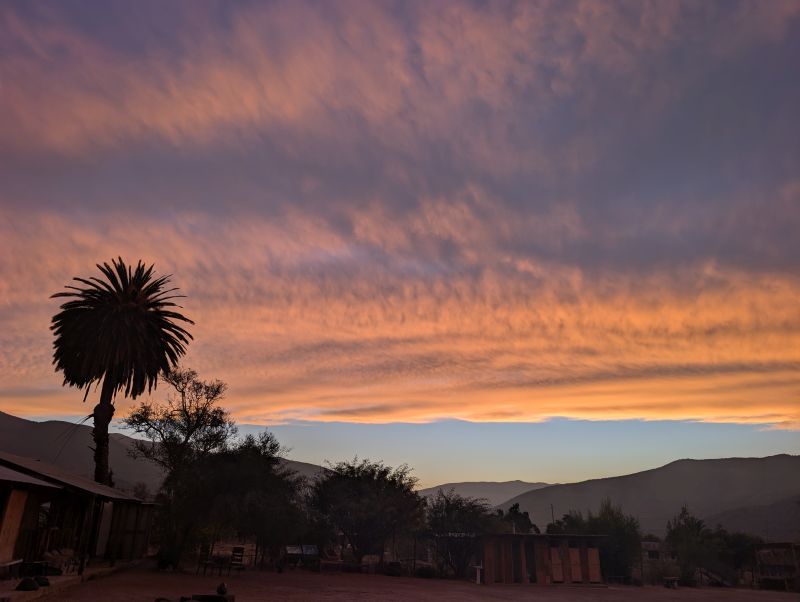
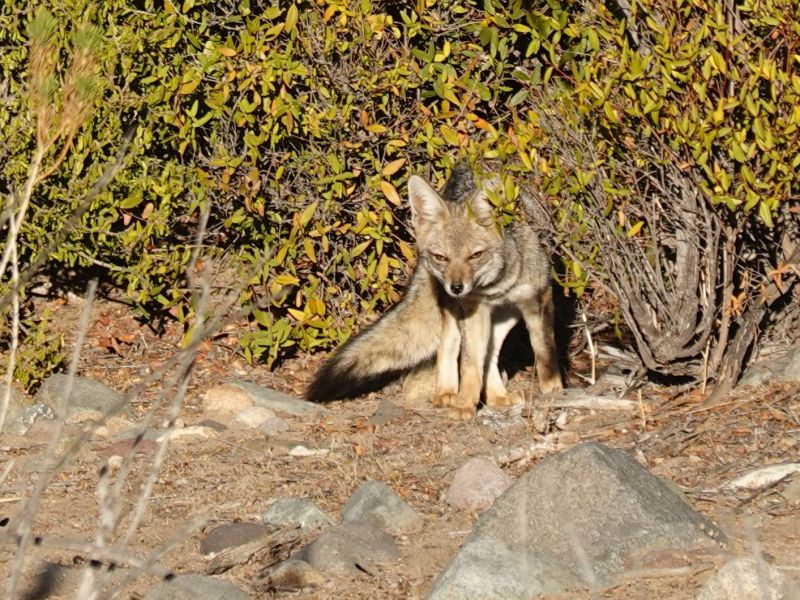
As expected, it was a perfectly peaceful night. We slept soundly and awoke with the sun (which isn’t early, since it’s winter here). A curious fox came by to see what we were doing. Packing up wasn’t fast, even though we wanted to be on the road before the heat. In the end it was nearly 11 when we finally drug our bikes back to road. After a long inspection of all the wheels (no cactus spines allowed!) we climbed back on the bikes.
The valley was gentle for the first part of the day, and it was incredibly fun to see the many goatherds next to the road. Before long though, the grade kicked up again and we were climbing. It was hot. We had to stop every kilometer or so to rest and drink water, and when we found a shady spot from a road cut-out we stopped for a leisurely lunch. The scenery was interesting at least – we mostly were switch-backing up the same valley and weaving around rocky outcroppings. Plants were more numerous in the steeper valley bottoms where shade was more plentiful.
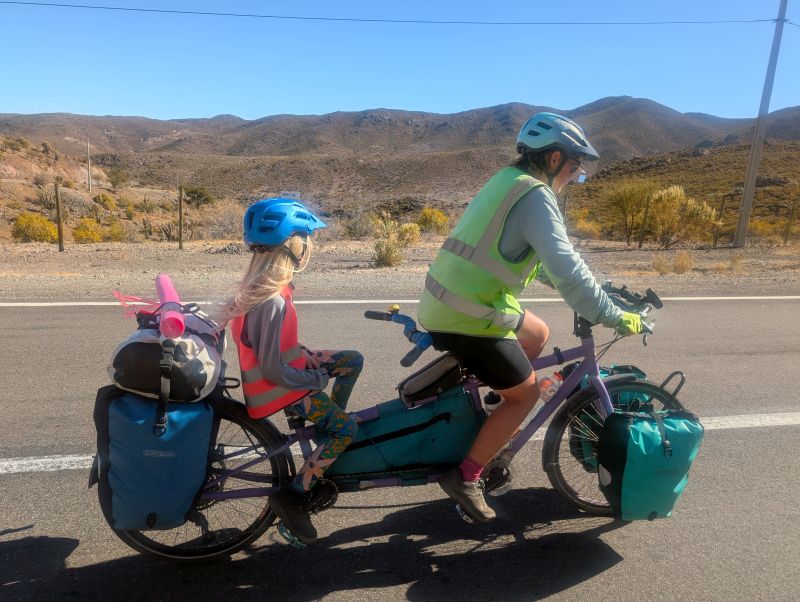
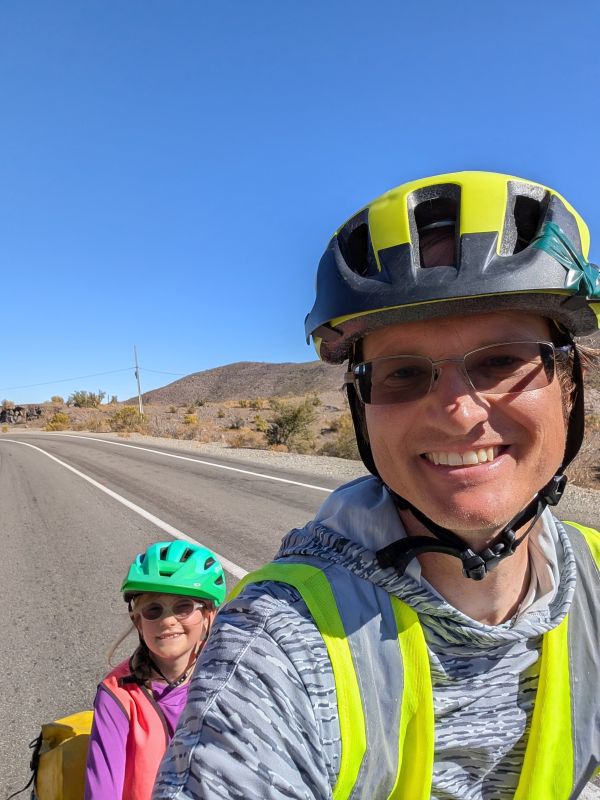
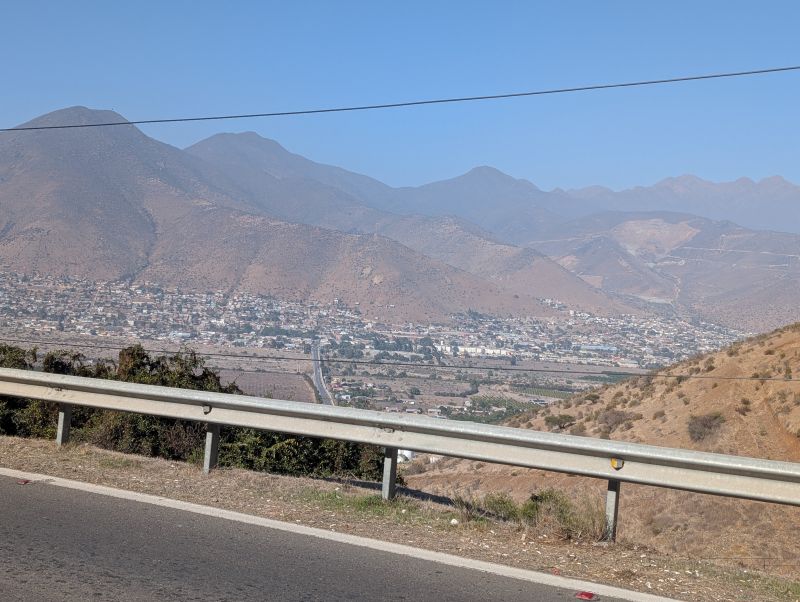
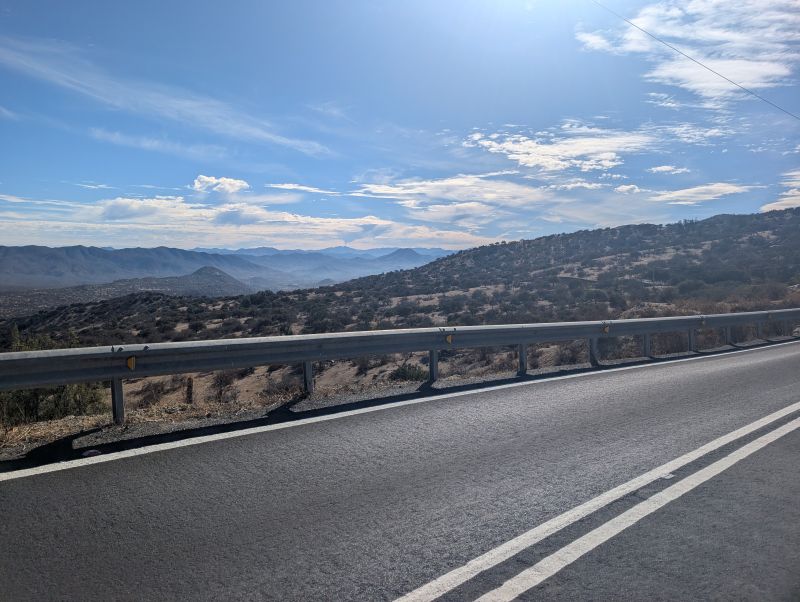
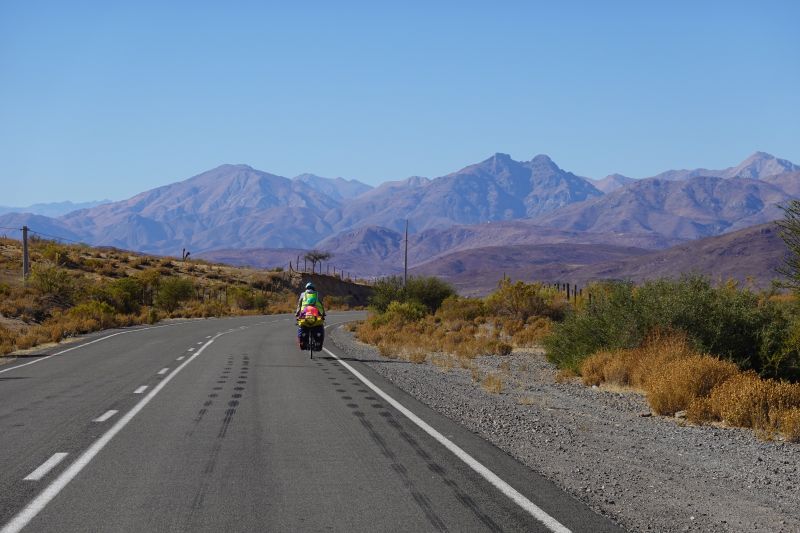
Up and over the top brought us back down to another slightly drier valley. The scenery was spectacular though! We zipped downward with layers of huge mountains behind us. We were hot and tired by the time we crested the last small hill (an overpass for an ancient and disused railway line) and rolled into town.
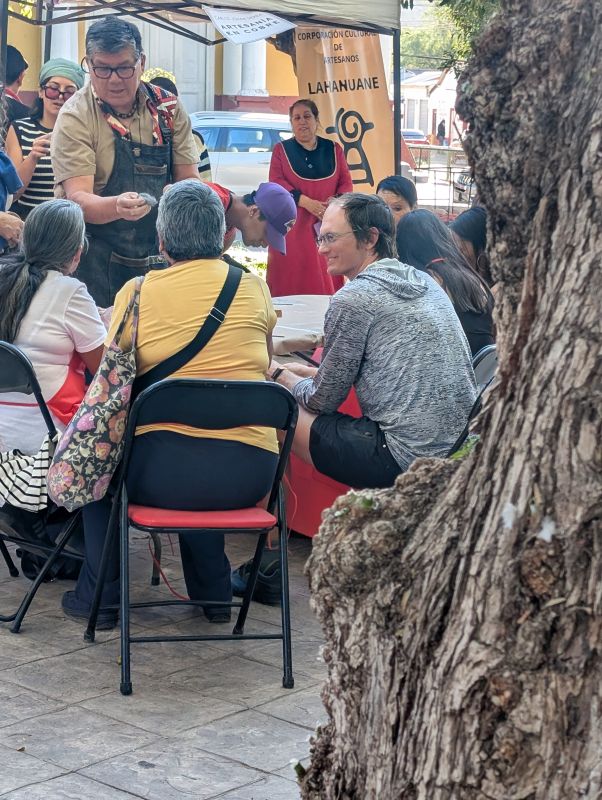
The little town of Combarbala was a surprise. It is laid out in a compact and perfect grid with a leafy plaza in the middle. When we rolled up the plaza was packed with booths and people. After we checked into our hostel we went down to investigate. It turned out to be National Heritage Day, so the booths were all celebrating and educating some part of the history and culture of the area.
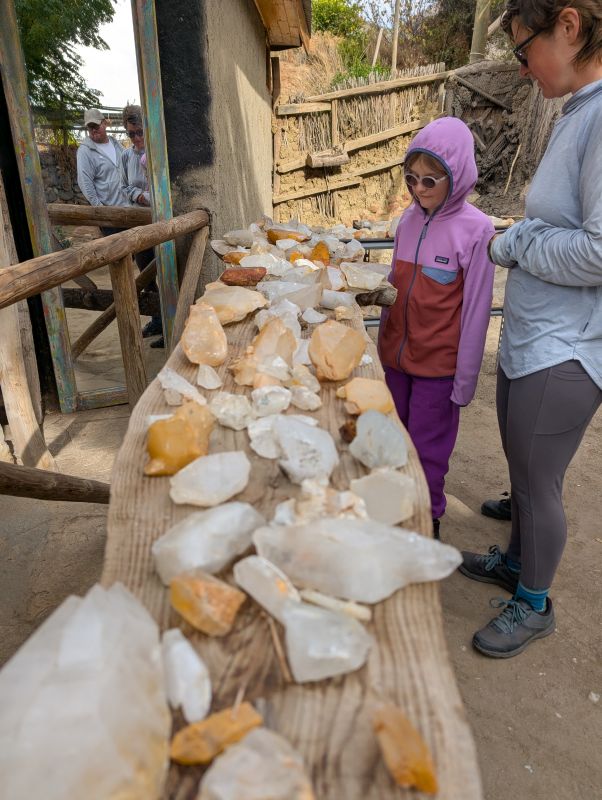
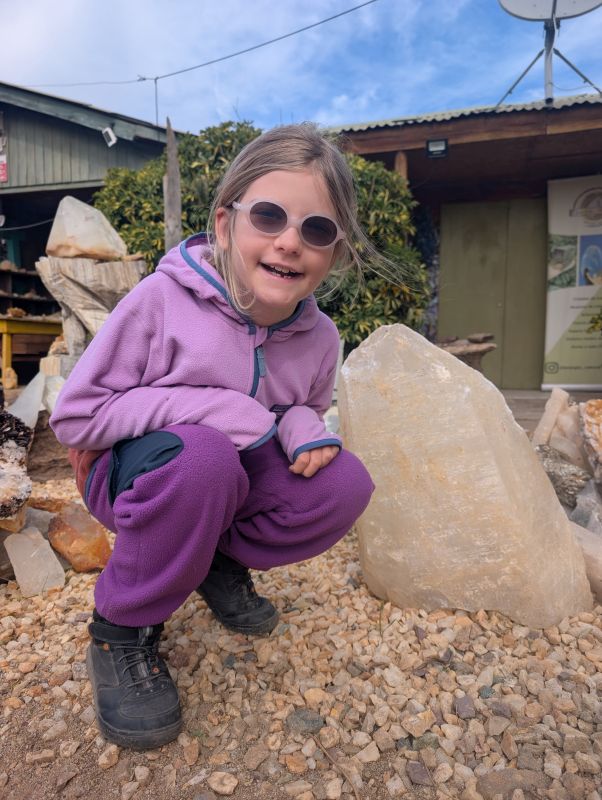
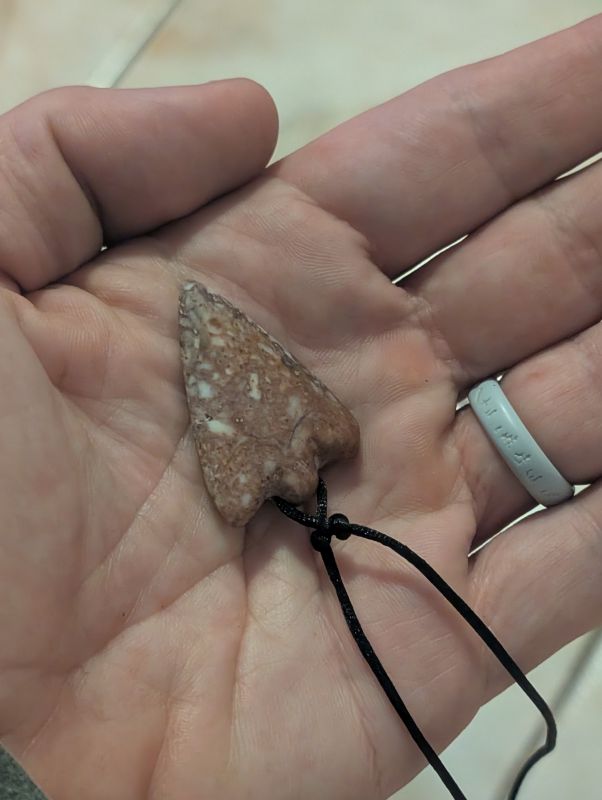
A local grabbed A and Jason and convinced them to sit down at a table. Soon after, they learned they were making arrowheads out of the local stone, called Combarbalite, which is famous in Chile for its beautiful colors. H and I wandered around and saw displays about making mud bricks, wood furniture, and reed whistles. Jason and A signed up for a tour of the nearby observatory. It was such a busy day!
We ordered sushi bowls for dinner on WhatsApp. Everything works through WhatsApp here in Chile. For example, this sushi place is running out of a non-descript home near the plaza. It only takes orders (and only over WhatsApp) for take-out or delivery and you can only get food for a few hours in the evening. It was a puzzle to get the food but it was certainly yummy!
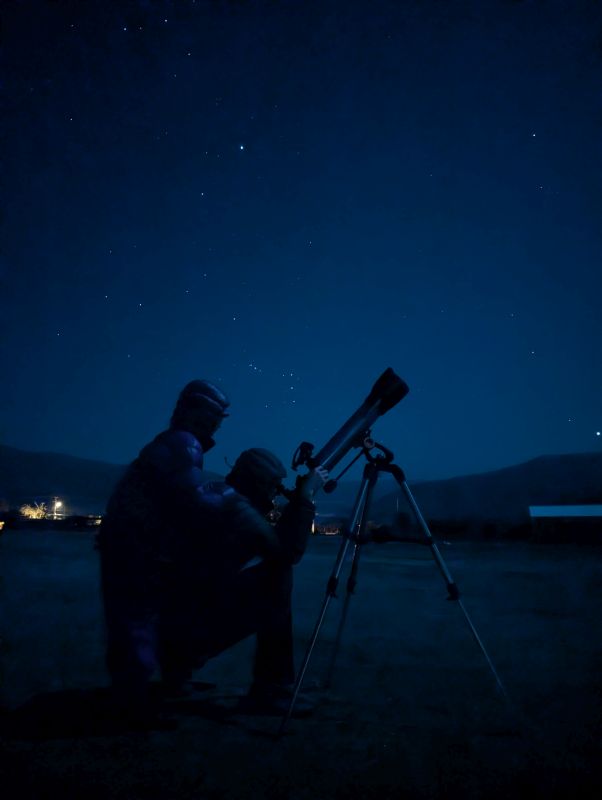
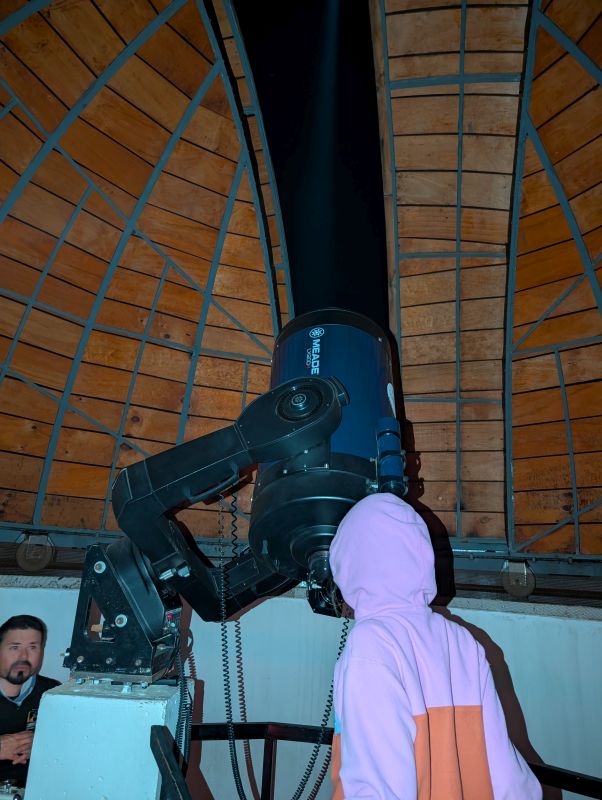
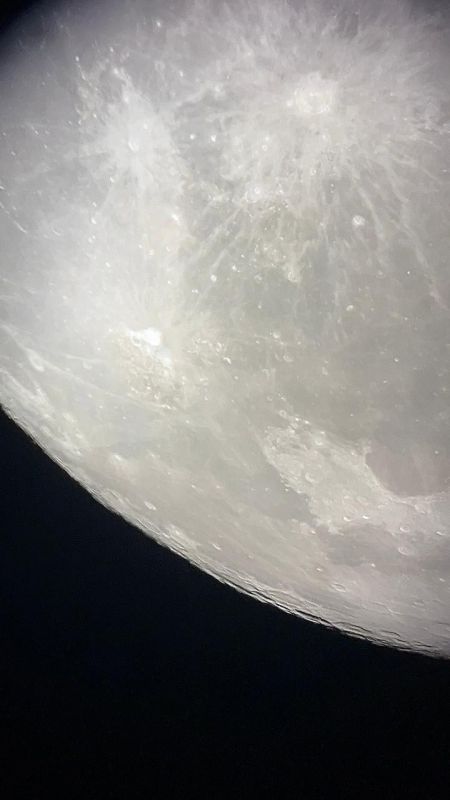
At 8pm Jason and A climbed into a transport van for their astronomy tour. Jason: We took a curvy road up and over the hill behind town to arrive at the ‘Cruz del Sur’ Observatory, which has four 14-inch telescopes set up to do educational tours. We watched a video in the planetarium and then went outside for a Q&A with the stars. I did my best to translate from Spanish to English for A, and at one point asked her if she understood what they were discussing about the speed of light. She said ‘Of course we wouldn’t know what was happening over at a distant star until the time for the light to get here’, correctly summing up what took about 10 minutes for the guide to explain to the other 50 tourists. The last event was looking through the telescope at an open star cluster, globular star cluster, and the edge of the moon. We were impressed at the vastness of space!
Day 149: Rest day in Combarbala
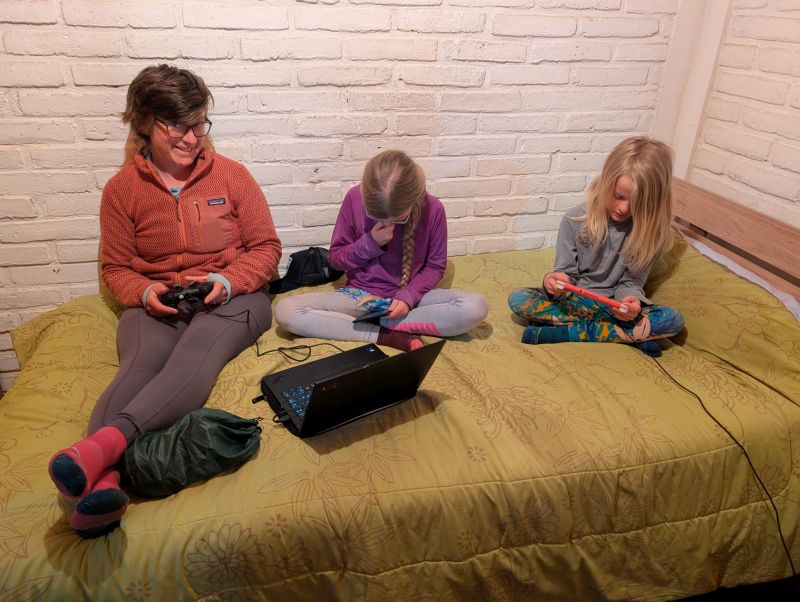
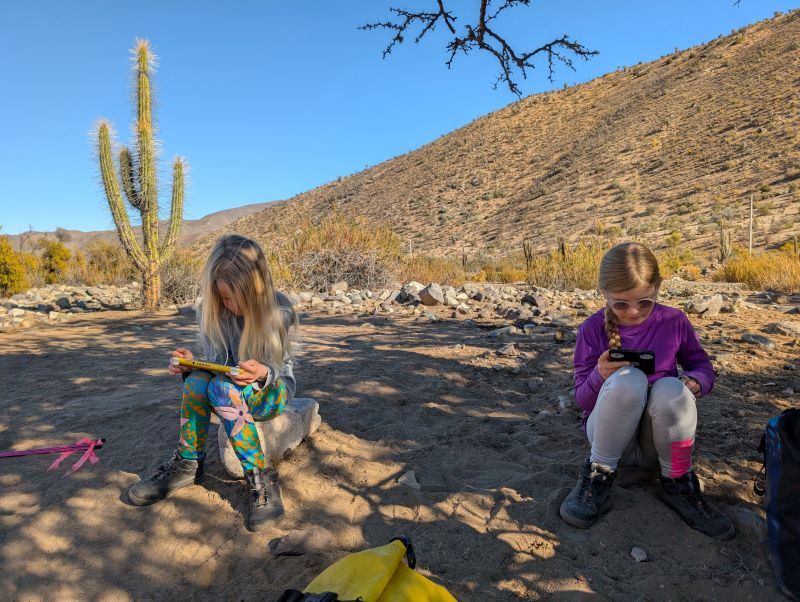
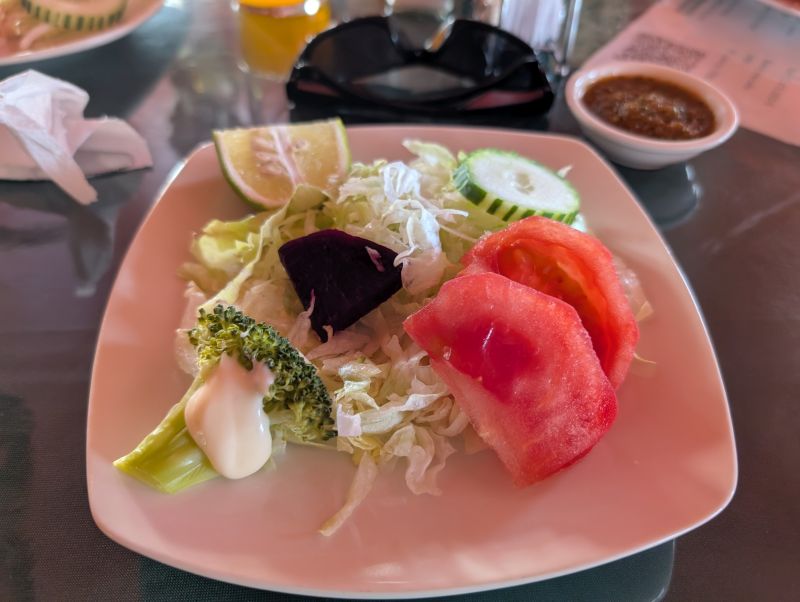
After all the excitement of yesterday we laid low today and did a deep relax. I did a load of laundry in a big sink and we hung it up to dry in a corner of our room. We wandered town a bit, and got lunch out at a local restaurant. We went searching for a supermarket that Google said was at the edge of town… but there was nothing there. We wandered around searching for the supermarket, then finally gave up and walked back towards the center.
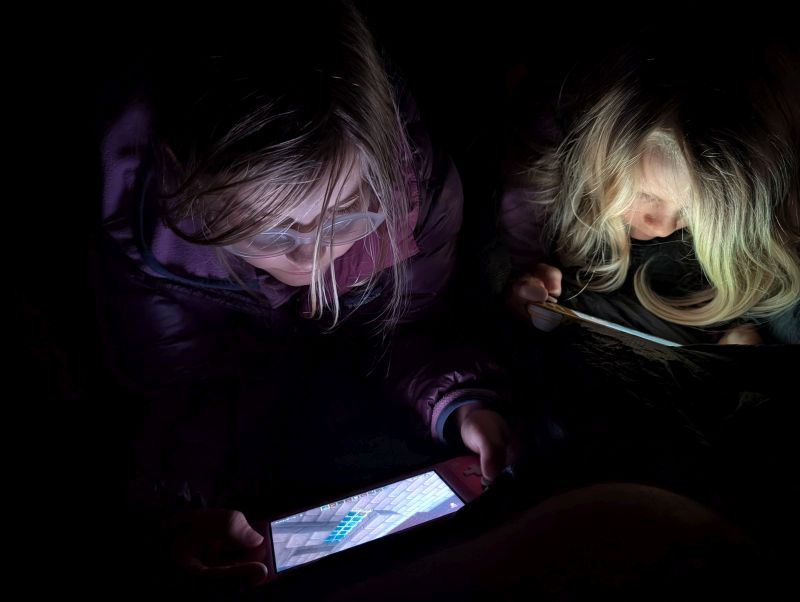
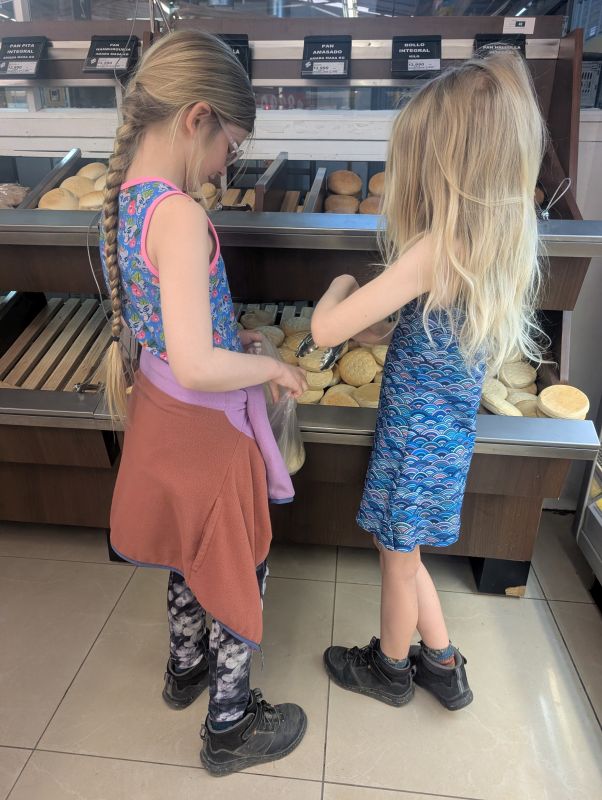
When we approached the center the supermarket magically appeared! Google just had the location wrong. We did a resupply for the next few days of riding, played videogames, and relaxed some more.
Our hostel was close to the center of town and attached to a restaurant. By luck we were staying on Saturday and Sunday nights, so the restaurant was closed and our bikes could live in the dining room. We were the only people here, so we had a quiet rest. I think it would have been a very loud place to stay if the restaurant had been open!
Day 150: Combarbalá to El Palqui (62 km / 39 mi)
You’d never guess that today we… rode another 2,000′ pass. Or maybe you would? This section of riding has been pass after pass. We are getting used to the rhythm.
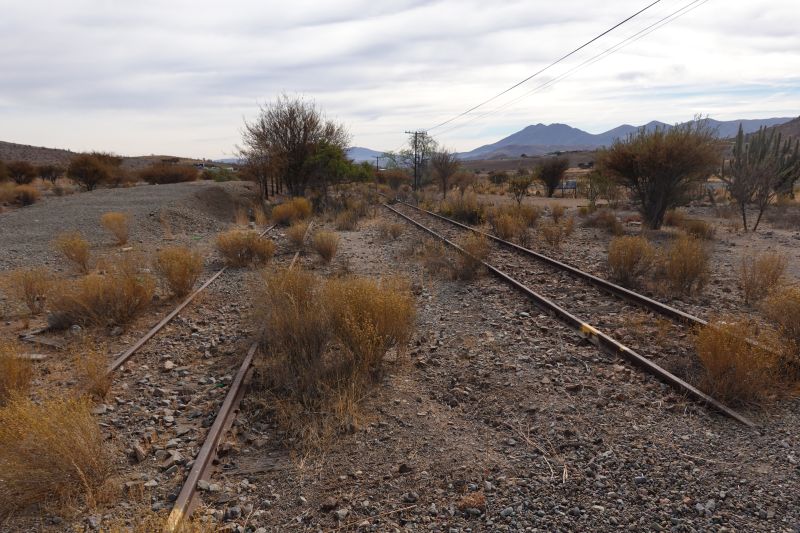
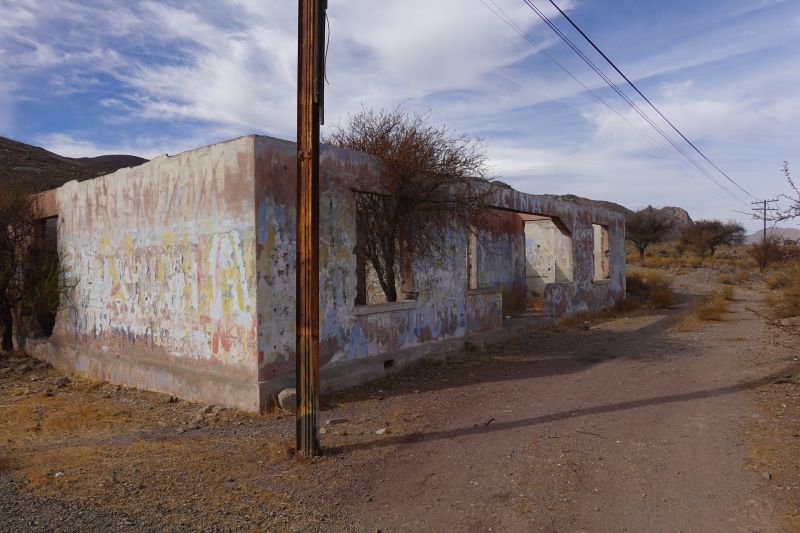
The riding this morning was particularly lovely though. The views were so big it’s hard to explain the scale. We saw a beautiful railroad bridge and an abandanoed railroad station. We zoomed down some huge hillsides before going back up steep climbs. In the afternoon we finally moved into the next valley.
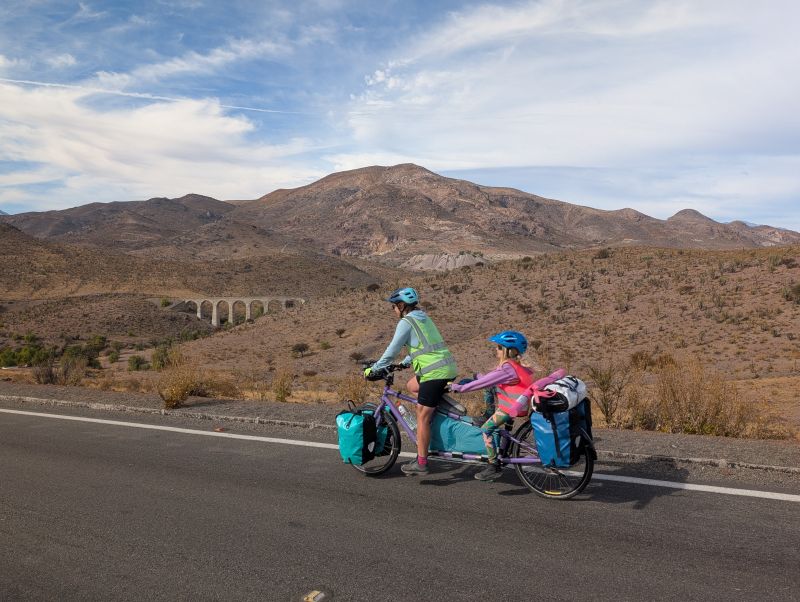
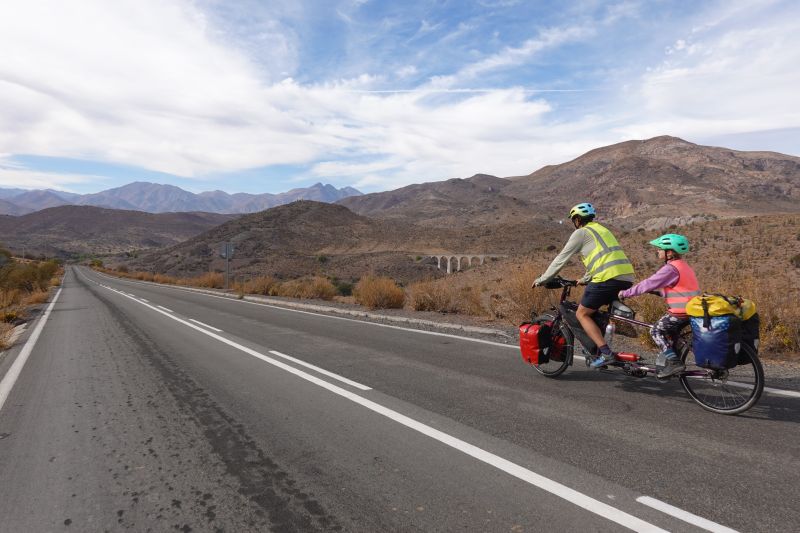
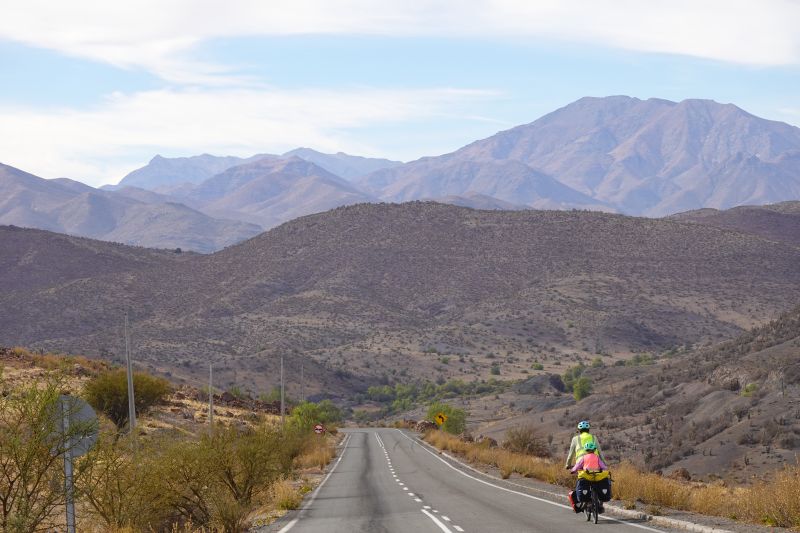
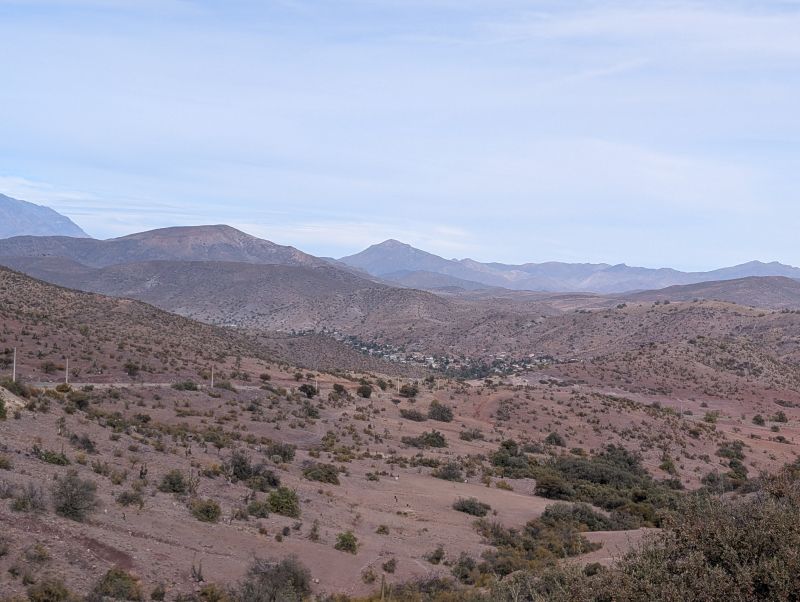
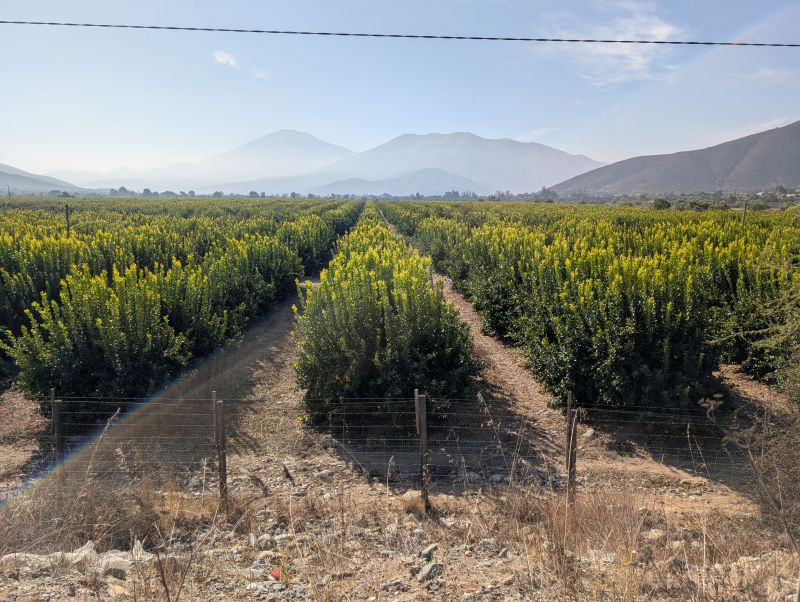
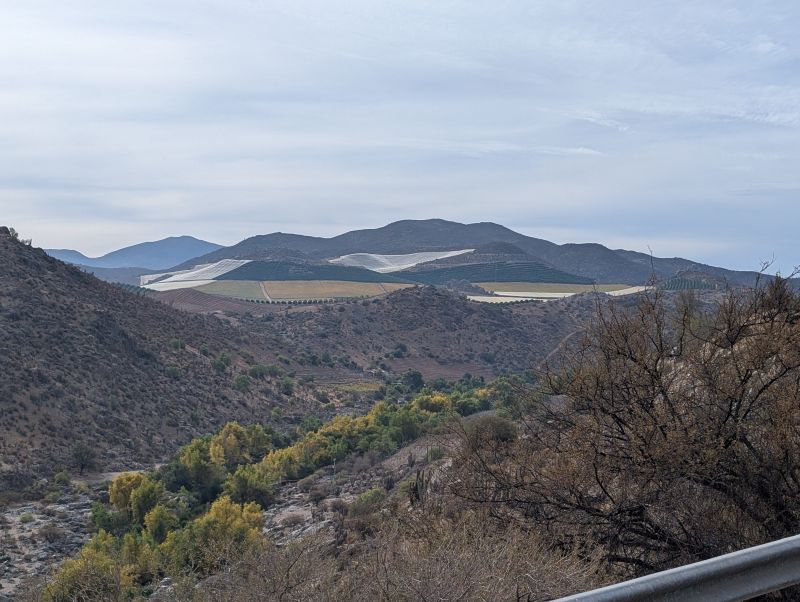
Instead of the typical ‘slightly more dry’ valley, this one was alive with agriculture! There were vineyards and orange trees and small farmlands, all fed by the (very small) river in the middle. We rode down the river valley, but the ‘down’ included a lot of steep up as we veered around and through settlements. On one steep downhill a huge pit bull came charging out of a driveway to bark at me and H. That was fine, except that he then stopped in the middle of the road – right in front of Jason and A! They were barely able to avoid slamming into him.
The heat and the steep hills got to us. I got so upset with H not pedaling much (as well as pestering me for being slow) that near the top of one hill I just stopped and made her get off and walk. That was a shocker! After that we had a more peaceful rest of the day.
It was a long day for us, but as always we arrived to our intended destination “between 3 and 5 pm.” That’s what we always tell the hostel owners when they ask when we plan to arrive. This time, we rolled into a small town just as the local school was letting out. We rode right past the school and waved to the dozens of parents waiting to collect their children. It’s a delight to see the daily rhythm of other families.
Our hostel for the night mainly catered to construction workers. Most of the rooms were full with young folks away from home and working long days. Everyone was nice, and it was fun to see their work shoes lined up in the shared hallway. Jason made us dinner on our camp-stove on the counter of the shared dining area. He had tried to set up in the courtyard but the owner inexplicably asked him to go inside!
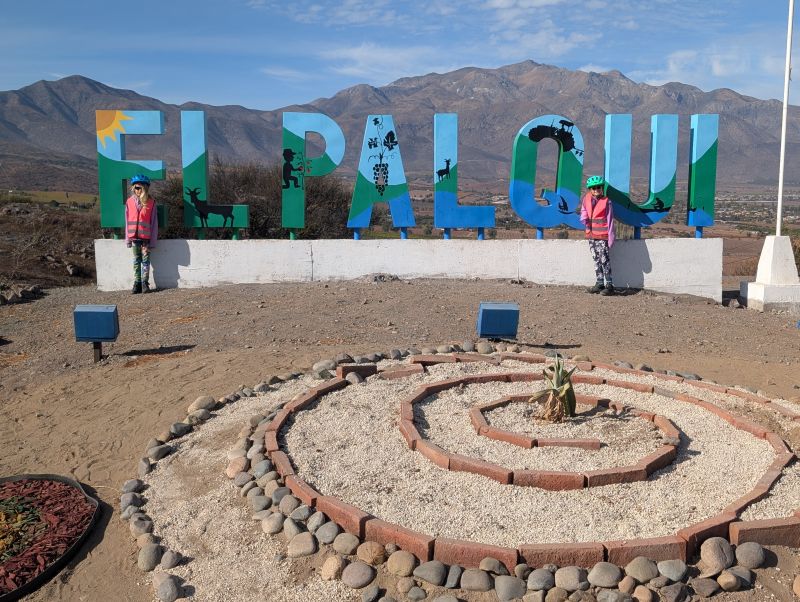
Day 151: El Palqui to Ovalle (43 km / 27 mi)
Today was planned to be pretty easy – short and mostly downhill, so we weren’t in a rush. It was another beautiful sunny day. As we left town there was a bit of a climb which was a surprise. We were surprised because as we approached on the road we could see a huge cut-out of the mountainside; we assumed the road would go through. Nope! Instead, the crumbling remains of a rail-line stayed low and the road went up high.
At the top of the small climb a nice man was waiting next to his parked car. He loaded us up with a pile of small oranges. Our handlebar bags, feedbags, and pockets were all full by the time he waved us goodbye and drove off.
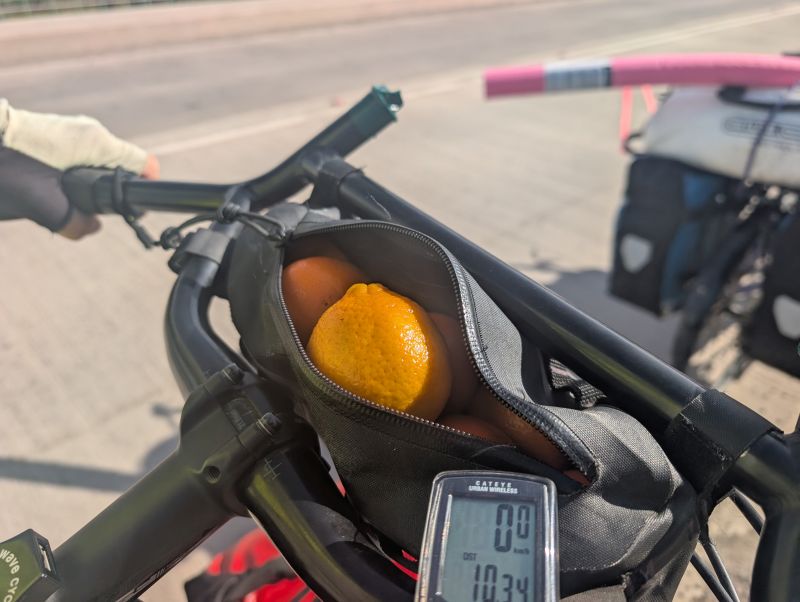
We descended into the town of Monte Patria (Heritage Mountain), which was in a lovely green valley. When we stopped to eat some of the oranges (which were delicious) another car stopped nearby. A woman came out carrying a bag of four fruit juices for us. Apparently her husband had seen us, bought us juice, and then made her present the gift! We were very grateful and wished her well. Then we loaded up the juices and got back on the road. This is one example of why we don’t bother trying to be ‘ultra light’ cyclists. Sometimes we get five pounds of oranges and juice gifted to us!
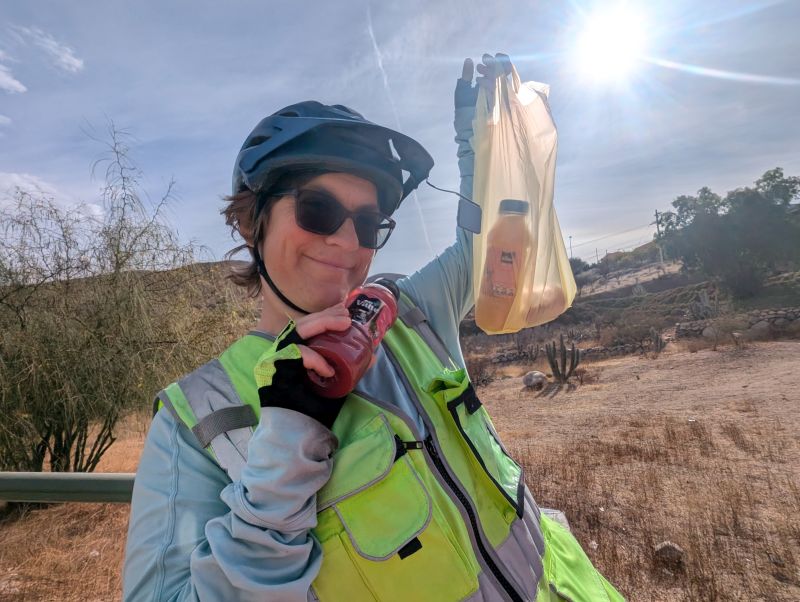
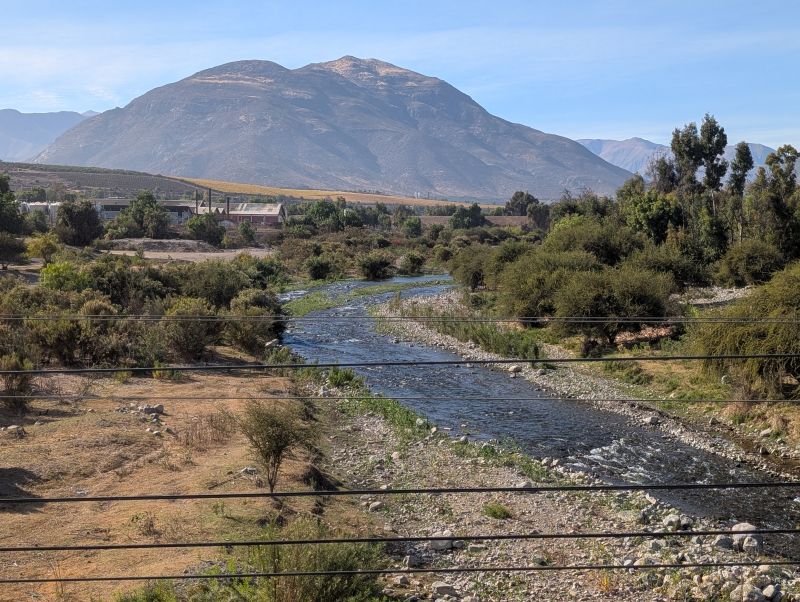
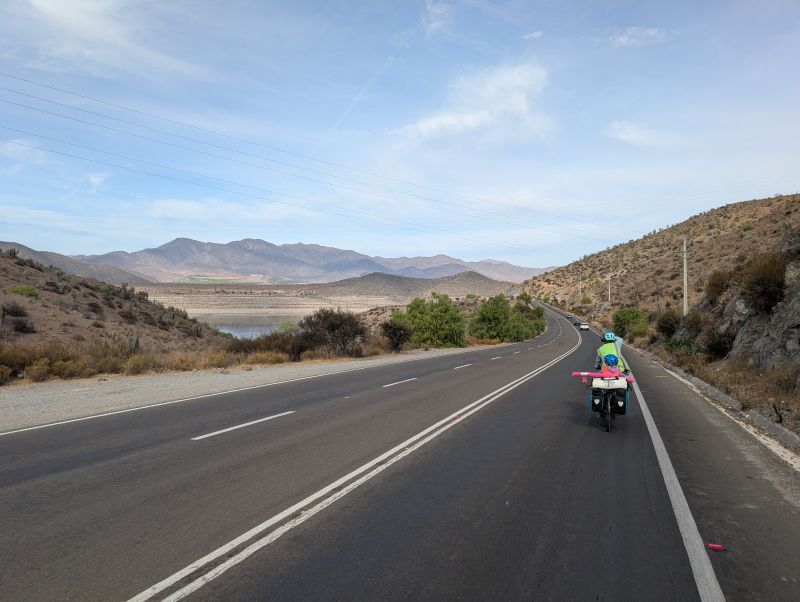
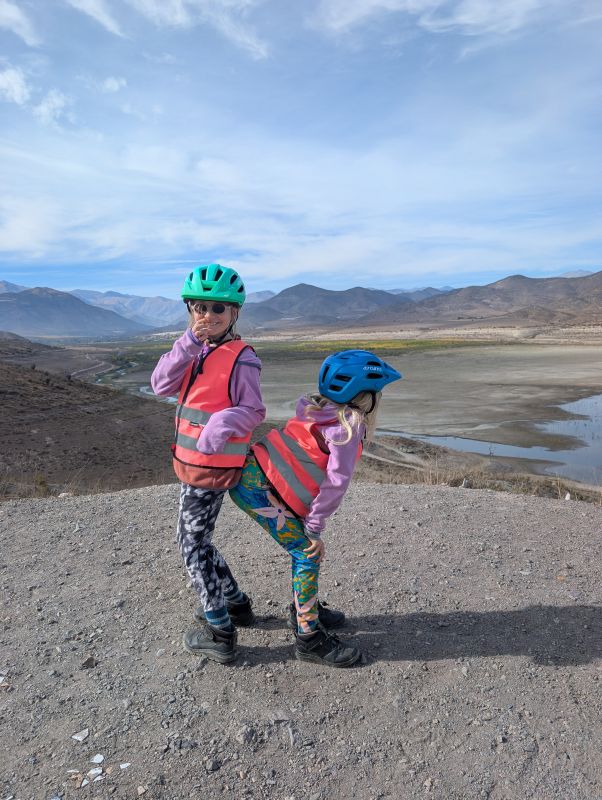
The road snaked along a hillside above a huge, mostly empty reservoir. We really enjoyed drinking some of the juice as we stopped to lament the dry state of the area. On the other side of the dam we zipped down into the lower part of the valley and found a humble food stand for a lunch of completos and french fries. As far as we could tell, it existed to serve a group of five guys that worked at a nearby construction site. In any case, the hot dogs were good and the fresh made fries were delicious.
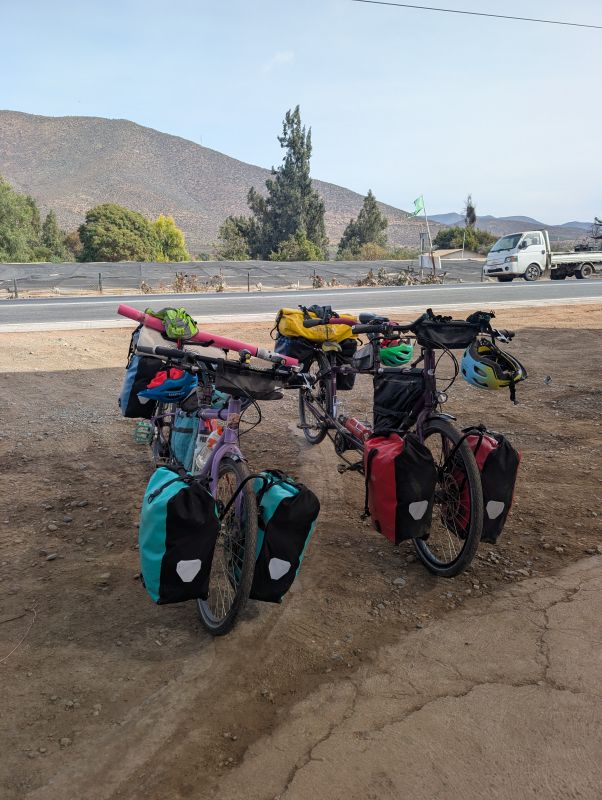
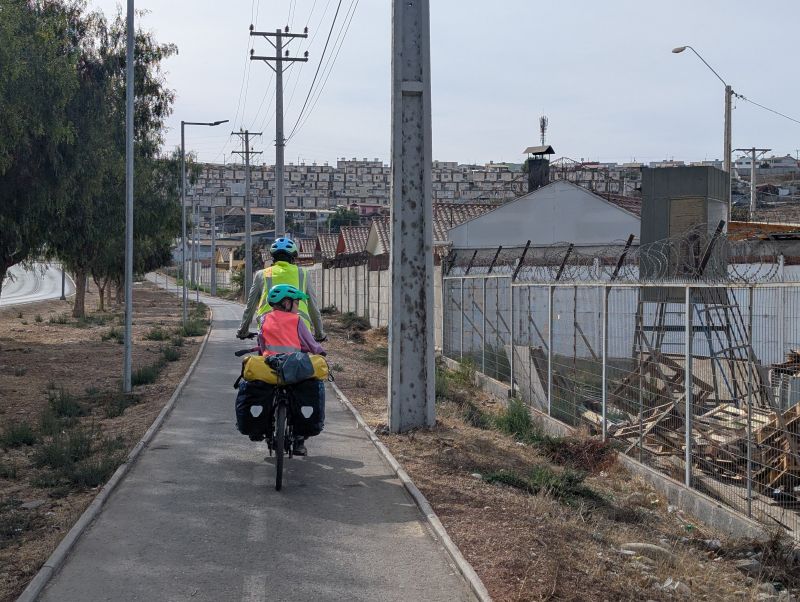
It was a quick downhill to the big city of Ovalle, population 120,000. We found our hostel, “Casona Campos.” Despite being one of the more official places we have stayed (we paid with a credit card), it was just an unassuming house in a normal neighborhood next to a big school. Inside it was also a normal house, but then attached to the rear was basically another house full of rooms for travelers, with two shared bathrooms. We would have never known it was a hostel from the outside.
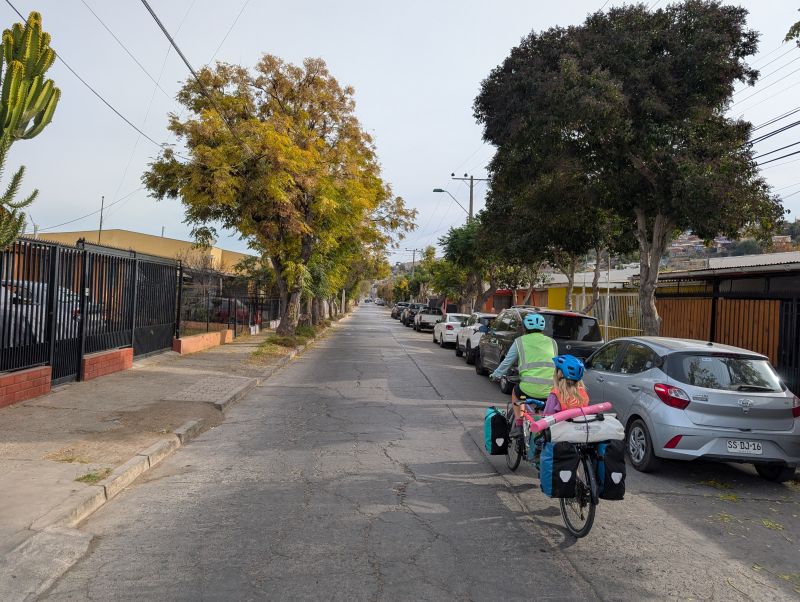
Luckily the host, Luz Marina, met us on the sidewalk. We sent the girls to rest and play videogames while we chatted with her. She had moved to Chile a couple years ago from her home country of Venezuela. She had a lot of hot takes about Chileans to share with us! We enjoyed her company.
Later in the evening we made dinner and ate with some of the other guests: two women from Santiago doing social work in Ovalle. They were really interesting and fun. We talked for hours and learned about the history of women in Chile and their first woman president.
Camping in the desert is fun, but so is sharing stories with the people that live here! We settled in to take a rest day in Ovalle before our final push to our end destination of La Serena.