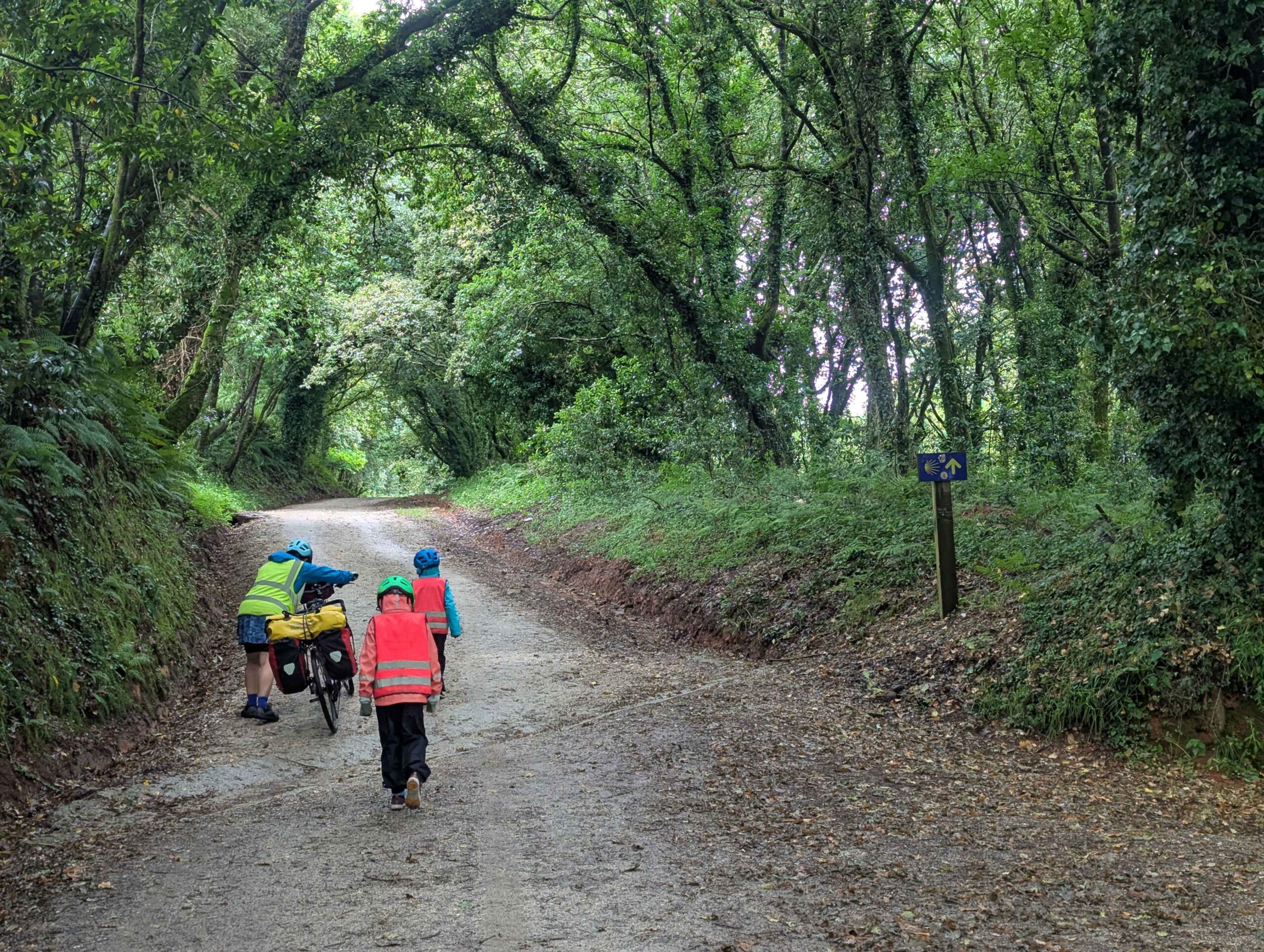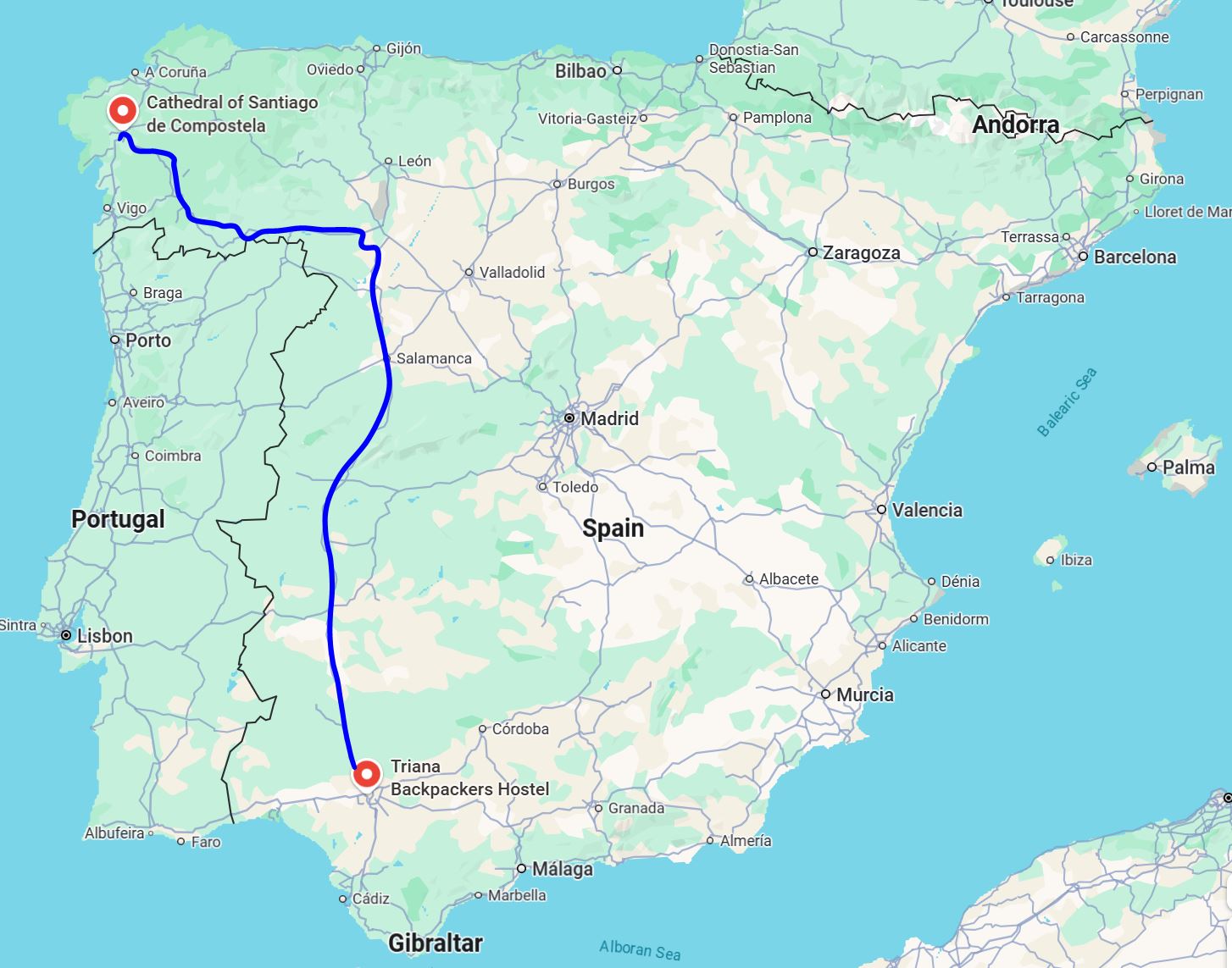
Summary:
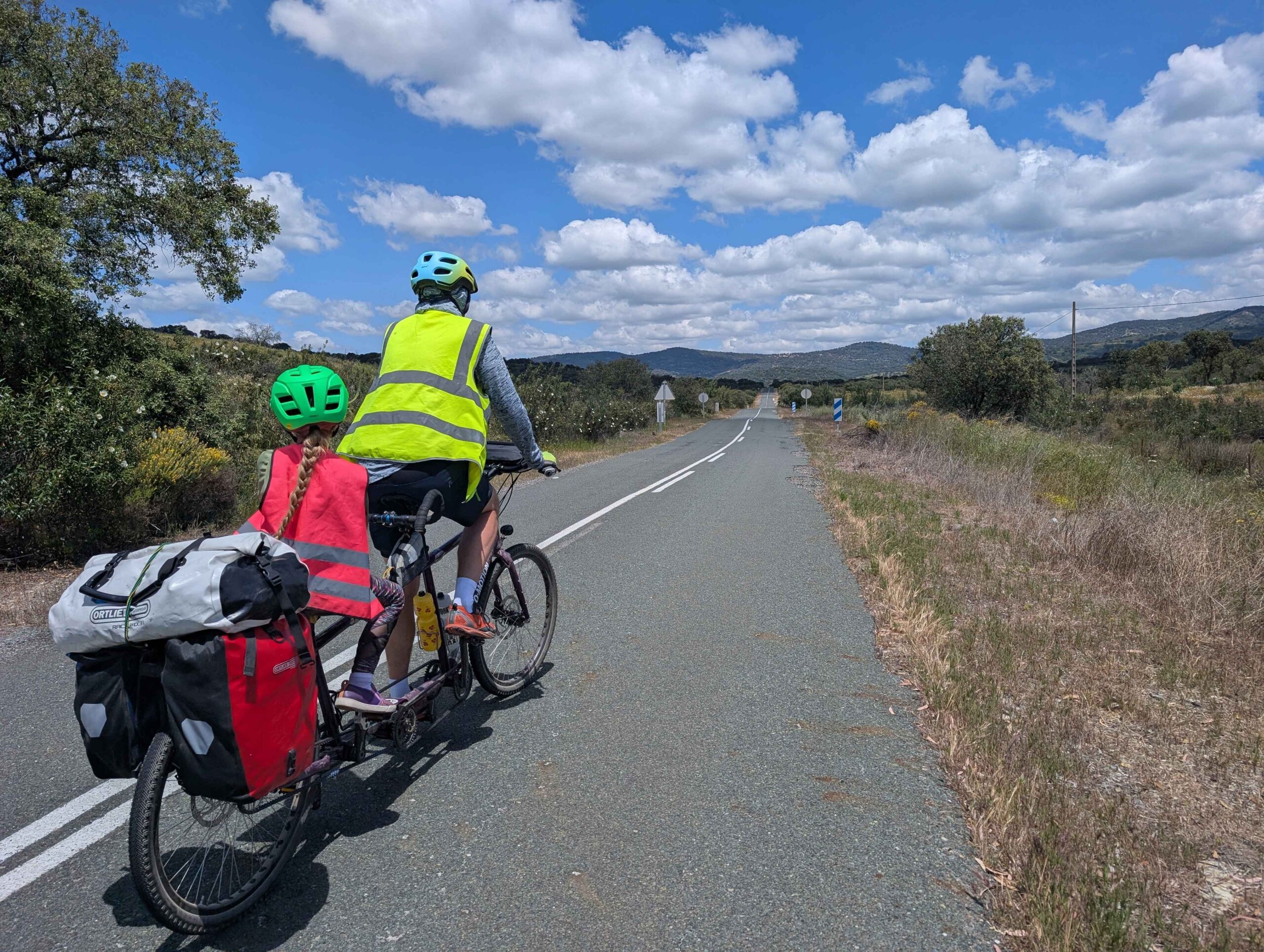
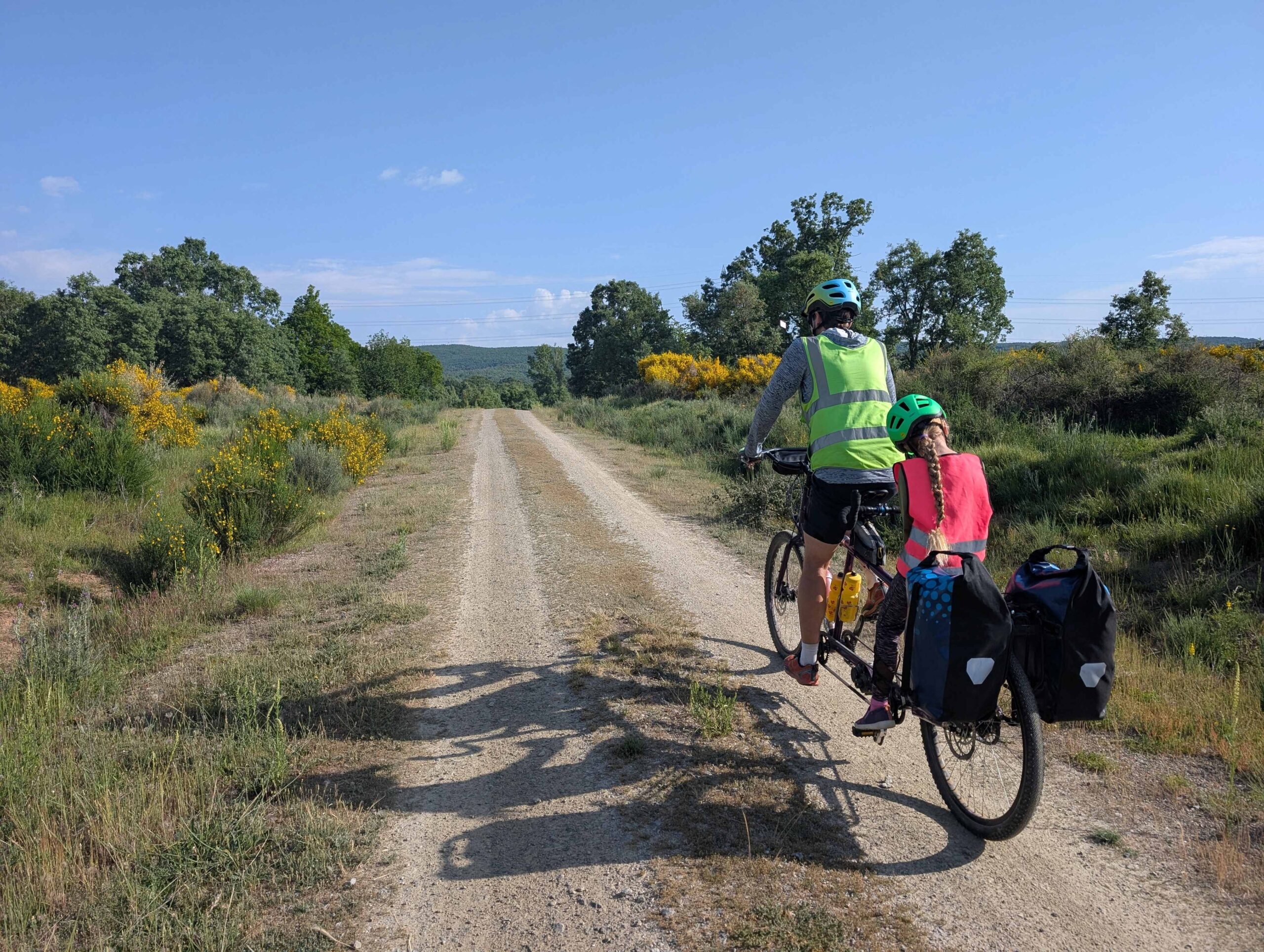
The Camino de Santiago is a pilgrimage route that is in fact many routes. We did the Via de la Plata, which was historically a trade route. We started in Sevilla, a city in southern Spain, and ended in Santiago, in the northwest corner. It took us 24 days total to travel 1007 km (627 miles). A ‘typical’ day was about 50 km (31 miles). The scenery was pretty and varied, and the Spanish people were friendly. There were plentiful services for cyclists, and drivers were very careful with us. We would not hesitate to recommend this route to other families or casual riders. It was quite different than our usual preference for camping in remote areas, as we didn’t even bring a tent! It was also a bit of a logistical challenge, but Spain has quite a bit of infrastructure built up around cyclists and hikers doing exactly this route.
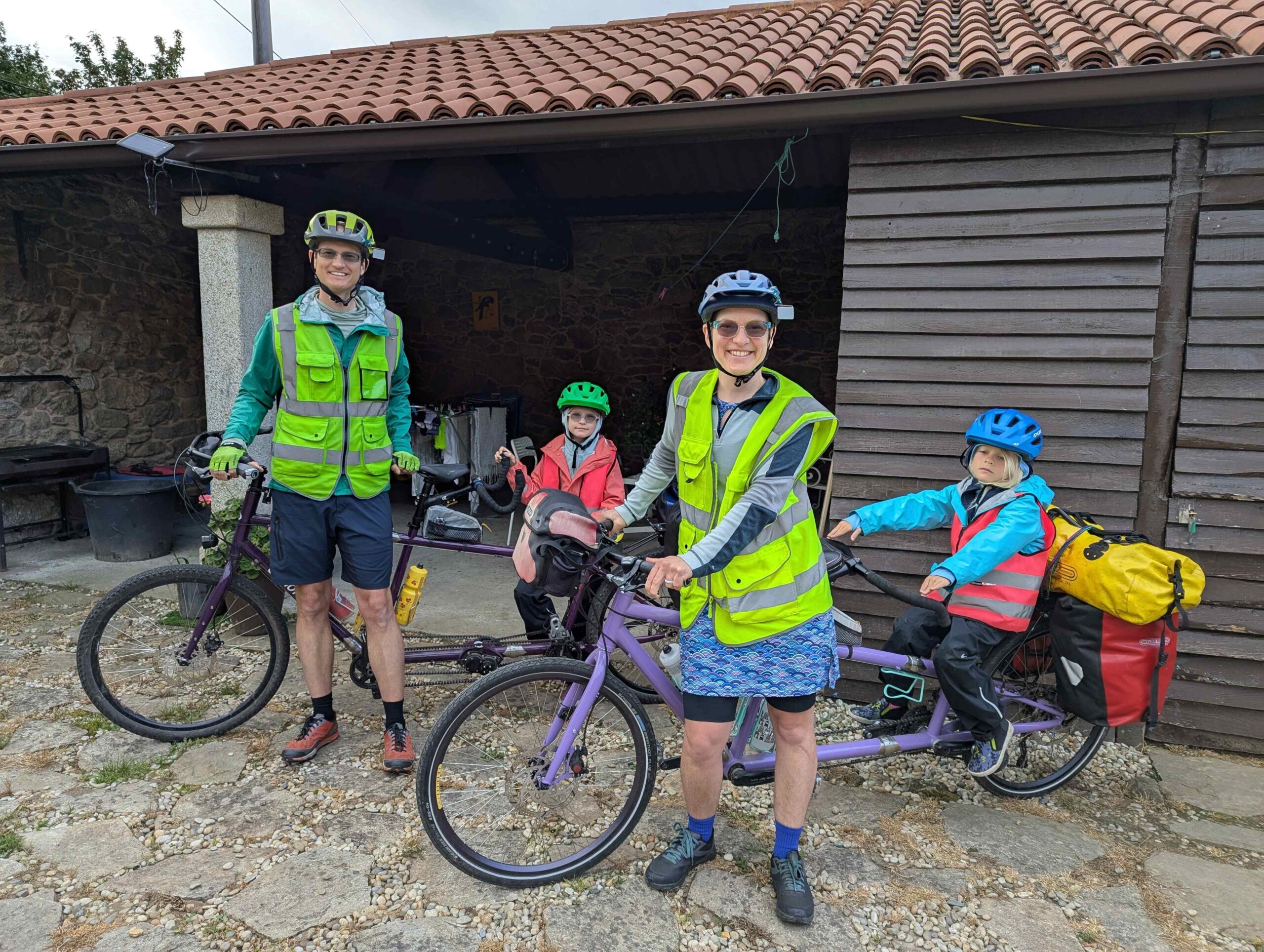
We used a guidebook for this route to keep us on low-traffic roads and trails. It included on and off-road directions and elevation profiles. The recommended days were usually too long for our family, but that didn’t matter. We used the website gronze.com to find lodging. Typically we booked rooms/hotels 1-2 days in advance. We stayed in communal bunkroom hostels a few times in the early part of the trip when there were few hikers on the route. As the hikers started to be more common we switched to apartments/hotels/rural houses. Hikers always have preference in the bunkrooms, which is fair.
It took days of research to get the logistics for this plan sorted out. I summarize how we did it here so that you don’t have to!
Logistical considerations getting to our start-point:
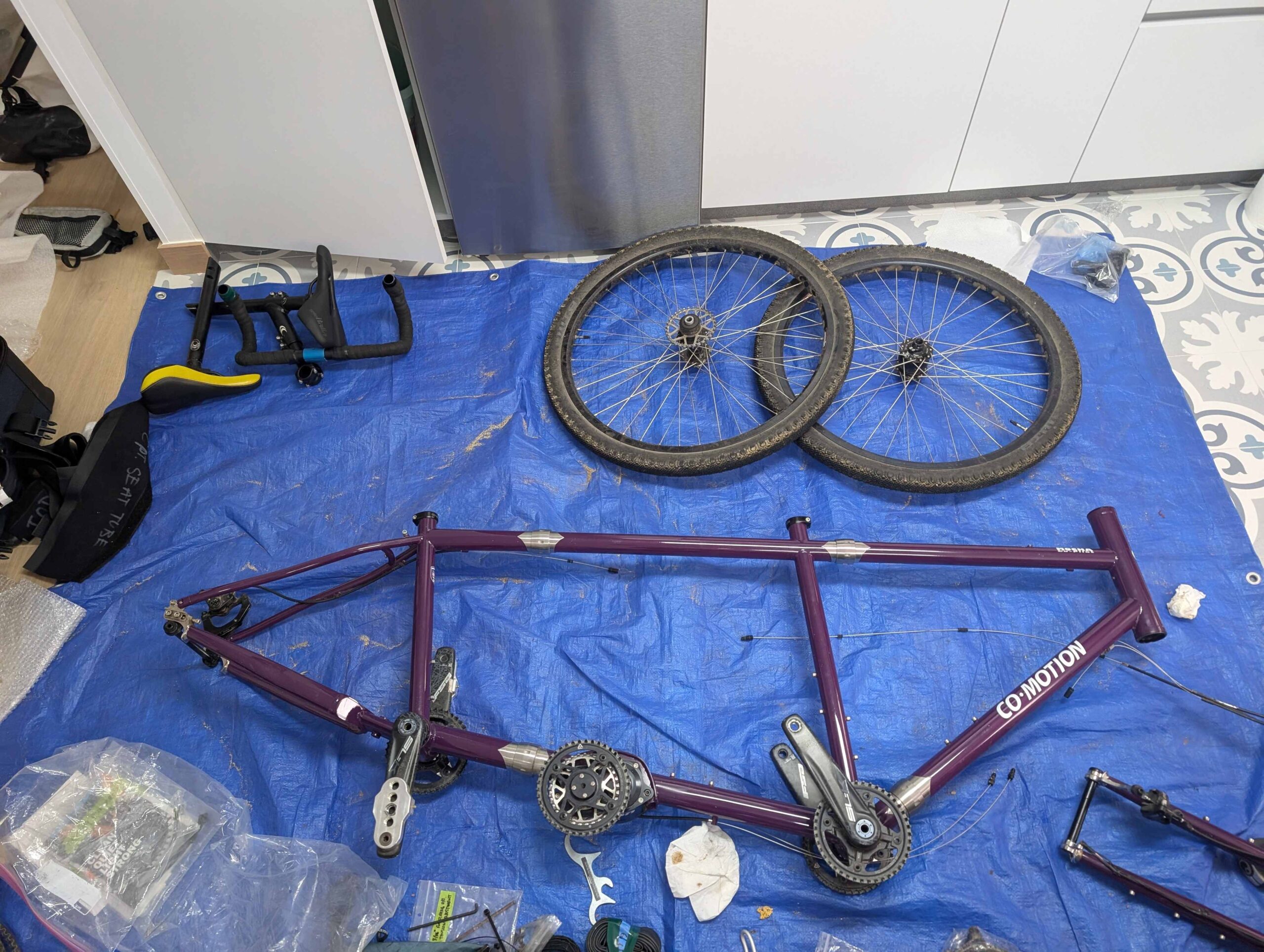
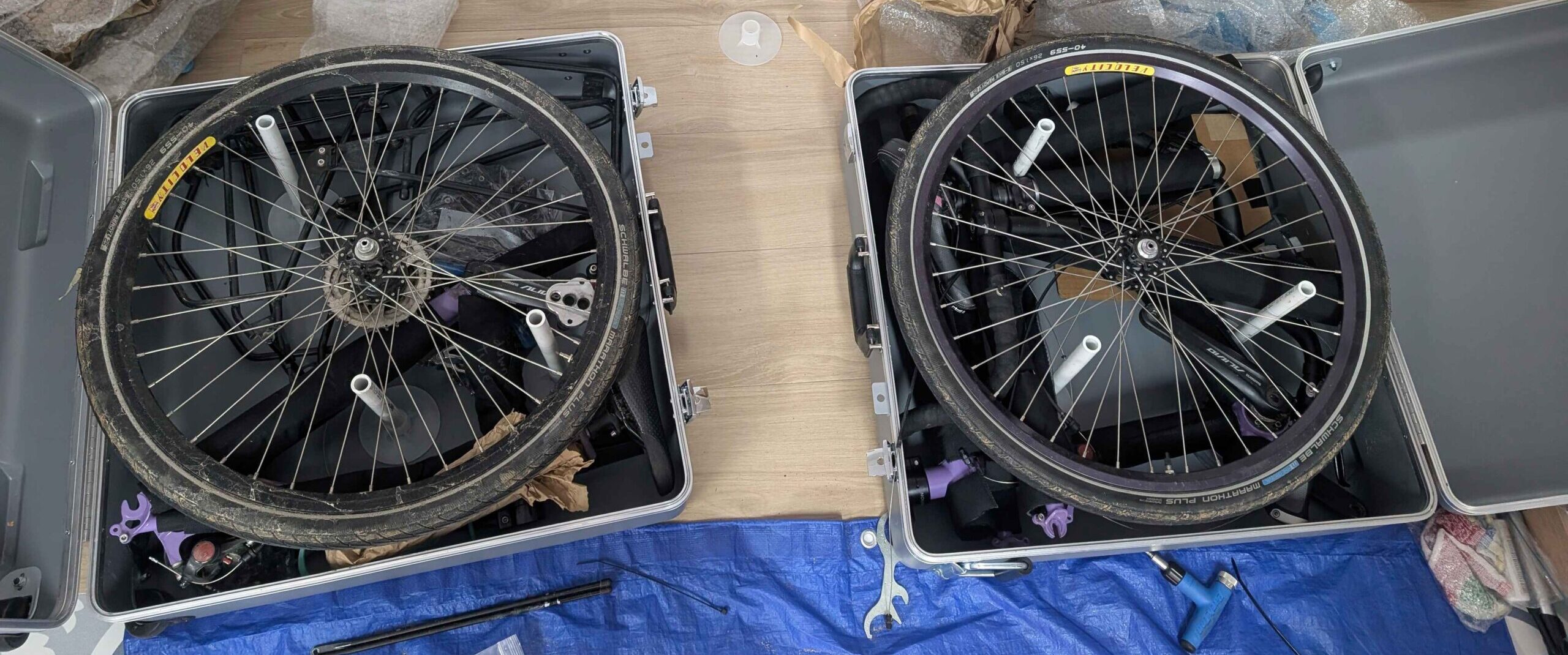
- FLY: We flew into Madrid using United Card benefits to check the bikes, disassembled and in two airline-regulation-size suitcases each. We each carried on one or two panniers.
- Regional train: The Madrid airport is connected to the high-speed rail terminal by regional train. We had to transfer once and the trains had about three steps up/down to get to from/to the platform. It was a challenge to move all the bags but we did it.
- High-speed train: We took a 3-hour high speed train to Sevilla, which allowed us to carry our bikes and bags right on without issue. Honestly, the high-speed rail network was incredible.
- Uber to hostel: A ten-minute UberXL carried us to our backpacker hostel, where we spent a couple nights to allow time to assemble the bikes.
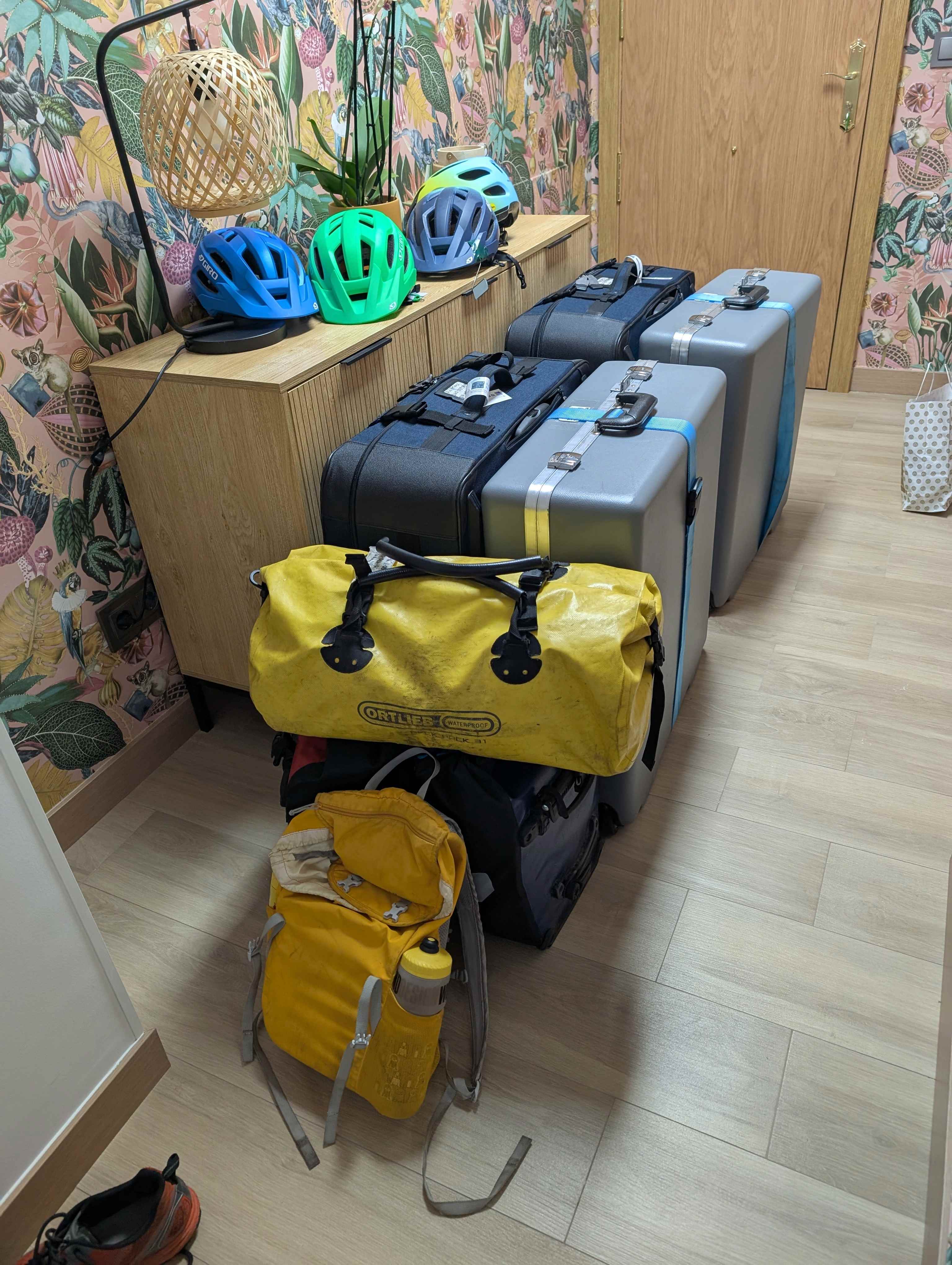
- Bike Bag Shipping: Here is the magic – Spain has a program (Pilgrim Pac) that allows folks to ship their bags to the end of this route, where they are stored safely until you arrive. We shipped the bike boxes from Sevilla to Santiago for about $40 each, including 30-day storage. The default is 15-days so you do need to add time
Logistical considerations getting back from our endpoint:
- Retrieving the bike boxes: As promised, our bags were waiting for us in downtown Santiago. We walked in, presented our ID and tracking numbers, and walked out with all our stuff.
- Disassembling the bikes: We carefully chose an AirBnb at the end of the trip that provided us space to get the bikes back in their boxes. We had hoped to stay in a hostel, but many in Santiago don’t allow children.
- High-Speed train to Madrid: Our high-speed train to Madrid was on time and efficient and accepted our bicycles, but it was stressful. Apparently the rules for bikes in boxes are contradictory for the train we chose and we needed special approval from a supervisor.
- Regional train to hotel for overnight stay.
- UberXL to airport: As before, the airline took our bike boxes without issue or charges.
Weather and Timing:
We had two days of rain and the rest was sunny and warm/hot.
You do not want to do this route in the summer. It gets dangerously hot. We started cycling mid-may and were done the first week of June. Even with our early departure (the girls skipped the last two weeks of school), we endured several hot days before entering the mountains. I would not do this trip in June-July-August.
Thoughts from our family on this route:
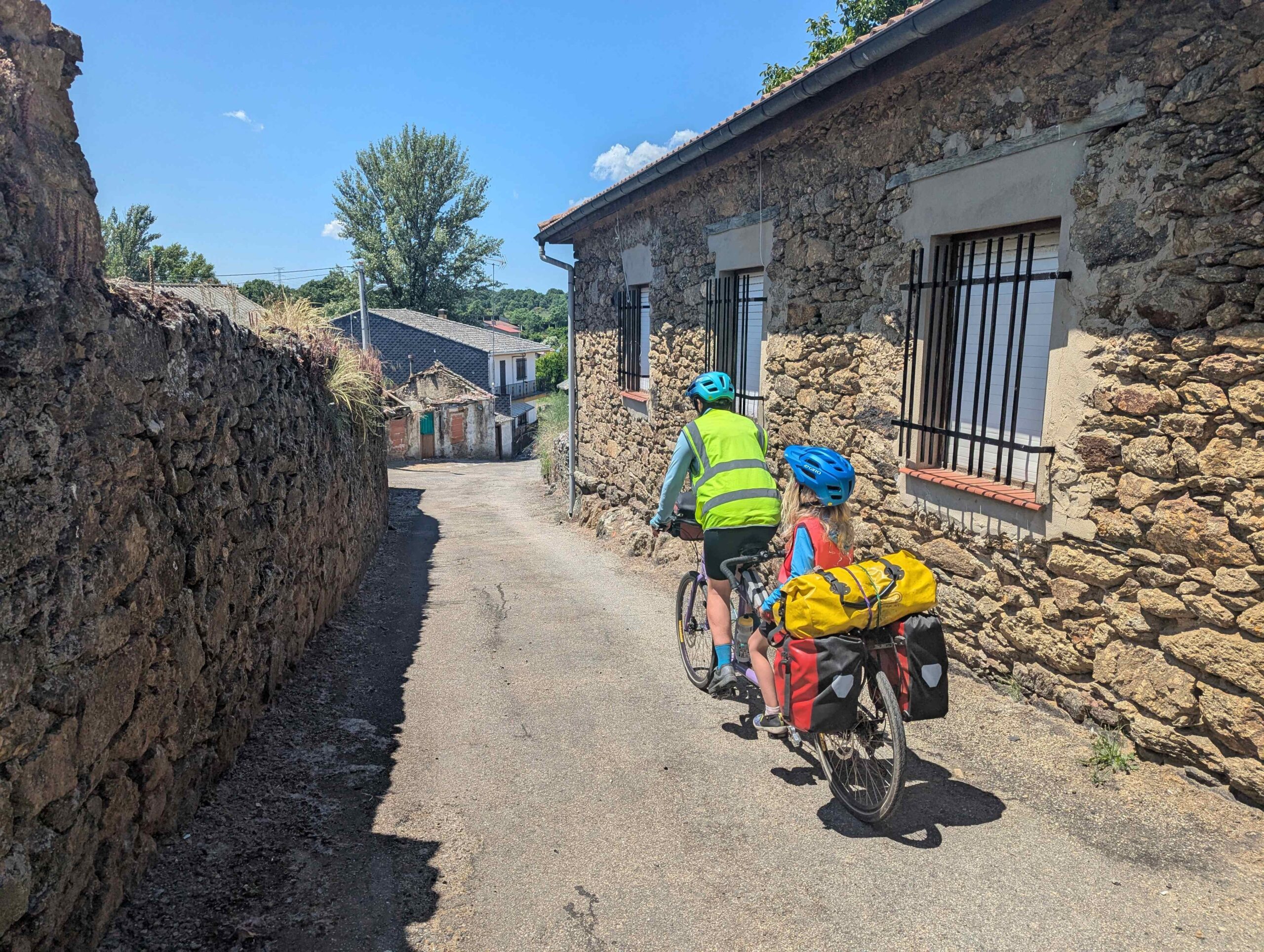
We stayed inside every night (no camping gear!) at a mix of private room hostels, shared bunk bed rooms in albergues (pilgrim bunkrooms), hotels, rural houses, and rented apartments. Calling ahead was important to ensure space for bicycles – especially if you’re on tandems. The guidebook often recommended staying in larger cities, but we found that we instead enjoyed the smaller towns. Our favorites were Zamora, which is highest on our list to come back to, and a village called Laza.
We struggled with the siesta – which in Spain lasts from 3 PM to 6 PM (about). If you arrive to town in the afternoon you may find that the only thing open are the bars. Nearly all businesses (grocery stores pharmacies, etc) close. Sundays were particularly challenging, when even the bars might be closed and nearly nothing opens in the evenings.
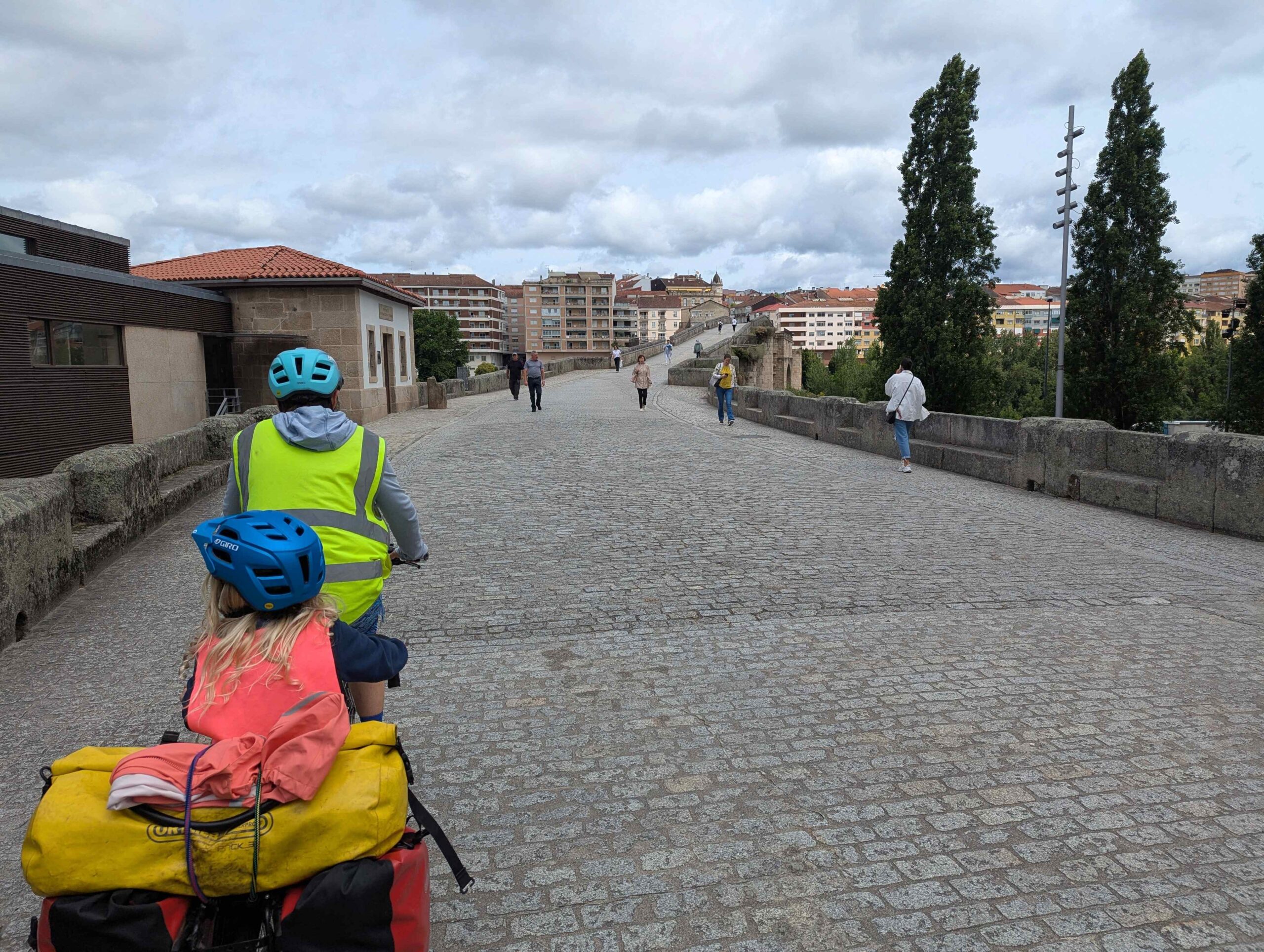
We loved the scenery, the quiet roads, and the historical towns. The girls noticed how the houses changed as we moved through different regions. Despite the comfort and lightweight setup that staying inside allowed, we all missed camping.
Thoughts about cycletouring with two elementary-aged kids
1. These kids are way tougher/more resilient than anyone on the outside could guess. They almost never complained about cycling stuff. They do need real rest days every 3-4 riding days. When asked what they would say to someone who thought 6 years old was too young for a bicycle tour… H replied ‘Who says that – I’ve been on more than 4 bike tours!’.
2. Entertaining them on the bikes can be a beautiful family experience or a patience-testing trial, depending on the terrain. When the riding was flat and easy we had so much fun singing and talking. When the hills were steep and the grown-ups were working as hard as possible it was so difficult.
3. I’ll never get used to having a six-year old poke my butt with her little fingers while I’m trying to just ride.
4. Piloting a tandem with a small child on the back also requires constant upper body strength. They wiggle! They point! We have to be constantly working to compensate and keep the bike upright. I had several days with very sore shoulders and arms, despite doing a lot of upper body work before this trip.
5. We ended up letting the kids have almost unlimited screen time in the evenings when it was an option. We asked a lot of them all day, and they wanted to just truly veg in the evenings. Every evening there was an obligatory family walk through town to see some sights, but besides that we let them read and play games.
6. Being an adult on a family bicycle tour is HARD. We have stuff for four people, and have to organize for four people, but only two people are really involved in the effort. The kids aren’t jumping up and down to pack, or organize, or cook, or choose food. They aren’t interested in doing their hair or brushing their teeth, or loading the bikes. We do it all. We pedal it all. The girls *do* help pedal, but their effort doesn’t quite equal their weight. It’s always easier to get up a big hill if the girls are off the bikes.
7. IT’S ALL WORTH IT. We are so grateful we had the health, the money, the time, and the audacity to do this trip.