Leaving the altiplano and entering Peru

This past week we’ve been moving quickly towards Cusco. We had an exiting exit from La Paz, a beautiful ride along Lake Titicaca, and have entered our 7th country: Peru!

Country number 7: Peru!

Country number 7: Peru!

After taking a day to let our legs recover from our hike, we got up very early to leave La Paz before traffic picked up. Unfortunately, Daisy got a flat tire 3 blocks down the street! We changed the tube on the sidewalk while avoiding a couple puddles that were probably urine, based on the smell. It seems that people just pee all over the place in this city.

Flat tire in downtown La Paz

Flat tire in downtown La Paz

Crazy traffic in El Alto. We dodged cars, trucks, buses, and minibuses, and all the people trying to get rides or walk across the street!

Crazy traffic in El Alto. We dodged cars, trucks, buses, and minibuses, and all the people trying to get rides or walk across the street!

After escaping the traffic, we found ourselves back in the flat altiplano. Soon enough, we were riding along the famous Lake Titicaca. We took a short ferry (actually a small wooden raft) with a couple cars and then climbed our way up and over the hill to get to Copacabana. The road wound along the ridge and we could see the lake on both sides. It was beautiful!

Back on flat roads in the altiplano

Back on flat roads in the altiplano

These guys pushed our ferry (aka raft) off the dock before turning on a small motor. We shared the boat with 2 cars, although it looked like 3 or 4 could fit.

These guys pushed our ferry (aka raft) off the dock before turning on a small motor. We shared the boat with 2 cars, although it looked like 3 or 4 could fit.

The road wound up the hills and we got great views of Lake Titicaca.

The road wound up the hills and we got great views of Lake Titicaca.

May12_010

May12_012

Our bikes get a break

Our bikes get a break

The next day we entered Peru, and we felt the difference immediately. The people are very friendly! A lot of people smile and wave to us as we ride by. Also, there are a lot more bicycles, cargo tricycles, and motorcycle taxis. In general, people seem to be a bit happier and a lot less reserved. When we stopped for our picnic lunch the first day, a woman with 4 cows sat down nearby and chatted with us.

The wheat was cut and set to dry

The wheat was cut and set to dry

One of many motorcycle-trucks

One of many motorcycle-trucks

A fishing village along Lake Titicaca.

A fishing village along Lake Titicaca.

Cut reeds drying in the sun. Along the road there were ladies tying them together to make mats.

Cut reeds drying in the sun. Along the road there were ladies tying them together to make mats.

Our first city in Peru: Puno.

Our first city in Peru: Puno.

Many of the small towns have municipal sports stadiums. Most of them have livestock inside!

Many of the small towns have municipal sports stadiums. Most of them have livestock inside!

Cargo tricycle traffic in Juliaca

Cargo tricycle traffic in Juliaca

Meeting Erik and Garbi, a friendly Spanish couple that have been heading south since Mexico.

Meeting Erik and Garbi, a friendly Spanish couple that have been heading south since Mexico.

Alpacas along the road

Alpacas along the road

Snowy mountains as we head up our first Peruvian pass, very gradually. Peru is known for having low grades and many switchbacks.

Snowy mountains as we head up our first Peruvian pass, very gradually. Peru is known for having low grades and many switchbacks.

"Summit Lake" -- or at least that is what we called it.

“Summit Lake” — or at least that is what we called it.

Our first summit sign in ages.

Our first summit sign in ages.

We got a little rain near the top

We got a little rain near the top

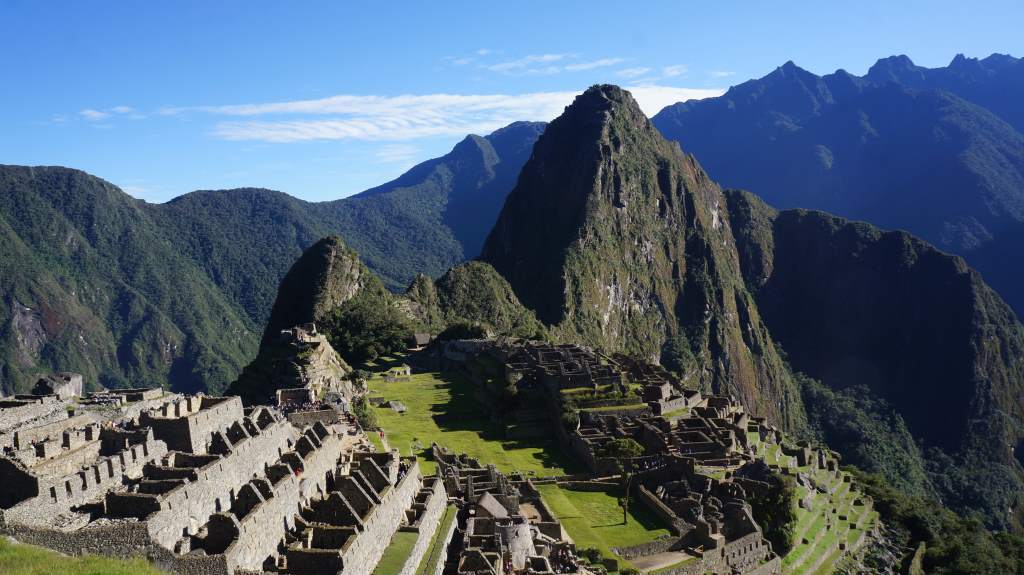
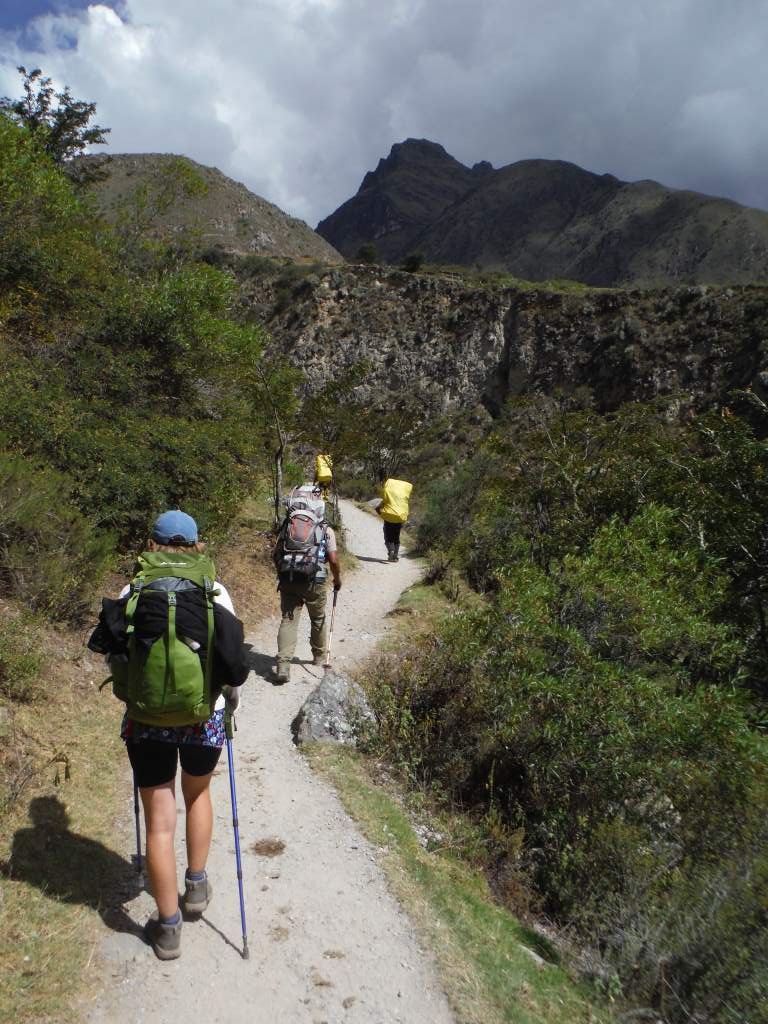
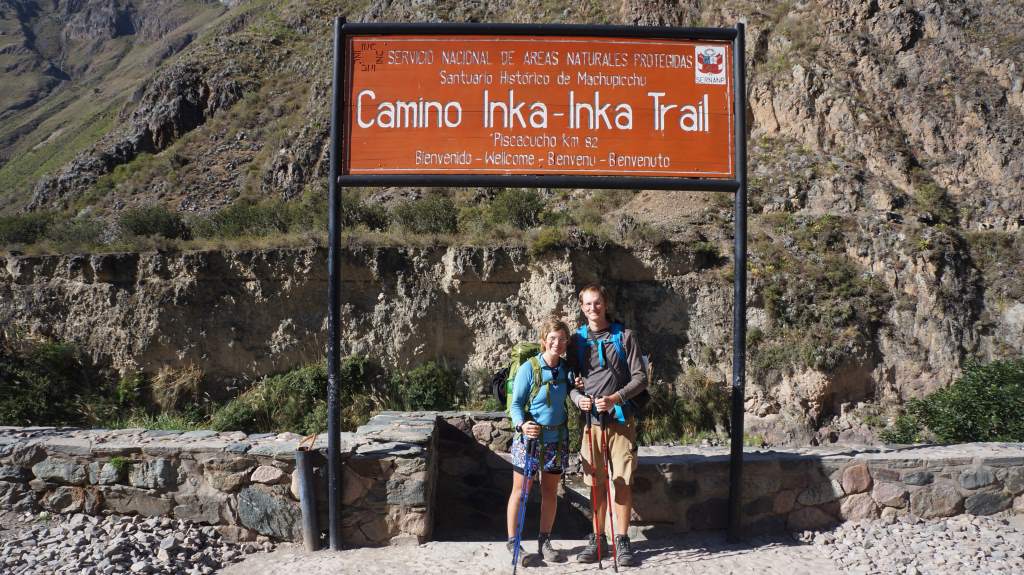
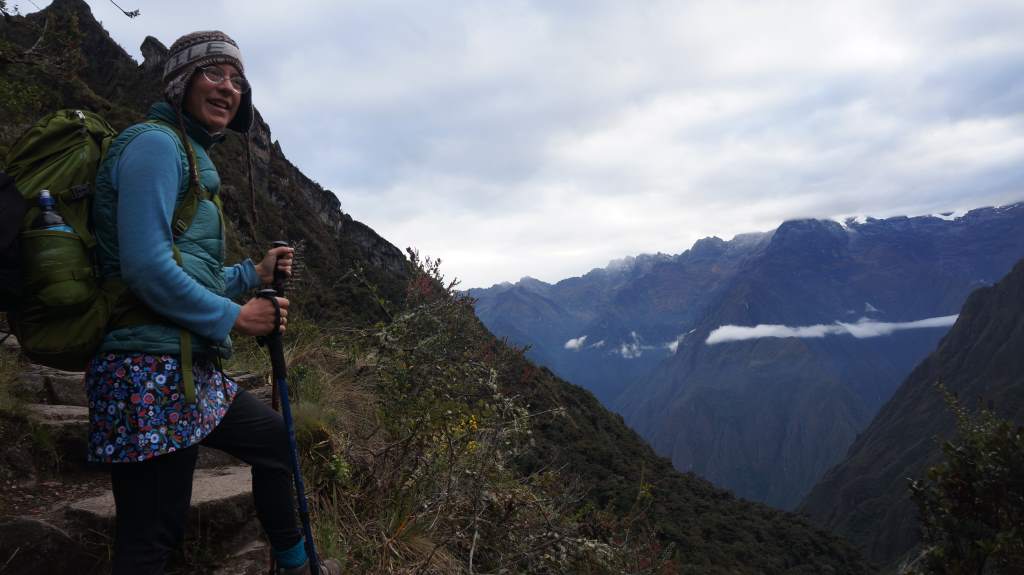
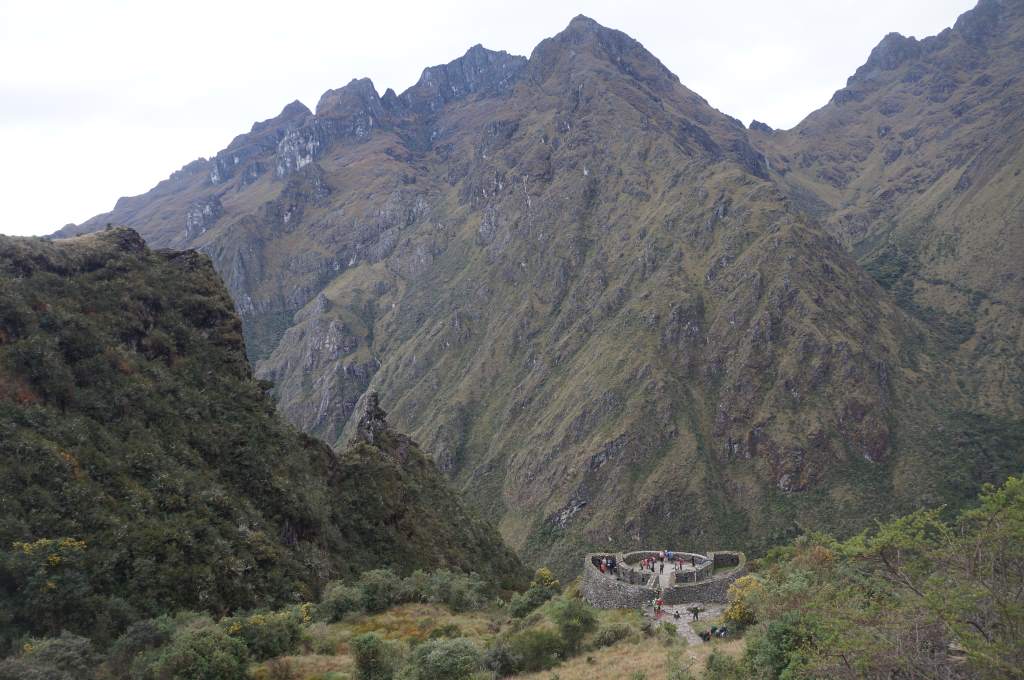
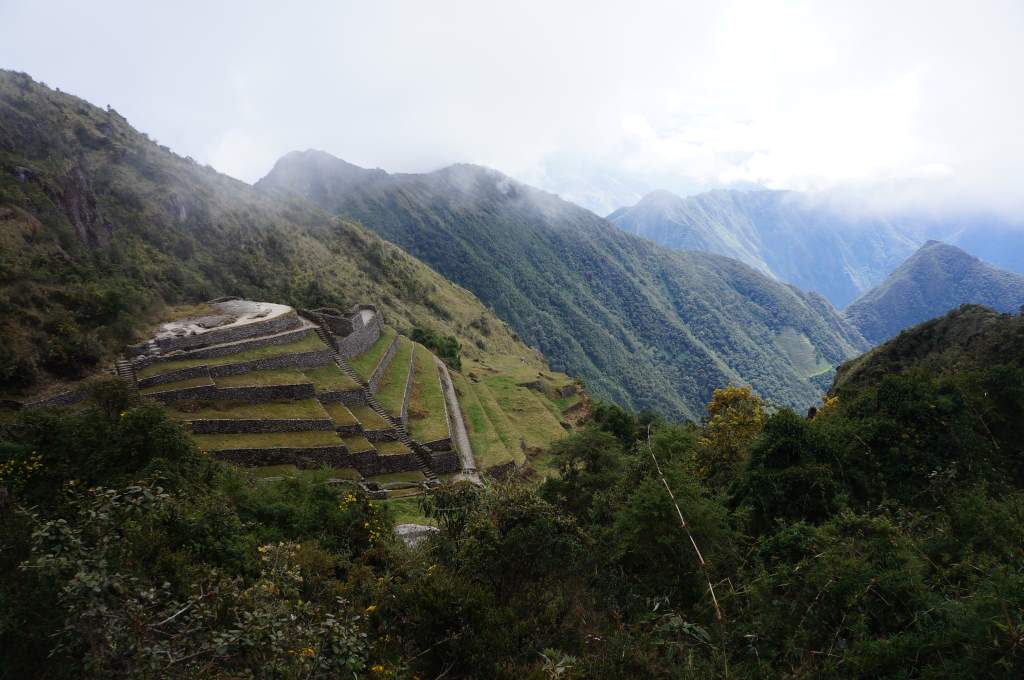
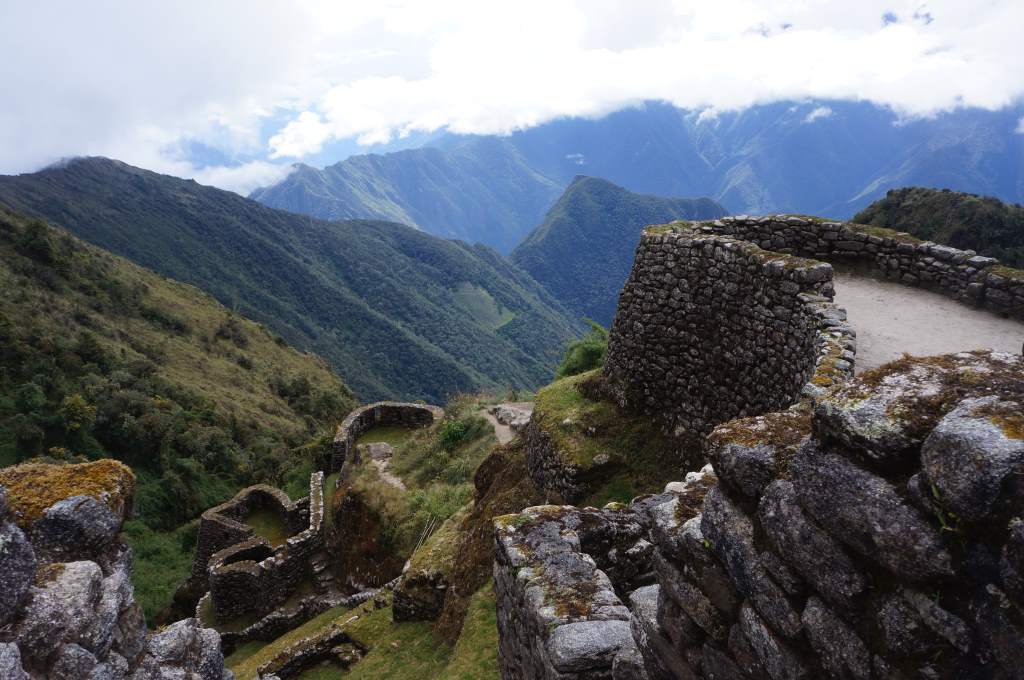
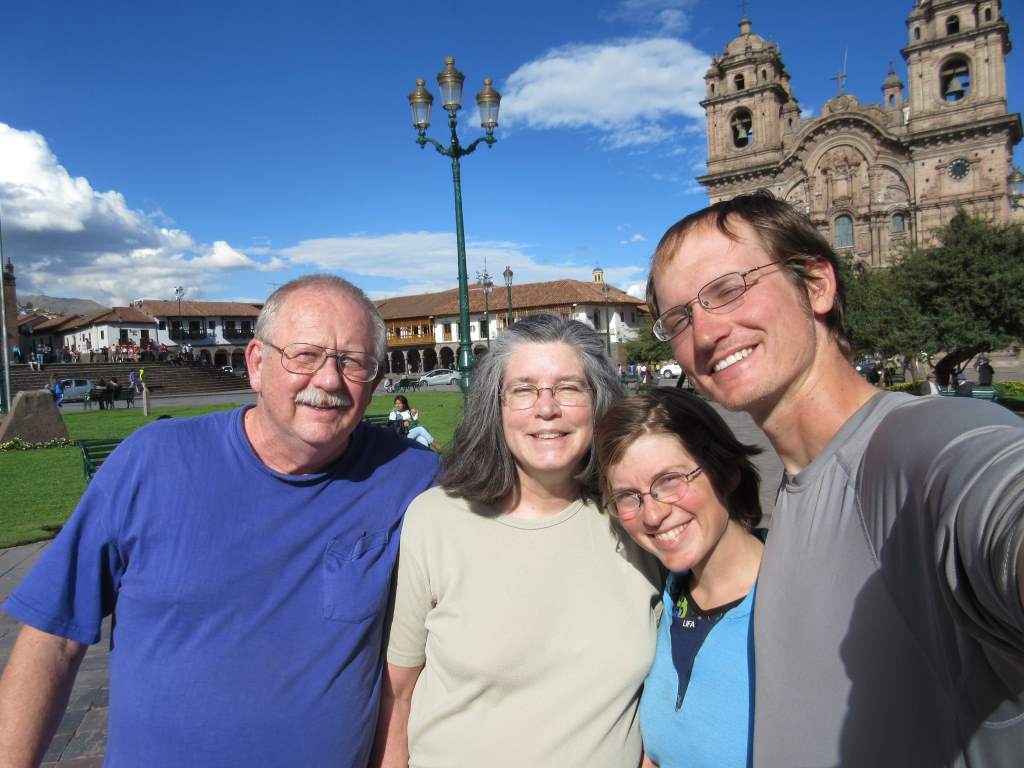
We are excited to arrive in Cusco in just a couple days. We will meet up with my parents and visit for a week – we haven’t seen them since San Francisco! We will also do the 4-day Inca Trail hike to Machu Picchu. I think after that we’ll be happy to retire our hiking boots until after the bicycle trip is over.

They are serious about their guinea pigs!

They are serious about their guinea pigs!

Three days hiking to remind us that bikes are better

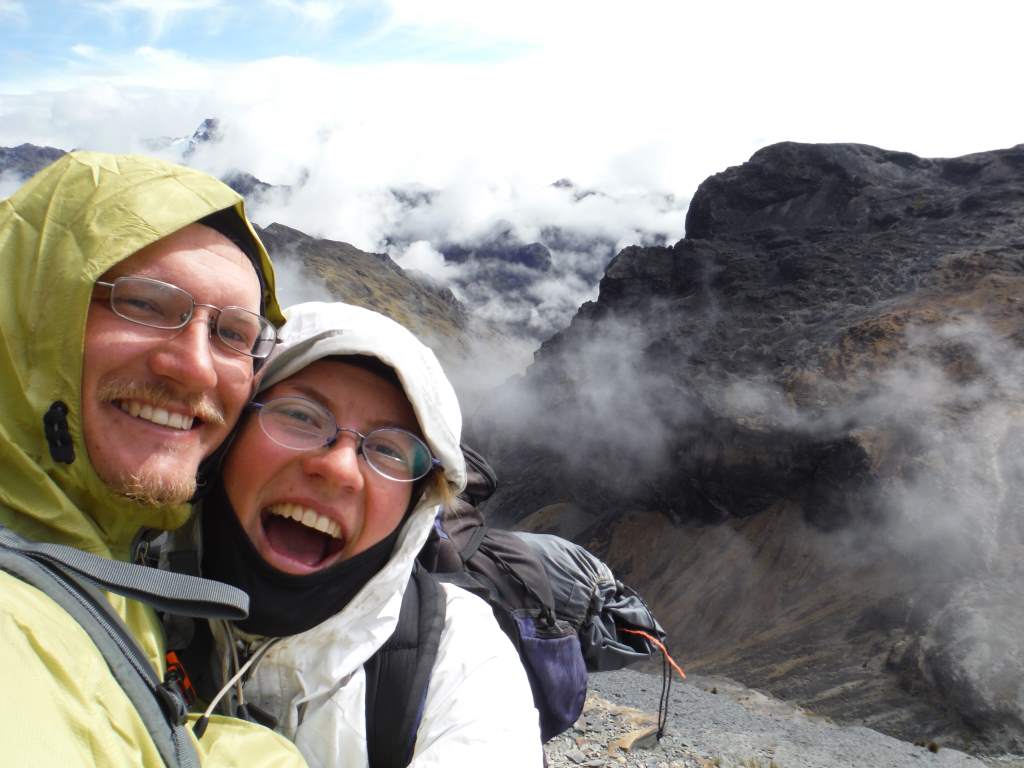
Up at the top near La Cumbre, around 16,000' (nearly 5000 m)

Up at the top near La Cumbre, around 16,000′ (nearly 5000 m)

Our time in Bolivia (on bikes) has been restricted to the high and dry altiplano, but we wanted to get a glimpse of the tropical lowlands before leaving the country next week.  For this reason, we decided to do a three day hike that starts in the high mountains and winds down a river valley into the steamy jungle.  We also wanted to break in our new hiking shoes (bought in La Paz) before our 4-day hike to Machu Pichu which we will start in another couple of weeks.

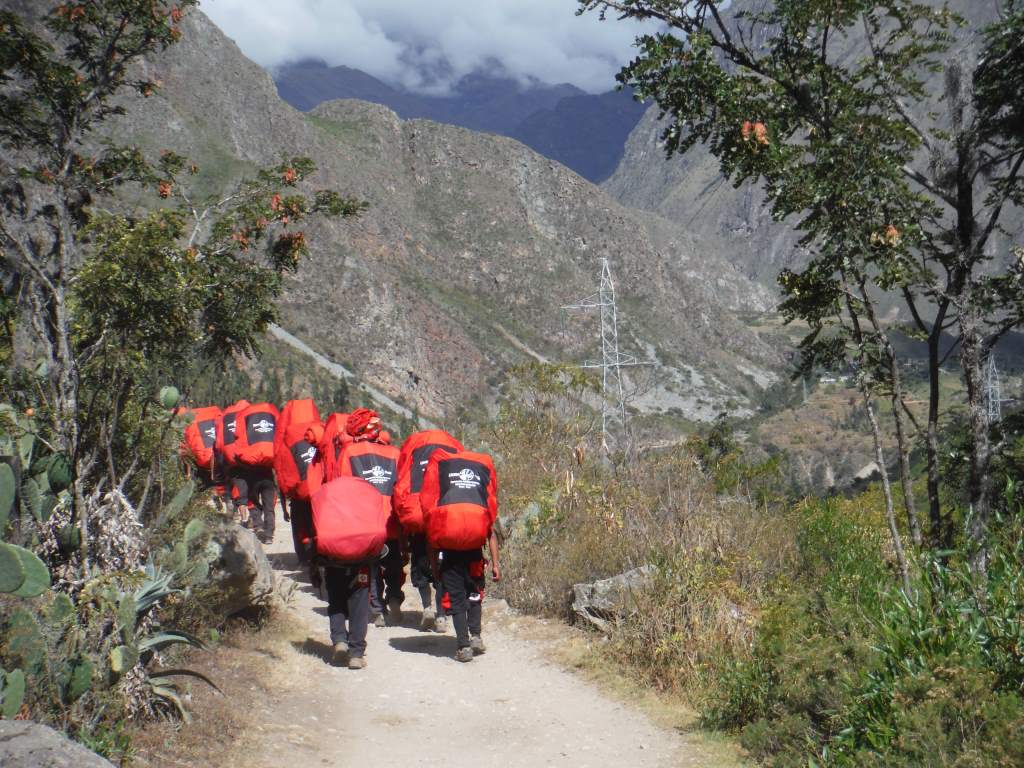
Because we didn’t have backpacks, and we were nervous about undertaking the hike, we decided to hire a guide through a travel agency.  Our ‘guide’ turned out to be more of a porter and a cook.  This was all good and well, but we could certainly have carried our own gear and cooked our own food.  We were disappointed that he didn’t tell us anything about the areas we were hiking through, and even more so when it came time to return to La Paz.  It was a nightmare half day of finding public transportation (4 separate vehicles), and our guide seemed just as lost as we were.  In fact, Jason was the one who found us the main transport to La Paz!

Despite the shortcomings, we are glad we did the hike.  Our legs are more or less destroyed from descending so many miles on rough, slippery trails, but we got to see the lush jungle and even a wild monkey!  In the narrative below I’ll try to share a bit about our time on the trail.

Day 1:  
We were super excited to start the hike, and a little nervous too since it’s been over a year since our last real hike. We agonized over what items were actually worth carrying. We decided we only needed one sleeping bag, and that we didn’t need too much warm gear since we could use our sleeping bag liners as warm togas. We might have looked a bit funny, but it worked!

DSCF5399

DSCF5407

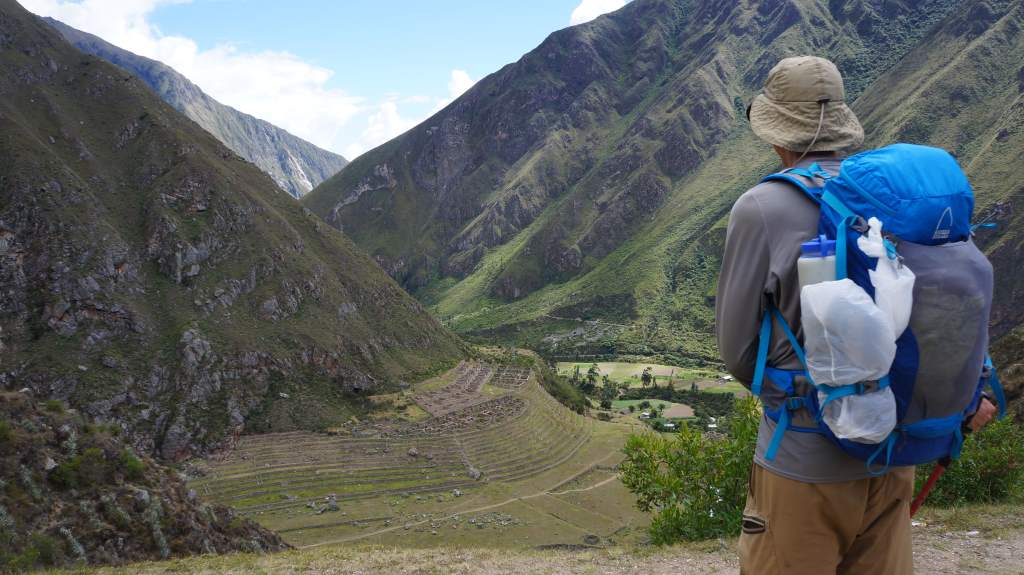
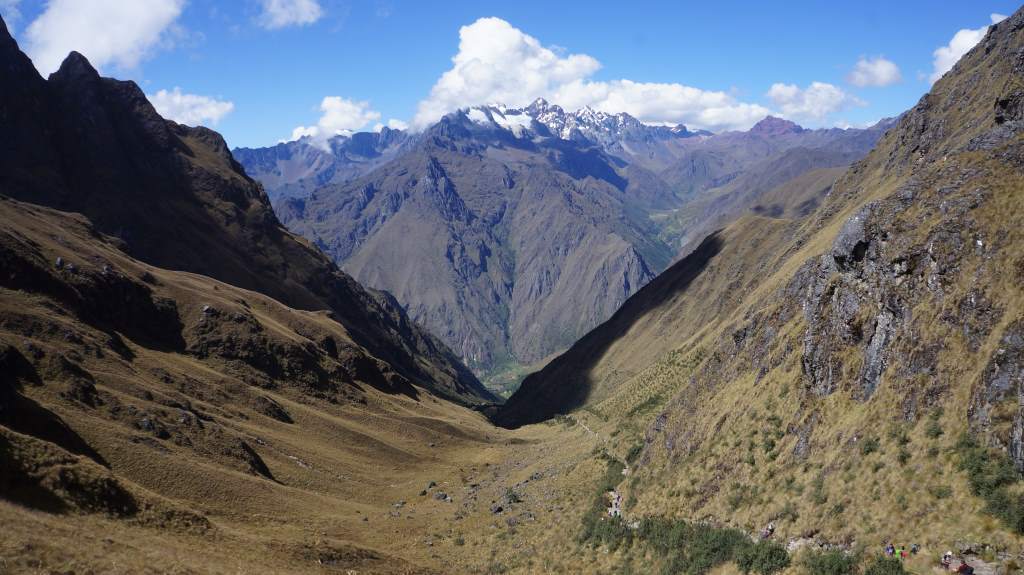
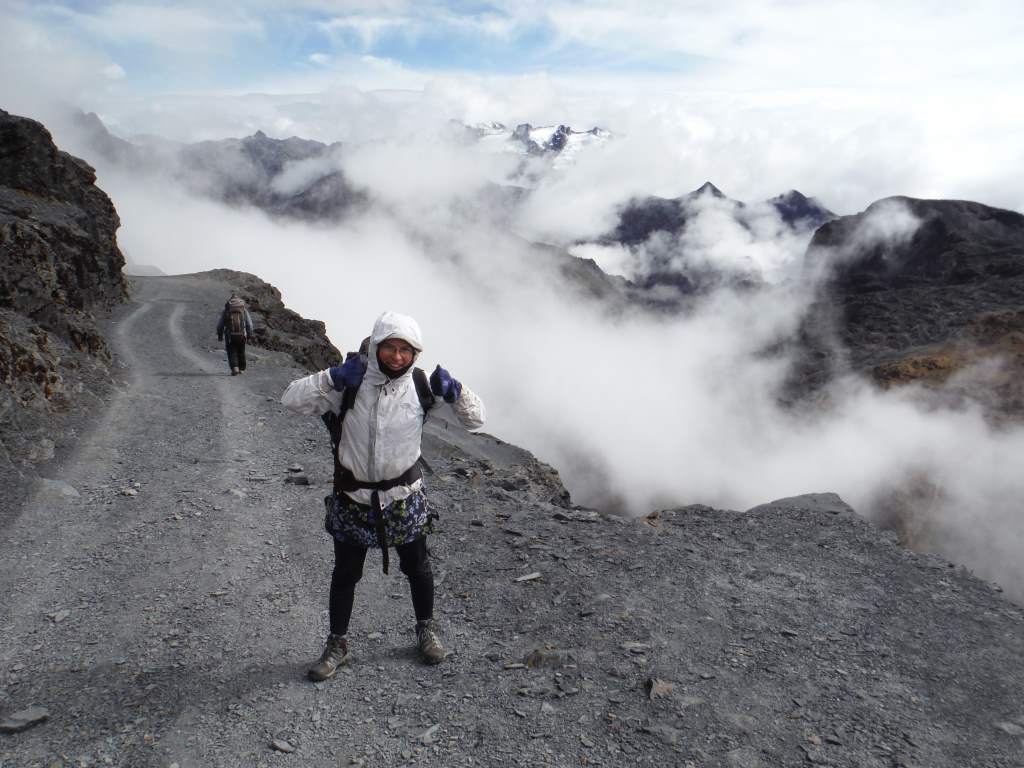
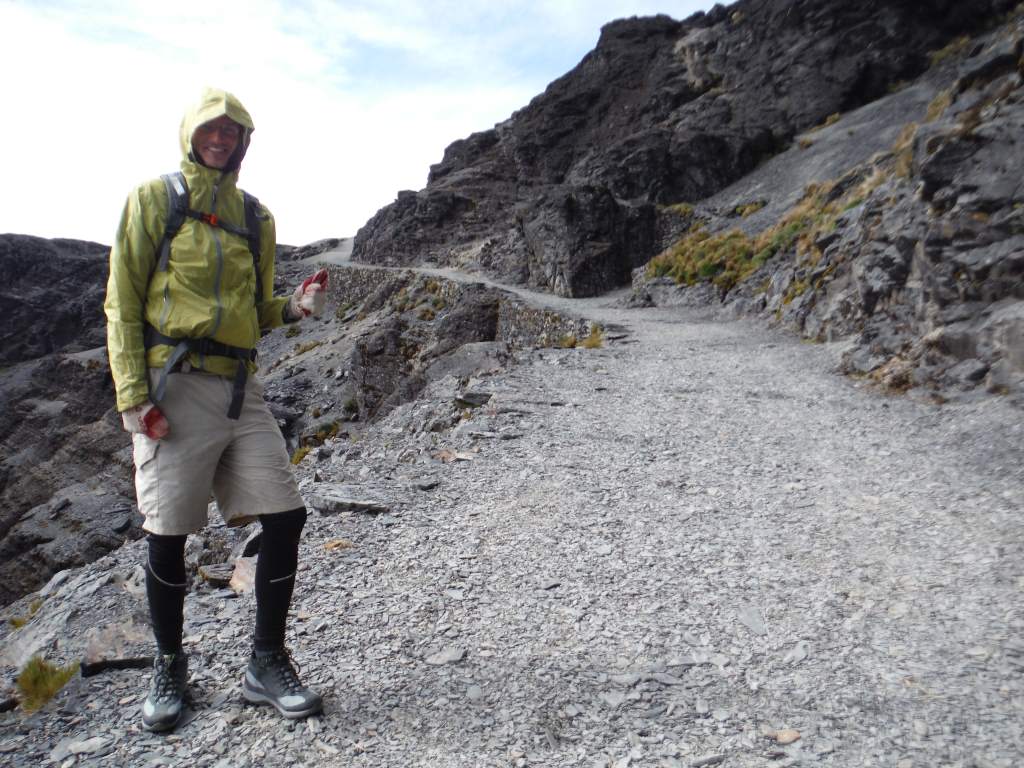
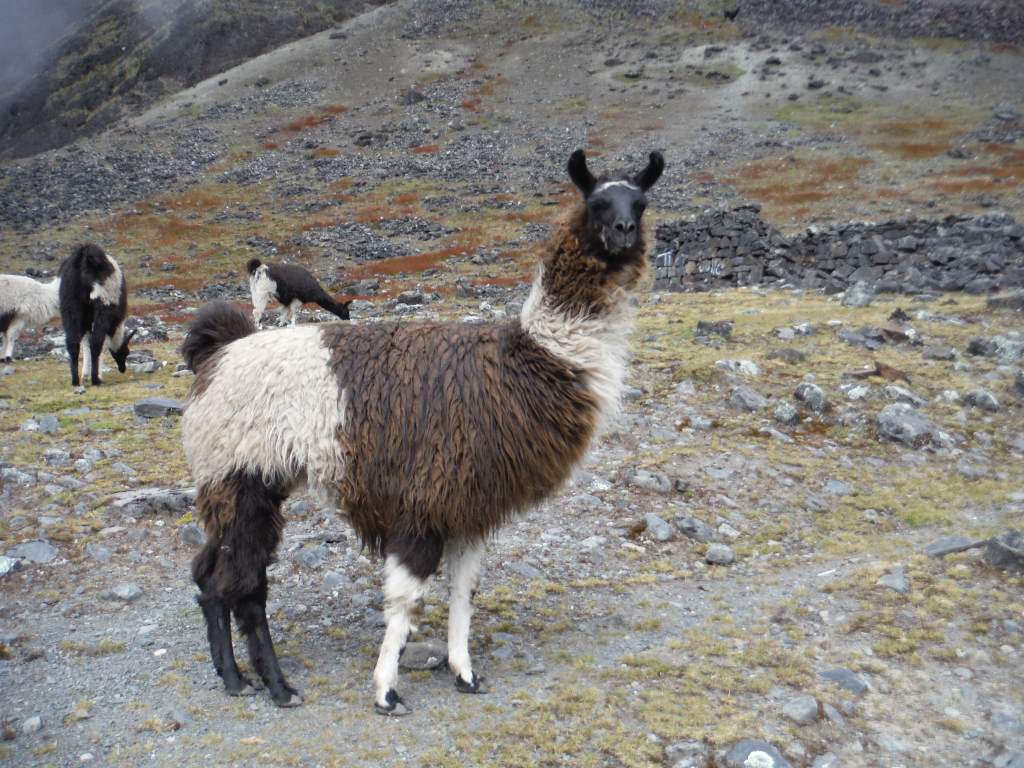
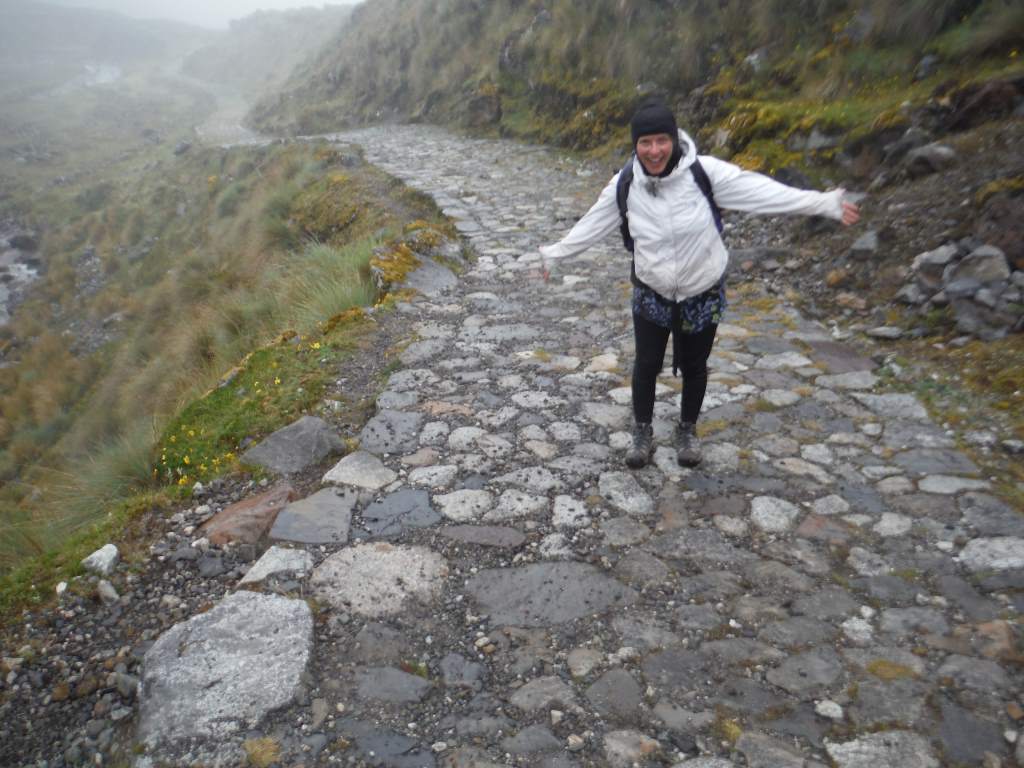
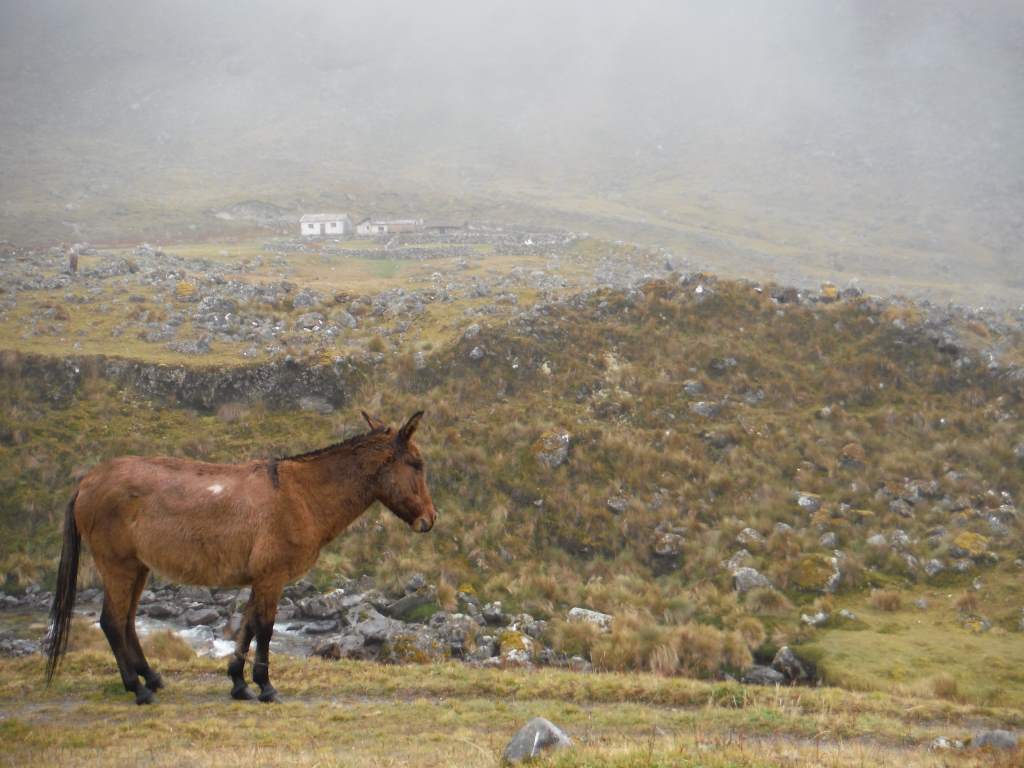
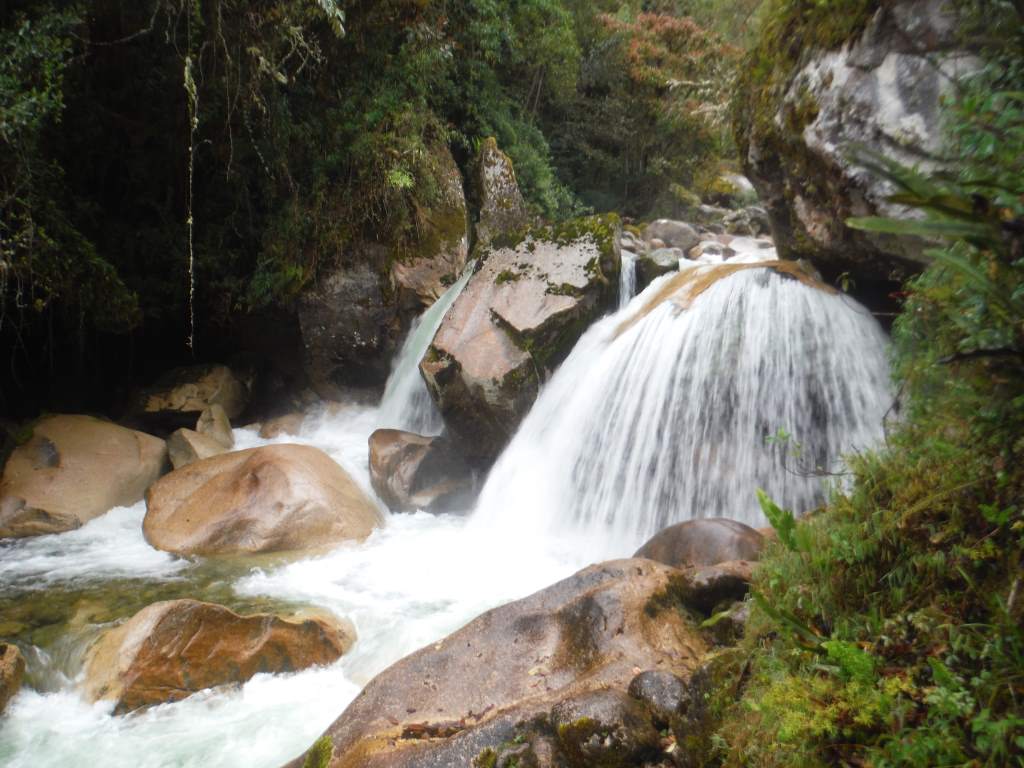
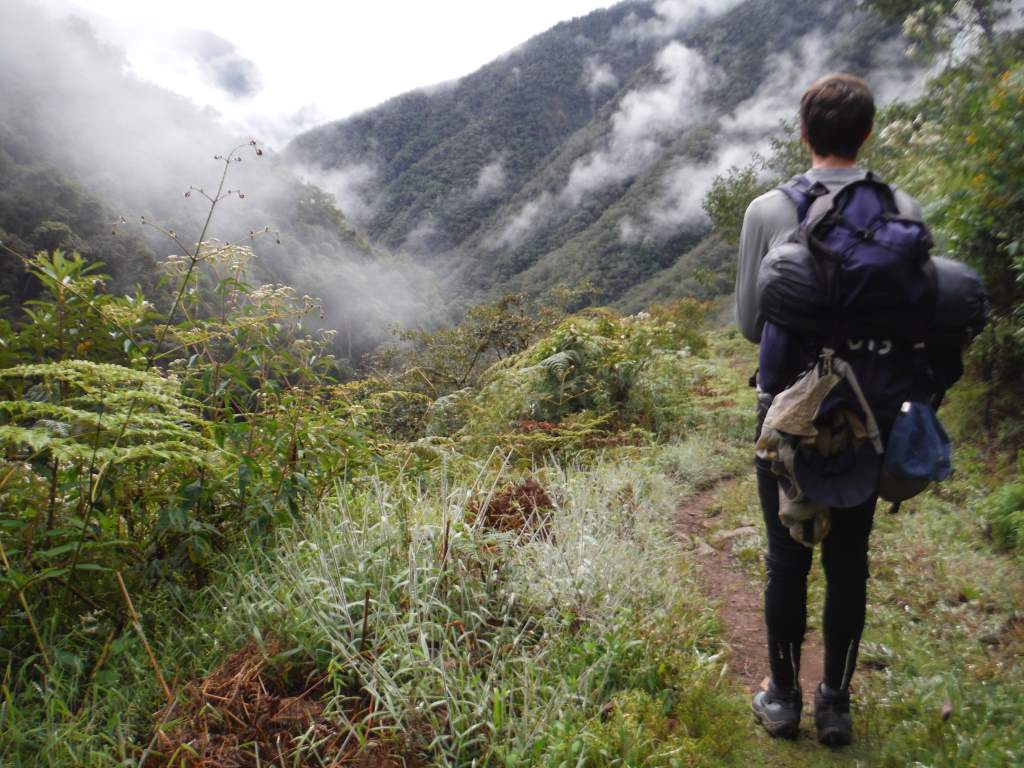
We were transported in a taxi to the highest part of the trail. When we got there it was high, beautiful, and cold! We got wrapped up in our sleeping bag liner togas, and started down the trail.  The views were good when the clouds parted enough to let us see. Our guide took off in front of us, and we made our own careful way down the steep and rocky path. This first bit of hiking before lunch ended up being one of our favorite parts of the whole thing. There were very few plants, but there were steep rock faces, cute llamas, and stone ruins. We watched the clouds rise from the depths of the valleys until we were in them, and for the rest of the day all we saw were clouds.

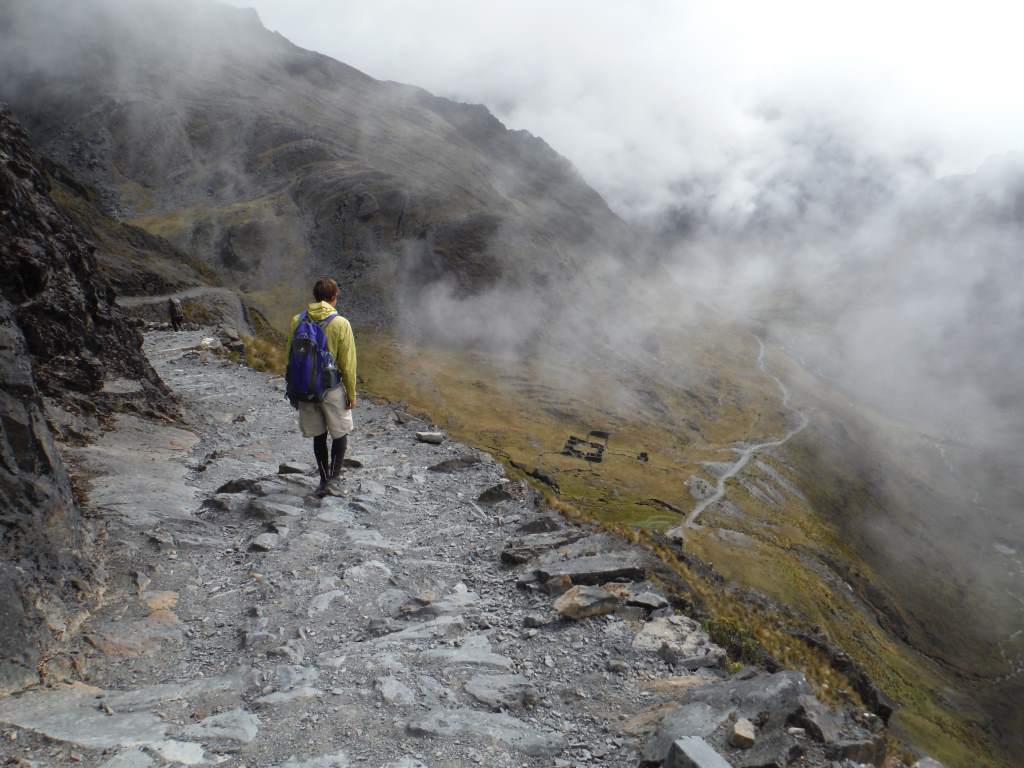
It was a long way down...

It was a long way down…

DSCF5422

Just as we stopped for lunch the rain began, and it continued for the rest of the day. The path was actually very nice, and we mostly stayed happy, but not completely.  They didn’t give us a rain cover for the rented backpack, and we had to do quite a bit of shuffling to get our gear in places where it would stay mostly dry.

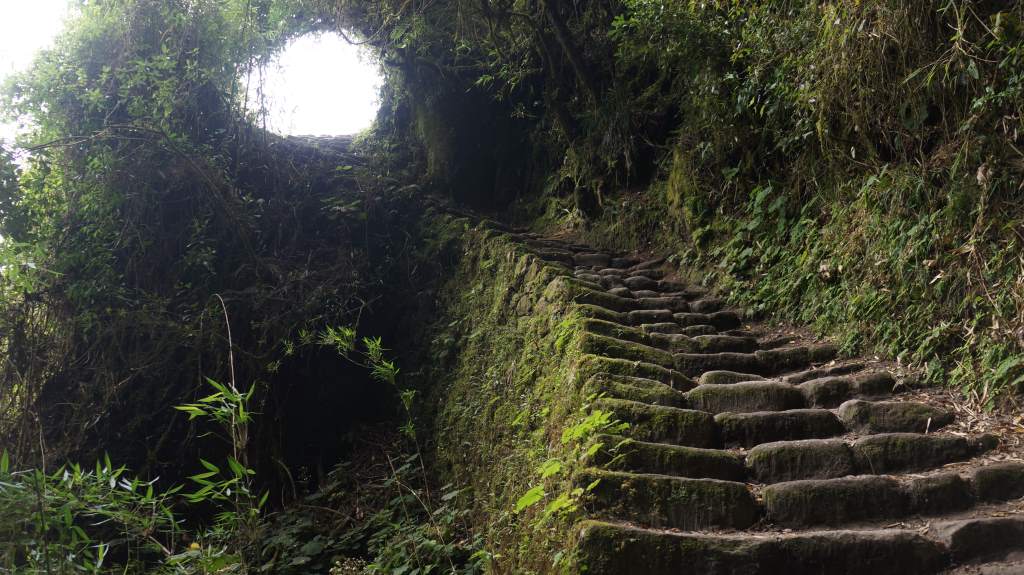
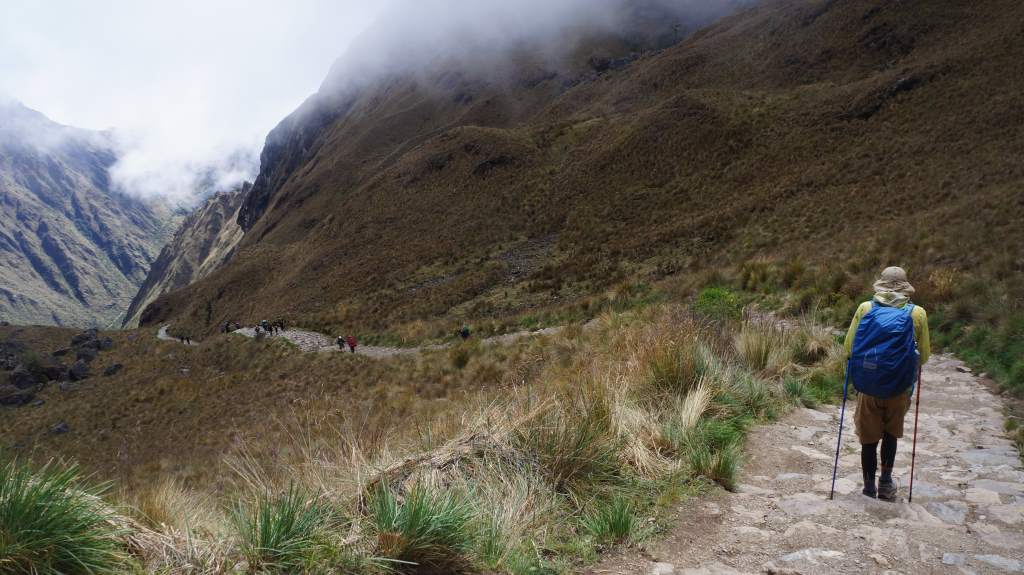
Stone-paved trail, in the Inca style

Stone-paved trail, in the Inca style

DSCF5458

Everything got a lot greener!

Everything got a lot greener!

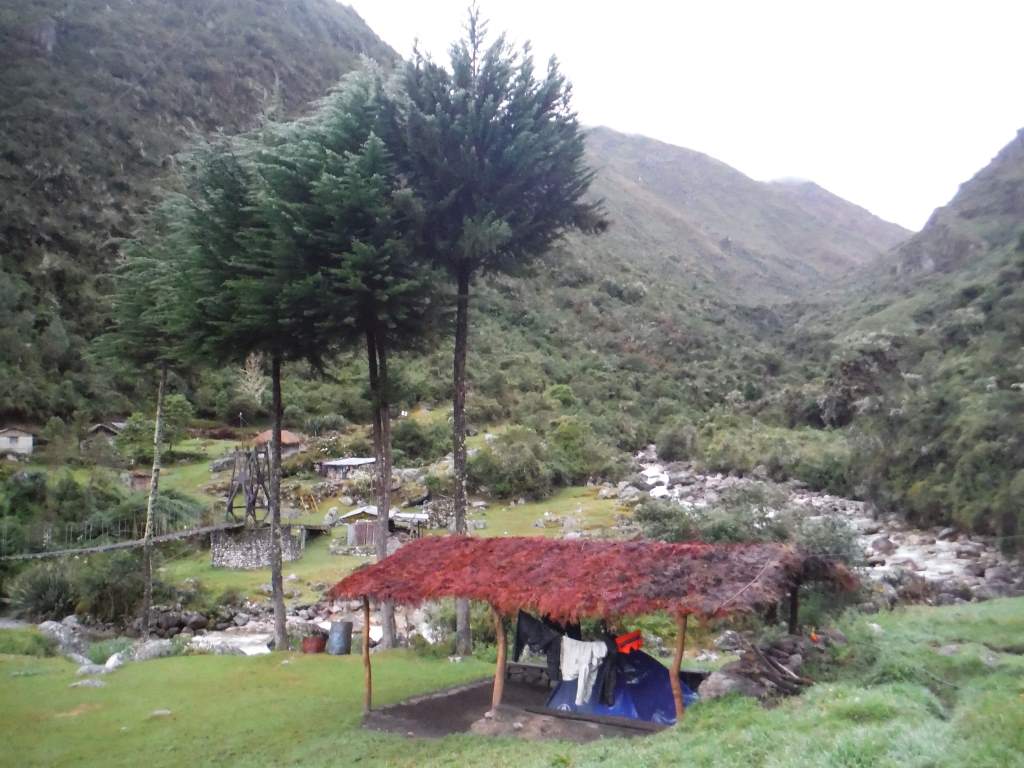
For the rest of the day we picked our way downhill steeply on slick stones, with our guide somewhere off ahead of us. It was with great relief (and the beginning of tired legs) that we arrived at our intended destination with a covered camping area.

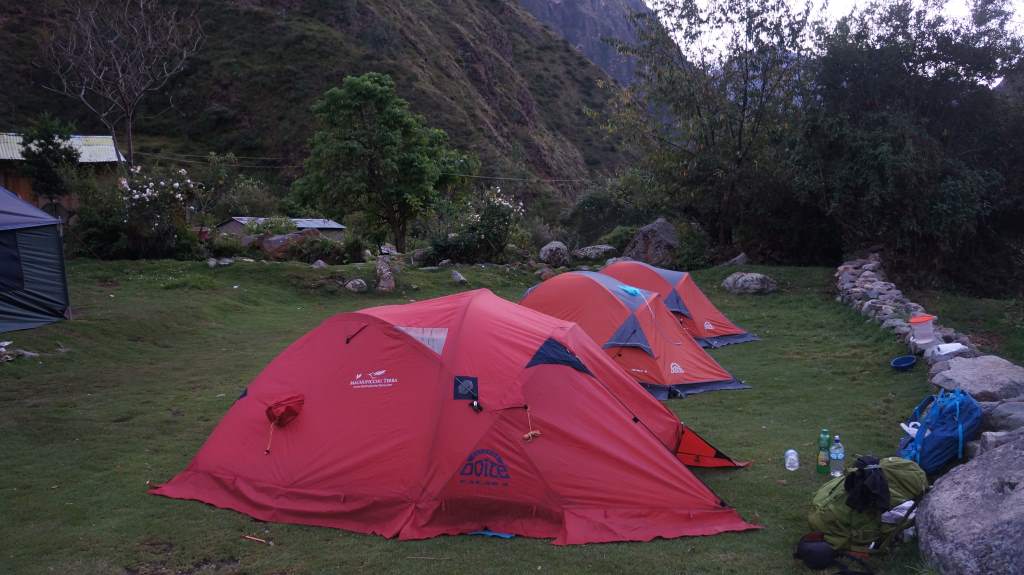
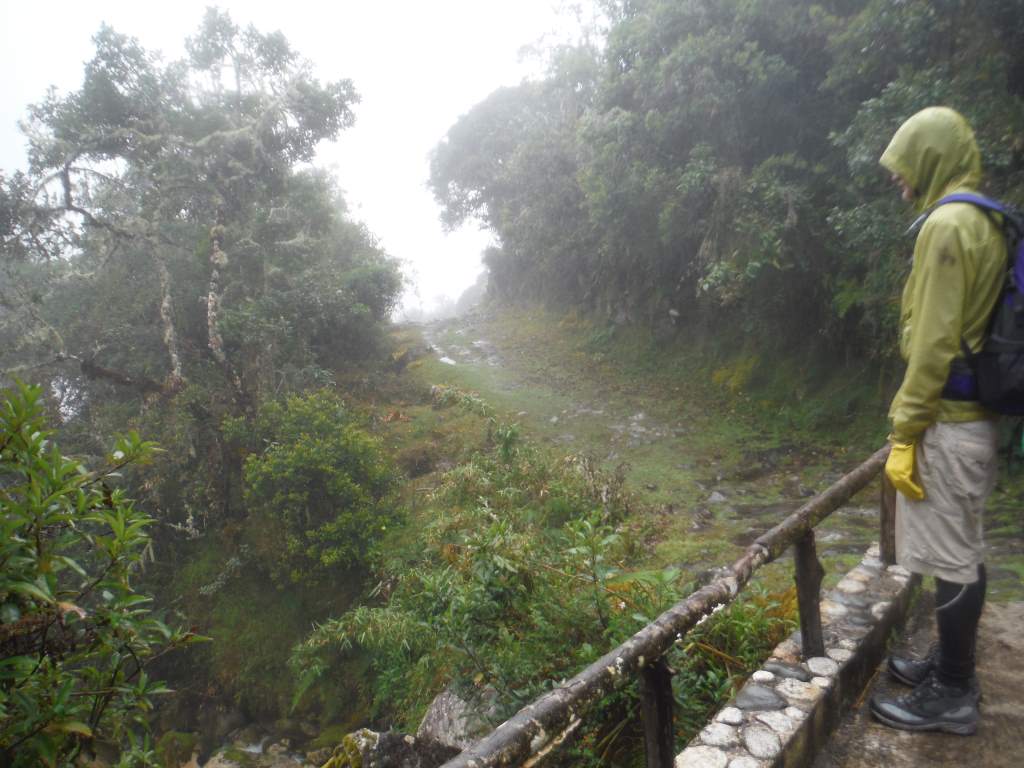
It got wet.

It got wet.

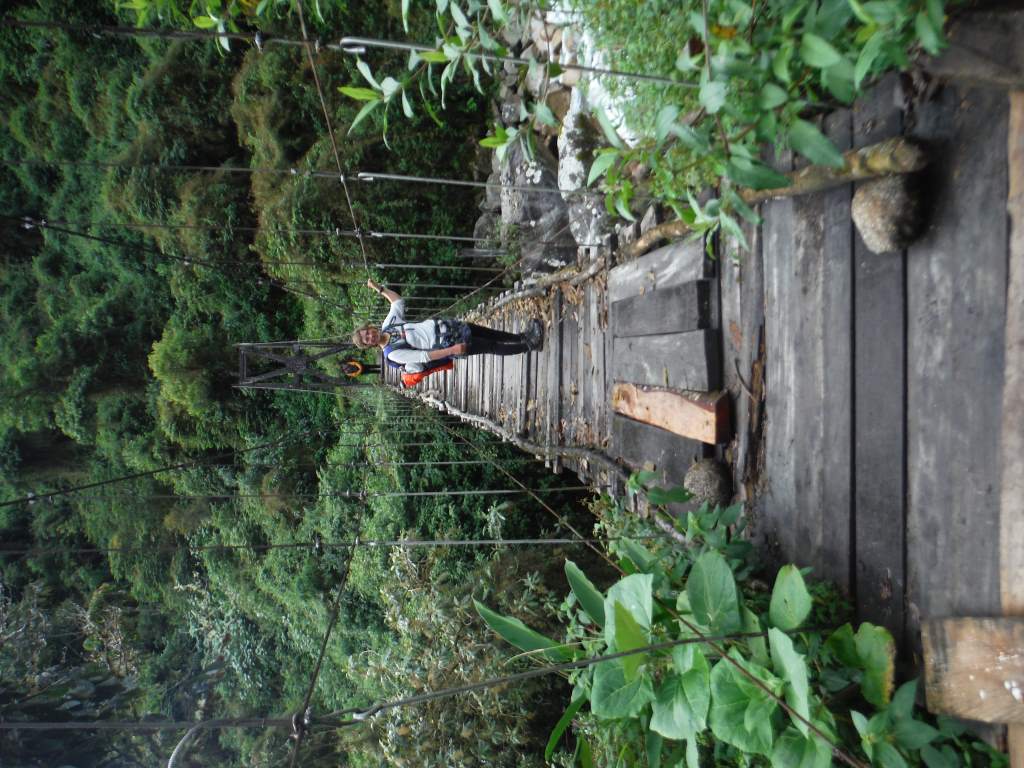
Jason was very excited to see the bridge to a covered camping spot!

Jason was very excited to see the bridge to a covered camping spot!

That night was pretty fun. We had snacks and a little chat with our guide, Tomas. He has four mostly grown kids, one of which is in college. It was nice to chat with him, and this was our only chat for the rest of the trip, which was passing strange. He cooked us a yummy dinner of soup, pasta, meat, and some simple veggies. We chatted some more with a lovely Belgian couple also doing the hike, then headed to early bed.

Day 2.
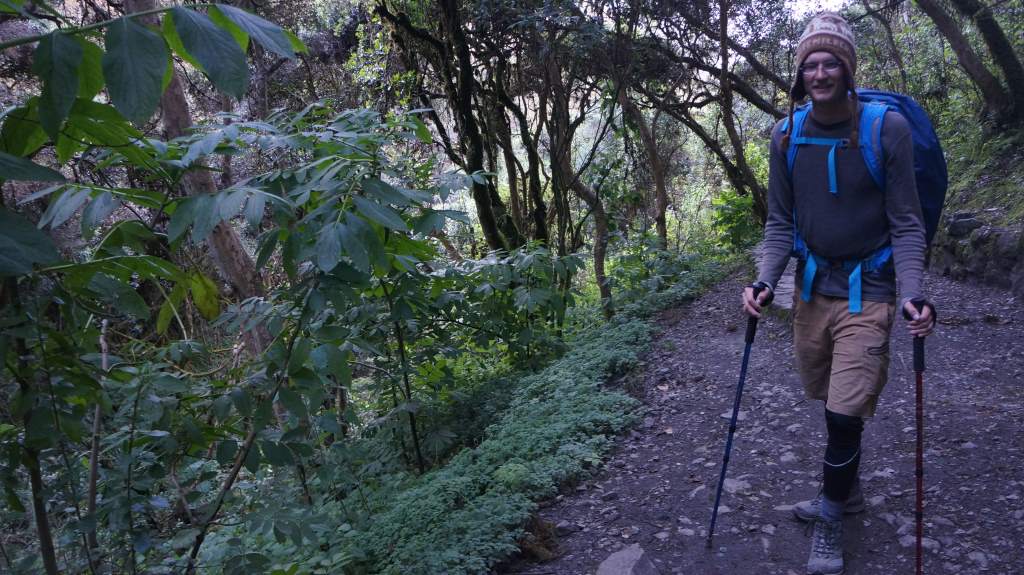
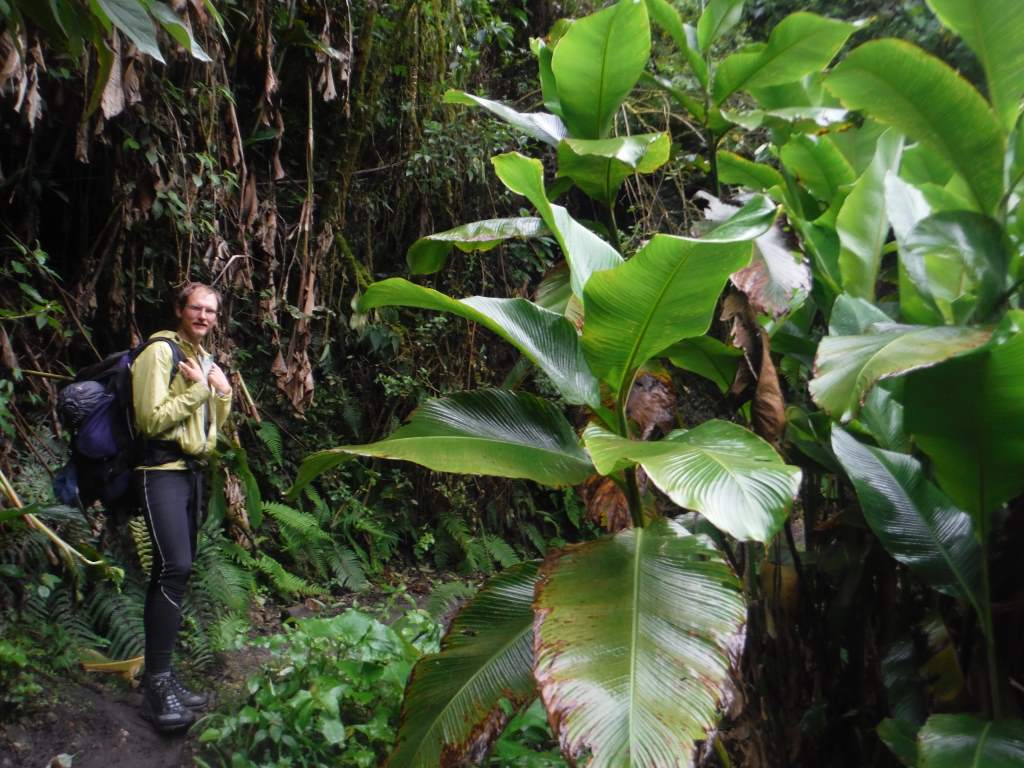
Luckily, the day dawned a bit drier, and it wasn’t too cold.  Tomas insisted that we get up at 5:30 am, so the alarm went off in complete darkness.  We were hiking by first light.  The trail began to be overgrown with jungle-type plants, and there were many crossings of raging streams. The first three hours were super slippery, but after that the trail improved and we could walk more or less normally. Of course, by this time our legs were already sore from the previous day.

It was clear and not raining early in the morning.

It was clear and not raining early in the morning.

DSCF5514

DSCF5520

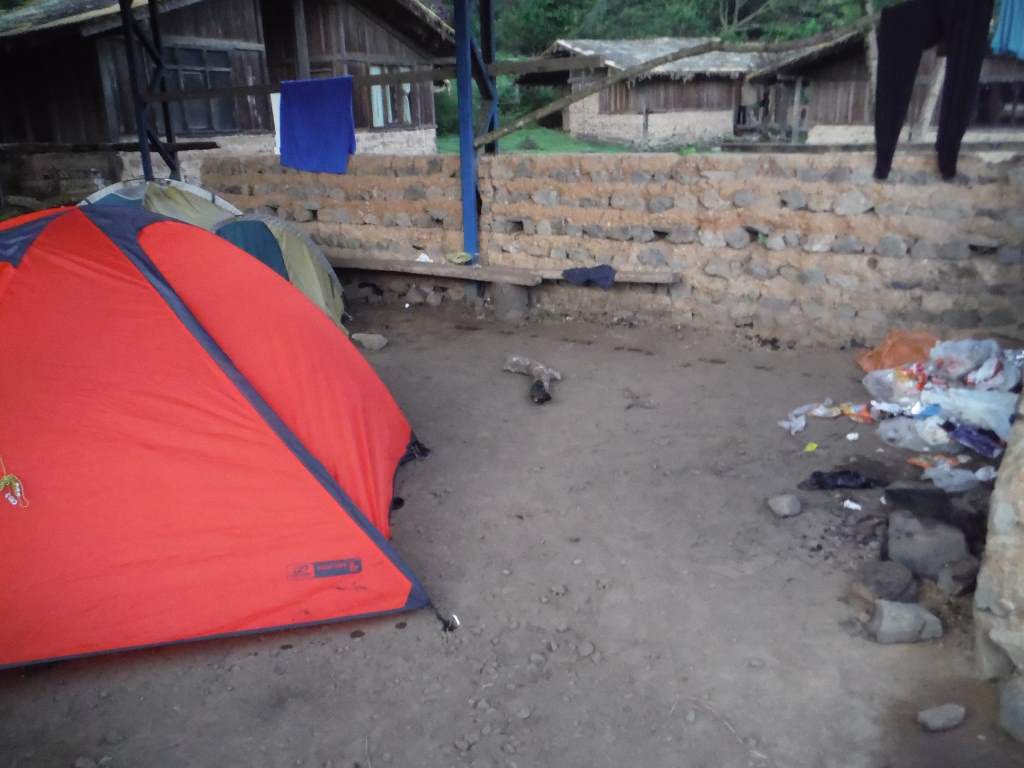
The entire day was long and tiring, but through lovely scenery with some great views when the clouds parted. At times the hot air rose from the valleys and made us feel like we were in a sauna. At other times a cold wind came down from the hills and cooled us off. The trail went up and down, following the side of the mountain and dipping down to cross many streams.  We finally emerged to our destination of Sandillani. It used to be a happening place, with manicured japanese gardens, an eco-hostel, and snack bars. Currently, however, it is abandoned and strewn with trash.  We set up the tent, hobbled around a bit, and were mostly incredibly sore from 8.5 hours of hiking.

DSCF5522

DSCF5547

DSCF5531

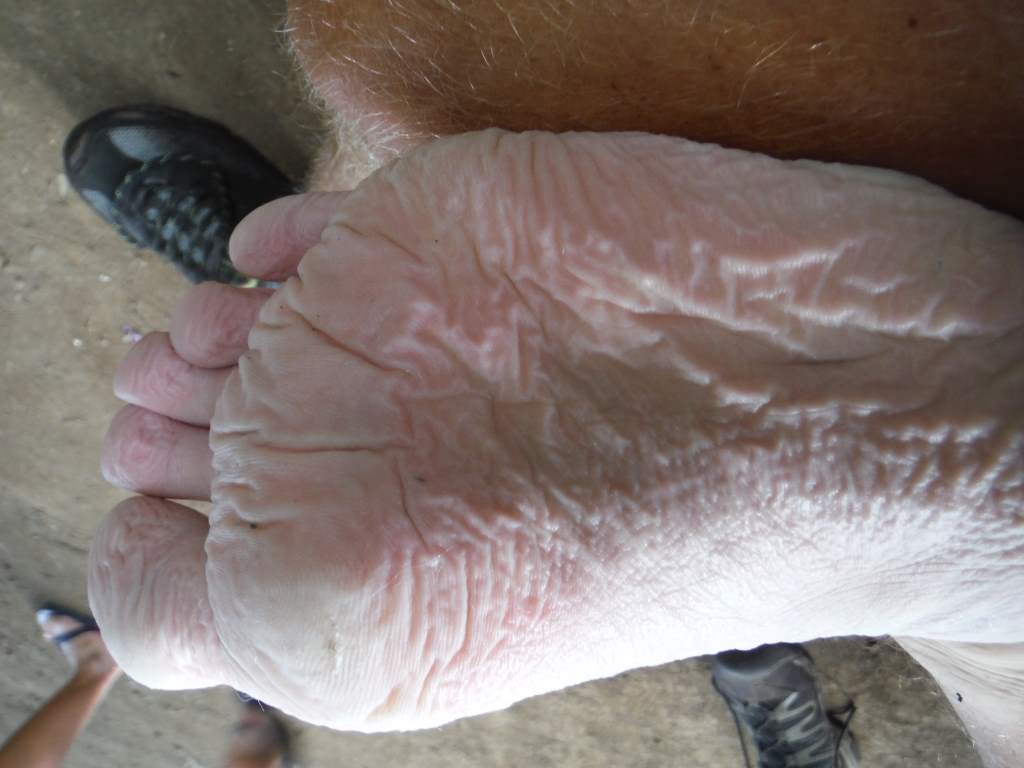
Jason's nasty wet foot, I'm sure you wanted to see that!

Jason’s nasty wet foot, I’m sure you wanted to see that!

Working out some soreness with a hot water bottle massage.

Working out some soreness with a hot water bottle massage.

The trash pile is under the roof of the only covered camping spot.

The trash pile is under the roof of the only covered camping spot.

Day 3.
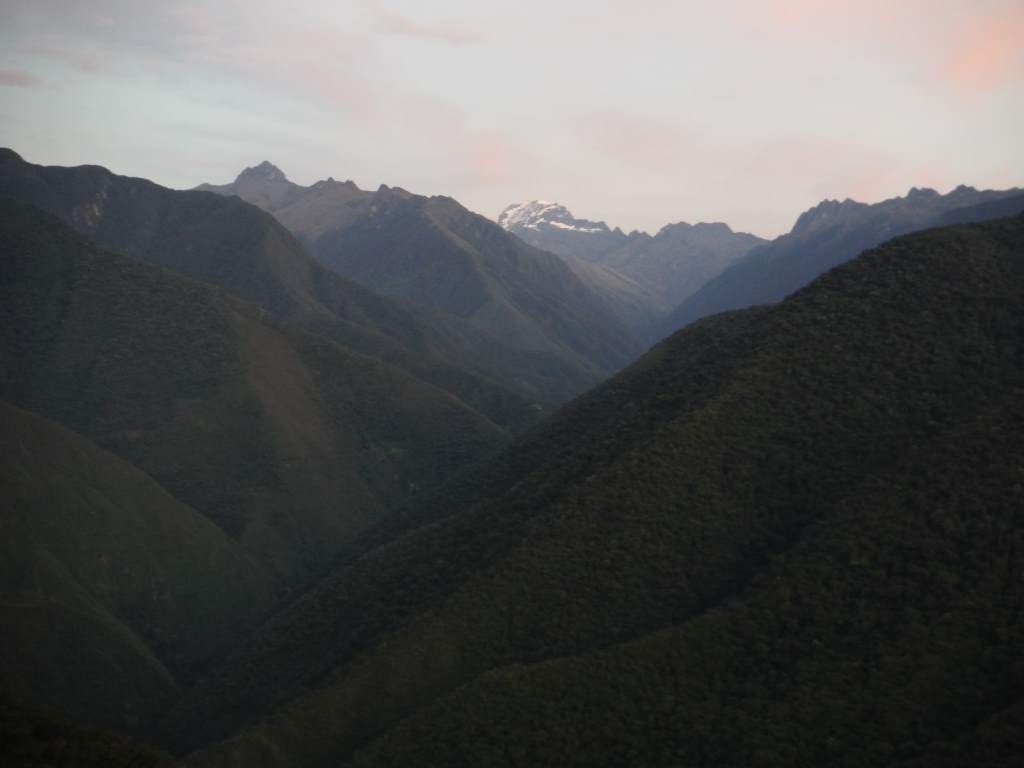
That morning was lovely – our other favorite part of the trip. The day dawned clear and the sunrise over the mountains was beautiful. We enjoyed taking pictures from the overlook and having a slightly more mellow morning. Our guide suggested that we get on the road by 7 so that we could be in town by 10 in time for the direct bus back to La Paz.

DSCF5604

DSCF5614

DSCF5631

Our final descent to civilization was a mostly easy and pleasant 2.5 hour walk. We kept our pace up high so that we could get the bus, and we were super relieved when we emerged from the jungle. This was when things started to go wrong, however. Our guide seemed to have been confused about the timing to the bus, since this first town didn’t have one and it was an hour walk along the road to the next town. When we got there we learned that the only bus was at 2 pm. Our guide was supremely uncommunicative regarding how we would get back to La Paz, and he seemed mainly concerned about doing it in the cheapest way possible. We kept asking him what was going on, and he would respond evasively. He said we needed to get to the main road, but wouldn’t pay the 5 Bolivianos per person to get us there in a vehicle. We were exhausted at this point, but still unwilling to start paying for the transport that was included in the tour. We started walking, but luckily a truck was willing to give us a free ride.

Finally, we see a small town!

Finally, we see a small town!

At the main intersection we had to stand there and hope for a minibus to come by. After a long while, one did. It was a crowded and incredibly bumpy 30 minute ride in the wrong direction to get to the hilltop town of Coroico.

DSCF5660

Once there we needed to transfer to a minibus for La Paz. The guide didn’t seem to know where to find one, and was hesitant to look at the nicer seeming ones because of price. Jason found the minibus for us, and within moments we were flying back down the bumpy road towards La Paz.   Our guide didn’t give us the promised lunch, so we bought empanadas from some ladies at a quick stop through the bus window during the ride. We finally reached La Paz, but still had to transfer once more to another crazy minibus to get back downtown. It was with very great relief that we returned the backpack, gave our guide a reduced tip, and hobbled back to the casa de ciclistas.

Looking back at the hilltop town of Coroico as we fly up the highway to La Paz.

Looking back at the hilltop town of Coroico as we fly up the highway to La Paz.

We are now taking another day of rest in La Paz to let our legs recover before we brave the climb out of the city.  My legs feel like someone has been hitting them with a meat tenderizer!  Next we will ride the two days to Lake Titicaca, where we might take another hike.  From there we will enter yet another new country: Peru. We have heard fantastic things about Peru, and we are very excited to get there!

1 Year on the Road

DSC00533

It has been a a full 365 days since we’ve left State College, PA, and we have come a long way. To help celebrate, let’s look back at how far we’ve come…

We really have cycled a long way this past year!

We really have cycled a long way this past year!

Distance cycled: 13,614 mi (21,910 km)

Countries entered: 6

Degrees N/S traveled: 94

Time zones crossed: 6

Nights camping: 209

Our favorite camping spot

Our favorite camping spot

Showers taken: 150 (each)

Family visits: 8

Touring cyclists ridden with: 10

The blog: 73 posts from the road, 22,719 pageviews

Flat tires: 11

Jason's favorite puncture - a rusty nail

Jason’s favorite puncture – a rusty nail

Chains replaced: 4 each

Mexican states visited: 20 of 30

Chilean regions visited: 13 of 15

Rides taken in car: 2 through construction areas (less than 50 mi)

Big fights: Just 1!

Most small fights are resolved by eating, preferably ice cream!

Most small fights are resolved by eating, preferably ice cream!

Money spent: $12,480 on the road (not including flights)

Coldest night in the tent: -6 deg F (-21 deg C), at 15,600 ft (4,755 m)

Highest altitude: 16,220 ft (4,944 m), Paso Sol de Manana in Bolivia

Hardest climb: Hito Cajon in Chile, a pure 7,000 ft (2,000 m) of climbing at high altitude

Largest earthquake: 5.8 near La Serena, Chile

Jason's keychain for Bolivia

Jason’s keychain for Bolivia

Keychains for Jason’s trip collection: 15? We’re not really sure…

Cycling the world’s largest salt flat

Since our last update we spent two magical days on the Salar de Uyuni, which has the distinction of being the world’s largest salt flat. The salt flat is the remains of an ancient (and massive) lake, and it provided perfectly flat riding on a lovely surface. It also warps your sense of perspective and scale, allowing for some fun and hilarious photo opportunities. For the most part, this post is just a good excuse to share with you some of the pictures we took during our ride on the salt. Of course, we also spent a magical night on the salt, explored a desert island in the salty expanse, made our own path back to land, rode through a llama field and a mud flat, and had a couple of adventures in small Bolivian towns. First, the salt!

The Philtrons as tourist attraction.

The Philtrons as tourist attraction.

The first part of the salt flat was packed with tourists in jeep tours. They all run out of the jeep to take perspective photos, and then when they see us they freak out and swarm. We had to answer the same questions umpteen times, but a few were new. One woman from New Jersey asked us if it was flat all the way to Ecuador! The answer is a resounding NO, for the record!

Apr27_007

We rode away from the salt hotel and other tourist spots near the edge of the salar and headed towards the middle. About 40 miles from ‘land’ we stopped for our own photo shoot, since we had reached 13,000 miles! We are still riding with Emma and Debbie, the New Zealanders, so we were lucky to have someone else take our photo for once! Here are some of the photos:

Apr27_011 Apr27_010 Apr27_008 Apr27_009 Apr27_014

Did I mention we finally made it to 13,000 miles??!

Apr27_012

Apr27_024That night was camped on the salar in the vast expanse of nothing but hexagons formed by salt. We watched the sunset, which seemed to happen in slow motion, and then after dark we watched distant lightning storms in the mountains. It was a wonderful night.

Apr27_019

Apr27_021Apr28_005The next morning we reached the Island Incahuasi, which is another huge tourist draw. Lucky us, we had the whole place to ourselves since we are on a different schedule from the jeep tours. We hiked to the top of the island, saw many many cacti, and enjoyed the peace. From there we rode on the salt again, straight towards a towering volcano. It was a completely different experience to be off the jeep “road”, and to simply choose our own path. We decided to ride around the volcano on the salt, and then head for land on the far side. Sometimes the salt surface got soggy, and we had to race across it to keep from sinking! Even when we did reach land we had to cut through mud flats and across fields before finally finding a track to ride.  The track led us through fields of llama and quinoa before it led us to town.

Apr28_009

Apr28_014 Apr28_011 Apr28_017Apr28_019 Apr28_020Apr28_023That night we stayed in the town of Salinas, which was a charming place with a beautiful plaza, friendly little kids, and very nice women selling fresh bread on every corner. We stayed in a hotel which was clearly not up to earthquake code, but luckily we made it through the night anyhow.

Apr29_001


After Salinas we made fast time across the flats on good roads. We wanted to stay in more small towns, but the lodging options were abysmal or nonexistent so we had to camp. One night we had a wonderful campsite next to a river, and the next night we had a desperation sort of campsite along the road.

Quinoa statue!

Quinoa statue!

Apr29_003 Apr29_013

You see, we had planned to stay in the mining town of Poopo (funny name, right?). Poopo claimed to have a resort-style hotel next to a semi-olympic swimming pool, so we headed in to town after a long day of 70 miles riding into a headwind. We arrived at 4:30, but no one was at the hotel. A nice guy on the street called the number on the door for us, and learned that the attendants were watching a soccer game and would arrive in an hour. That sounded ok to us, so we just waited around for a bit chatting with the Kiwis. An hour and a half later… no movement. We got another nice guy to call for us, and the attendants said they’d be there in an hour. Uh oh. At this point it was starting to get dark, and we really didn’t like the sound of things. We asked the ladies at the pool if we could camp there – NO. We asked the city government people what to do, they said we should just wait. We asked the police if there was another safe place to camp, they told us to put the tent up in the street in front of the hotel!

A hotel we don't recommend.

A hotel we don’t recommend.

We were shocked and a bit sad that no one would help us, so we just got on our bicycles and rode out of town. It is never fun to set up camp in the dark, but we managed. It helped that there were four of us. We found an out of the way spot and settled in. Remarkably, it was a quiet night, and no one bothered us a bit. New rule: if we’re not in the hotel by 5:00 we move on and find a good place to camp! It gets dark around 6:15 here.

Now we are in the big city of Oruro. Our guidebook warned us that it was a gritty place without any good food, but we have found the opposite to be true. The streets are full of life here, and we spent all morning wandering around huge street markets. They are very different from the markets in Mexico: much quieter, with less yelling and a lot less food. We are learning to bargain a bit, but mostly just gawk at everything and everyone. In three more days we’ll be in La Paz, which is legendary for its markets. We are very excited!

Now, a few more photos that didn’t make the narrative:

Small town in Bolivian Altiplano

Small town in Bolivian Altiplano

Quinoa, up close and personal.

Quinoa, up close and personal.

Us and the Kiwis!

Us and the Kiwis!