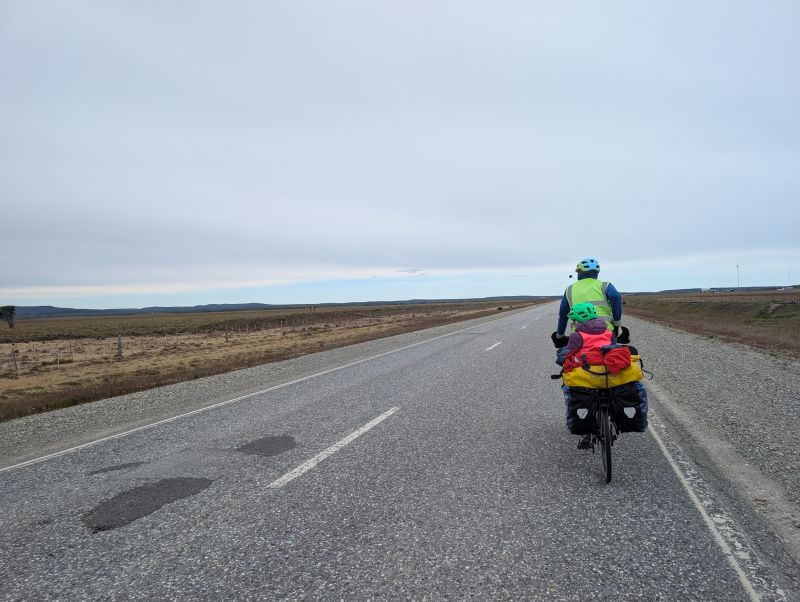
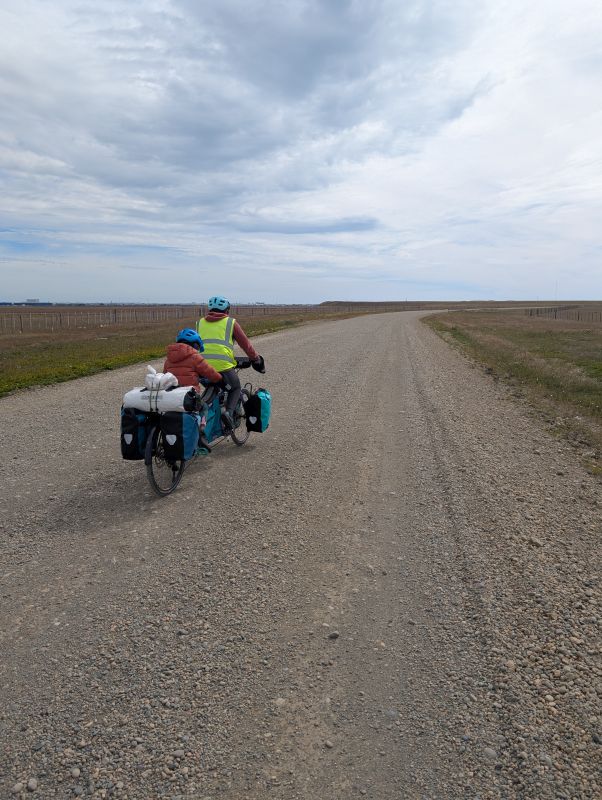
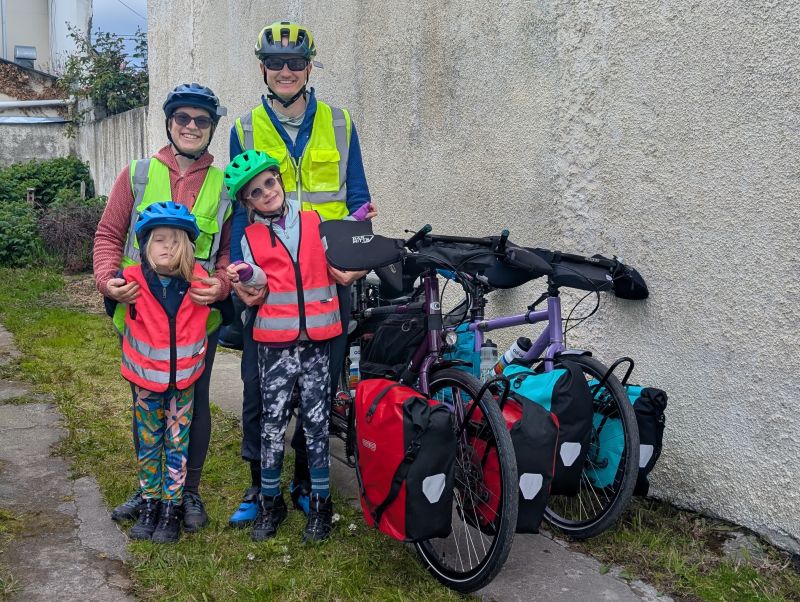
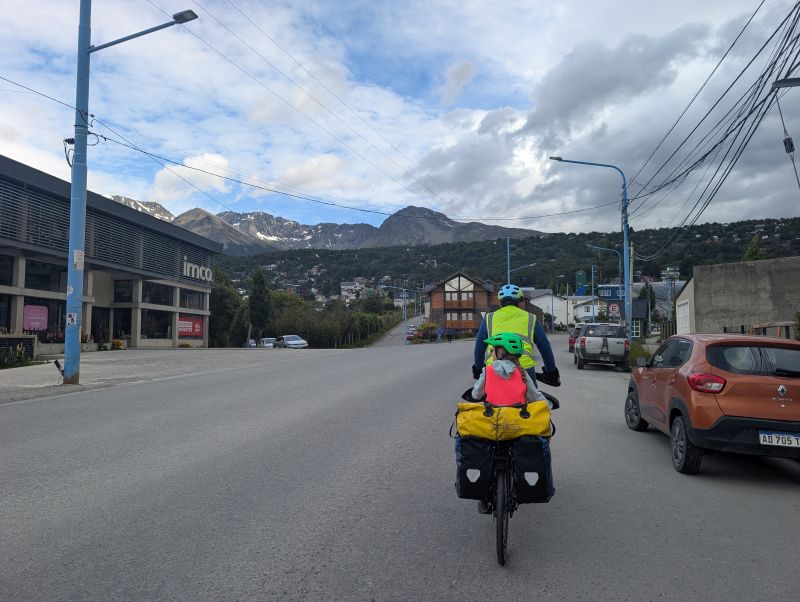
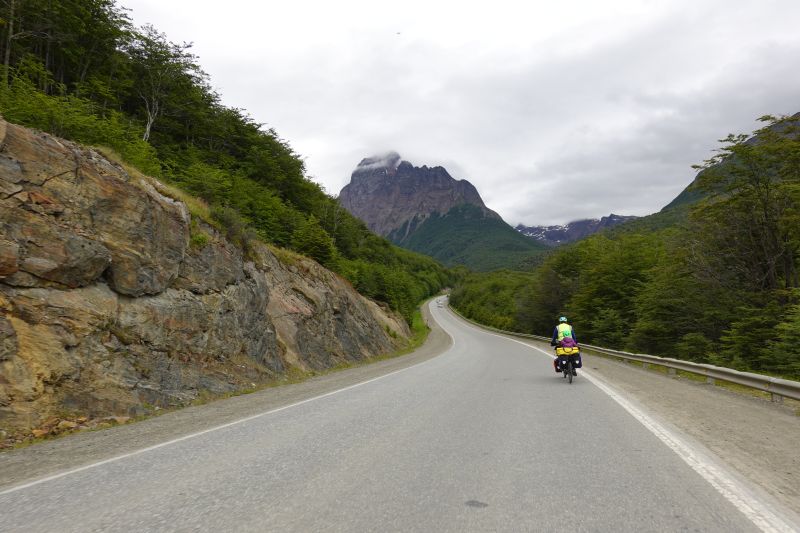
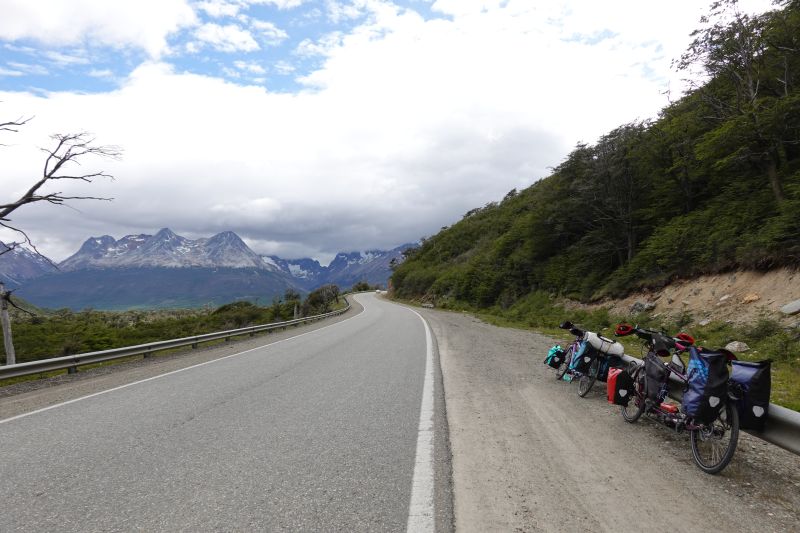
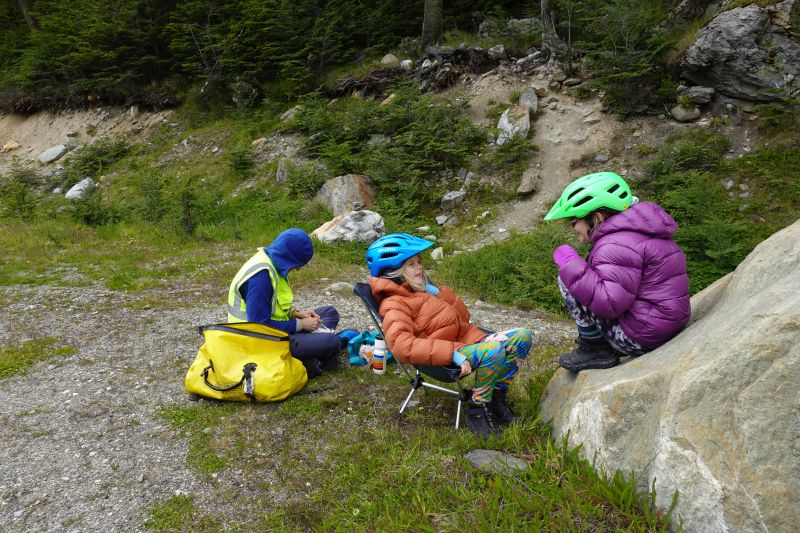
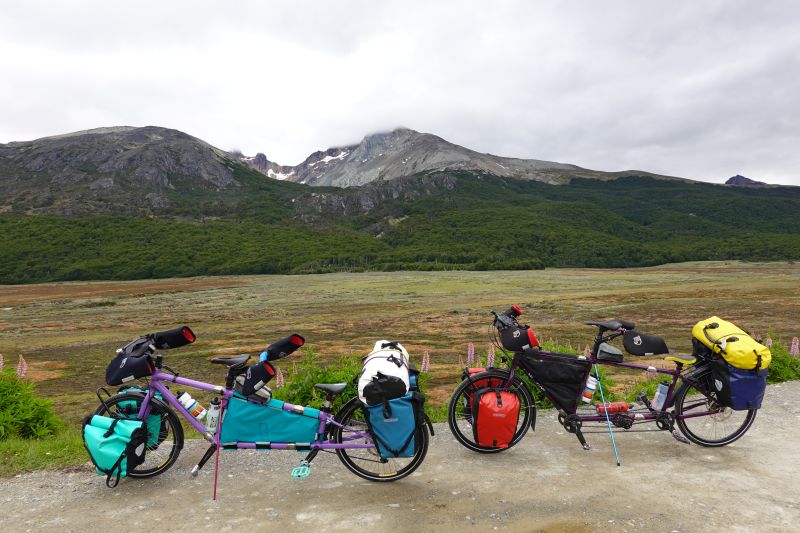
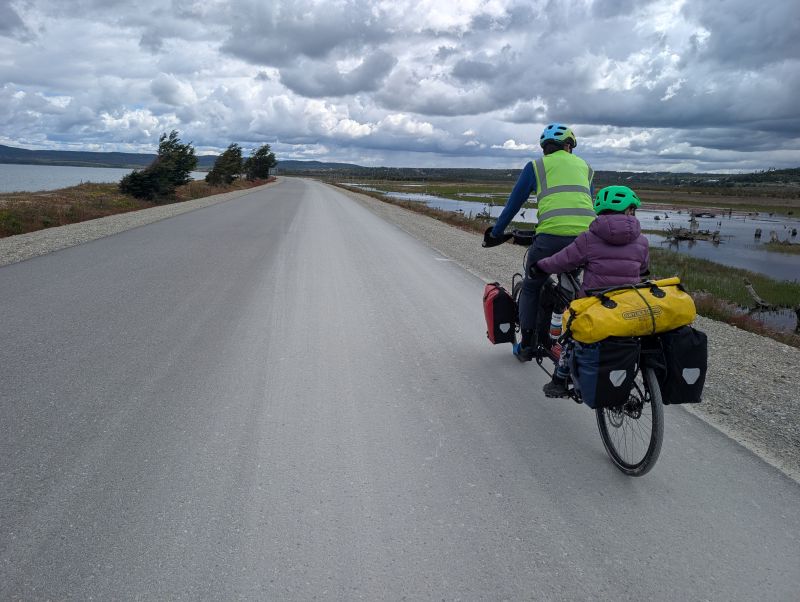
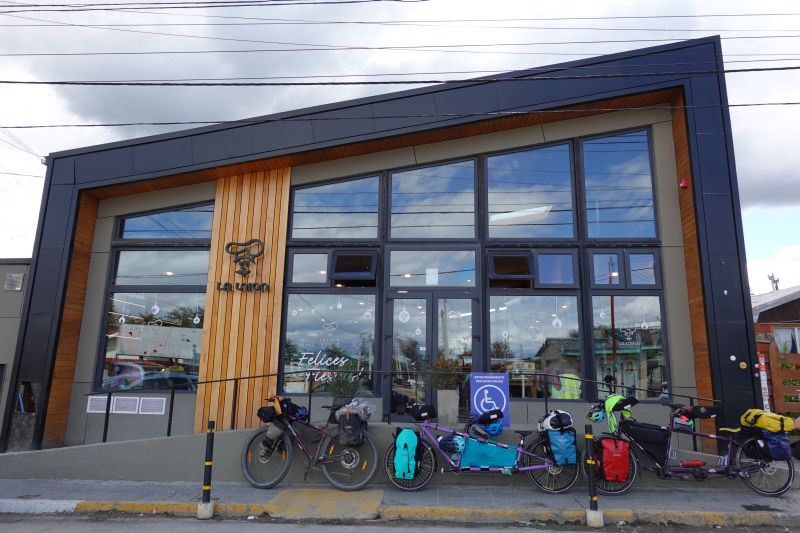
After a relaxing day in Tolhuin, we decided to tackle the 110 km in two days. Luck was with us, and for both days the wind was extremely mild compared to what is normal for the area. However, we are looking ahead at the weather forecast and weighing our options, as rain and strong winds are forecast for much of the next week.
For this blog post, A has agreed that we could use her (hand-written) journal entries. I’ve typed them here and added the photos.
Day 5: Tolhuínto Camping Norte (61 km)
Less exciting scenery today
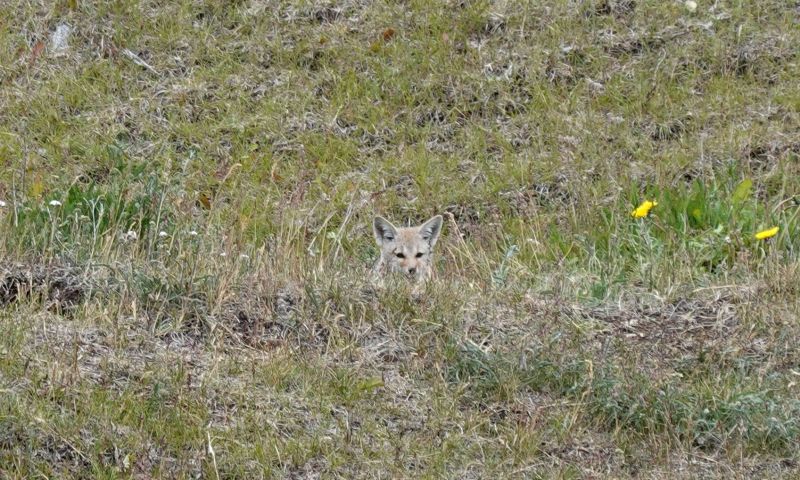
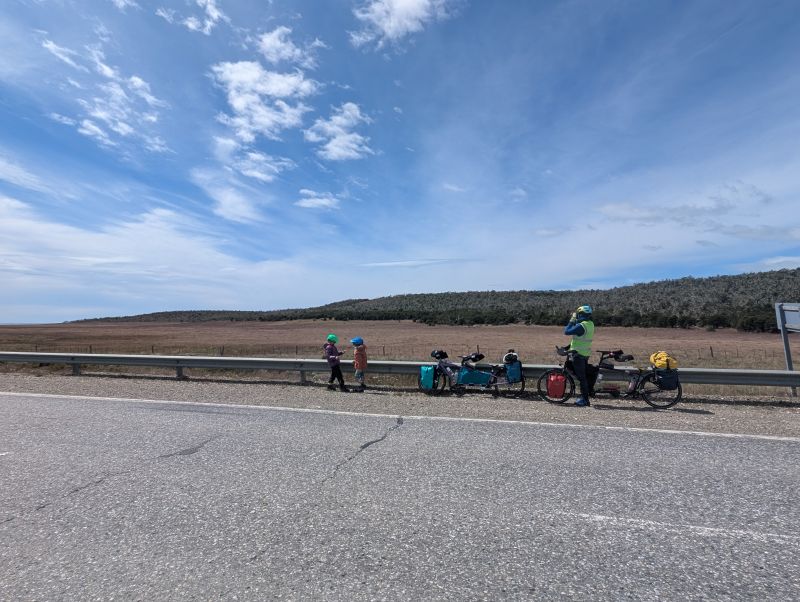
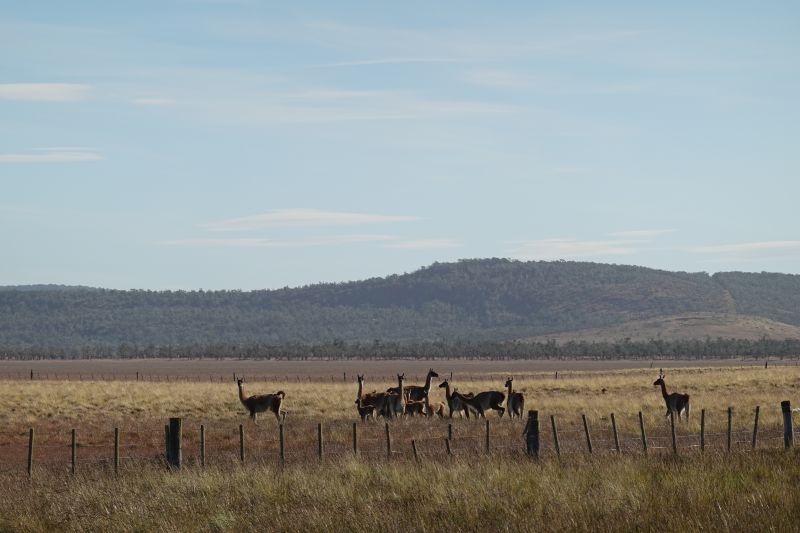
Today we biked out of Tolhuín around 8:20 (A.M.). We were going 60 kilometers to et to a campground near the Atlantic ocean. The land was mostly down/flat with small or medium sized hills. When we stopped for lunch me and H had a stone-throwing competition. We ate Mayonnaise/Mayo sandwiches and I had tuna on mine. Just before lunch we had seen a fox den. We saw three cubs and a mother fox peek out at us, and throughout the day the family saw tons of guanacos. They had very long necks and some had black faces.
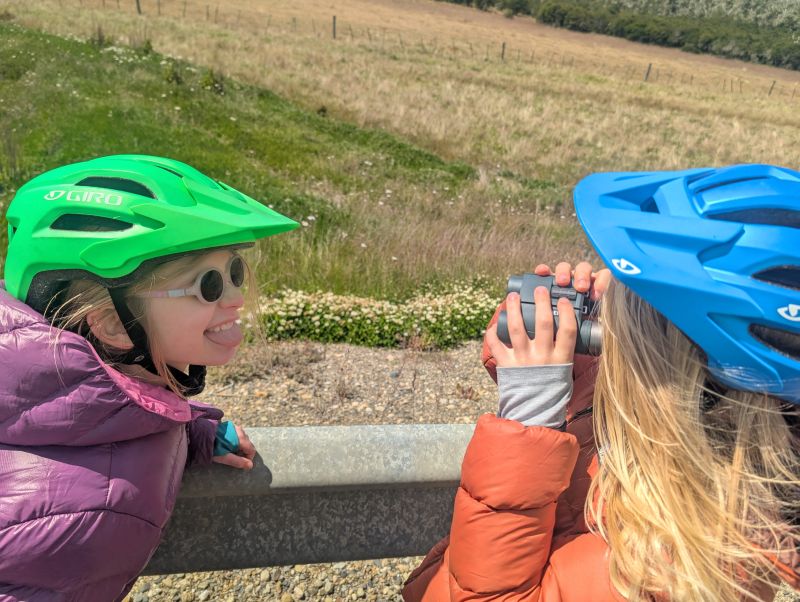
Fox!Looking at guanacos via binocularsPutting binoculars to a more immediate use
Around 1 o’clock the headwind got really bad. But we could see the ocean so we all knew we were close. My opinion was that we were going way too slow. :(. Soon, we made it to the campsite. It was a lot less windy there. :). After dinner we all went to an outlook and down a hill to see a herd of around 25 guanacos including around 10 baby guanacos. (So cute!) By the way, we had hot chocolate for breakfast and eggs and pasta with carrots for dinner. Now we are all reading or writing then probably going to sleep. See you!
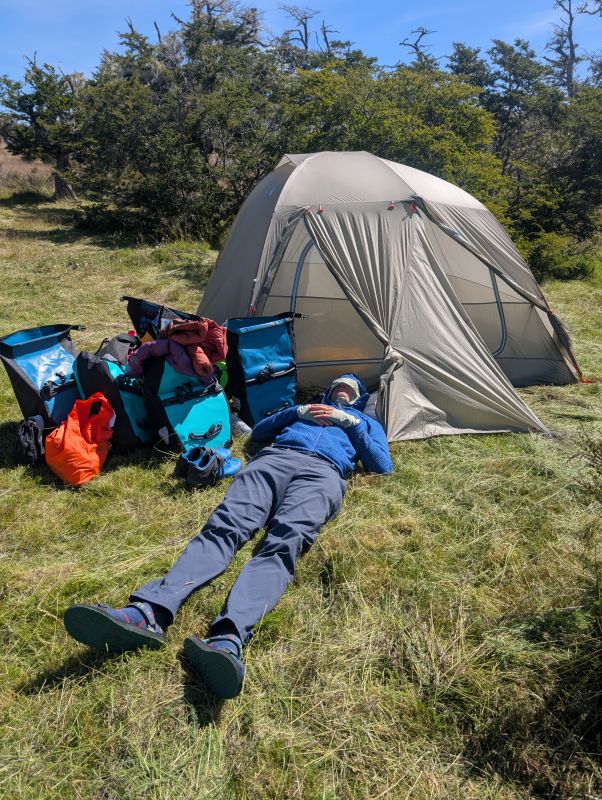
NaptimeGuanacos and babies near our campsite
Day 6: Camping Norte to Rio Grande (50 km)
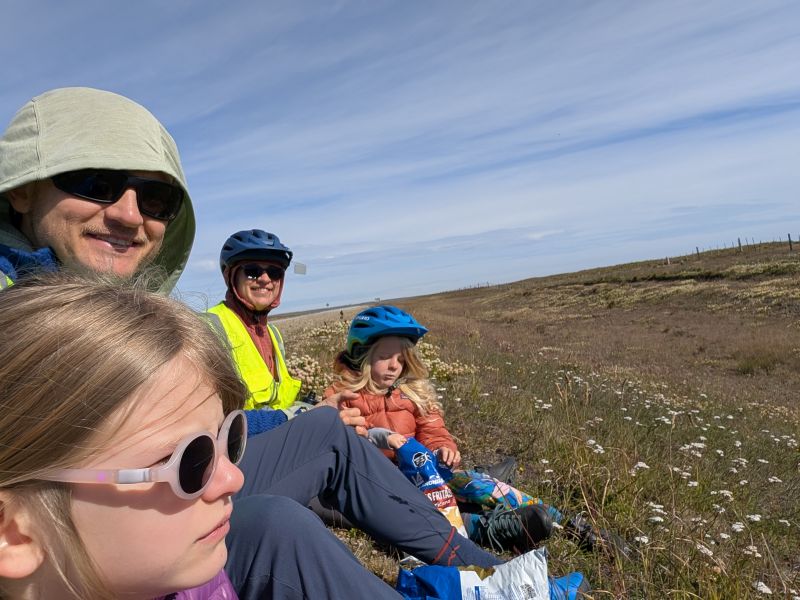
Snack time. Yes, we can eat a whole bag of potato chips!
Today we made it to Rio Grande. People say it is an ugly city but I think it is a perfectly fine city. To start it off, today we saw tons of guanacos and a couple big fat-looking birds. The scenery was very boring, just a buncha tall and short grass going on and on forever with small patchy groves of trees covered in pale lichen. Not my favorite. (But I do think the guanacos like it. We saw a herd of what seemed like 25 guanacos with at least 10 babies. Thought maybe that is not very exciting, because I told you the exact same thing.)
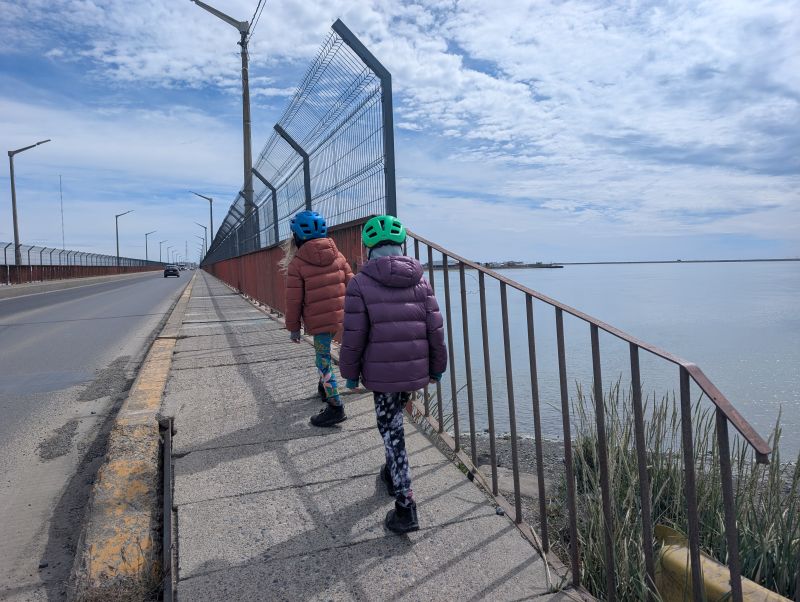
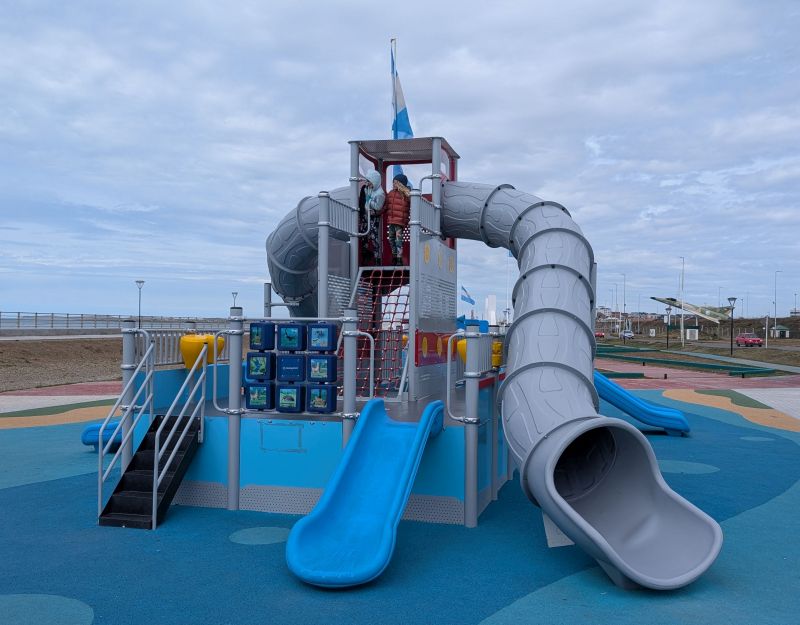
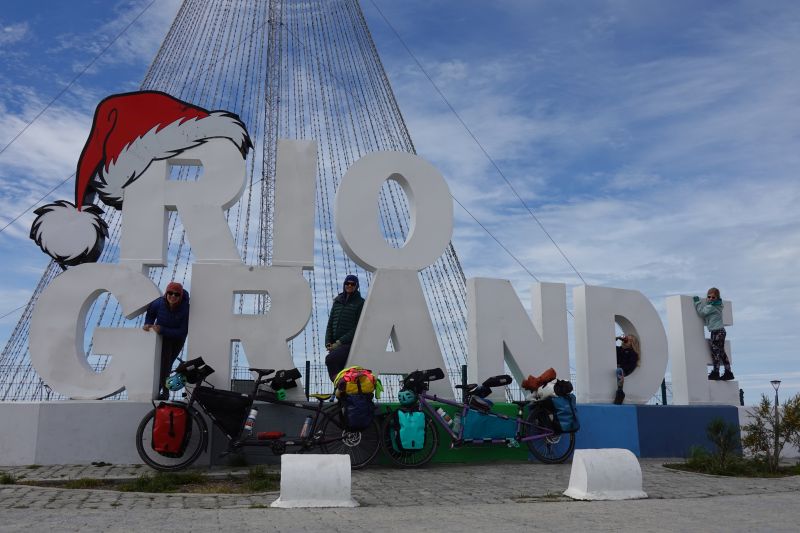
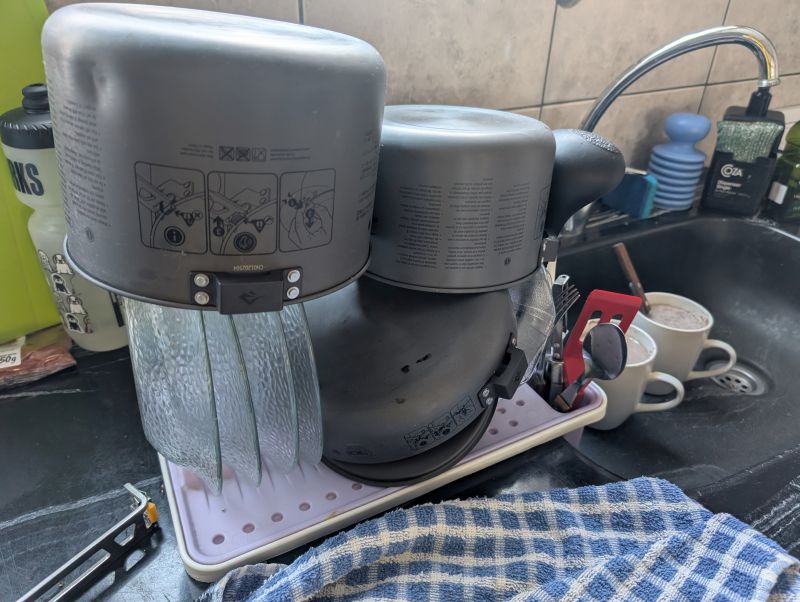
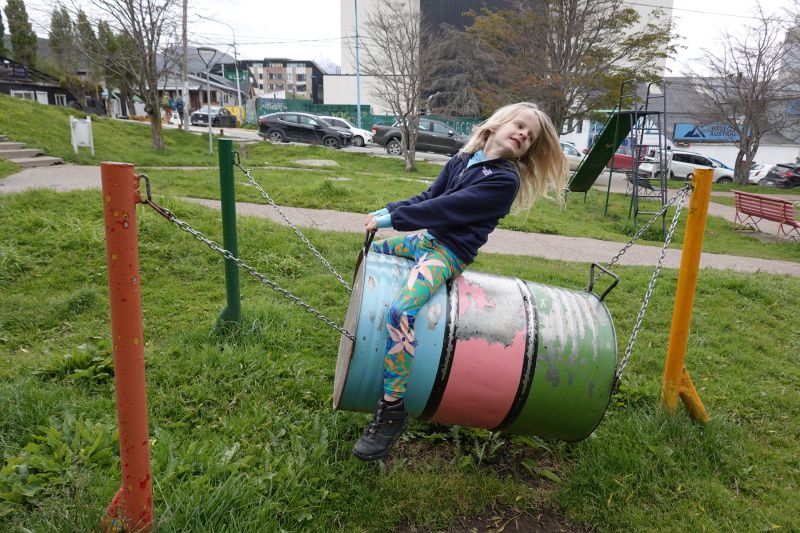
For lunch we had apple cheese sandwiches and I ate the apple separate from the cheese and bread. To get into Rio Grande we had to take a busy bridge over a river called Rio Grande. The name of the river was Big River. Then while we waited for our rental apartment to open we found a great park, me and H played on a couple long twisty tunnel slides. The family also took a photo with a huge RIO GRANDE sign. Then we went into our rental house. It is a great place with 2 bedrooms, a couch, and a kitchen. Mama and Papa were commenting on how bad the dishrack was. It was just super small. Now we’ve all finished writing. Need to go. I’m brushing my hair. Bye!
The bridge to/across Rio GrandeBest playground we’ve seen! (There’s a lot more in the other direction.)The Rio Grande SignThe over-full dish rack
In this entry we travel from our start point, Ushuaia, to the next town, Tolhuin. We enjoyed spectacular scenery and spent two nights wild camping. Everywhere we go the locals and other travelers are fascinated with and excited by our set-up. They take pictures of us as we pass by, they stop their cars to check if we need anything, and once we even got interviewed on video for a local business owner!
Day 1: Ushuaia to camping near Cerro Castor (34 km)
Our first day of riding had finally arrived! The weather looked to be good for the next three days, so we left our AirBnB a day early. Our hosts were absolutely lovely and came to see us off.
Riding out of town
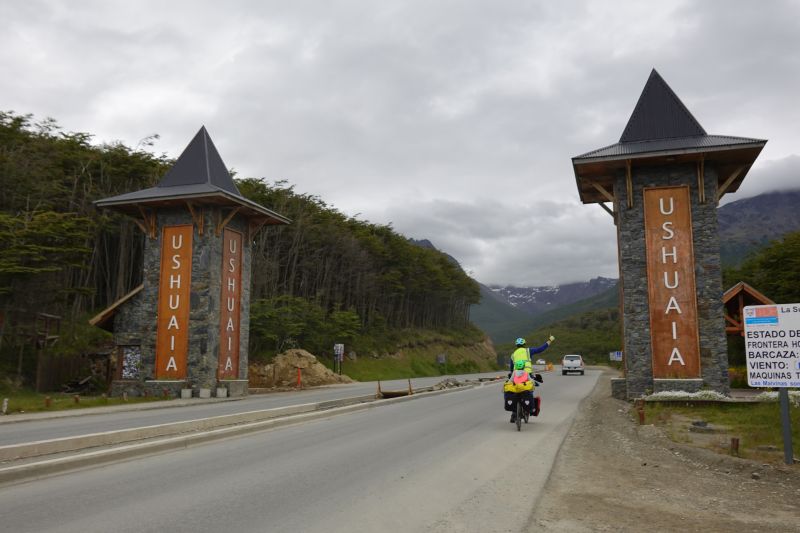
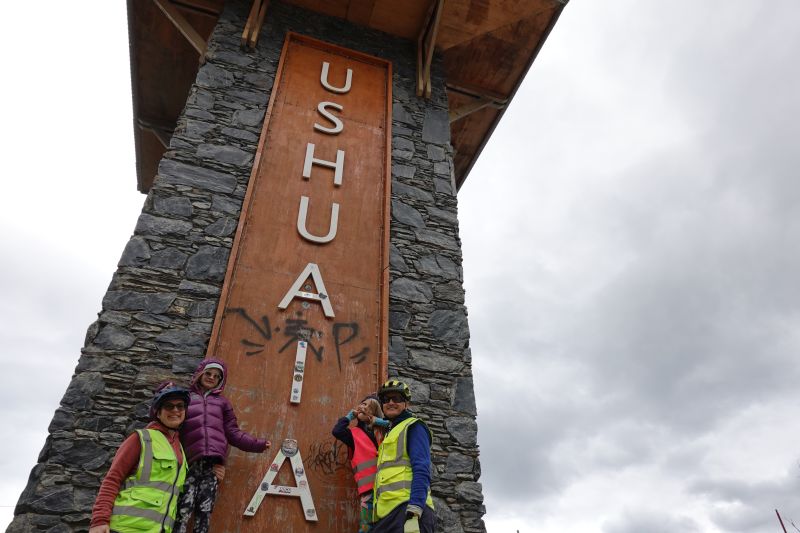
The road wove along the hillside above town for about five miles before we reached the famous “gates” of Ushuaia. There was a very nice bike path all through town, which was a little more up and down than the highway, but a lot less busy! When the bike path ended we were at the very edge of town. We stopped for a snack and to take photos of the welcome towers. While there we met a trio of Australians also starting out on bicycle tour. They told us we were traveling light and that felt good!
Gates of Ushuaia
After leaving the city we were truly in the Martial Mountains, which are steep and jagged and rocky. The tree line seemed outrageously low for us Coloradans, but the conditions here are harsh. The trees are scraggly and covered in lichen. The rocks are covered in thick moss. Honestly, it feels like a cold Lopez Island!
We climbed for the next five miles or so until we were in a huge glacial valley with peaks on either side. When we saw a fancy lodge on the side of the road… we decided to stop and drink hot chocolates and eat French fries! They had a raging fire inside and were serving extremely fancy lamb meals to tourists and locals alike. We were a bit shocked to see the menu price – over $40/person (US dollars)! Our hot chocolates were much more affordable.
Putting the Click-Stands to good use
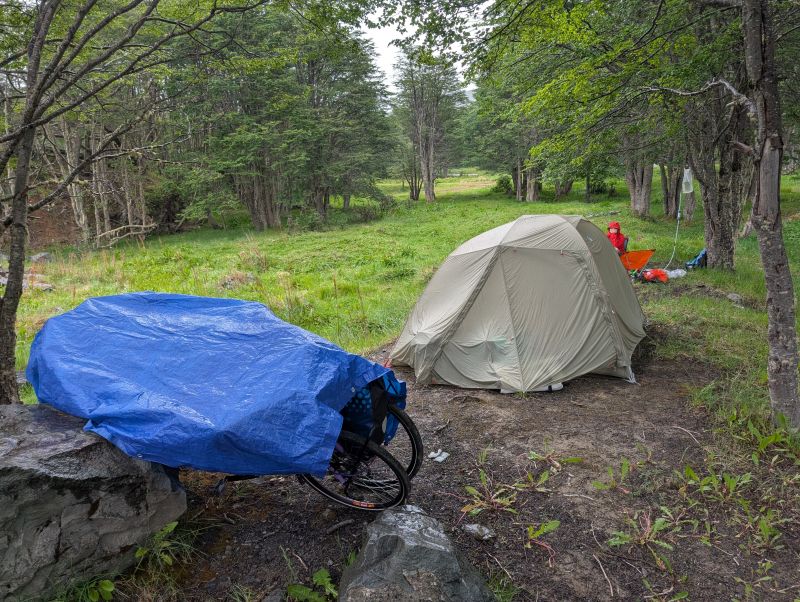
We stopped for the day around 3pm, since there was a lovely campsite next to a small river. Also, it was threatening rain. It rained for several hours starting at 5pm and continuing into the night. We cooked up a dinner of pasta with red sauce and scrambled eggs, played hearts (A is winning), and fell asleep cozy in the tent.
Wild campsite near Cerro Castor
Day 2: Camping near Cerro Castor to Camping at Rio Tuerto (49 km)
This day was magic. We awoke to sun on the tent and a forest practically glowing with morning light and leftover rain. For breakfast we had watery oatmeal that no one liked, and then we were riding.
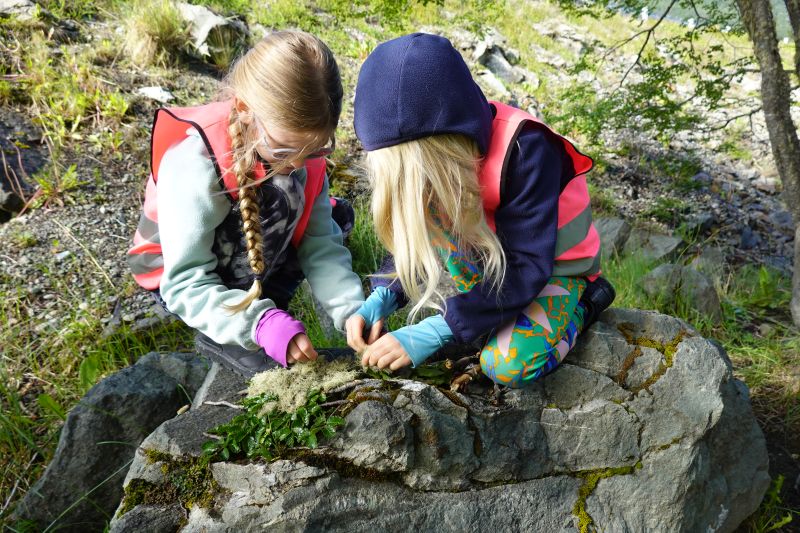
Creating a Fairy Fortress
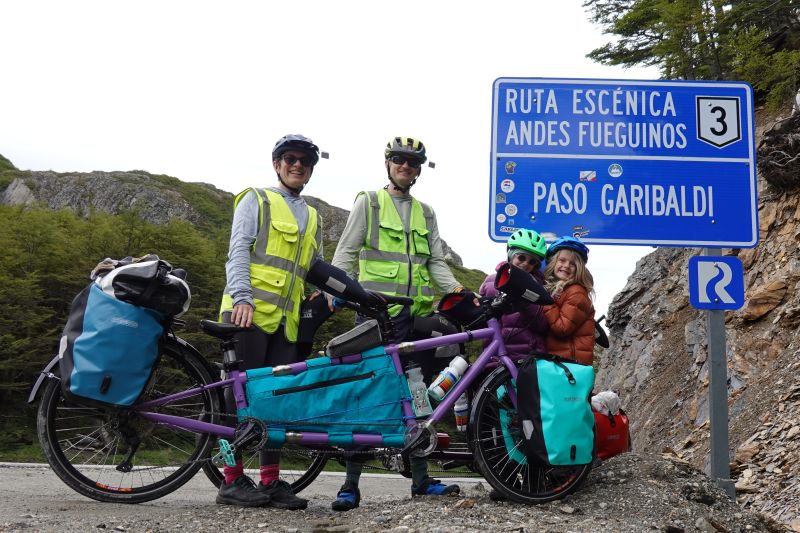
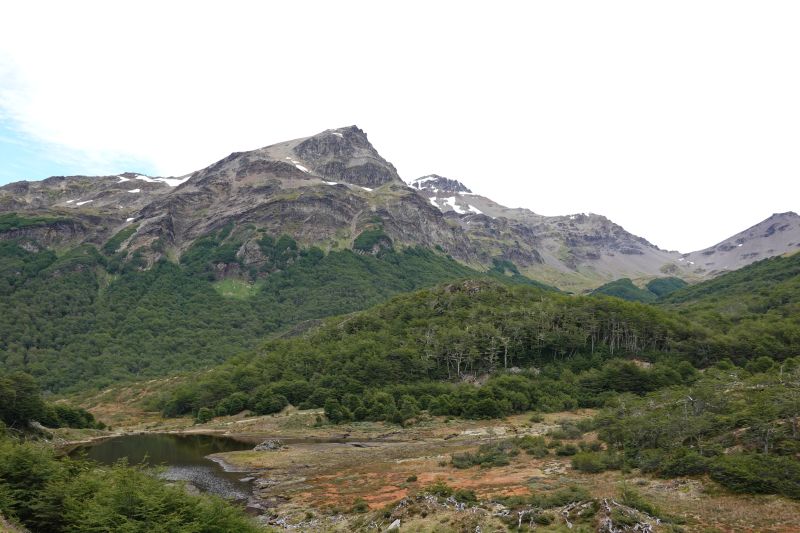
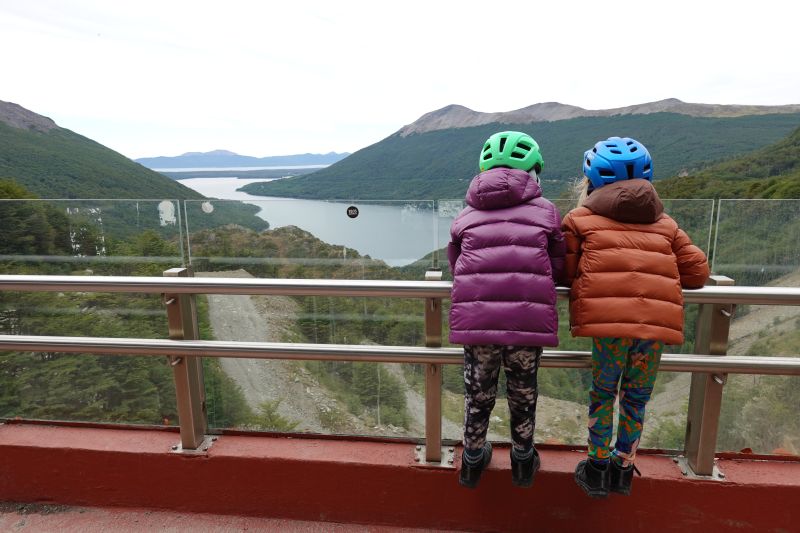
We climbed up and up to the famous pass of this island: Paso Garibaldi. We had gorgeous mountain views behind us and then a view of the lakes to come ahead of us. You know we can never resist a good pass sign.
Paso GaribaldiMany of the streams have beaver damsEnjoying the view
On the other side it was fast zip down to a small settlement at the end of Lago Escondido (Hidden Lake). We decided to splurge on a big lunch at a restaurant called La Casona 2, which had a big yard for playing and a big fire they used to roast lambs. Lunch took a very long time to prepare (over an hour!) but we were happy to be warm. We laughed because the kids’ hamburger meal was once again just a huge burger patty with a pile of fries. H promptly grabbed a few pieces of the table bread and made it an American-style hamburger sandwich. A cut hers up and dipped the pieces in ketchup (of course). We were stuffed by the time we were done, but we had 23 kilometers left to ride.
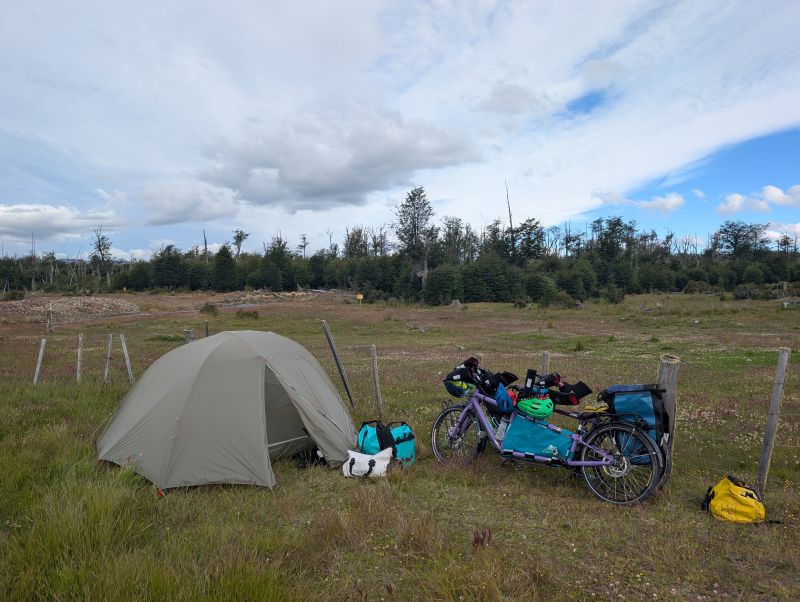
Luckily it was downhill with a tailwind! We zoomed along until we were near a spot another cyclist had marked as ‘trees with space for tents.’ It was near the river Tuerto, which actually was a much more appealing spot. We set up camp off the road behind a pile of gravel, next to a picturesque valley.
Wild camp near Rio Tuerto
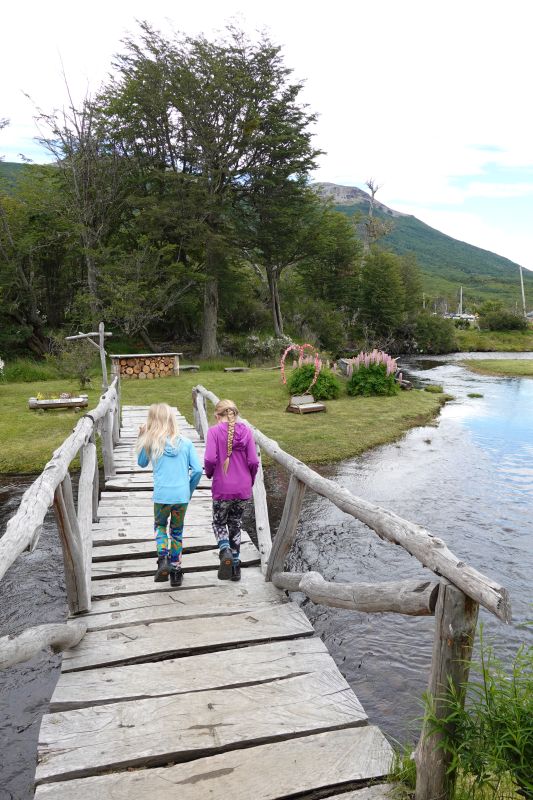
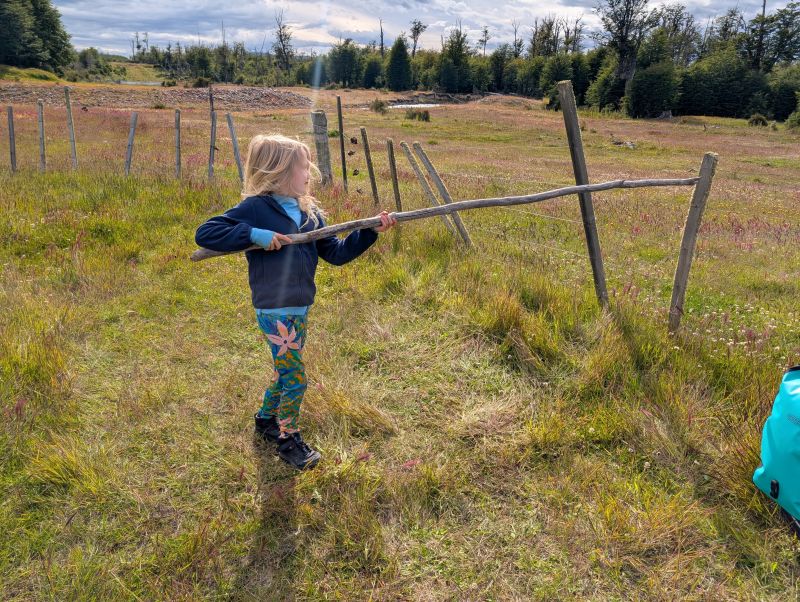
H found a giant stick and was delighted for a long time waving it around; miraculously no one was injured. Both girls spent a stretch of time collecting flowers and grasses to ‘clean’ our shoes. It was a delightful evening and it didn’t even rain!
Day 3: Rio Tuerto to Tolhuin (27 km)
We thought today would be easy, but we woke up and had noodle legs. Maybe it was just me though, since I had run out of coffee! GASP!
Lago Fagñano
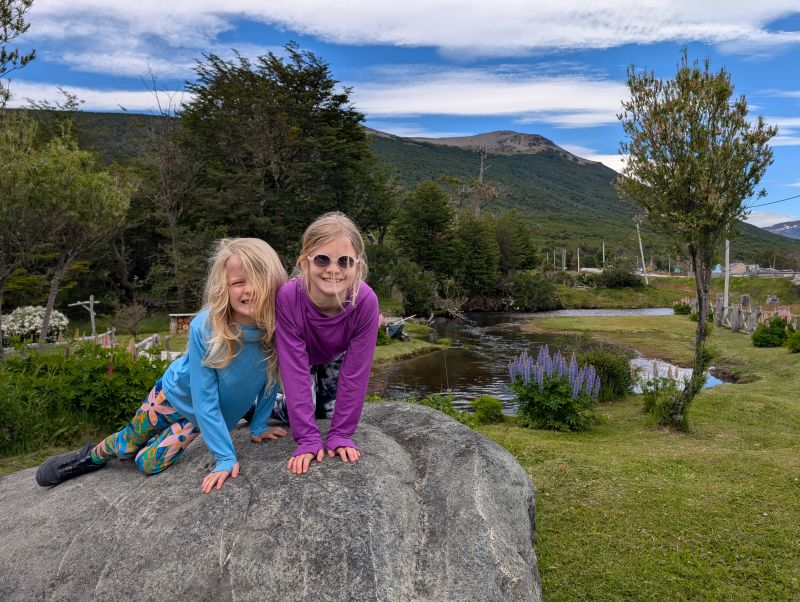
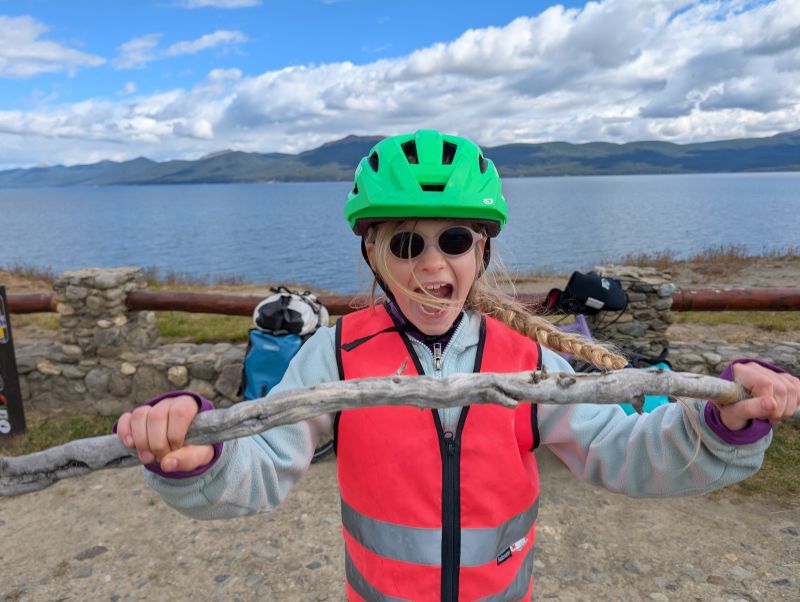
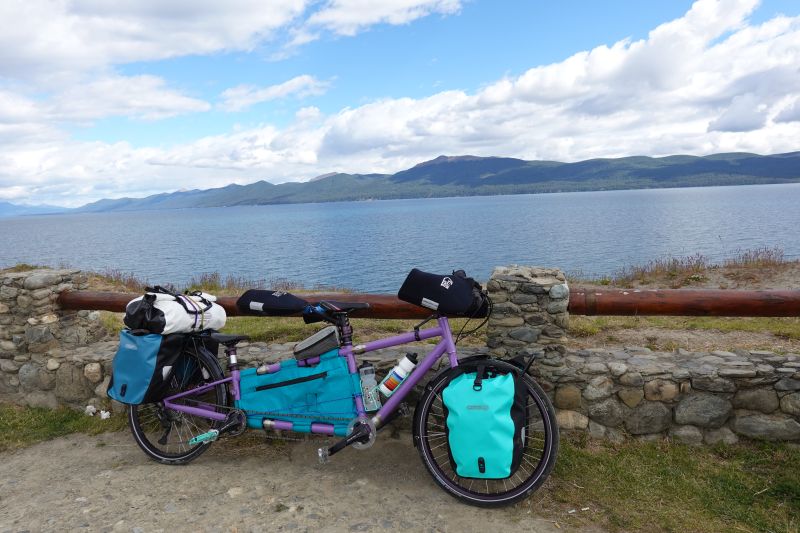
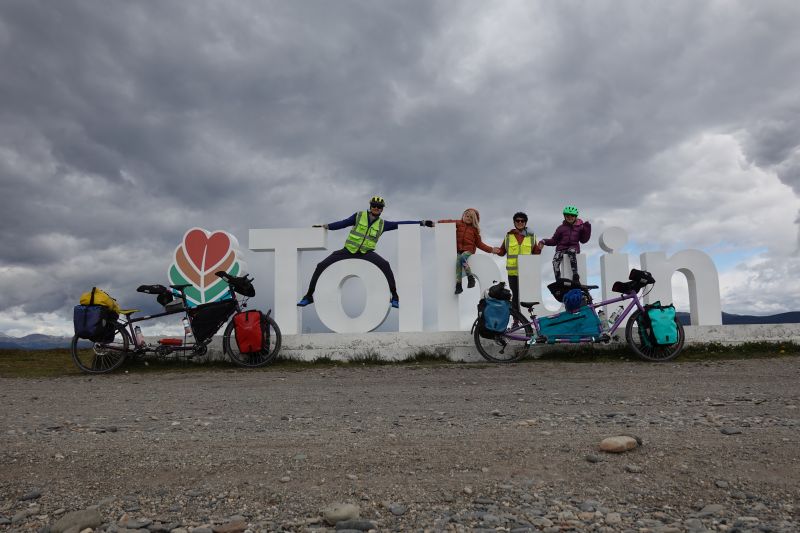
The riding was mostly up and down along the massive Lago Fagnano. Each little stream that joined the lake required a descent and then a climb. As we approached town we detoured down to the lake’s edge to see a small wildlife preserve (ducks and other birds) and take a picture with the Tolhuin sign. Many of the towns here have these big signs and it’s so fun to take pictures with them.
After the sign the road was dirt/gravel and straight up. In a fit I demanded we stop and eat a snack. After nearly emptying the remainder of our snack bag (potato chips, marshmallows, cookies, and gummy bears) we continued on.
Our destination was a very famous bakery, La Union. It welcomes touring cyclists from all over the world as they pass through, offering them bunks to sleep on in the basement past towers of flour. We are not staying there, since it’s better for our family to find private accommodations. However, we did stop for nearly two hours to eat! We had empanadas, huge sandwiches, donuts, chocolate, and finally coffee. It was incredible and we will be back tomorrow.
La Union bakery
For tonight we are resting out of the wind and rain that is blowing through this town. We rented a little one room cabin that is warm, cozy, and just a short walk from a grocery store. Honestly, it feels heavenly. Our next stretch to Rio Grande is less scenic and more windy, so we need tomorrow to strategize.
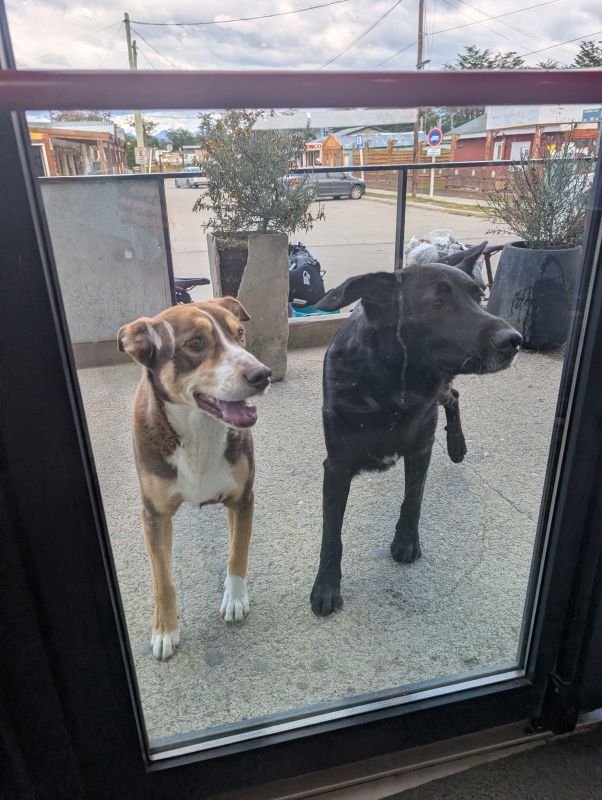
These two furry friends were interested in everyone but refused to eat my chicken, and then peed on Jason’s rear wheel
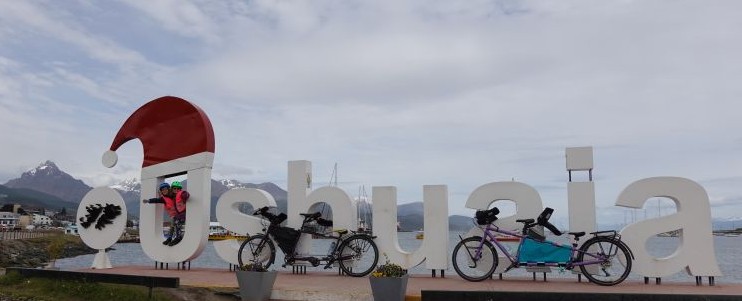
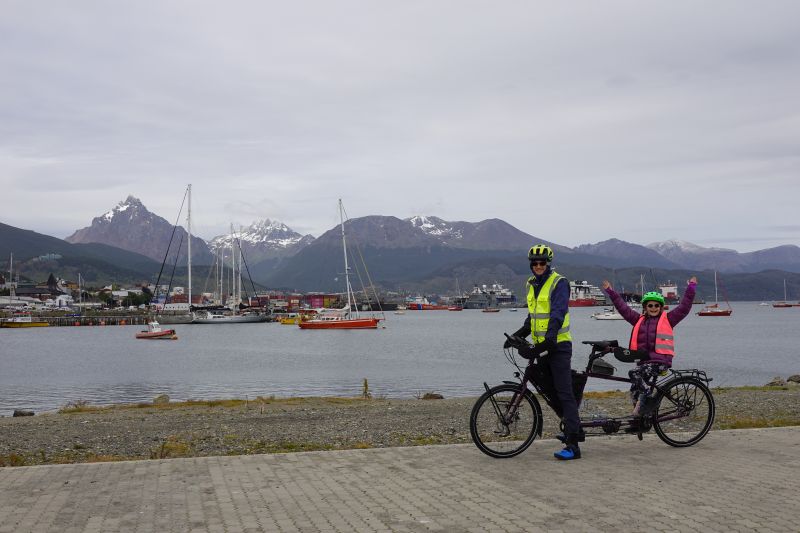
The city of Ushuaia is the southernmost city in the world. It has captured the imaginations of explorers for decades, and we are no exceptions. I (Daisy) have been dreaming of this place for many years. To actually be here, preparing to embark on our next big cycling adventure, is a dream come true.
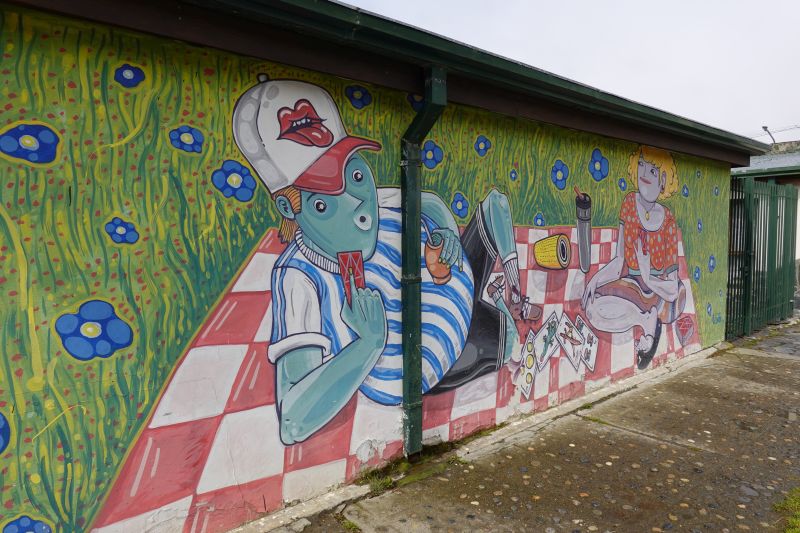
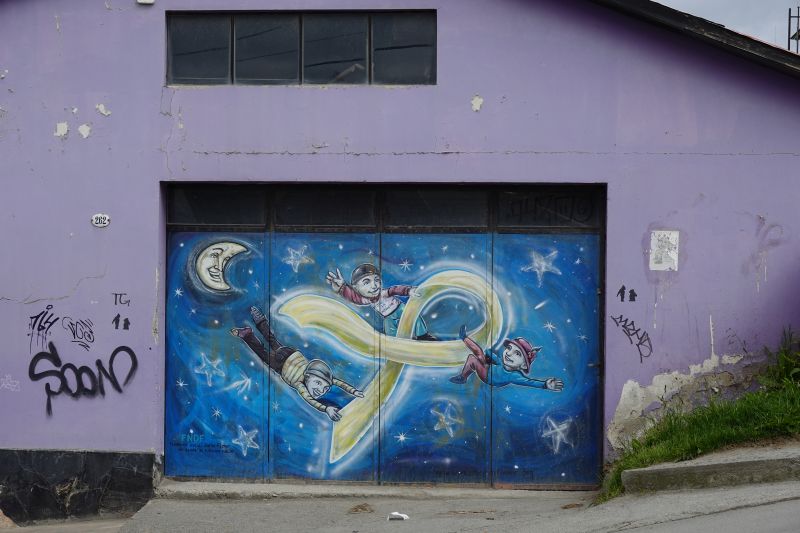
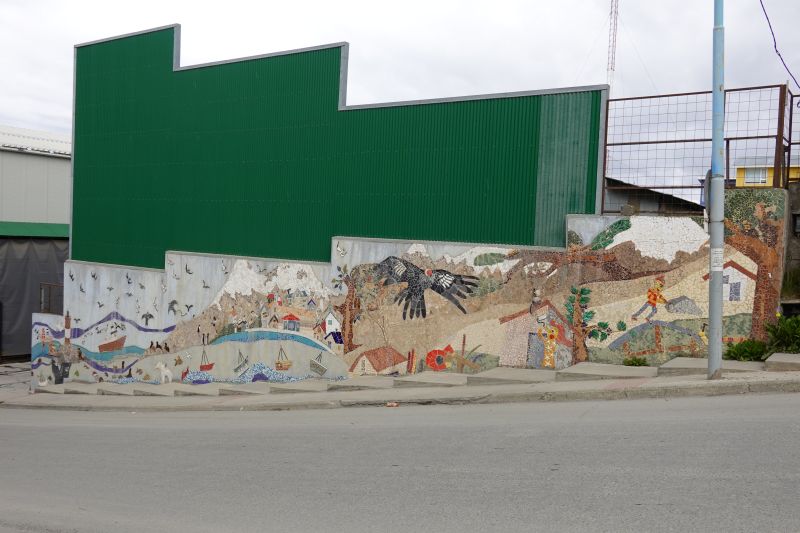
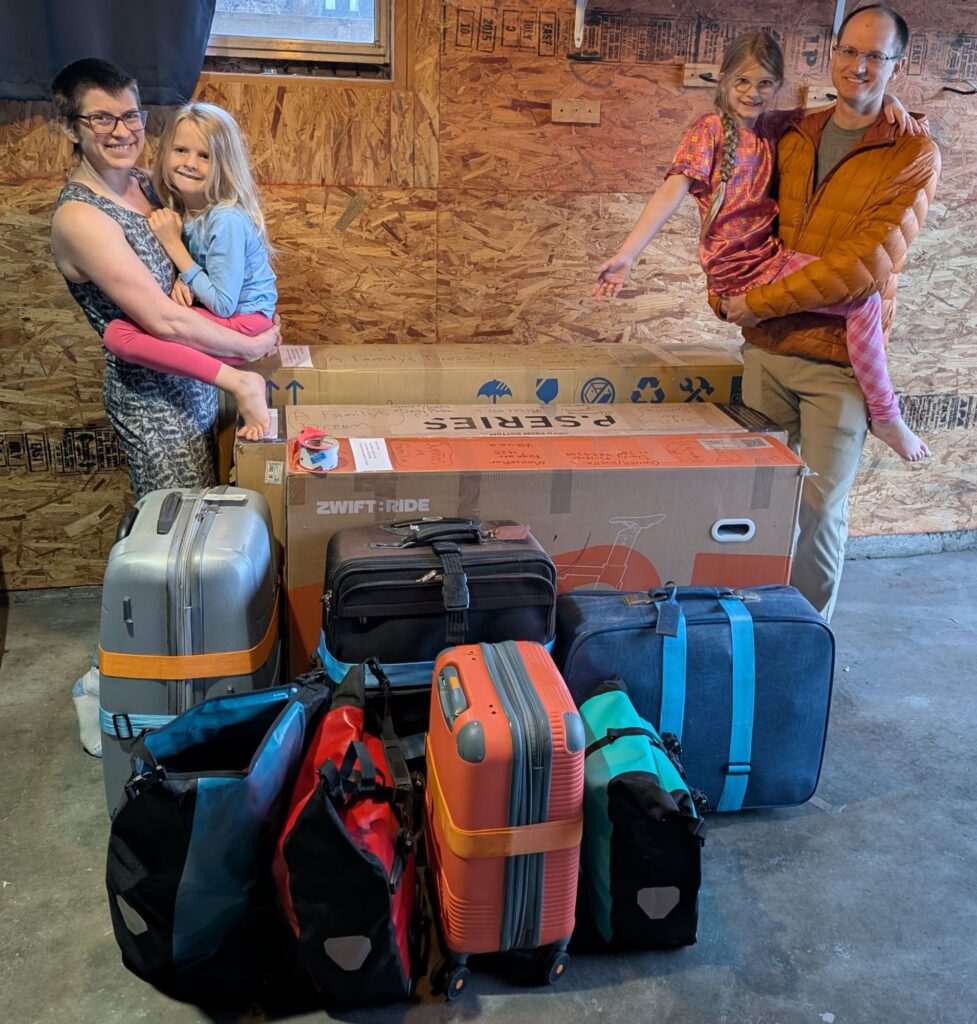
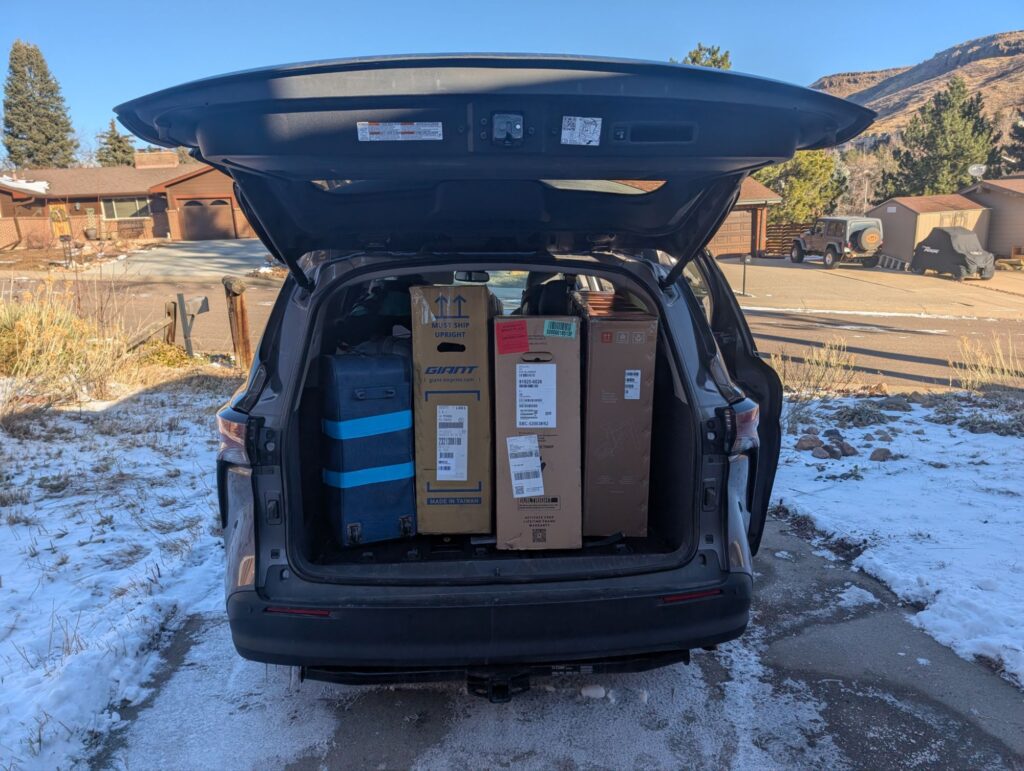
Total travel time to get here from our door was about 26 hours. Miraculously, every bag and every bike box arrived undamaged. We spent our first day wandering the town and putting the bicycles together. Ushuaia is cold, windy, wet and full of art.
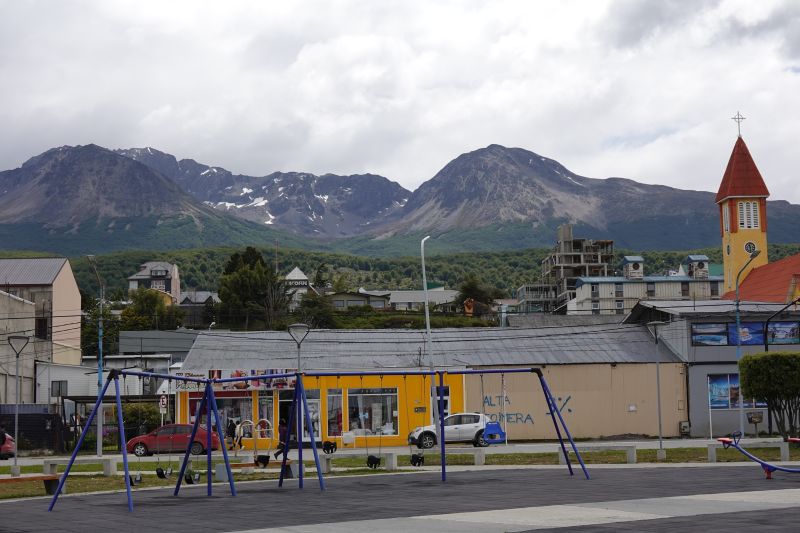
The city is perched on the edge of the Beagle Channel, surrounded by mountains. It was so dreary we didn’t see them until the fourth day, but they are stunning!
We discovered that both girls love empanadas and most particularly they love “submarinos,” which is the local approach to hot chocolate. To make one you start with steaming hot milk, then melt in a big chunk of dark chocolate before drinking it all down!
I learned the hard way that to buy groceries with a credit card you must show your passport here. Alice and I headed to the store with just a credit card and a few US dollars. At check out I was shocked when they asked for my passport! I tried to pay with the dollars, but they were all too ragged to be accepted. After a long back and forth, I learned that a *photo* of my passport would be good enough and luckily I had one! It was quite a scene.
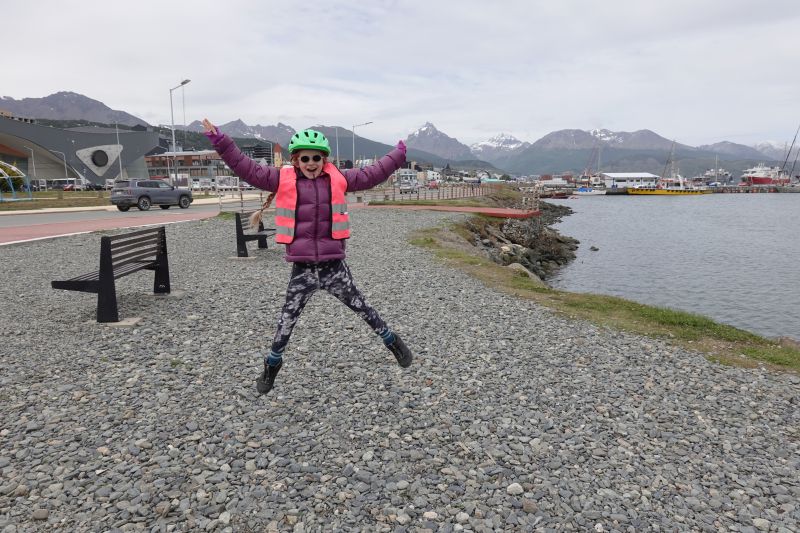
Here are a few more photos of our time here. Tomorrow we start our journey on bicycles!
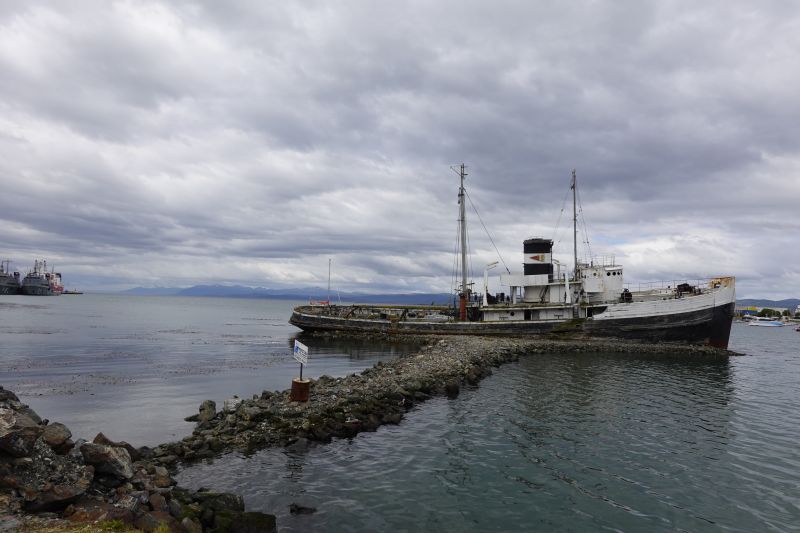
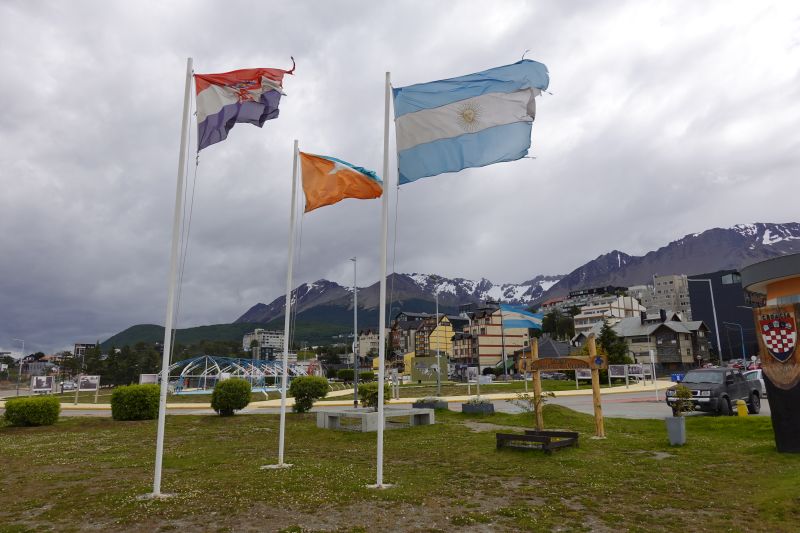
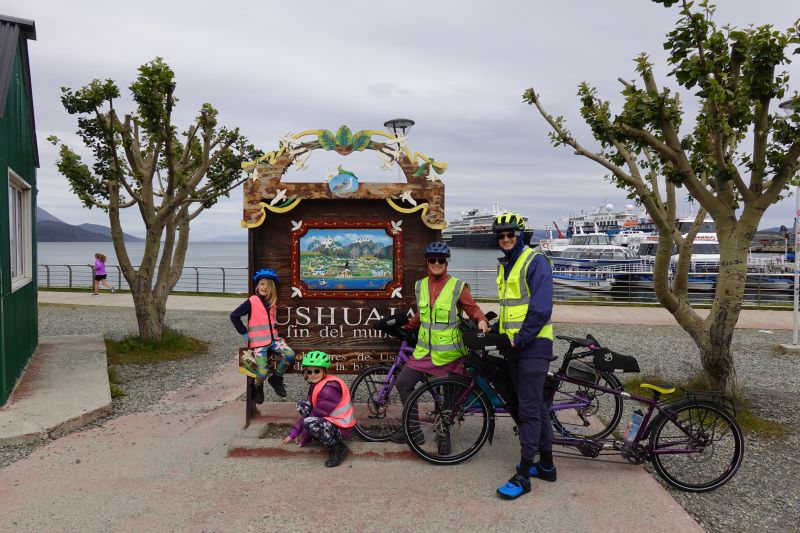
The St. Christopher shipwreck. Apparently this ship was assisting another in 1957 and ended up stuck ever since.The wind is famous here and the huge flags were almost always flappingThis ‘end of the world’ sign is an iconic destination for cyclists…and of course we found the playgrounds. This one had some particularly cool swings.